
Introduction
The 800 area code has been a staple of business communication since its introduction by AT&T in 1966. It remains one of the most trusted toll-free phone numbers for businesses across industries. Unlike traditional phone numbers that are linked to geographic regions, an 800 area code number allows customers to connect with your business without the burden of long-distance charges.
This feature makes it essential for enhancing customer accessibility and reinforcing professional credibility. Whether you're running a startup or managing a large enterprise, understanding the functionality and advantages of the area code 800 for business is crucial for building a successful customer service strategy. This guide explores the ins and outs of the 800 number system, its benefits, and how to leverage it to improve your business communications.
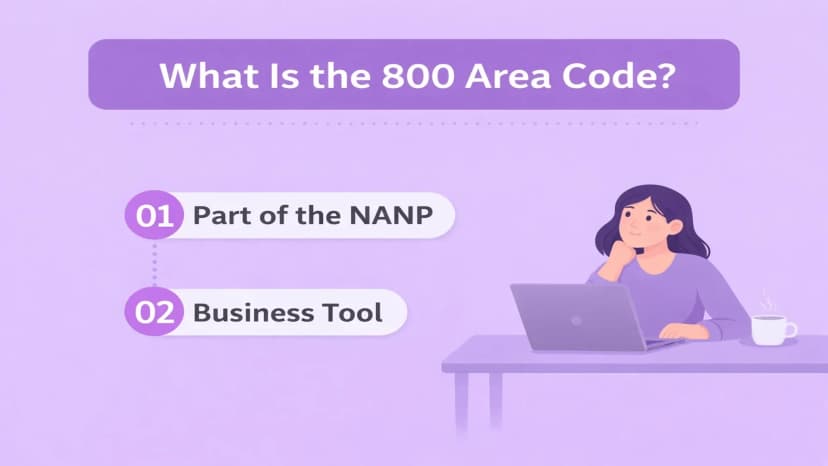
What Is the 800 Area Code?
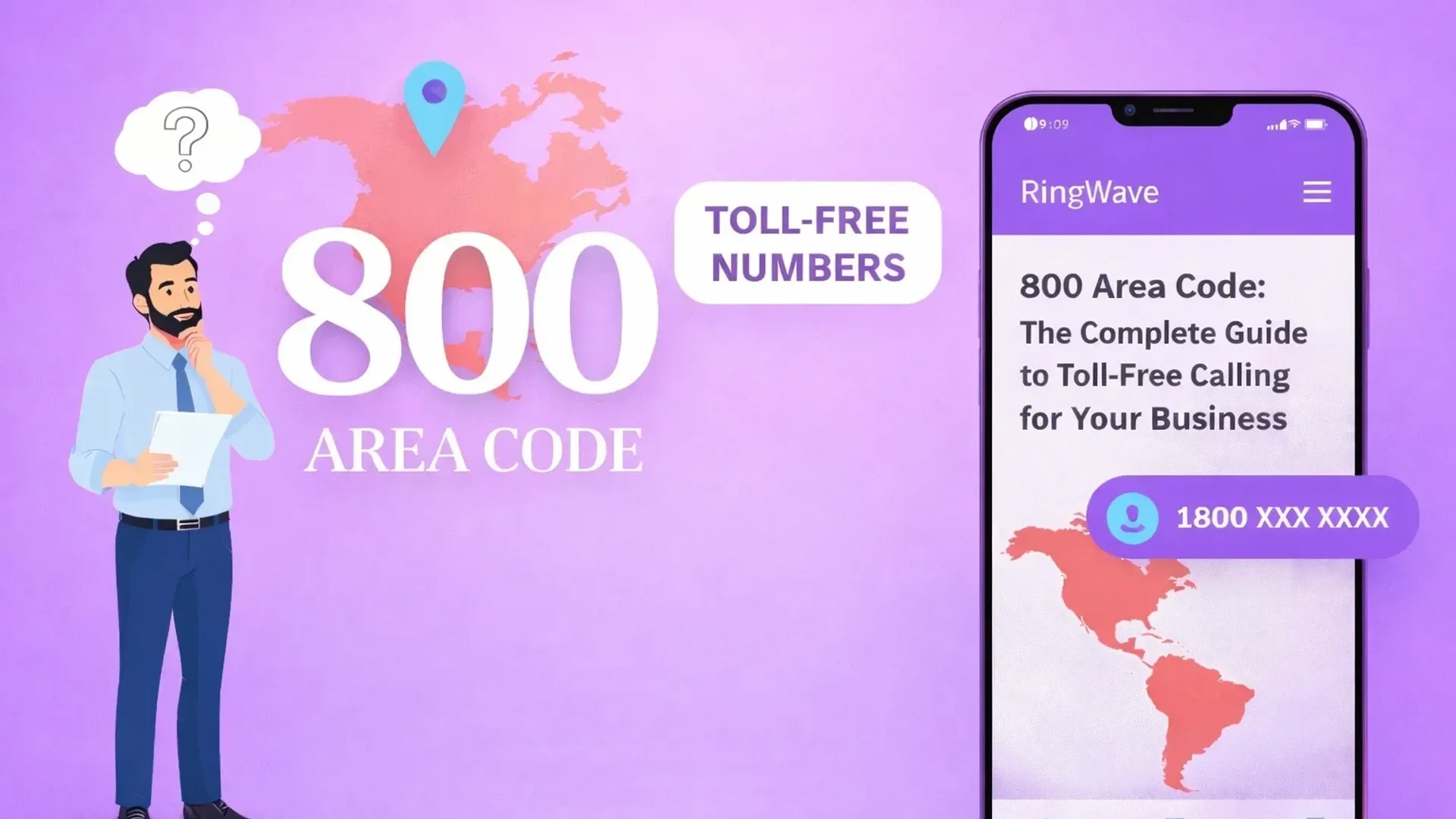
An 800 area code is a toll-free phone number within the North American Numbering Plan (NANP), designed to allow customers to contact businesses without incurring phone charges. Instead, the company receiving the call bears the cost. This virtual number system eliminates geographic restrictions, making it easier for businesses to serve national and international clients.
When the 800 area code was introduced, it revolutionized business communication by providing an efficient way for customers to reach businesses without worrying about call charges. Today, businesses rely on this toll-free business number to enhance customer experience, increase brand credibility, and improve accessibility.
The area code 800 is part of the broader NANP, which includes regions in the United States, Canada, and several Caribbean nations. While the 800 prefix is still the most popular, there are other toll-free prefixes such as 888, 877, 866, 855, and 844, each serving businesses across the world.
How Does the 800 Area Code Work?
Understanding the area code 800 system is crucial to utilizing its full potential. While the technology behind 800 phone number has evolved since its inception, the basic concept remains simple.
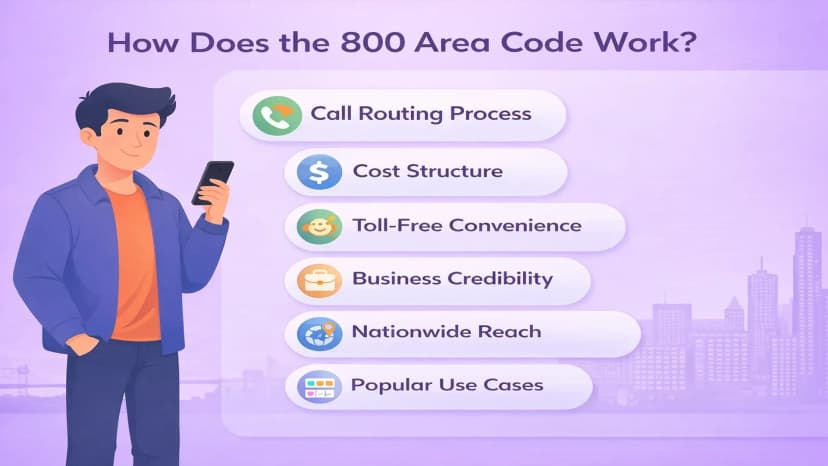
Call Routing Process
When a customer dials an 800 local number, the call is directed through the Public Switched Telephone Network (PSTN) and routed to the business's phone system. The call routing is managed by a Responsible Organization (RespOrg), ensuring the number is allocated correctly and preventing misuse. This entire process occurs almost instantaneously, ensuring minimal delays for the caller.
Modern call routing uses advanced algorithms, enabling businesses to direct calls to different departments or locations based on pre-established business rules. This means calls can be routed to call centers, remote offices, or even mobile phones seamlessly, ensuring customer satisfaction.
Cost Structure
One of the main reasons businesses prefer area code 800 is the cost structure. Unlike regular phone lines, where the caller pays for the call, the business receiving the 800 number call covers the cost. Typically, businesses pay between 2 to 10 cents per minute based on factors like call volume and call duration.
This payment model is beneficial for businesses, especially those dealing with a high volume of customer inquiries. With 800 local number, businesses can offer toll-free access, eliminating barriers for customers and enhancing accessibility. Businesses can also optimize costs by improving call-handling efficiency.
Geographic Coverage and Availability
A common misconception about area codes 800 is that they represent a specific geographic location. In reality, 800 phone number are virtual and can be routed to any location within the North American Numbering Plan (NANP). This geographic flexibility allows businesses to have a national presence without being tied to a specific area.
The NANP covers:
- United States and its territories
- Canada
- Bermuda
- Caribbean countries such as Jamaica, Bahamas, and Trinidad and Tobago
The ability to route calls across state lines or even internationally allows businesses to expand their reach without geographic limitations.
Who Uses 800 Area Code Numbers?
area codes 800 are widely used by businesses across various industries. They're particularly popular in customer-facing businesses that prioritize accessibility and customer satisfaction.
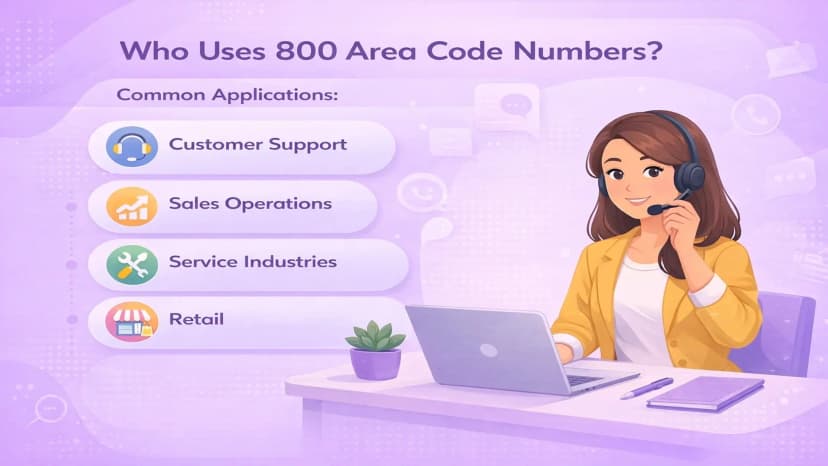
Common Applications
- Customer Support: 800 phone numbers are commonly used by customer service teams in sectors like technology, banking, healthcare, and e-commerce. They enable businesses to handle a high volume of customer calls efficiently and cost-effectively.
- Sales Operations: 800 location are also used in telemarketing and direct sales to remove friction from the purchasing process and make it easier for customers to inquire or make purchases.
- Service Industries: Businesses in sectors like insurance, law, and travel also use 800 numbers to build trust and make it easier for customers to contact them for services like quotes, reservations, and consultations.
- Retail: Retail businesses—whether online or brick-and-mortar—rely on area code 800 for customer service, orders, and returns, significantly enhancing customer interaction.
Key Benefits of the 800 Area Code
Ringflow offers numerous benefits for businesses seeking to implement an area code 800. These advantages have helped 800 local number remain an essential tool in business communication, even in the digital age.
Enhanced Credibility
An 800 local number immediately signals professionalism and trustworthiness. Customers recognize these numbers as belonging to established businesses, which can enhance your company's reputation and improve customer trust.
Increased Accessibility
By removing the cost burden for customers, an 800 phone number makes it more likely that people will reach out to your business. This increased accessibility improves customer engagement and retention.
Competitive Advantage
In markets where competitors use traditional local phone numbers, having an 800 number can set your business apart. It's easy to remember and often associated with larger, more established companies, giving you a competitive edge.
800 Area Code vs. Other Toll-Free Prefixes
Ringflow offers businesses an easy way to secure toll-free numbers with various area codes, including the 800 area code, to maintain a professional image and enhance communication.
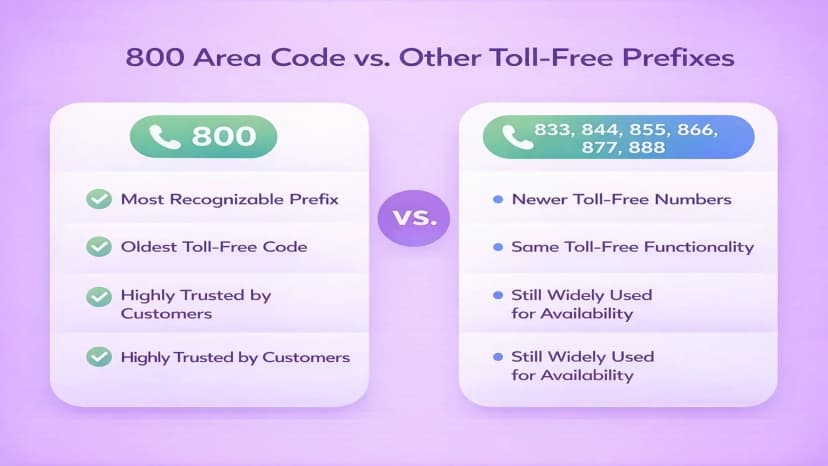
- 888: Introduced in 1996, this was the first alternative to 800 region. It has since gained widespread adoption.
- 877: Launched in 1998, this alternative is popular among businesses needing toll-free communication.
- 866: This option became available in 2000 to meet growing demand.
- 855: Introduced in 2010, it is often used by small and medium-sized businesses.
- 844: The latest addition, launched in 2013, offers businesses another option when 800 numbers are unavailable.
While each of these prefixes functions in the same way, the 800 area code is still considered the most prestigious, carrying significant brand recognition.
Vanity Numbers: Making Your 800 Area Code Memorable
Vanity numbers combine the power of toll-free communication with easy-to-remember words or phrases. For instance, a company may choose 1-800-FLOWERS or 1-800-PIZZA-NOW. These vanity numbers are easier for customers to recall and can even boost brand recognition.
Advantages of Vanity Numbers
- Improved Recall: Vanity numbers make it easier for customers to remember your business's contact information.
- Enhanced Marketing Value: A vanity number can serve as a memorable advertisement in itself, helping you stand out in a crowded market.
- Targeted Marketing: By incorporating relevant keywords (like 1-800-PLUMBER), vanity numbers attract customers searching for specific services.
How to Get an 800 Area Code Number
Obtaining an 800 number for business is simple. Here's how to get started:
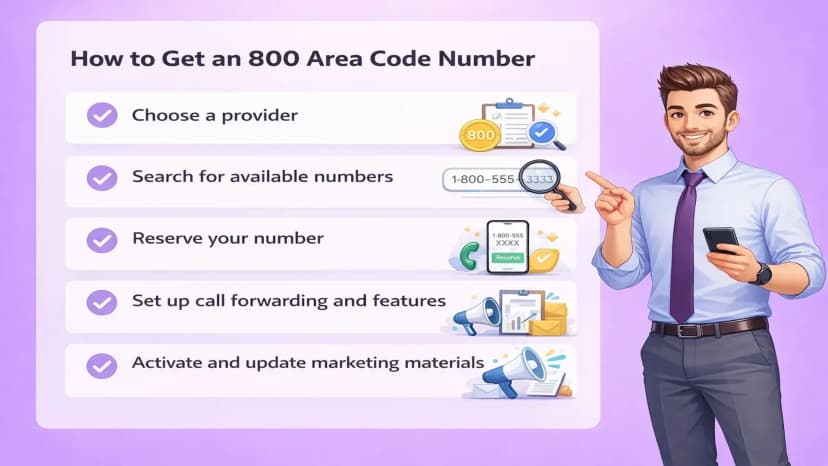
- 1Choose a provider: Select a service provider that offers toll-free numbers and fits your business needs.
- 2Search for available numbers: Use the provider's search tool to find available 800 local numbers.
- 3Reserve your number: Once you find a number you like, reserve it.
- 4Set up call forwarding and features: Configure your number to forward calls to your desired locations.
- 5Activate and update marketing materials: Once activated, update your website, business cards, and advertisements with your new 800 phone number.
Conclusion
The 800 area code continues to be a vital communication tool for businesses looking to establish credibility, improve customer engagement, and expand their reach. With its many benefits and flexible routing capabilities, an 800 number remains an essential part of modern business communication. By implementing an 800 number for business, you can significantly enhance your customer service strategy, build brand recognition, and gain a competitive edge in your market.
For related coverage, check out our 888 toll-free area code guide and guide to the best wholesale VoIP providers.
Ready when you are
Give Your Business a Toll-Free Front Door
Build instant business credibility with an 800 toll-free number from Ringflow. Set up in minutes — free trial, no card required.
FAQ's
An 800 number enhances credibility, increases accessibility, and allows your business to establish a professional image with customers. It's essential for businesses targeting a national or international market.
Getting an 800 area code is simple. Choose a service provider that offers toll-free numbers, use their search tool to find available 800 numbers, reserve the number you like, set up call forwarding and features, then activate it and update your website, business cards, and advertisements with your new 800 phone number.
Yes. The 800 area code is part of the North American Numbering Plan (NANP), which covers the United States and its territories, Canada, Bermuda, and Caribbean countries such as Jamaica, Bahamas, and Trinidad and Tobago. Since 800 numbers are virtual and not tied to a specific location, calls can be routed across state lines or internationally within the NANP.
An 800 number removes the cost burden for customers, making it more likely they'll reach out to your business. With advanced call routing, calls can be directed to different departments, call centers, remote offices, or mobile phones based on business rules—ensuring minimal delays and higher customer satisfaction.
While toll-free prefixes such as 888, 877, 866, 855, and 844 all function in the same way as 800, the 800 area code is the original and most prestigious. Introduced by AT&T in 1966, it carries significant brand recognition and is often associated with established businesses, whereas the others were introduced later to meet growing demand.