
Introduction
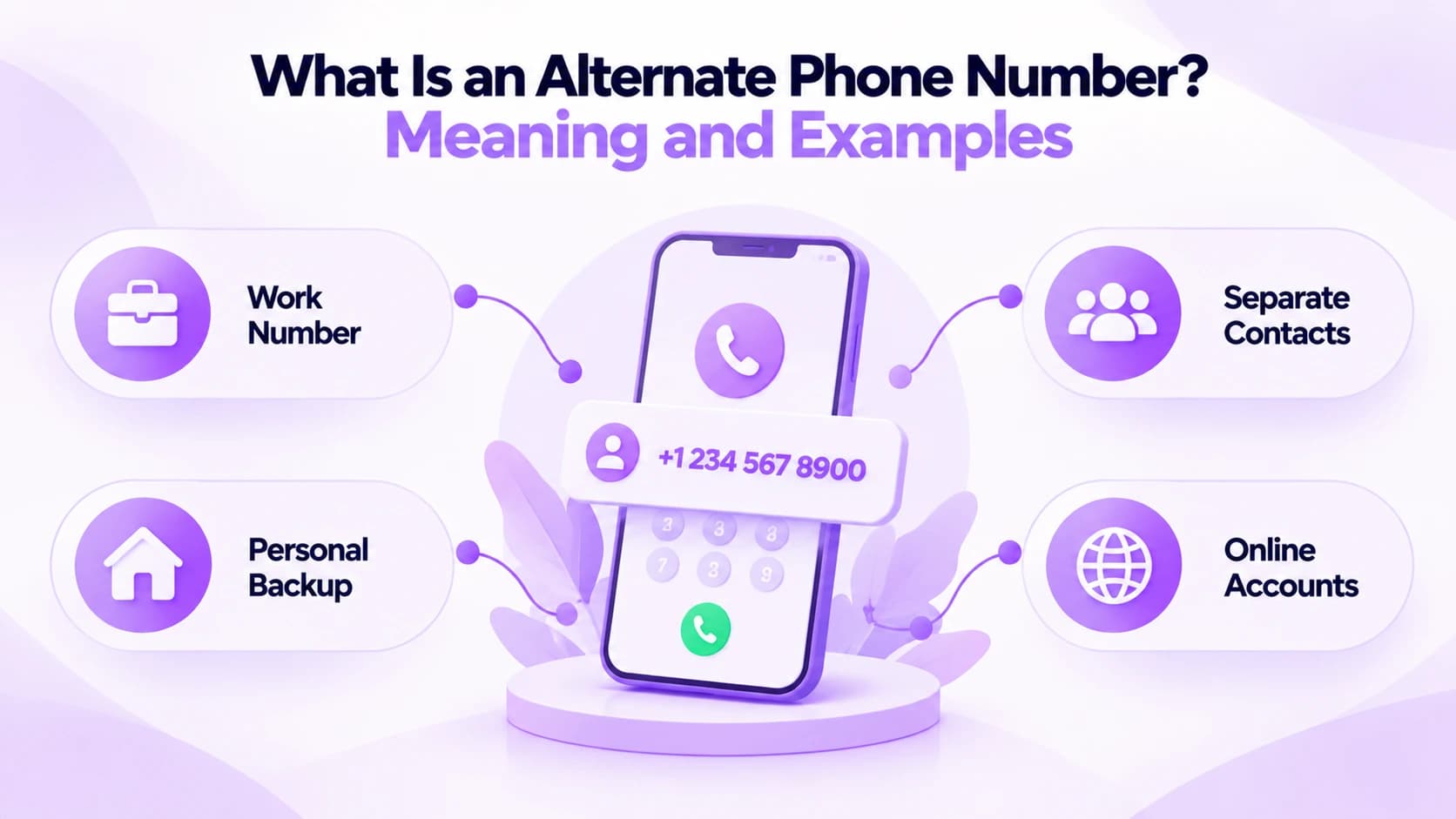
An alternate phone number is a second number where a company, school, or employer can reach you when your main number does not answer. Forms label the field in different ways, such as Alternate Mobile No., Alternative Contact, or Secondary Phone. The wording changes, but the purpose stays the same: give the organization a backup way to reach you. It is a small field that causes surprisingly many mistakes.
This guide from Ringflow explains what an alternate phone number means, how it differs from an emergency contact, and what to enter when you only have one number. You will also see example entries, how a second number can help, and how to keep any number tied to account recovery safe. Read it before you fill in your next form. Each section stands alone, so you can skip ahead.
What Does Alternate Phone Number Mean?
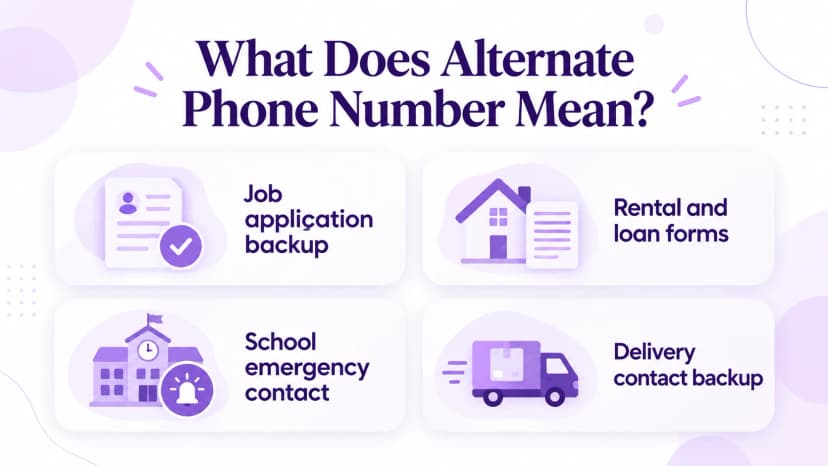
The meaning of an alternate phone number is simple: it is the backup line in your contact details. An organization tries your primary number first and the alternate contact number next, if the first call goes unanswered or the line has been disconnected. An alternate phone number keeps you reachable when your main phone is off, broken, or out of coverage. It also saves the organization from chasing you.
The alternate phone number field turns up on job applications, rental and loan paperwork, school forms, delivery checkouts, and account settings. It is sometimes labeled additional phone, other phone, or alternative number. Online accounts use the idea for security too. Google asks for a recovery phone so it can help you back in if you are locked out, and Apple uses trusted phone numbers for two-factor sign-in.
- Job applications: employers use it when they cannot reach your main number to schedule an interview.
- Rental and loan forms: landlords and lenders keep a backup number on file.
- School forms: staff use it when a parent's main phone is unavailable.
- Delivery checkouts: couriers call it when the first number does not answer.
- Account settings: online services use it for security alerts and sign-in codes.
Alternate vs Primary vs Emergency Contact Number
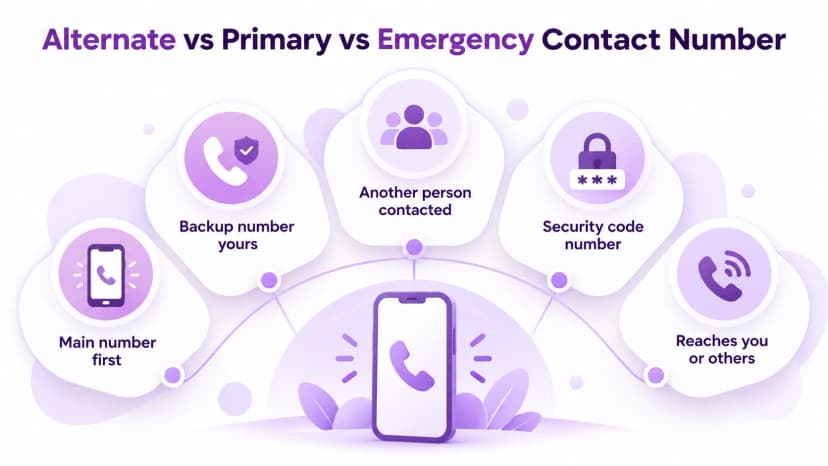
A primary phone is the number an organization tries first, and an alternate phone number is also yours, tried when the primary does not connect. An emergency contact is different: it is another person, usually listed with a name and relationship, who gets a call when something has happened to you or you cannot be reached. Mixing them up causes real confusion on forms.
If a form asks for both, use different numbers. If a field called alternate contact information also wants a name and relationship, treat it as an emergency contact rather than a backup line for you. A recovery phone is a separate idea again: a number you control that receives sign-in codes and security alerts, ideally one that only you can use. Always read the label carefully.
- Primary phone: your main number, which an organization tries first.
- Alternate phone number: also yours, or a shared household line, tried when the primary does not connect.
- Emergency contact: someone else, called when something happens to you.
- Recovery phone: your number, ideally only yours, used for sign-in codes and security alerts.
- Rule of thumb: an alternate phone number reaches you, while an emergency contact reaches someone about you.
- Shared lines: a family landline can serve as an alternate phone number if everyone agrees.
Alternate Phone Number Examples
Any working number you answer counts. Each alternate phone number example below uses the 555-0100 to 555-0199 block, which the North American Numbering Plan reserves for fictional use, so none of them rings a real subscriber. Match the example to your own situation, and make sure the person or place that answers the line can actually pass your message on. Test the number by calling it yourself first.
Write the number the way the form asks: ten digits such as 312-555-0164 on a US form, or +1 312 555 0164 where a country code is required. Our US phone number format guide shows other accepted styles. Avoid adding extra words or symbols in the number field, because some forms reject entries that contain letters. Keep the same format on every form so your records stay consistent.
- Mobile plus home landline: primary (312) 555-0118 mobile, alternate (312) 555-0164 home.
- Office worker: primary (212) 555-0132 mobile, alternate (212) 555-0107 direct work line.
- Freelancer: primary (415) 555-0189 personal mobile, alternate (415) 555-0121 business number.
- Student living with family: primary (713) 555-0143 own mobile, alternate (713) 555-0150 parent's mobile, with permission.
- Small business: primary the main line, alternate a second line that rings the same team.
- Consistent format: use the same style across forms so your records always match.
- Consent: ask the person before you list their number as your alternate.
What to Enter If You Only Have One Number
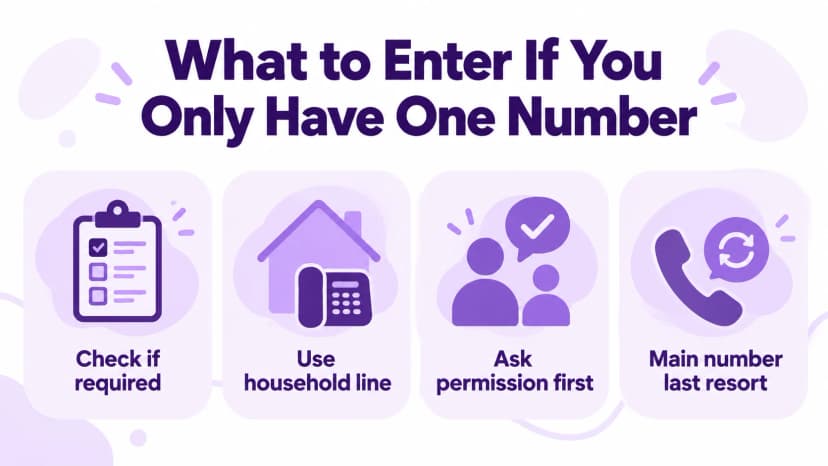
Many people have only one phone, and that is fine. First check whether the alternate phone number field is required. If it is marked optional, leave it blank rather than inventing something. A blank optional field is honest and causes no problems, while a made-up entry can send someone else's calls to a stranger. Only fill the field when you have a real number to give. Small details like this keep your records accurate.
If the field is required and will not stay blank, use a household or work line where someone will pass on your messages, and ask before listing another person's number. Repeating your main number is a last resort, since some forms may reject a duplicate. Never borrow the 555 sample numbers from this guide, because they reach nobody, including you.
- Check if required: leave optional fields blank.
- Use a household or work line: a line where messages reach you counts.
- Ask first: get permission before listing someone else's number.
- Repeat your main number only as a last resort, when a required field will not stay blank.
- Never invent one: made-up numbers can ring real people.
- Read the help note: some forms explain which kinds of number they accept.
Using a Second Number as Your Alternate Contact
If you often leave the alternate field empty, a second number fills it. It also lets you use a different phone number for side work or online listings, so strangers never see your main mobile. The usual routes are a second line on a dual-SIM phone, an extra line from your carrier, or an app-based number that rings the phone already in your pocket.
Our second phone number guide compares those options for business use and walks through setup. A business number is useful beyond forms. Ringflow lets you add a local or toll-free number that rings through apps on your phone and computer, or bring over a number customers already know, so a backup line does not require a second handset. Compare costs before you choose a route.
- Dual-SIM phone: one handset with two lines, each with its own number.
- Extra carrier line: a second line from your mobile carrier, usually at an added monthly cost.
- App-based number: a number that rings through an app on the phone you already carry.
- Business line: a number kept for work, so customers never see your personal mobile.
- Forwarding: a second number can forward calls to your main phone when you are busy.
- Cost check: compare monthly prices before choosing between SIM, carrier, and app options.
Is It Safe to Share an Alternate Number?
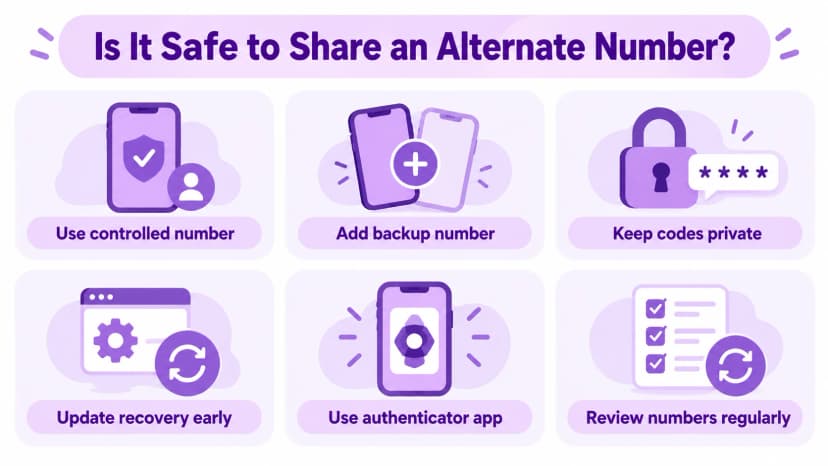
Giving a second number to a school or a delivery company is low risk. What matters more is who controls the number and whether it is tied to account recovery. The FTC warns that hackers can take over a phone number through a SIM card swap attack and receive its texts, including verification codes, so numbers that receive codes deserve extra care.
The Google recovery options page explains that recovery info helps you back in if you forget your password or are locked out, and that a new recovery phone can take up to seven days to take effect. It also says not to use a Google Voice number as the recovery phone, because you could lock yourself out. Plan changes early, ideally before you travel, change phones, or close an old number.
- Pick a number you control: a recovery number should be one that only you can use.
- Add a backup: Apple suggests adding a trusted number not tied to your iPhone, so a lost phone does not lock you out.
- Keep codes private: never share a verification code with anyone you did not contact first.
- Update early: changes to a recovery phone can take up to seven days to take effect.
- Use an authenticator app: the FTC calls it safer than text codes, because the passcode is not exposed to a SIM swap.
- Review regularly: check your recovery numbers every few months, especially after you change phones.
Conclusion
An alternate phone number is a second way to reach you: a home line, a work line, a second mobile, or with permission a trusted person's phone. It is not an emergency contact, who is someone else entirely, and an optional field can simply stay blank. Understanding that difference helps you fill in any form correctly. It takes a minute and prevents missed calls.
Guard any alternate phone number tied to account recovery, and never invent digits to get past a form. If you keep running short of numbers to give out, a separate line solves it, and Ringflow offers a free trial so you can try business numbers or move an existing number over. Review the numbers on your key accounts today. A short check now saves a lot of trouble later.
Ready when you are
Need a Second Number for Work?
Get a local or toll-free business number that rings on your mobile and desktop apps. Try Ringflow free, or port a number you already use.
Frequently Asked Questions
A second number where someone can reach you if your primary number does not answer.
No. An alternate number reaches you, while an emergency contact is someone else.
Yes, if it is optional.
Up to seven days to take effect.
The FTC says yes; it avoids SIM swaps.