
Introduktion
Om du någonsin har ringt en kundtjänst, bokat ett läkarbesök eller returnerat en leverans, finns det en god chans att du slagit ett 1-866-nummer.
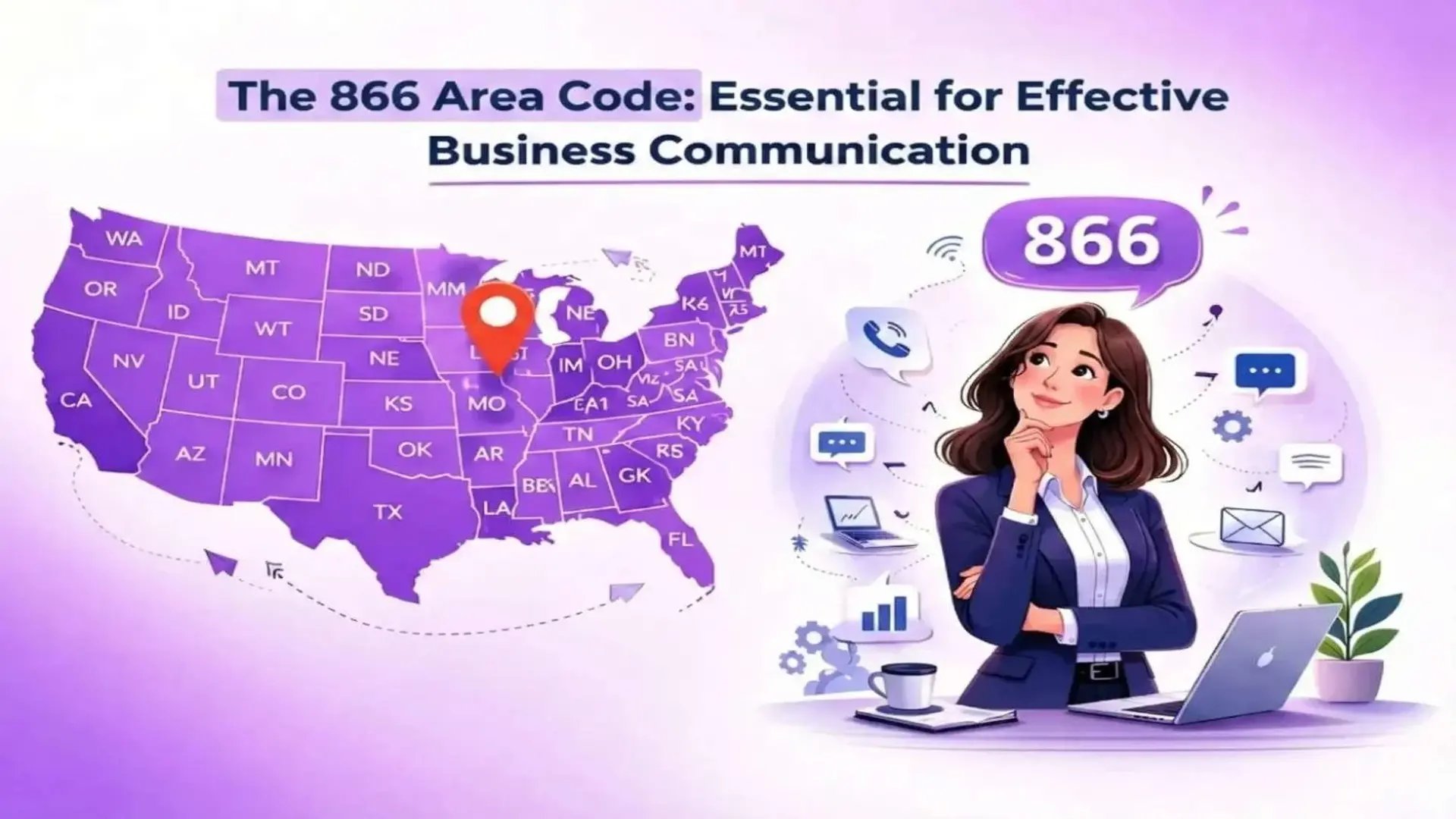
Riktnumret 866 är ett av sju avgiftsfria prefix som känns igen i USA, Kanada och de flesta karibiska länder, och det fungerar lite annorlunda än ett normalt geografiskt riktnummer.
Den här guiden täcker vad 866-prefixet faktiskt är, hur avgiftsfri routing fungerar under huven, varför bedragare dras mot avgiftsfria nummer och hur ett företag kan göra anspråk på ett eget minnesvärt 866-nummer.
De tekniska och historiska detaljerna nedan kommer från North American Numbering Plan Administrator (NANPA) och FCC:s regelverksregister.
Vad är riktnummer 866?
866 ligger i en egen kategori: en avgiftsfri kod utan någon stad, stat eller provins bakom sig.
En uppringare som ringer ett 1-866-nummer betalar ingenting för samtalet - företaget som äger linjen står för inkommande kostnad per minut via sin telekomleverantör istället. Varje avgiftsfri kod, 866 inkluderad, delar ett uppringningsformat över hela Nordamerika:
- USA - alla 50 stater, plus territorier
- Kanada - alla 10 provinser och 3 territorier
- Bermuda, Trinidad och Tobago, Barbados, Bahamas, Dominikanska republiken, Jamaica och de flesta karibiska NANP-medlemmar
Eftersom det uppringningsformatet delas över North American Numbering Plan (NANP) ringer ett 866-nummer likadant oavsett om den som ringer är intill eller tre tidszoner bort, utan långdistansavgift, ingen roamingavgift,
och ingen landskod att ringa inifrån NANP.
Viktiga fördelar med att använda ett 866-telefonnummer
Ett 866-nummer tar bort kostnaden som anledning att inte ringa, vilket mätbart ökar hur ofta kunder faktiskt lyfter telefonen istället för att ge upp på ett mejl eller ett kontaktformulär.
Det läses också som en mer etablerad, professionell installation än ett lokalt cellnummer, vilket är viktigt för ett företag som fortfarande bygger sitt rykte.
Letar du efter ett pålitligt avgiftsfritt nummer? Lär dig mer om vår Amerikanska avgiftsfria nummeralternativ.
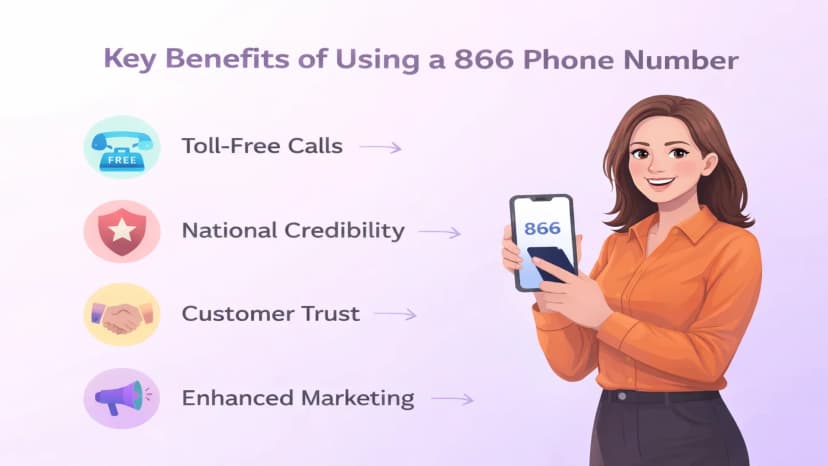
Ett enda 866-nummer låter också ett företag arbeta var som helst och samtidigt behålla en konsekvent kontaktpunkt för varje kund, oavsett vilken stat eller tidszon de ringer från.
Det tar bort behovet av att jonglera med separata regionala nummer när verksamheten växer till nya marknader.
För callcenter specifikt skickar avgiftsfri routing varje samtal direkt till rätt team eller agent baserat på uppringarens behov innan någon ens svarar. Att para ihop det med CRM-verktyg, som Ringflow, innebär att representanter ser relevant kundhistorik i samma ögonblick som samtalet kopplas upp.
Geografisk täckning och tidszon
866-prefixet täcker hela USA, från Alaska och Hawaii till fastlandet, tillsammans med Kanada och de flesta karibiska NANP-medlemmar, eftersom det inte är fäst vid någon enskild stat eller tidszon.
Den räckvidden är exakt varför det tar lite mer planering att ställa in öppettider än för ett rent lokalt nummer.
Samtal kan komma från vilken som helst av de fyra kontinentala tidszonerna på en gång, så de flesta företag kör sin schemaläggning och IVR-dirigering utanför Eastern Time som referenspunkt, med överflödesregler för samtal efter timmar från Stillahavs- eller bergsuppringare.
Callcenter som hanterar jämn volym över alla fyra zonerna har mest nytta av att få den schemaläggningslogiken rätt.
Hur man får ett riktnummer 866
Att få ett 866-nummer tar vanligtvis några arbetsdagar. Börja med att söka efter tillgängliga nummer genom en avgiftsfri leverantörs sökverktyg för att hitta en sekvens som är lätt för kunderna att komma ihåg.
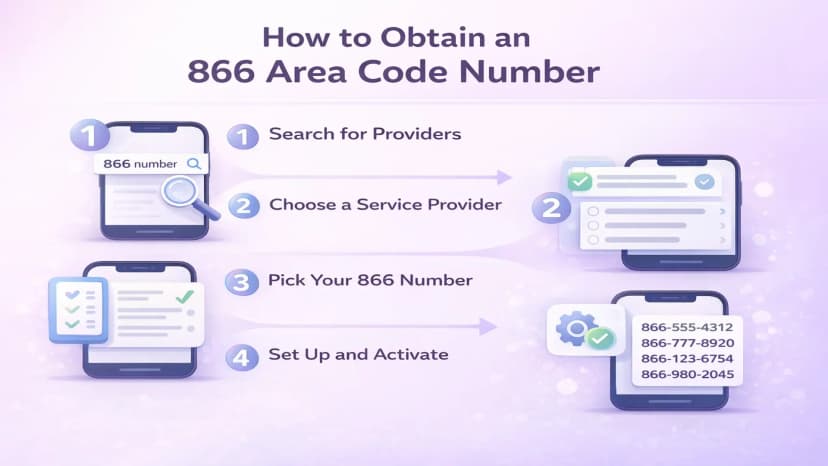
En siffersekvens som stavar något eller upprepar ett mönster fastnar i en uppringares minne bättre än en slumpmässig, så det lönar sig att bläddra lite längre innan man bestämmer sig för ett nummer.
Därifrån, registrera dig med en leverantör som stöder 866-koden, bekräfta företagsuppgifterna som det frågar efter och numret aktiveras när konfigurationen är klar och redo att ta emot samtal.
Reverse Lookup Services och nummerpresentation
Verktyg för omvänd sökning är väldigt praktiska för att ta reda på vem som ligger bakom ett inkommande 866-riktnummersamtal. De hjälper dig att dubbelkolla om det är legitimt och undvika skumma saker. Att föra bra loggar över dina affärssamtal blir också lättare med dagens spårningsfunktioner.
Håll dig till välkända, säkra plattformar för omvänd sökning som skyddar din egen information samtidigt som du levererar korrekta detaljer. Innan du hämtar en obekant kan en snabb kontroll spara dig problem – särskilt användbart i callcenter i 866 lokala miljöer där samtal strömmar in konstant.
Är riktnummer 866 en bluff?
866-koden i sig är inte problemet - ingenting med prefixet gör ett samtal mer eller mindre trovärdigt än ett från 800 eller 877.
Det som får det att se riskabelt ut är att bedragare förfalskar avgiftsfria nummer specifikt för att de läser som professionella och säkra att svara på. De FTC har dokumenterat tusentals klagomål knuten till 1-866 spoofing varje år, vilket är anledningen till att denna fråga fortsätter att dyka upp.
Vanliga 866 blufftyper
- Falska IRS- eller skatteskuldsamtal. En falsk 866-ringare utger sig för att vara IRS, hotar med arrestering och kräver betalning med presentkort eller banköverföring. IRS ringer inte för att kräva omedelbar betalning.
- Auto-garanti samtal. Inspelat meddelande hävdar att din garanti är på väg att löpa ut. Det finns ingen garanti; målet är att samla in VIN, betalning eller personlig information.
- Teknisk supportbedrägeri. Den som ringer säger sig vara från ett stort mjukvarumärke och ber om fjärråtkomst till din dator för att fixa ett icke-existerande virus.
- Bedrägerier med priser och lotterier. Röstbrevlådan säger att du har vunnit ett pris eller ett presentkort och behöver ringa ett 866-nummer för att hämta det. Återuppringningen kräver vanligtvis en liten avgift eller bankuppgifter.
- Bankimitation. Den som ringer uppger sig som en bankbedrägeriavdelning och ber dig att verifiera ditt kortnummer, säkerhetskod eller engångslösenord.
Hur RÖR/SKAKAR hjälper (och var det kommer till kort)
Sedan 2021 har amerikanska operatörer varit tvungna att implementera STIR/SHAKEN – ett ramverk för autentisering av nummerpresentation som signerar samtal så att de inte kan förfalskas i tysthet. De flesta moderna telefoner visar en verifieringsbricka eller "Caller Verified"-etikett när ett samtal klarar kontrollen.
Avgiftsfria 866-samtal går igenom samma ramverk, men verifieringen är inte skottsäker; vissa ursprungsnätverk släpper fortfarande igenom overifierade samtal.
Hur man verifierar ett riktigt 866-nummer
- Lägg på om något känns fel. Legitima företag pressar dig inte att stanna på linjen.
- Slå upp företagets officiella nummer direkt på dess hemsida eller på baksidan av ditt bank-/försäkringskort.
- Ring det officiella numret och fråga om det ursprungliga samtalet var äkta.
- Läs aldrig ett engångslösenord eller PIN-kod över telefonen, inte ens till en 866-linje som ser verifierad ut.
- Rapportera numret till FTC på reportfraud.ftc.gov – detta matas in i nationell tillsyn.
Varför ett företag använder ett 866-nummer
Fallet för att sätta ett 866-nummer på ett visitkort kommer ner till en handfull konkreta fördelar:
- Erkännande. Uppringarens förtroende. Människor är mer benägna att ringa ett 1-866-nummer än ett okänt lokalt prefix, särskilt i support- och försäljningssammanhang.
- Nationell räckvidd. Ett enda 866-nummer kan dirigera rikstäckande, så ett litet företag i Reno ser ut på samma sätt som ett nationellt callcenter i Atlanta.
- Högre inkommande konvertering. Gratis att ringa tar bort priset som en friktionspunkt för support, returer och inkommande försäljning.
- Fåfänga alternativ. Vanity-nummer - 1-866-LAW-FIRM, 1-866-CAR-LOAN - är fortfarande lagliga och lätta att hitta på 866-prefixet.
- Bärbarhet. Enligt FCC-reglerna äger företaget numret, inte operatören. Att byta leverantör betyder inte att man tappar linjen.
- Inbyggda funktioner. Moderna leverantörer levererar 866 nummer med IVR, samtalskö, röstbrevlåda-till-e-post, inspelning och analys – allt utöver den avgiftsfria routingen.
Kom igång med din amerikanskt avgiftsfritt nummer i dag. Utforska vår sömlösa process.
Vårdpraxis, online-återförsäljare och nystartade tekniska företag är bland de tyngsta användare av 866-nummer, till stor del för att ta bort kostnaden för att ringa sänker barriären för en kund att rapportera ett problem istället för att tysta.
Plattformar som Ringflow parar den avgiftsfria linjen med samtalsdirigering, inspelning och analys, så numret i sig är bara en del av förbättringen - det omgivande verktyget är det som faktiskt flyttar nöjdhetspoängen.
Avancerade funktioner tillgängliga med 866-nummer
De flesta 866-leverantörer paketerar funktioner utöver grundläggande samtalssvar: automatisk samtalsdirigering och vidarekoppling till rätt team och transkription av röstmeddelanden så att ett missat samtal inte kräver att du ringer in för att kontrollera det.
Samtalsinspelning och analys avslöja var samtal stannar eller släpps, IVR-menyer dirigerar uppringare till rätt avdelning innan en människa är inblandad, och CRM-integrationer visar uppringningshistoriken i det ögonblick en representant hörs.
Implementera 866 riktnummer för ditt företag
Att rulla ut ett 866-nummer fungerar bäst när det börjar med en titt på befintliga samtalsmönster - högtrafik, typiska samtalsanledningar och vilka funktioner (routing, IVR, inspelning) teamet faktiskt kommer att använda från dag ett.
Efter lanseringen är de viktiga siffrorna svarsfrekvens, genomsnittlig samtalslängd och hur många samtal som löser sig utan en överföring. De spårar om den avgiftsfria linjen faktiskt minskar friktionen för kunderna, inte bara lägger till ett nytt nummer att hantera.
Hur ett 866-nummer fungerar
Ett 866-nummer är gratis för den som ringer men ringer fortfarande på ett specifikt företag var som helst i landet, tack vare ett routingsystem som underhålls av den avgiftsfria industrin under FCC:s tillsyn. Här är samtalsflödet, förenklat:
- En uppringare ringer 1-866-XXX-XXXX från valfri telefon i NANP.
- Den ursprungliga operatören frågar efter SMS/800-databasen - ett centraliserat routingregister som underhålls av Somos, den officiella avgiftsfria nummeradministratören.
- Den databasen returnerar den ansvariga organisationen (RespOrg) för det slagna numret, plus dess routingöversättning.
- RespOrg dirigerar samtalet genom sitt växlingsnätverk till vilken destination företaget än har konfigurerat - en fast telefon, en SIP-trunk, en VoIP-softphone, en callcenterkö eller en mobiltelefon.
- Den som ringer betalar ingenting; företaget betalar sin leverantör för den inkommande minuten, vanligtvis faktureras i 6-sekunderssteg efter de första 30 sekunderna.
Det översättningssteget är det som låter ett 866-nummer fläkta ut till flera destinationer samtidigt - en huvudsupportdisk, en överflödesagent som arbetar på distans och en reservlinje - alla ringer från samma slagna nummer.
Det är också anledningen till att numret förblir kvar även om företaget byter leverantör: ägandet ligger hos företaget, så en RespOrg-ändring betyder inte ett nytt nummer.
Branscher som förlitar sig på 866-nummer
Storvolymindustrier får ut det mesta av en avgiftsfri linje, eftersom det är de som absorberar kostnaden per samtal för det största antalet inkommande samtal:
- Sjukvård och försäkringar — möteslinjer, reklamationer, påfyllning av recept
- E-handel och detaljhandel — ordersupport, returer, återbetalningar
- Banker, kreditföreningar och långivare – bedrägerilinjer, kontoservice
- Statliga myndigheter — allmännyttiga telefonjourer, skattehjälp
- SaaS och B2B-teknik — företagssupport och onboarding
- Logistik och leverans — förarutskick, kund ETA
- Resor och gästfrihet — bokningslinjer, support efter vistelsen
Jämförda avgiftsfria koder (800 vs 888 vs 877 vs 866 vs 855 vs 844 vs 833)
Alla sju koder är funktionellt identiska för uppringare - uppringningsupplevelsen och kostnaden (gratis för den som ringer) är densamma. Skillnaderna beror på lanseringsdatum, lagertillgänglighet och hur minnesvärt numret känns.
| Avgiftsfri kod | Lanserades | Status | Praktisk skillnad |
|---|---|---|---|
| 800 | januari 1967 | Mest utmattad | Svårast att få tag på. Premiumnummer kan säljas för mer än 10 000 USD. |
| 888 | mars 1996 | Begränsat lager | Fåfänga inventering gallring. Anses ofta som det näst bästa valet efter 800. |
| 877 | april 1998 | Tillgänglig | Bra balans mellan igenkänning och inventering. Enkla fåfänga alternativ. |
| 866 | 29 juli 2000 | Tillgänglig | Millenniets första avgiftsfria kod. Brett fåfänga inventering. |
| 855 | oktober 2010 | Allmänt tillgänglig | Starkt lager; vanligt val för nya företag. |
| 844 | december 2013 | Allmänt tillgänglig | Starkt lager; yngre kod, mindre varumärkeskännedom. |
| 833 | juni 2017 | Nyaste, rikligt | Största tillgängliga pool. Lägre varumärkesförtrogenhet med allmänna uppringare. |
Kort sagt: alla avgiftsfria koder fungerar likadant. Valet handlar mest om huruvida det specifika numret du vill ha är tillgängligt, och om du bryr dig om uppringarens förtrogenhet.
En ny sjukvårdslinje 2026 kommer att se nästan ingen skillnad mellan ett 866- och ett 855-nummer.
Slutsats
Ett 866-nummer är en avgiftsfri kod som först lanserades 2000, med samma gratis-att-samtal-routing som 800, 888 och 877, men en mycket bredare pool av tillgängliga nummer och fåfängnummer är fortfarande öppna idag.
Den kombinationen av igenkänning och tillgänglighet är därför det förblir ett vanligt förstahandsval för ett företag som startar sin första avgiftsfria linje.
Bedrägerisken som beskrivs ovan gäller för det avgiftsfria formatet i allmänhet, inte för 866 specifikt - samma verifieringsvanor fungerar oavsett vilket avgiftsfritt prefix som ringer.
Parat med en leverantör som Ringflow som lagrar routing, inspelning och analys ovanpå det råa numret, gör en 866-linje jobbet som både en professionell kontaktpunkt och en källa till data om hur samtal faktiskt går.
Är du redo att ta nästa steg? Skaffa ditt amerikanska avgiftsfria nummer nu!
Klar när du är
Låter större än du är — Hämta ett avgiftsfritt 866-nummer
Ge ditt företag ett avgiftsfritt 866-nummer med Ringflow. Konfigurera på några minuter – gratis provperiod, inget kort krävs.
Vanliga frågor
Ja. 866 är en av sju avgiftsfria koder i den nordamerikanska numreringsplanen, tillsammans med 800, 888, 877, 855, 844 och 833.
Riktnumret 866 är inte bundet till någon geografisk plats – det är ett icke-geografiskt avgiftsfritt prefix som fungerar i hela USA, Kanada och de flesta karibiska länder i den nordamerikanska numreringsplanen.
Båda är avgiftsfria koder som är gratis för uppringare och fungerar identiskt. De huvudsakliga skillnaderna är lanseringsdatum och tillgänglighet: 800 lanserades 1967 och är för det mesta uttömda (premiumsiffror kan säljas för tusentals), medan 866 lanserades 2000 och fortfarande har ett brett lager av fåfänga.
Ett 866-nummer fungerar i hela den nordamerikanska numreringsplanen, inklusive USA, Kanada och de flesta karibiska medlemmarna, utan långdistans- eller roamingavgifter för uppringare inom NANP. Samtal utanför NANP kanske inte når ett avgiftsfritt nummer eller kan medföra avgifter.
Ja. '1' är den nordamerikanska landskoden som slås före det avgiftsfria prefixet, så 1-866 och 866 refererar till samma avgiftsfria nummer.