
Introduction
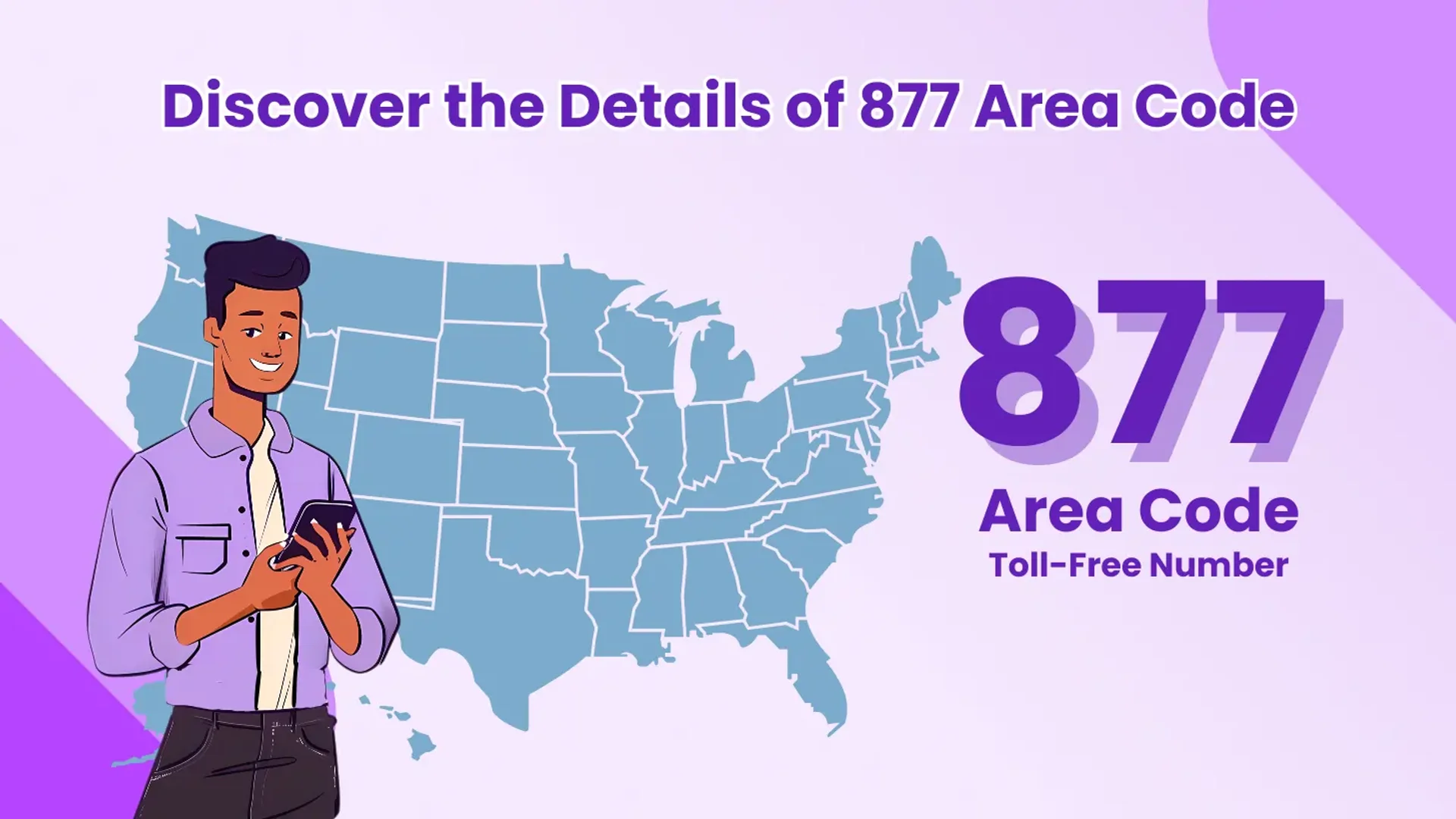
Curious about the 877 area code and how it works? The area code 877 is a toll-free code used across North America. It is a key tool for businesses that offer customer service. But its convenience has also made it a target for scams and fraud. Businesses often choose 877 numbers to widen their reach.
The numbers give customers a free way to call. Companies can build a nationwide presence without callers paying long-distance charges. An 877 number also improves customer service with a reliable line. Sadly, the code's popularity draws scammers too. Their schemes range from fake customer service lines to identity theft attempts. These pose real risks to unsuspecting consumers.
What Is the 877 Area Code?
The 877 prefix is a toll-free code, not a geographic area code. There is no specific location attached to it. When someone dials a 1-877 number, the call is free for the caller — the business that owns the number pays the inbound charge to its telecom provider, typically a few cents per minute. The 877 prefix shares a single dialing format across the entire North American Numbering Plan:
- United States — all 50 states, plus territories
- Canada — all 10 provinces and 3 territories
- Bermuda, Trinidad and Tobago, Barbados, the Bahamas, the Dominican Republic, Jamaica, and most Caribbean NANP members
Calls inside the NANP reach an 877 number the same way regardless of where the caller is — no long-distance fee, no roaming charge, and no country code needed from inside the plan.
How an 877 Number Works
The reason an 877 prefix can be free for the caller — yet still ring at a specific business in any state — is a routing system maintained by the FCC and the toll-free industry. Here is the call flow:
- 1A caller dials 1-877-XXX-XXXX from any phone in the NANP.
- 2The originating carrier sees the toll-free prefix and queries the SMS/800 database, the centralized routing registry maintained by Somos, the official toll-free numbering administrator.
- 3That database returns the carrier-of-record, called the Responsible Organization (RespOrg), for the dialed 877 number, plus the routing translation.
- 4The RespOrg routes the call through its switching network to whatever destination the business has configured — a landline, a SIP trunk, a VoIP softphone, a call center queue, or a mobile phone.
- 5The caller pays nothing. The business pays its provider for the inbound minute, typically billed in 6-second increments after the first 30 seconds.
This is why a single 877 number can ring at a customer service desk in Texas, an overflow agent in the Philippines, and a backup line in New York at the same time. The routing translation can fan out to multiple endpoints. It is also why toll-free numbers are portable. A business can move its 877 number from one RespOrg to another without losing the number.
Key points about how the 877 area code works
- Toll-free accessibility: Companies often choose 877 numbers for their national reach and customer-friendly image, enhancing accessibility for clients across vast geographical regions.
- Seamless connectivity: This specific area code functions as a vital component of the expansive telephone network, ensuring seamless connectivity and efficient communication across various sectors.
- Resource allocation: Area code 877 integration into the NANPA framework streamlines the allocation of toll-free resources, balancing the demand for these sought-after numbers.
- Routing flexibility: Calls to 877 numbers can be easily routed to any desired destination, such as a call center, office, or mobile phone, providing businesses with greater flexibility in managing their communications.
- Memorable and professional: The 877 prefix has become synonymous with professionalism and reliability, helping businesses establish a strong brand identity and foster trust among their customers.
- Incoming and outgoing calls: The 877 area code facilitates incoming and outgoing calls for businesses, enhancing their communication capabilities and boosting brand awareness nationally and internationally.
- Toll free codes: Toll-free codes like 877 are part of the North American Numbering Plan, providing toll-free services across the United States, Canada, and various territories.
How Do Toll-Free Numbers Work?
Toll-free numbers, such as those with the area code 877, are managed by providers like Verizon, AT&T, and Sprint. They let businesses offer free-to-call lines for customer questions, sales, and support.
These numbers play a pivotal role in customer service strategies
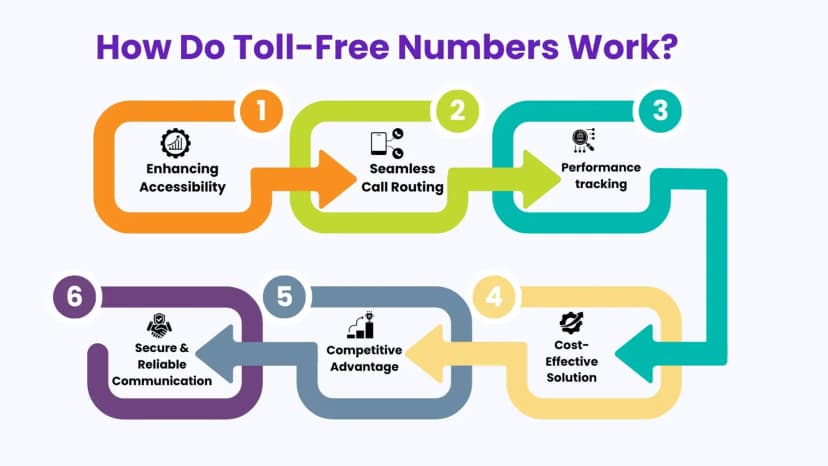
- Enhancing accessibility: Toll free telephone numbers signal a commitment to assisting without additional charges, creating a positive impression and encouraging customers to reach out.
- Seamless call routing: By partnering with established service providers, businesses can ensure seamless call routing and high-quality connections, improving the overall customer experience.
- Performance tracking: Toll-free numbers enable businesses to track the effectiveness of marketing campaigns, as calls to these numbers can be monitored and analyzed for performance metrics.
- Cost-effective solution: While businesses pay for incoming calls, toll-free numbers can be a cost-effective solution for customer support and sales, as they encourage higher call volumes and customer engagement.
- Competitive advantage: Offering a toll-free number can give businesses a competitive edge, demonstrating their commitment to customer satisfaction and setting them apart from rivals who may not provide this service.
- Secure and reliable communication: Toll free services provide secure and reliable communication solutions for businesses, featuring HD Voice over Internet Protocol (VoIP) calling quality, call routing, integration, voicemail, encryption, two-factor authentication, secure data storage, and expert customer support. These services are crucial for expanding business reach, enhancing customer satisfaction, and protecting against potential fraud risks.
Industries That Rely on 877 Numbers
Some sectors lean on toll-free lines more than others, usually because the call volume is high and the business has to bear the per-minute cost to keep callers comfortable:
- Healthcare and insurance — claims, prescriptions, appointment lines
- Banks, credit unions, and lenders — fraud lines, account servicing
- E-commerce and retail — order support, returns, refunds
- Government agencies — public benefit hotlines, tax help
- SaaS and B2B technology — enterprise support and onboarding
- Logistics and delivery — driver dispatch, customer ETAs
- Travel and hospitality — booking lines, post-stay support
Features of 877 Area Code
Toll-Free Calling
The main feature is toll-free calling for the caller. People or businesses calling an 877 number pay no long-distance charges, no matter where they are in North America. Removing the cost barrier invites more customer calls. It improves access and lifts the customer service experience.
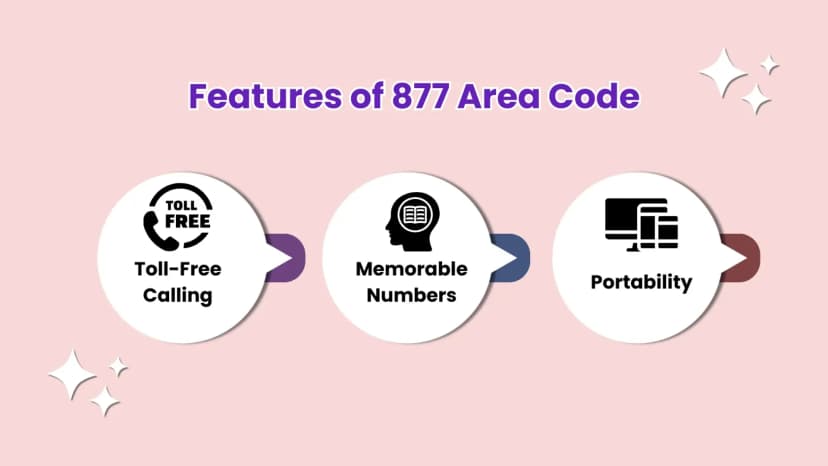
Memorable Numbers (Vanity Numbers)
Beyond standard 877 numbers, businesses can get vanity numbers — also called memorable numbers. These use easy-to-remember words or phrases tied to the business. For example, a florist might pick 1-877-FLOWERS. Vanity numbers are strong branding tools. They boost brand recognition and make your contact info easy to recall. For more on toll-free branding options, see our 888 area code guide.
Portability
Another key feature is portability. Businesses can often port their existing phone numbers to the area code 877. They keep their established number and gain toll-free calling. This helps businesses that have already invested in promoting their number. There is no need to change and re-promote a new one.
Call Routing, Forwarding, and Management
The area code 877 works with advanced call routing and management features. These give businesses more control and flexibility. Some of these features include:
- Call Forwarding: 877 numbers can be seamlessly forwarded to any existing phone line, whether it's a landline, mobile phone, or a virtual phone system. This capability allows businesses to maintain a consistent and recognizable contact point while routing calls to the appropriate destination based on predefined rules or preferences.
- Interactive Voice Response (IVR): IVR systems enable callers to navigate through a menu of options using voice commands or keypad inputs. By integrating IVR with their 877 numbers, businesses can automate aspects of customer service, route calls more efficiently, and provide self-service options for common inquiries or requests.
- Call Analytics: Many toll-free service providers offer call analytics tools that provide valuable insights into call patterns, caller behavior, and overall usage. These analytics can help businesses optimize their communication strategies, identify areas for improvement, and make data-driven decisions to enhance their customer experience.
- Call Blocking Services: Utilizing call blocking services is crucial for managing unwanted calls, including telemarketing and scam attempts. Businesses can use call-blocking features on smartphones, third-party call-blocking apps, or contact phone carriers to block unwanted 877 calls. This helps protect the business from disruptions and ensures that only legitimate calls are received.
These features help businesses look professional and stay easy to reach. They boost brand recognition and streamline communication. The result is happier customers and smoother operations.
Why a Business Uses an 877 Number
Toll-free numbers exist for a few practical reasons that have not changed much since the original 800 launch in 1967:
- Caller trust. People are more likely to dial a 1-877 number than an unfamiliar local prefix, especially for support and sales contexts.
- National reach. A single 877 number can route nationwide, so a small business in Reno looks the same to a caller as a national call center in Atlanta.
- Higher inbound conversion. Free-to-call removes price as a friction point for support, returns, and inbound sales.
- Vanity options. Vanity numbers — 1-877-FLOWERS, 1-877-CARS-USA — are still legal and easy to find on the 877 prefix.
- Portability. Under FCC rules, the business owns the number, not the carrier. Switching providers does not mean losing the line.
Benefits of 877 number for Businesses
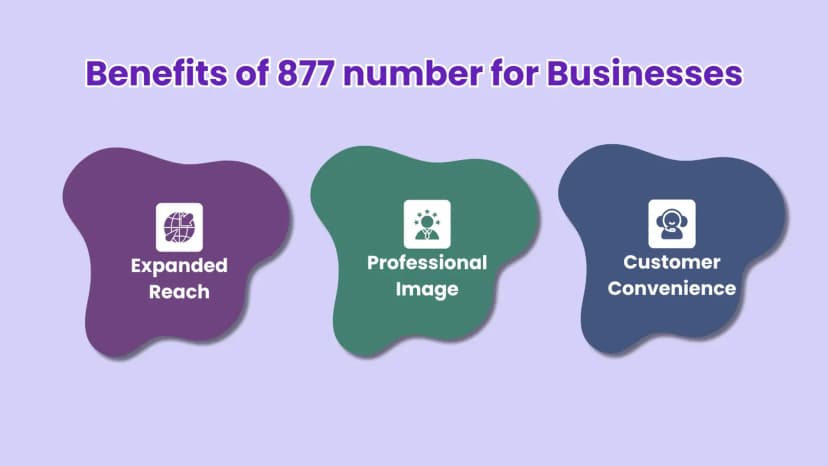
877 toll-free numbers do more than expand reach, polish your image, and help customers. They also provide valuable data through call tracking and analytics. Many providers offer reporting tools that track call patterns, volumes, and caller behavior. This data shows how customers interact with you and when calls peak.
You can then adjust your communication strategy. The same data can guide marketing campaigns — it shows what works, so you can make better decisions. In short, an 877 toll-free number is a powerful asset. It improves access, credibility, and customer experience, and gives you insight into every call.
Who Uses 877 Area Code Numbers?
Businesses and organizations across many industries use 877 area code numbers. They set up customer service lines, support hotlines, and sales channels. The 877 prefix is a popular pick for companies that want a dedicated, toll-free line. Customers use it to get help, ask questions, place orders, or give feedback.
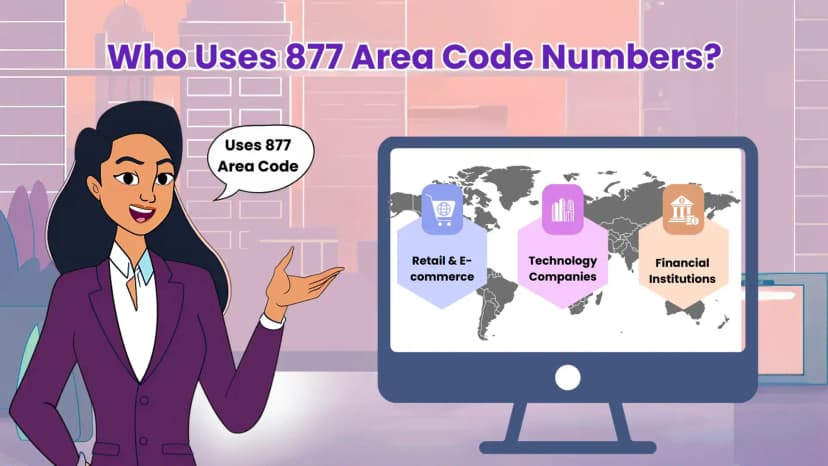
Key industries that use 877 numbers include:
- Retail and e-commerce: Many retail stores and online shopping platforms use 877 numbers for their customer service hotlines.
- Technology companies: Tech giants and software providers often employ 877 numbers for technical support.
- Financial institutions: Banks, credit card companies, and investment firms frequently use 877 numbers for their customer service lines.
Why Is the 877 Area Code Popular for Businesses?
Businesses favor it for customer service for three reasons. It is easy to remember. It is free for customers to call. And it works nationwide. Scammers exploit it too, though. Companies like tying their brand to a memorable 877 number. Customers recall it and reach out more easily. Toll-free calling removes charges, which invites more questions and interactions. A nationwide presence lets businesses connect with customers in every region. That wider reach drives engagement, builds a strong market foothold, and fuels growth.
Easy to Remember
Businesses often choose a phone number within this specific area code to create memorable vanity numbers that align with their brand and facilitate customer interaction.
Vanity numbers are personalized phone numbers that spell out a word or phrase. They are catchy and easy for customers to remember. This creative use of numbers raises brand visibility and improves communication with clients.
Pick a vanity number that matches your brand name or key message. It plants your identity in customers' minds. This approach helps businesses stand out in a crowded market and build a strong bond with their audience.
Free for Customers to Call
Free calling means customers can reach out at no cost. Companies can also manage incoming calls with smart features. They can block unwanted calls, screen important ones, and forward questions to the right people.
- Call blocking helps businesses avoid unwanted calls, maintaining productivity and efficiency.
- Call screening enables companies to prioritize important calls, ensuring that urgent matters are promptly addressed.
- Call forwarding allows for seamless connectivity, ensuring that customer inquiries are promptly directed to the right department or individual, enhancing customer satisfaction.
With these features, businesses using the 877 number can streamline communication. That improves customer service and daily operations.
National Coverage
Nationwide coverage lets businesses connect with customers in any city or zip code. It extends their reach and phone capabilities.
A widespread presence means businesses can reach customers across the nation, not just nearby. That broad reach opens doors for growth. It also builds stronger customer ties in many regions.
Companies can talk with clients in different cities with ease. That builds strong relationships and loyal customers. National coverage smooths operations and supports fast, reliable customer service. The result is trust in the company's services.
How to Get an Area Code 877 Phone Number?
Want a dedicated number for customer calls? Contact service providers or telecom companies that offer business communication services.
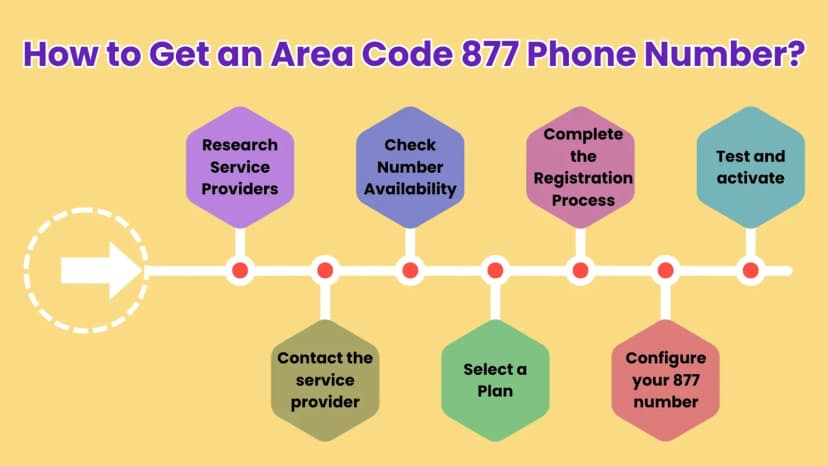
Follow these steps to acquire a phone number for your business:
- 1Research service providers: Look for reputable telecommunication companies or service providers that specialize in offering dedicated business phone numbers and communication services.
- 2Contact the service provider: Reach out to the chosen service provider and inquire about their available phone number offerings. Discuss your business needs, such as the desired vanity number (if applicable), expected call volume, and any additional features you may require.
- 3Check number availability: Work with the service provider to check the availability of your desired 877 phone number. If your preferred vanity number is not available, consider alternative options or explore other toll-free area codes.
- 4Select a plan: Choose a pricing plan that aligns with your business needs and budget. Consider factors such as monthly fees, per-minute charges, and any additional costs for features like call forwarding or voicemail.
- 5Complete the registration process: Provide the necessary business information and documentation to the service provider to complete the registration process. This may include proof of business ownership, contact details, and billing information.
- 6Configure your 877 number: Work with the service provider to configure your 877 phone number. Set up call forwarding to your desired business line, customize voicemail greetings, and ensure that all necessary features are activated.
- 7Test and activate: Before launching your 877 number, conduct thorough testing to ensure that calls are being correctly routed and all features are functioning as expected. Once satisfied, activate your 877 number and start promoting it to your customers.
Follow these steps and work with a reliable provider. You will get an area code 877 phone number, improve customer service, and build a strong nationwide presence.
Comparing 877 Area Code Providers
When comparing business phone providers, look at the services they offer and the factors that shape your setup. Reliability comes first. The provider needs strong infrastructure and network connectivity for smooth calls. Check the scalability options too, so the service can grow with you. Customer support also matters. Responsive, knowledgeable support helps you fix technical issues fast.
Types of Providers
Business phone providers come in different types. Some are dedicated communication companies. Others are big telecom firms. Each has its own strengths. Specialized toll-free providers focus on businesses that want a memorable 877 number. They help lift customer satisfaction and brand credibility. Major telecom firms like AT&T and Verizon offer broad infrastructure and reliable networks. They suit large enterprises that need smooth communication across regions. These providers deliver clear call quality plus extras like call routing, analytics, and room to scale.
Key Factors to Consider
When choosing a provider, weigh service reliability, pricing plans, and customer support. Reliability is critical — downtime hits your operations directly. Pick a provider with strong infrastructure and a solid uptime record. Prices vary, so compare plans against your budget and usage. Support quality matters too. Choose a provider known for a responsive, knowledgeable team.
877 vs. Other Toll-Free Area Codes
When choosing a toll-free number for your business, it's important to compare and contrast the various options available. Here's a look at how the 877 number stacks up against its counterparts:
877 Area Code
- Widely Recognized: The 877 number is one of the most familiar toll-free prefixes in North America, established and recognized by consumers.
- Nationwide Coverage: It provides extensive coverage across the United States, making it suitable for businesses with a broad customer base.
- Potential for Vanity Numbers: Depending on availability, businesses might be able to secure memorable vanity numbers within the area code 877 (e.g., 1-877-FLOWERS).
Other Toll-Free Area Codes (800, 833, 844, 855, 866, 888)
- 800: The original and most prestigious toll-free area code, often associated with established businesses. Limited availability for new numbers.
- 833: A newer option with increasing popularity, offering a large pool of available numbers.
- 844: Another newer option with growing availability, known for its easy-to-remember pattern.
- 855: A recent addition with a vast pool of available numbers.
- 866: A newer option with increasing popularity, known for its easy-to-remember pattern.
- 888: A popular alternative to 800, offering a wider range of available numbers.
Factors to Consider
- Call Rates: Pricing structures can vary depending on the provider and chosen features. It's essential to compare rates across different area codes to find the most cost-effective option.
- Service Features: Consider the specific features you need, such as call forwarding, voicemail, and automatic call distribution, as availability may differ.
- Geographic Reach: If you have a regional focus, certain area codes may be more recognizable or relevant to your target market.
How Can the 877 Area Code Be Used for Scams?
This type of phone number can be exploited for scams. Common tactics include telemarketing tricks, robocalls, and other deceptive practices meant to defraud people over the phone.
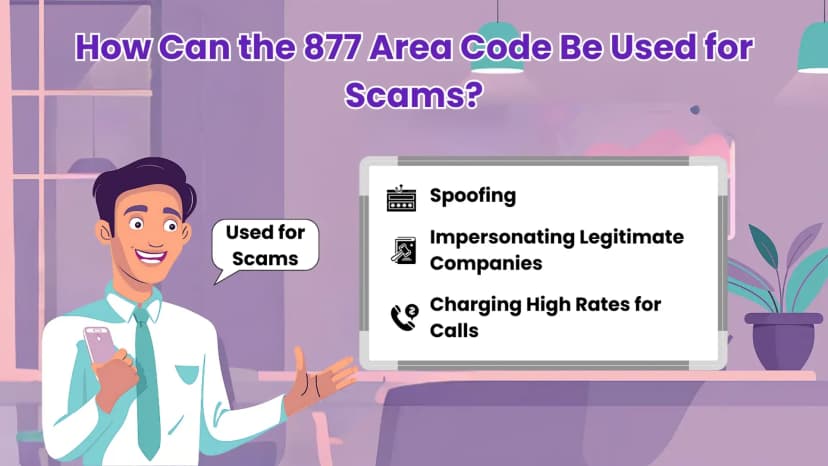
Scammers often pose as real businesses or government agencies. The toll-free number helps them look legitimate. They manipulate caller IDs to appear as trusted organizations. Then they lure victims with tempting offers, fake prizes, or urgent warnings. The goal is to pressure people into sharing personal information or sending money. These actors prey on trust — and often stay undetected.
Spoofing
One common scam is spoofing. Fraudsters fake caller IDs to look like real businesses or organizations. The fake IDs often display well-known companies or government agencies, so the calls seem genuine. Victims may then share sensitive details or make payments under false pretenses. Phone scams that use spoofing are a serious threat. Protect yourself. Question unexpected calls that ask for personal details, money transfers, or sensitive information. Use call-blocking features, report suspicious numbers, and teach your loved ones about common phone scams.
Impersonating Legitimate Companies
Scammers often impersonate real companies. They use identity theft and phishing to steal sensitive information under false pretenses. The damage can be severe — from financial loss to a ruined credit score. A legitimate-looking phone number makes the trick more convincing. Stay alert. Question any phone or online request for personal information, especially from unknown sources. Verify callers on your own before sharing personal or financial details. Awareness is your best defense.
Charging High Rates for Calls
Fraudsters may charge extreme rates for calls. Others run illegal schemes that pressure people into paying. They often pose as real organizations or government agencies to win trust. They may promise prizes or windfalls, then trap victims in lies. These actors are skilled at using emotion and pressure to force compliance.
What Are the Risks of Answering Calls from the 877 Area Code?
Answering calls from unknown numbers carries risks. These include scams, fraud, and unwanted sales pitches. Stay careful with call screening, forwarding, and verification. Scammers hide their real identities and locations, so stay alert. Call screening tools can flag suspicious numbers before you answer. A call forwarding setup can send doubtful calls to voicemail for review. Number lookup tools help confirm whether a caller is genuine. Together, these steps help you dodge scams and make informed choices.
Is the 877 Area Code a Scam?
This is the most-asked question about the 877 prefix, and the short answer is: the prefix itself is fine. Scammers spoof toll-free numbers because they look professional and feel safe to answer. The 877 code is not inherently more dangerous than 800 or 866 — but it is heavily abused. The FTC reports billions in consumer losses to phone scams each year, and a meaningful share of those involve spoofed 1-877 caller IDs.
Common 877 Scam Types
- Fake IRS or tax-debt calls. A spoofed 877 caller pretends to be the IRS, threatens arrest, and demands payment by gift card or wire. The IRS does not call to demand immediate payment.
- Social Security Administration impersonation. Caller claims your Social Security number has been suspended due to suspicious activity. The SSA does not suspend numbers and does not call to threaten arrest.
- Tech-support fraud. Recorded message claims to be from a major software brand and asks for remote access to fix a non-existent virus.
- Medicare fraud. Spoofed 877 caller claims to be from Medicare and asks to verify your Medicare number, supposedly to send a new card. Medicare does not call beneficiaries unprompted.
- Prize and sweepstakes scams. Voicemail says you have won a prize or gift card and need to call an 877 number to claim it. The callback usually requests a small fee or banking details.
How to Verify a Real 877 Caller
- Hang up if anything feels off. Legitimate businesses do not pressure you to stay on the line.
- Look up the company's official number directly on its website or on the back of your bank or insurance card.
- Call that official number and ask whether the original 877 call was genuine.
- Never read a one-time passcode or PIN over the phone, even to a verified-looking 877 line.
- Report the number to the FTC at reportfraud.ftc.gov — this feeds into national enforcement.
How Can You Protect Yourself from Scams Using the 877 Area Code?
Protecting yourself from scams involving the 877 area code starts with awareness and a few practical habits. By staying cautious about who you share information with and verifying callers through trusted channels, you can significantly reduce your risk of falling for a scam.
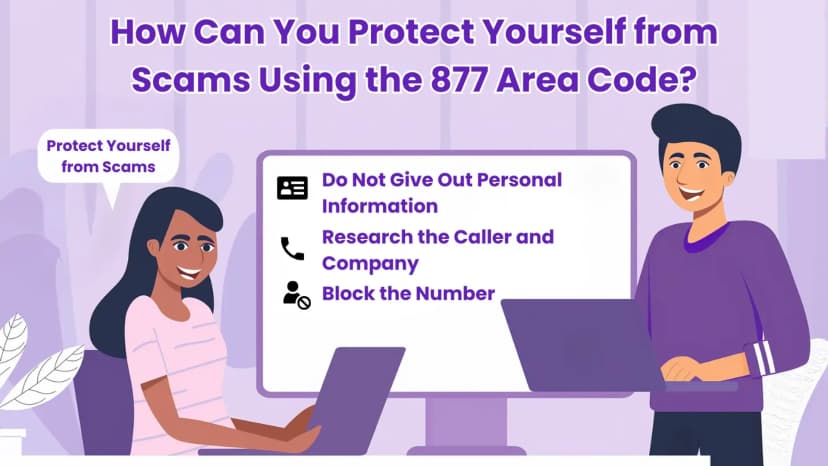
Block the Number
Got a suspicious or unwanted call? Use call blocking to stop further contact. Blocking cuts the risk of repeat scam attempts and intrusive calls. Add proactive spam prevention and number blacklisting for stronger call security. Screening and rejecting calls from dubious sources limits your exposure to fraud. These tools keep your phone environment safer — and keep you in control of incoming calls.
What Should You Do If You Have Been a Victim of a Scam Involving the 877 Area Code?
Fell victim to a phone scam? Act fast. Seek help from support resources and report the incident to the authorities. Then protect your financial and personal information from further harm. Organizations that focus on scam prevention and victim support can guide you through it.
Report the scam to the Federal Trade Commission (FTC), your state attorney general's office, and the Federal Communications Commission (FCC). Your report raises awareness and may protect others. Also freeze your credit reports, change key passwords, and watch your accounts for anything odd. If your business phone system was compromised, review our VoIP phone service security best practices.
Conclusion
The 877 area code remains a valuable tool for communication and customer service. But scammers abuse it, so vigilance matters. Strong security habits and informed decisions protect you — and protect the integrity of 877 phone numbers.
Scammers keep finding new ways to trick people and steal sensitive information. Phone numbers are easy to get. So users must take proactive security steps to stay safe.
Learn the common scam techniques. Be careful with calls from unfamiliar or suspicious numbers. These habits sharply cut your risk of fraud. Spot a warning sign? Act at once to protect your personal and financial information.
Ready when you are
Give Your Business the Toll-Free Edge with an 877 Number
Give your business a toll-free 877 number with Ringflow. Set up in minutes — free trial, no card required.
FAQs
Yes. 877 is one of seven toll-free codes in the North American Numbering Plan, alongside 800, 888, 866, 855, 844, and 833.
The 877 area code was introduced in 1998 as one of the first supplemental toll-free codes added to complement the original 800 prefix, in response to growing demand for toll-free numbers.
The 877 area code is not tied to any geographic location. It is a toll-free prefix used across all 50 U.S. states, Canada, and other North American Numbering Plan territories.
Costs vary by provider. Typically there is a monthly fee plus per-minute charges for inbound calls, billed in 6-second increments. Many VoIP providers include toll-free minutes in their business plans.
Yes. Under FCC rules, businesses own their toll-free number, not the carrier. You can port your 877 number to a new Responsible Organization (RespOrg) without losing the number.
Both are toll-free codes, but 800 is the original prefix introduced in 1967 and is often seen as more prestigious. 877 was added later and offers a larger pool of available numbers, including vanity options.
877 numbers work across the entire North American Numbering Plan, including Canada and many Caribbean nations. Callers outside the NANP may need to dial an international access code and may incur charges.
Yes. Dialing 1-877-XXX-XXXX and 877-XXX-XXXX both reach the same number. The leading 1 is the North American country code and is optional from most NANP phones.