
Introduction
Southeastern and central Ohio share the 220 area code — coverage that matters directly to any business serving customers in that stretch of the state, since a mismatched or unfamiliar number changes whether those customers even pick up.
This runs through which cities the code actually reaches, how it relates to the older 740 area code it overlays, and why it stops short of Columbus itself, ending with the practical steps for claiming a 220 number that fits the business behind it.
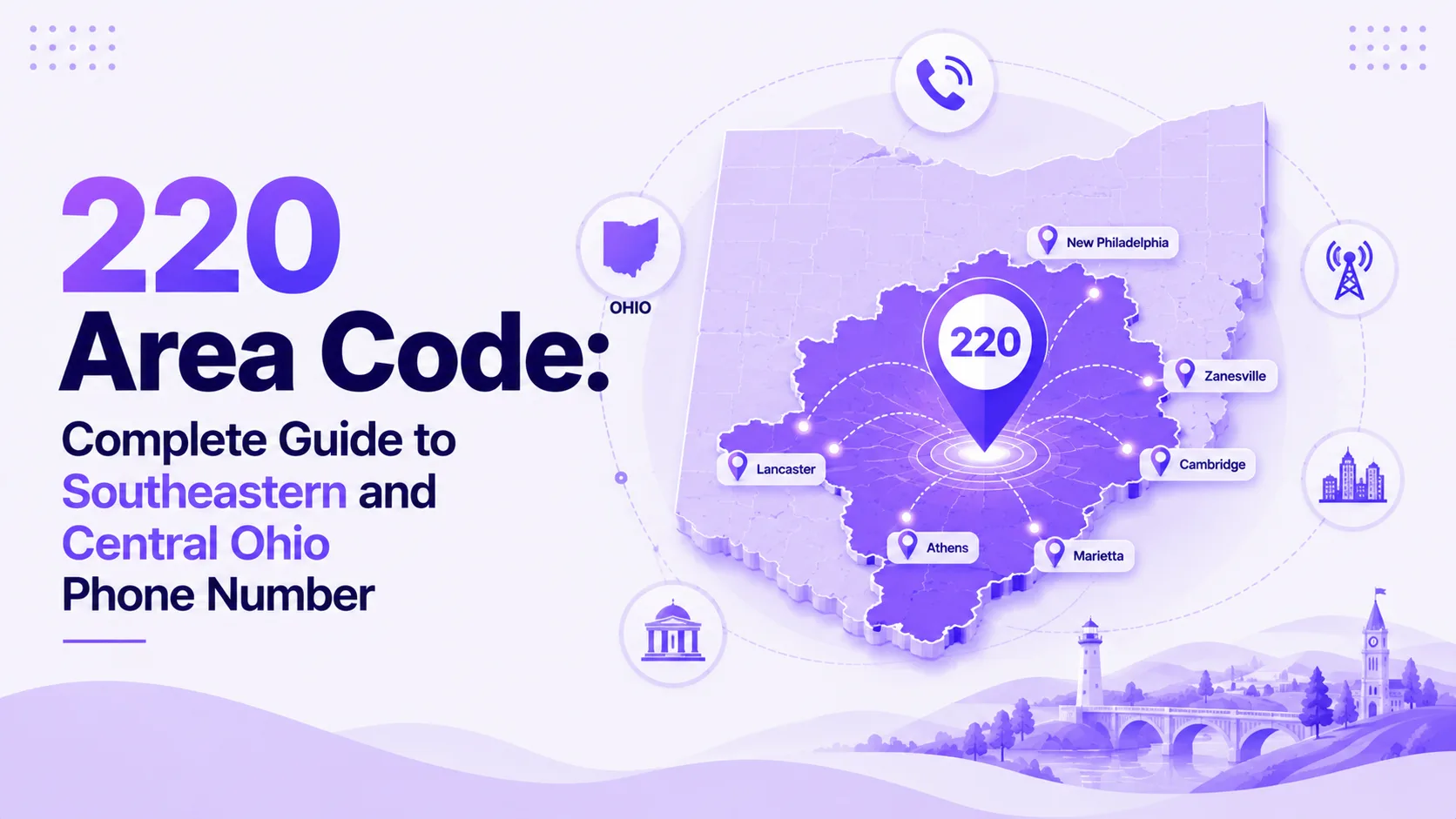
The 220 area code covers the southeastern and central regions of Ohio, United States, as an overlay of the older 740 code. Because it's an overlay added in 2020, every local call in this region requires 10-digit dialing. The 220 area code does not cover Columbus itself, which uses the separate 614 and 380 codes. The region blends college towns, river towns, and rural communities that all benefit from a recognizable local number.
Where Is the 220 Area Code Located?
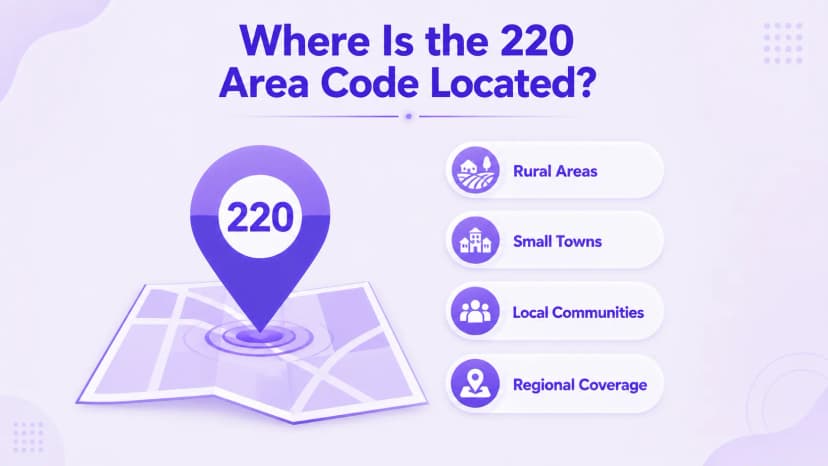
The 220 area code covers the southeastern and central regions of Ohio, United States, stretching from the Appalachian foothills near the West Virginia border out toward the edges of the Columbus metro. It shares this exact footprint with the older 740 area code, so both prefixes serve identical territory rather than separate regions. Businesses located here sit across a mix of college towns, small cities, and rural communities that don't share much in common with Ohio's larger metro areas.
Major Cities and Towns Covered
Athens, home to Ohio University, anchors the southern portion of the region, while Zanesville, Lancaster, Newark, Chillicothe, and Marietta round out the other major population centers. Marietta sits directly on the Ohio River and carries a distinct river-town economy built around tourism and light industry — none of these cities crack the national radar on their own, which is precisely why a recognizable local number carries more weight here than it would in a dense metro market.
Smaller communities scattered between these anchor cities add up to a meaningful share of the region's total population, even though no single town crosses fifty thousand residents. A business serving this wider footprint needs a number that reads as genuinely regional rather than tied to just one city, since customers routinely cross county lines for shopping, healthcare, and services.
Why It Doesn't Cover Columbus
Many callers assume any central Ohio number reaches Columbus directly, but that isn't accurate. Columbus itself uses the separate 614 and 380 area codes, and the 220 region only touches the outer edges of that metro before giving way to genuinely rural territory. A 220 number specifically signals a business in the southeastern and central regions of Ohio, United States, not downtown Columbus.
The 220/740 Overlay and 10-Digit Dialing
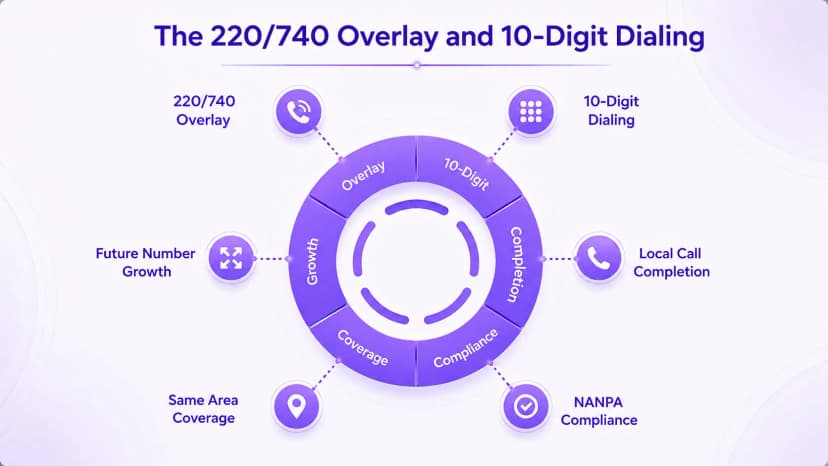
Here's what most guides never mention: 220 isn't a historic, original prefix at all. It's a modern overlay, added in 2020 on top of the older 740 area code — itself only created in 1997 when 614 split apart as Columbus and its suburbs grew.
With two codes now layered on the same footprint, 10-digit dialing is mandatory for every local call here, even two 740 numbers or two 220 numbers in the same town calling each other. A 7-digit dial simply won't go through anymore, no matter how local the call is. Any sign, invoice, or vehicle wrap still printed with a bare 7-digit number needs updating, since a customer dialing exactly what's printed will hit a dead end.
A Brief History of the 220 Area Code
Unlike some of the country's original 1947 area codes, the 220 area code has a short, practical history. The 740 area code it overlays was carved out of 614 in 1997, as Columbus's rapid growth consumed most of the available combinations in the surrounding counties.
By the late 2010s, growth in southeastern and central Ohio pushed 740 toward exhaustion too, and regulators approved 220 as an overlay in 2020 rather than splitting the region again. That decision kept every existing 740 number unchanged while opening up fresh inventory under the new code, a pattern increasingly common across mid-sized regions nationwide.
Because the overlay is so recent, most residents in the region still think of 740 as "the" local number, and 220 as the newer alternative issued once 740 combinations ran low. Businesses activating a fresh line today are more likely to receive a 220 number than a 740 one, simply because that's where the remaining inventory sits. Neither number carries less local credibility than the other, since both cover the exact same towns and counties.
Why Businesses Choose a 220 Area Code Number
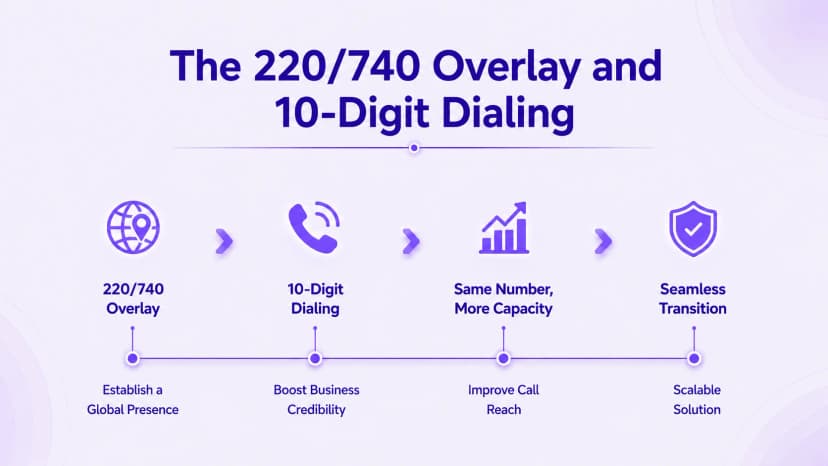
Companies operating across this spread-out part of Ohio get something real out of a local number here — not just a nicer-sounding prefix.
College Town and Healthcare Economy
Ohio University in Athens anchors a steady stream of student-facing businesses, from housing services to tutoring companies, that benefit from a number locals immediately recognize. Regional hospital systems and medical practices across Chillicothe and Zanesville also rely on local numbers that patients trust enough to answer.
River Towns and Light Industry
Marietta and other Ohio River communities support tourism, manufacturing, and logistics businesses that need to look established locally rather than out-of-state. Ringflow's cloud phone platform lets a distributed team route calls from one shared number across multiple small offices throughout the region without managing separate lines for each town.
Seasonal tourism around the river towns brings a predictable spike in call volume every summer. Businesses that plan for it with proper call routing and queuing tend to convert far more of those calls into actual bookings than ones that let calls simply ring out during their busiest weeks.
Ringflow helps you activate a 220 area code number and route it to your team in minutes.
How to Get a 220 Area Code Number
Getting a business number for this region takes a few simple steps, and most providers make the entire process available online without any need for a physical Ohio address.
- 1Pick a provider. Choose a cloud phone service that lists Ohio numbers as available inventory.
- 2Search for your number. Browse available combinations and choose one that's easy for customers to remember or repeat back.
- 3Verify your account. Most providers only need a name, email, and payment method to activate a business line.
- 4Activate and route calls. Point the number to your team, a call queue, or an auto-attendant within minutes.
- 5Test before publishing. Call and text the number yourself to confirm routing works before printing it anywhere public.
Ringflow issues 220 area code numbers through this same process, so a regional sales or support team can start answering calls from southeastern and central Ohio the same day they sign up.
Common Mistakes When Choosing an Ohio Business Number
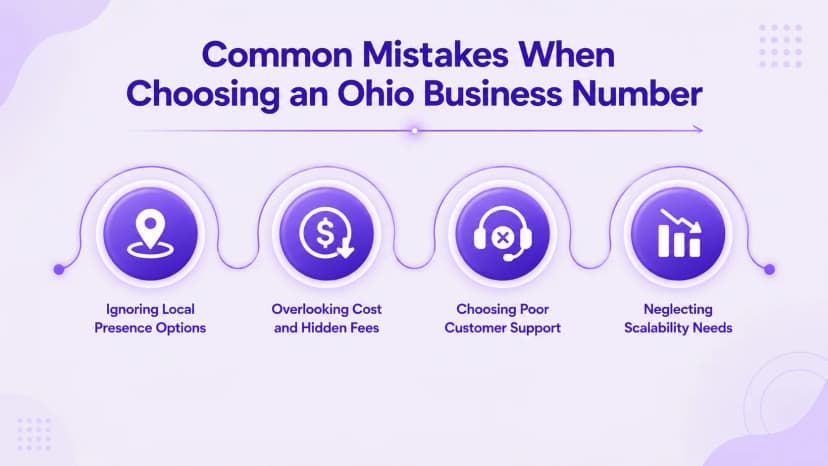
A handful of predictable errors catch out businesses setting up service in this region for the first time.
- Printing only 7 digits. Since the overlay requires 10-digit dialing, an incomplete number on marketing material simply won't connect.
- Assuming a 220 number reaches Columbus. This code covers the surrounding region, not the city itself, which uses 614 and 380 instead.
- Ignoring the region's varied economy. A number that only feels relevant to a college town may not build the same trust with a river-town or rural customer base.
- Skipping a test call after activation. Confirm routing works correctly under the 740/220 overlay dialing rules before the number reaches customers.
A local number still out-trusts a toll-free line for anyone weighing the two on area-specific credibility, and a cloud phone service keeps the routing behind it simple as the team grows.
Search available 220 area code numbers and route calls to your team the same day you sign up.
Conclusion
From college towns like Athens to river communities like Marietta, the 220 area code gives a business genuine local standing across southeastern and central Ohio — provided the setup accounts for the mandatory 10-digit dialing that comes with sharing a footprint with 740.
Figuring out which part of the region customers actually call from is the only real prerequisite before activating a number. Ringflow handles the rest, routing a southeastern or central Ohio number to a team the same day it's claimed.
Ready when you are
Ready to Sound Local Across Southeastern and Central Ohio?
Ringflow makes it simple to activate a 220 area code number and route calls to your team in minutes. Get a free trial with Ringflow.
Frequently Asked Questions
The 220 area code is a modern overlay added in 2020 on top of the older 740 area code in Ohio. It covers the southeastern and central regions of Ohio, United States, not the entire state.
It covers cities like Athens, Zanesville, Lancaster, Newark, Chillicothe, and Marietta. It does not reach Columbus itself, which uses the separate 614 and 380 area codes.
Always, since the overlay shares the same region as 740 and requires 10-digit dialing for every local call. Dialing only 7 digits, even for a same-town call, won't connect.
Sign up with a cloud phone provider like Ringflow, search available numbers, and activate the line online. Most providers only need a name, email, and payment method to get started.
Yes, as long as your provider supports proper caller ID setup so calls don't get flagged as spam. Test the number with a real call before publishing it on your website or ads.