
Introduction
South-central Pennsylvania answers to the 223 area code, and getting that number right matters for any business serving customers there — a mismatched or unrecognizable prefix is exactly the kind of thing that changes whether a call gets picked up.
Ahead: the cities this code actually covers, its relationship to the much older 717 area code it overlays, and why the region's three-part economy makes a local number worth more here than elsewhere — plus the steps for claiming one.
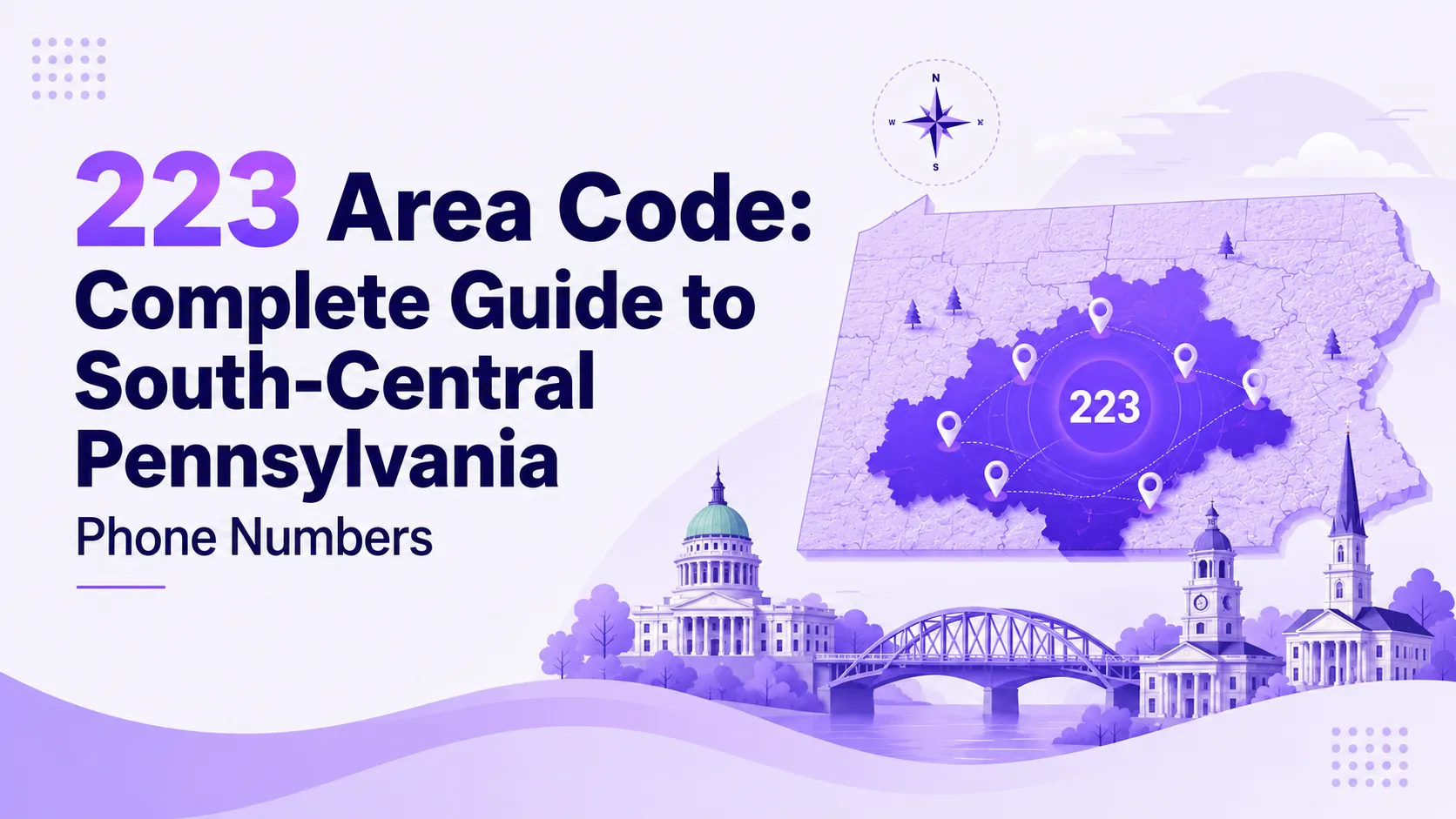
The 223 area code covers Harrisburg, Lancaster, York, and the surrounding region as a modern overlay of the much older 717 code. Because it's an overlay added in 2022, every local call in this region requires 10-digit dialing. The 717 area code it overlays is one of the original 86 area codes created in 1947. The region blends Amish Country tourism, state government, and Civil War history in a way few other regions do.
Where Is the 223 Area Code Located?
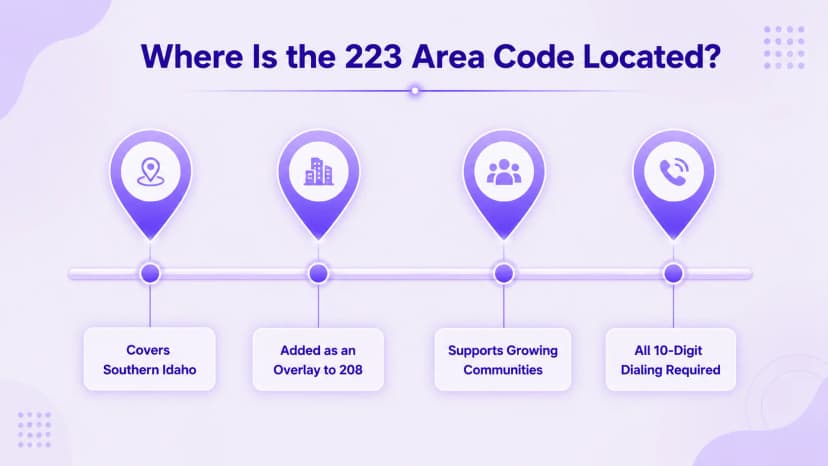
The 223 area code covers south-central Pennsylvania, stretching from Harrisburg, the state capital, through Lancaster and York out toward Gettysburg near the Maryland border. It shares this exact footprint with the older 717 area code, so both prefixes serve identical territory rather than separate regions. Businesses located here sit across a mix of state government offices, farmland, and small historic cities.
Major Cities and Towns Covered
Harrisburg anchors the region as Pennsylvania's state capital, while Lancaster and York serve as the other major population centers, alongside Carlisle, Chambersburg, and Gettysburg. Lancaster County in particular carries a distinct identity built around its Amish and Pennsylvania Dutch communities, drawing visitors from across the country. Few other area codes stretch across a mix this varied — government, agriculture, and tourism all under one number.
A Region Built on Three Distinct Economies
State government offices in Harrisburg drive a steady stream of B2B and consulting business tied to Pennsylvania's legislature and agencies. Lancaster's farmland and tourism economy runs on an entirely different rhythm, with seasonal visitor spikes around Amish Country attractions. Gettysburg adds a third layer entirely, drawing Civil War history tourism that peaks around anniversaries and school trip season.
Few other regions in the country combine a state capital, a major agricultural tourism draw, and a nationally significant historic battlefield within a single area code footprint. That mix means a business serving one segment often has little in common with a business serving another, even though both operate under the exact same local number format.
The 223/717 Overlay and 10-Digit Dialing
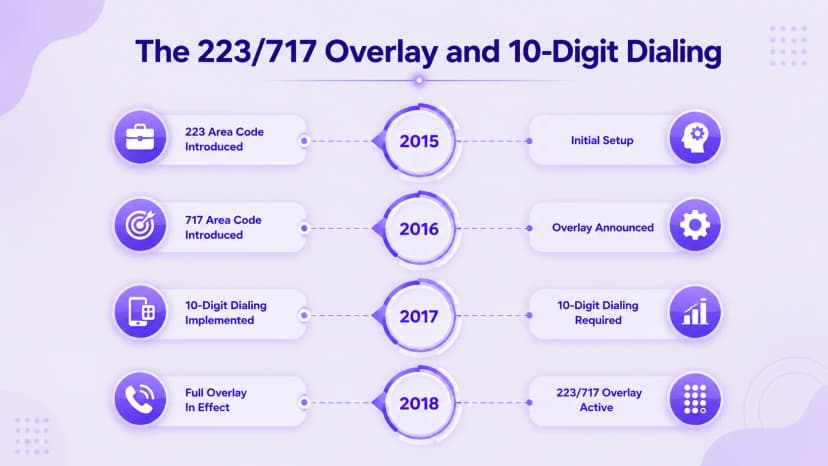
Most guides on this code leave out an important detail: 223 is genuinely recent, an overlay added in 2022 on top of the much older 717 area code — one of the original 86 codes from 1947, back when AT&T and the Bell System first split the country into calling regions.
Two codes sharing identical territory means 10-digit dialing is required for every local call, full stop — even between two 717 numbers or two 223 numbers in the same town. A bare 7-digit dial won't connect regardless of how local the call actually is, so any sign, invoice, or vehicle wrap still carrying a 7-digit number needs updating before a customer hits a dead end trying to reach it.
A Brief History of the 223 Area Code
The 717 area code that 223 overlays has served this region since 1947, making it one of the longest-running area codes in the country. For decades, it covered a huge stretch of central Pennsylvania without ever needing a second code.
Rising phone and internet-connected device demand eventually exhausted the available 717 combinations. Regulators approved 223 as an overlay in 2022 rather than splitting the region after 75 years of shared identity. That decision kept every existing 717 number unchanged while opening up fresh inventory under the new code, a pattern increasingly common as regions with decades-old area codes finally reach capacity.
Why Businesses Choose a 223 Area Code Number
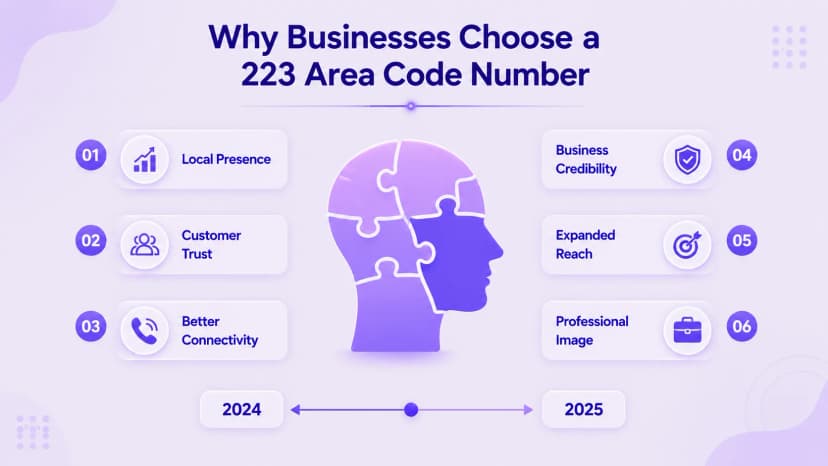
This region's genuinely varied economy is exactly why a local number does more than just look nice on a business card.
Government and Professional Services
Harrisburg's role as the state capital supports a steady base of law firms, lobbyists, and consulting businesses that work directly with Pennsylvania's government. A local number signals familiarity with the region to state agencies and legislative offices that prefer working with genuinely local vendors.
Tourism and Agriculture
Lancaster County's Amish Country and Gettysburg's Civil War sites together draw millions of visitors every year. Ringflow's cloud phone platform helps tourism businesses handle seasonal call spikes efficiently, whether that's a bed-and-breakfast managing bookings or a tour company routing calls during peak visitor months.
Farm-to-table restaurants, roadside markets, and agritourism operators across Lancaster County also depend heavily on phone bookings during harvest season, when web traffic spikes but many older customers still prefer calling directly. A 223 area code number that answers reliably during those peak weeks can mean the difference between a filled reservation book and a missed opportunity.
Ringflow helps you activate a 223 area code number and route it to your team in minutes.
How to Get a 223 Area Code Number
No physical Pennsylvania address is required to claim a number here — the whole process runs online through a cloud phone service:
- 1Find a provider that lists 223-region inventory.
- 2Browse and pick a combination that's easy for a customer to remember or repeat back over the phone.
- 3Set up billing — most providers ask for little more than a name, email, and payment method.
- 4Wire up routing so the number reaches a team member, a queue, or an auto-attendant within minutes of going live.
- 5Run a live test by calling and texting the number before it goes anywhere public.
Ringflow runs 223 numbers through that exact process, so a sales or support team covering this part of Pennsylvania can be answering calls the same day it signs up.
Common Mistakes When Choosing a Pennsylvania Business Number
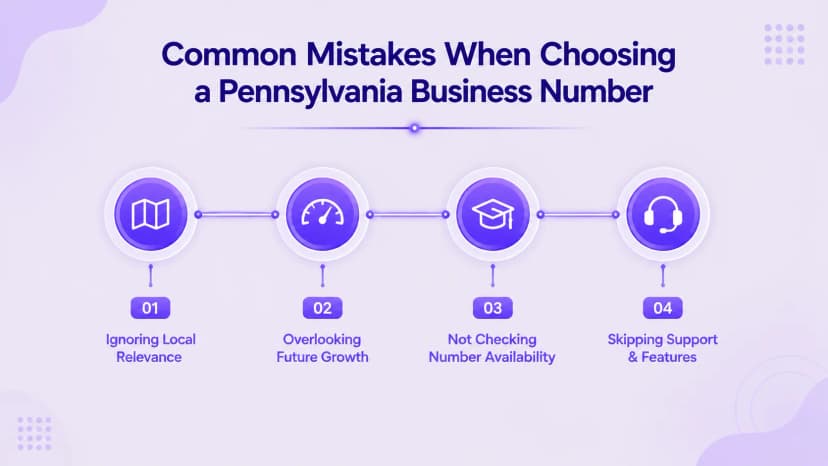
A short list of predictable mistakes accounts for most of the friction businesses hit when setting up service here for the first time.
- Printing only 7 digits. Since the overlay requires 10-digit dialing, an incomplete number on marketing material simply won't connect.
- Assuming 223 replaced 717. Both codes remain active and equally valid, since the overlay added new inventory rather than retiring the old code.
- Ignoring the region's varied economy. A number that only feels relevant to Harrisburg's government sector may not build the same trust with Lancaster's tourism customers.
- Skipping a test call after activation. Confirm routing works correctly under the 717/223 overlay dialing rules before the number reaches customers.
For area-specific credibility, a local number still beats a toll-free line on trust — and a cloud phone service keeps that routing manageable as the team scales.
Search available 223 area code numbers and route calls to your team the same day you sign up.
Conclusion
From the state capital in Harrisburg to Amish Country in Lancaster to the historic battlefields of Gettysburg, a 223 area code number reads as genuinely local across a region that mixes government, agriculture, tourism, and history in a way few others do — as long as the setup accounts for the 10-digit dialing that comes standard with overlaying one of the country's original 1947 codes, 717.
Pinpointing which part of south-central Pennsylvania customers actually call from is the real first step; everything else, Ringflow handles, activating a number and routing it to a team the same day, with room to scale as the business grows without ever losing the number customers already recognize.
Ready when you are
Ready to Sound Local Across South-Central Pennsylvania?
Ringflow makes it simple to activate a 223 area code number and route calls to your team in minutes. Get a free trial with Ringflow.
Frequently Asked Questions
The 223 area code is a modern overlay added in 2022 on top of the much older 717 area code in Pennsylvania. It covers south-central Pennsylvania, including Harrisburg, Lancaster, and York.
It covers cities like Harrisburg, Lancaster, York, Carlisle, Chambersburg, and Gettysburg. This spans the state capital region, Amish Country, and the historic Gettysburg battlefield area.
Always, since the overlay shares the same region as 717 and requires 10-digit dialing for every local call. Dialing only 7 digits, even for a same-town call, won't connect.
Sign up with a cloud phone provider like Ringflow, search available numbers, and activate the line online. Most providers only need a name, email, and payment method to get started.
Yes, as long as your provider supports proper caller ID setup so calls don't get flagged as spam. Test the number with a real call before publishing it on your website or ads.