
Introduction
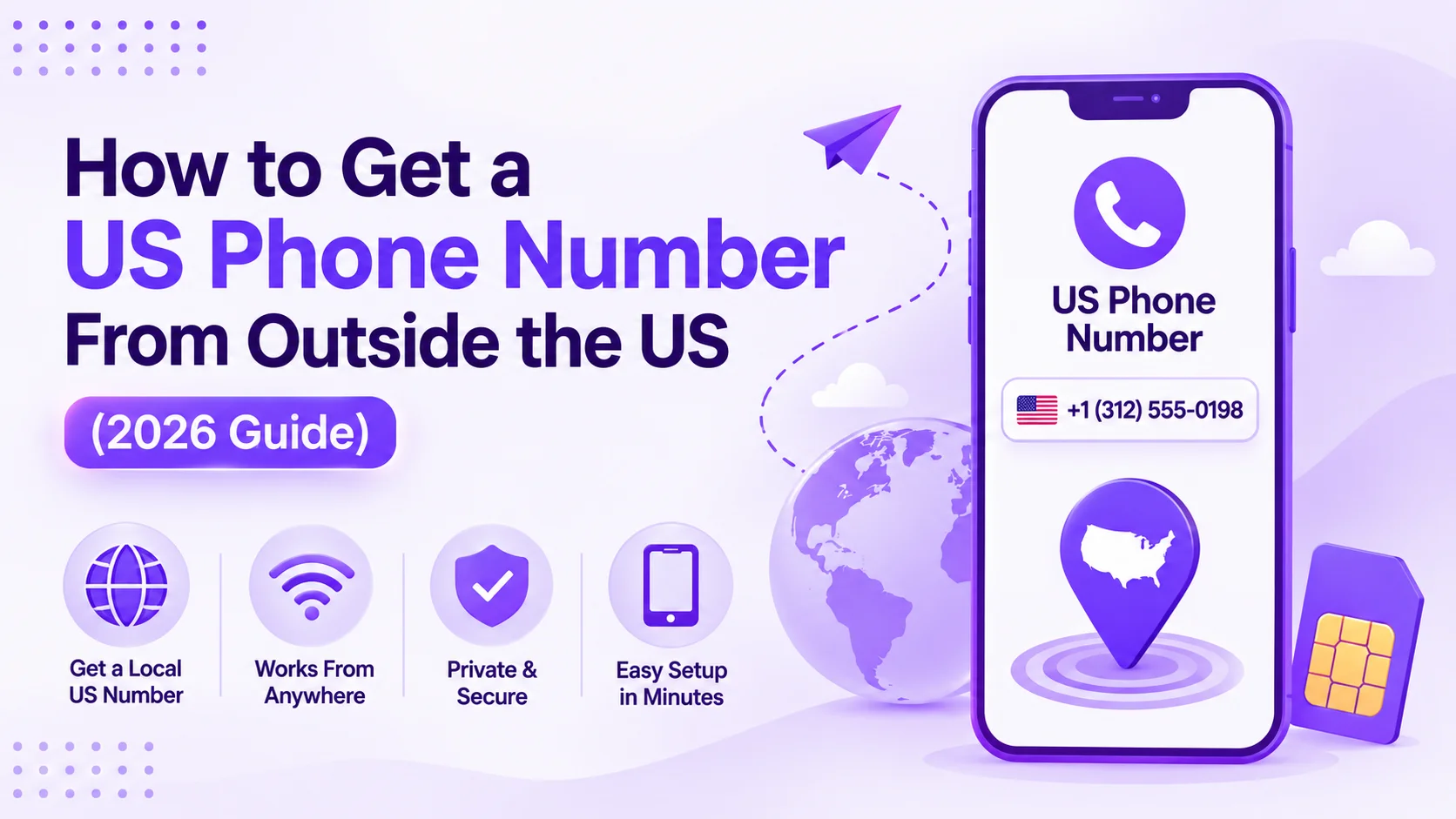
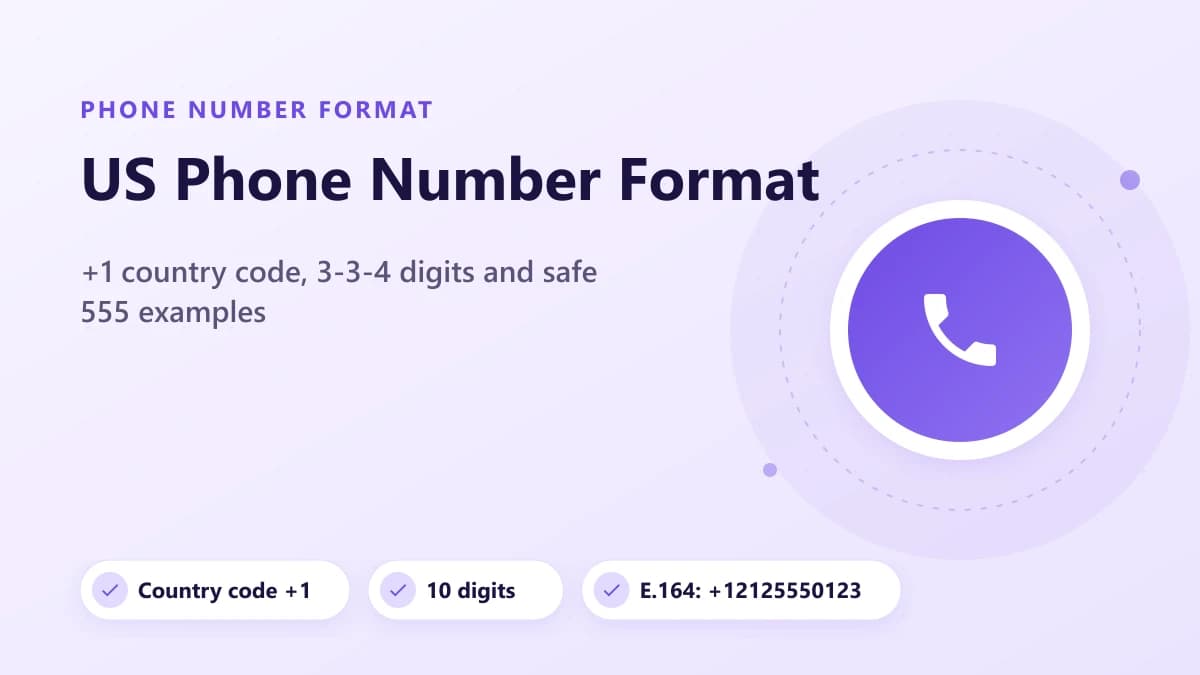
A US phone number has ten digits: a three-digit area code, a three-digit exchange code and a four-digit line number, with +1 in front for international callers. That layout is also the mobile phone number format US carriers assign to cell phones, so a mobile and an office landline look identical on paper.
Below, the pattern is broken down digit by digit, followed by E.164, toll-free codes and dialing from abroad. Every example uses the 555-0100 to 555-0199 block, which is reserved for fictional use, so none of them will ring a real person.
- US numbers follow the NANP pattern NPA-NXX-XXXX, and neither the area code nor the exchange code can start with 0 or 1.
- The country code is 1, shared with Canada and other NANP members. In E.164 form a number is +1 and ten digits with no spaces: +12125550123.
- Mobile and landline numbers share one format, so the digits won't tell you which kind of line you're calling.
- Only 555-0100 through 555-0199 are reserved for samples; other 555 numbers can belong to real services.
How a US Phone Number Is Structured (3-3-4)
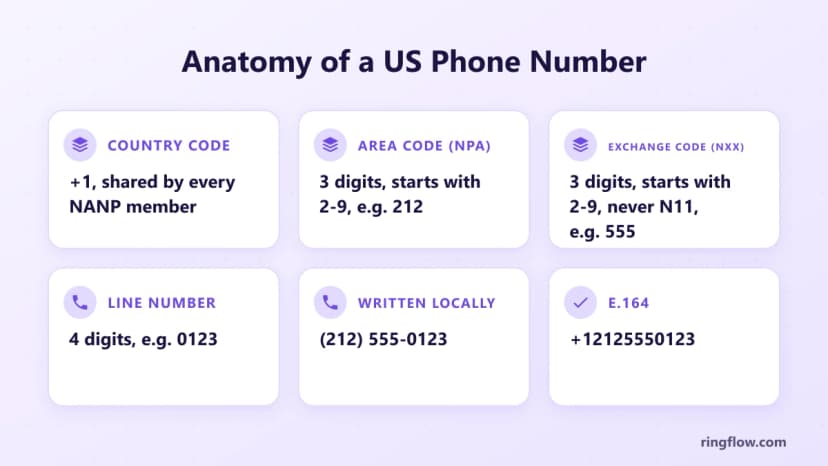
The United States shares the North American Numbering Plan (NANP) with Canada, Bermuda and much of the Caribbean, 25 regions in 20 countries in all. Every number in the plan has the same fixed length, summarized as NXX-NXX-XXXX, where N is a digit from 2 to 9 and X is any digit from 0 to 9.
| Part | Digits | Rule | Example |
|---|---|---|---|
| Country code | 1 | Shared by every NANP member | +1 |
| Area code (NPA) | 3 | Starts with 2-9; a middle 9 is held for expansion | 212 |
| Exchange code (NXX) | 3 | Starts with 2-9; never an N11 code like 911 | 555 |
| Line number | 4 | Any four digits | 0123 |
A leading 0 or 1 is ruled out because those digits are dialing prefixes: 0 reaches the operator and 1 marks a long-distance call. N11 codes are kept for short service numbers instead: 211 for community services, 311 for city government, 411 for directory assistance, 511 for traffic information, 611 for repair service, 711 for relay services, 811 for utility locating and 911 for emergencies.
Ten-Digit Dialing and the 988 Change
Where two or more area codes overlay the same region, callers must dial all ten digits even for a call next door. The FCC widened that rule for 988, the three-digit number for the National Suicide Prevention Lifeline: 82 area codes that still allowed seven-digit calls and also used 988 as an exchange code had to switch.
Those area codes, in 35 states and Guam, accepted ten-digit local calls from April 24, 2021 and required them from October 24, 2021, and the Lifeline moved to 988 on July 16, 2022. The FCC's ten-digit dialing guide has the details; the practical lesson is to save every contact with its area code.
US Phone Number Examples (Using 555 Test Numbers)
Here is an example of a US phone number, (212) 555-0123, in each common style:
| Style | Example | Best for |
|---|---|---|
| Parentheses | (212) 555-0123 | Everyday US writing and business cards |
| Hyphens | 212-555-0123 | Forms and documents (formal layout) |
| Dots | 212.555.0123 | A visual style for print |
| Spaced international | +1 212 555 0123 | Websites read outside the US |
| E.164 | +12125550123 | CRMs, texting tools and phone systems |
| Long-distance | 1-212-555-0123 | US callers in another area code |
Parentheses around the area code began as a signal that local callers could leave those digits out. Many areas now need ten digits for local calls, but (NPA) NXX-XXXX remains a common style, while NPA-NXX-XXXX with hyphens is the formal layout.
Films and TV shows have long used the 555 exchange so a number seen on screen won't disturb a real subscriber. Only 555-0100 through 555-0199 are reserved for that, though. Phone companies can assign other 555 numbers, and 555-1212 has traditionally been used for directory assistance, so take US phone number samples from the 0100 to 0199 block.
Pair a real area code with a line number from 555-0100 to 555-0199, such as (305) 555-0147 or +1 312 555 0110, for mockups, forms and training material.
Writing a US Number With the +1 Country Code (E.164)
The country code for USA phone numbers is 1. Every NANP member uses it, so a Canadian number and a US number both begin with +1, and the three digits that follow are the area code rather than part of the country code.
E.164 is the ITU recommendation for writing numbers internationally. For a US number that means a plus sign, the 1 and the ten digits with no spaces, dashes or brackets: +12125550123. The plus stands for whatever international prefix the caller's own country uses.
There's no leading zero to remove. A UK number drops its 0 after +44, as our UK phone number format guide shows, but a US number runs straight from +1 into the area code. Canadian numbers work the same way, as the Canada phone number format guide explains.
Mobile vs Landline: The Mobile Phone Number Format US Carriers Use
Some countries give mobile phones their own prefixes, but the NANP reserves no special area codes for them. US cell numbers come from ordinary area codes, in exchange blocks that serve wireless networks, so an American mobile number example like (646) 555-0139 could just as easily be a landline.
Calls to a US mobile are billed at the same rate as any other call in the same rate center. And because number portability lets people move a number between landline and wireless service, the digits can't reveal what kind of line you're calling.
Need a working US mobile number rather than a sample? Our guide on how to get a US phone number compares the options, including from outside the country.
Toll-Free Number Format: 800, 888, 877 and More
Toll-free numbers keep the ten-digit layout, but the first three digits are a toll-free code instead of a geographic area code. The FCC lists seven codes: 800, 888, 877, 866, 855, 844 and 833. The number's owner is billed for incoming calls, so callers on a US landline pay nothing.
- Everyday style: 1-800-XXX-XXXX or (888) XXX-XXXX
- E.164: +1, the code and seven digits, as in +1833XXXXXXX
- Not toll-free: 900 numbers, which have been used for high-cost pay-per-call services
The codes aren't interchangeable: the same seven digits after 800 and after 888 are two different numbers. Toll-free numbers have been portable between providers since 1993.
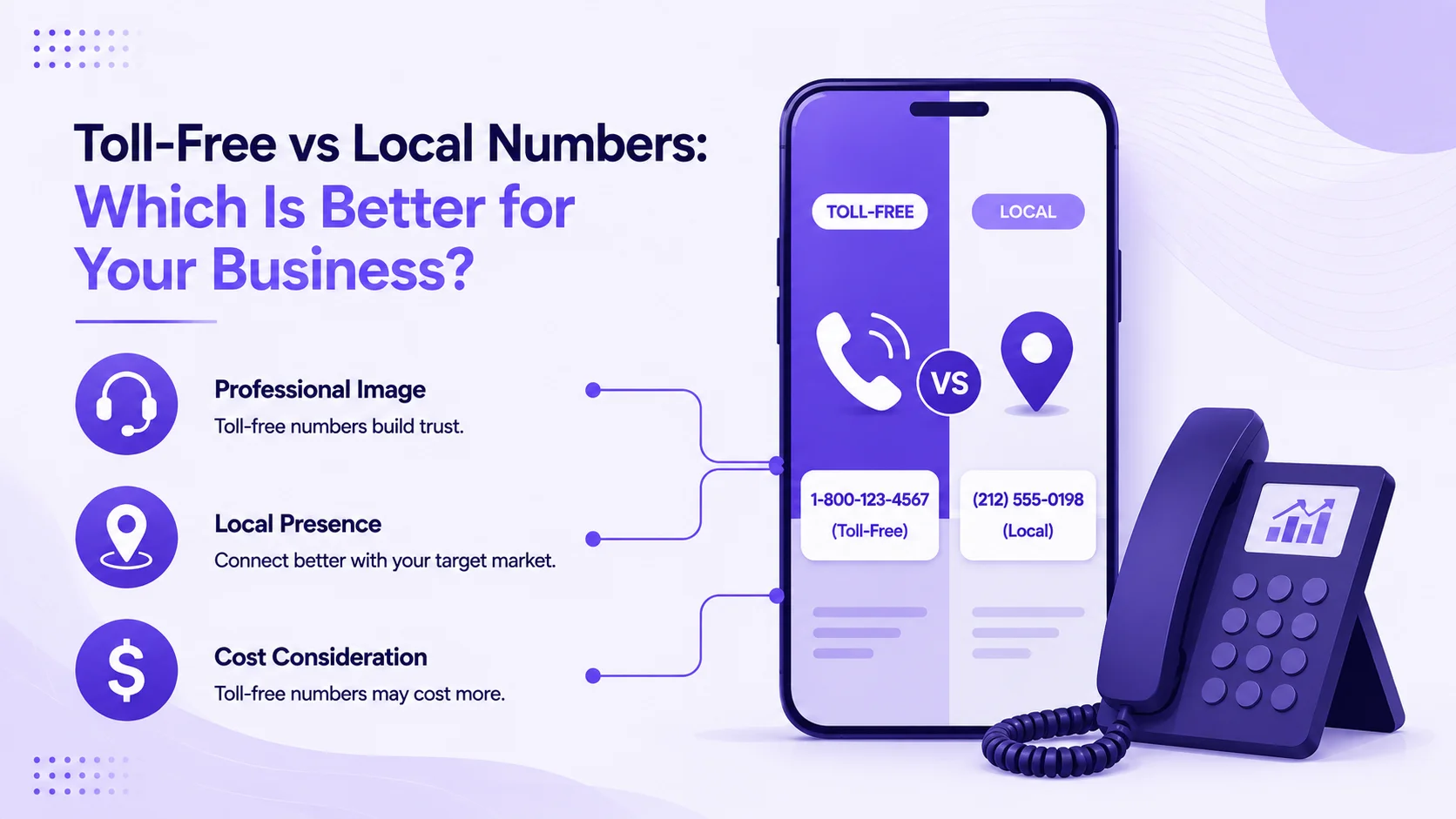
Callers outside the US, even in other +1 countries, may be charged to reach a toll-free number, so give international contacts a local number too. Our toll-free vs local number comparison covers when each makes sense.
How to Dial a US Number From Abroad
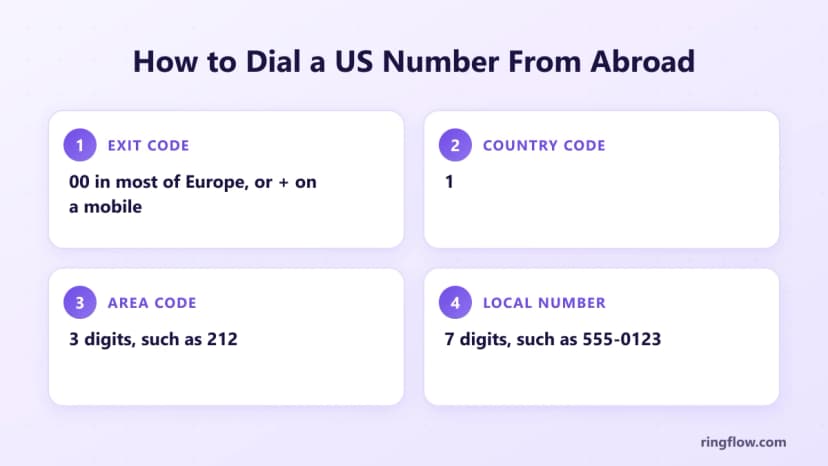
From another country, dial your international exit code, then 1, then the ten-digit number, leaving out parentheses and dashes.
| Calling from | What to dial | Example |
|---|---|---|
| Any phone that accepts the + sign | +, then 1 and the ten digits | +1 212 555 0123 |
| Most of Europe and many other countries | 00, then 1 and the ten digits | 00 1 212 555 0123 |
| Canada or another +1 country | 1, then the ten digits | 1 212 555 0123 |
On an iPhone keypad, touch and hold 0 until the plus sign appears, then enter 1 and the number. In the other direction, the US exit code is 011, followed by the other country's code and the local number.
Calls between the US and other +1 countries skip 011 but usually aren't billed at domestic rates, so check your plan. The United States country code page covers +1 dialing in more detail.
Formatting US Numbers in Forms, CRMs and Spreadsheets
USA phone numbers arrive in forms and imports in every style, so accept any punctuation and clean it up on save. Strip spaces, dots, dashes and brackets, remove a leading +1 or 1, and confirm ten digits remain. Store the result in E.164, such as +12125550123, and format it for people only on display.
A few NANP rules make reliable validation checks:
- The area code and exchange code each start with a digit from 2 to 9.
- The exchange code isn't an N11 service code such as 411 or 911.
- The 555 exchange isn't blocked outright, since 555-0100 to 555-0199 are valid test numbers.
Keep extensions in a separate field so the main number stays clean. In spreadsheets, a leading plus sign can be read as a formula and a long run of digits stored as a plain number, so set the column to text format before pasting.
Common Formatting Mistakes
Check for these errors in forms and contact lists.
- Adding a zero after +1. Area codes never begin with 0 or 1, so +1 0212 555 0123 is invalid.
- Dropping the area code. Seven-digit calls fail in overlay areas and in the 82 area codes that moved to ten-digit dialing for 988.
- Saving exit codes with the number. 011 and 00 are dialing prefixes, not digits of a US number.
- Guessing line type from the digits. A number's format won't show whether it can receive texts.
Conclusion
A US phone number is ten digits in a fixed 3-3-4 pattern, with +1 added for international use, and mobiles, landlines and toll-free lines all share that shape. Write it with parentheses or hyphens for people, store it as +1 and ten digits for software, and use 555-0100 to 555-0199 for samples.
When you need numbers that actually ring, Ringflow provides local numbers in US area codes and toll-free numbers, forwards calls to mobile and desktop apps and supports business texting. Port a number you already have or begin with a free trial.
Ready when you are
Need a US Number That Actually Rings?
Ringflow gives your business local numbers in US area codes or a toll-free line, with calls forwarded to mobile and desktop apps. Start a free trial, or port the number you already use.
FAQ
A US phone number has ten digits in a 3-3-4 pattern: area code, exchange code and line number, written NPA-NXX-XXXX. Neither the area code nor the exchange code can begin with 0 or 1. For international use, +1 goes in front.
(212) 555-0123 is a correctly formatted example that won't reach anyone, because 555-0100 through 555-0199 are reserved for fictional use. It can also be written 212-555-0123, +1 212 555 0123 or +12125550123. Avoid other 555 numbers, since some are assigned to real services.
The country code for US phone numbers is 1, usually written +1. Canada and the other North American Numbering Plan members share it, so the three digits after it are an area code.
Use E.164: a plus sign, the country code 1 and the ten-digit number with no spaces or punctuation, such as +12125550123. For readability on a website, +1 212 555 0123 also works. There is no leading zero to remove.
No. US mobile numbers use the same ten-digit format and area codes as landlines, because the North American Numbering Plan has no separate mobile prefix. You can't tell a cell number from a landline by its digits.
Ten: three for the area code, three for the exchange and four for the line number. Some calls within the US need a 1 dialed first, and the international form is +1 followed by the same ten digits.