
Introduction
Getting a US phone number used to mean a US mailing address, a local bank card, and enough patience to sit through paperwork. None of that is true anymore, and the change caught a lot of long-running guides off guard. A cloud provider can hand you a working US number in minutes, whether you are hiring US clients, launching a US-facing business, or just want family and friends to reach you on a familiar 10-digit line.
This guide covers every legitimate way to get a US phone number from outside the country, what providers actually check before activating one, and the compliance details most guides skip entirely. By the end, you will know exactly which option fits your situation and how to avoid the small mistakes that get a brand-new number quietly flagged or suspended within weeks.
The Fastest Ways to Get a US Phone Number
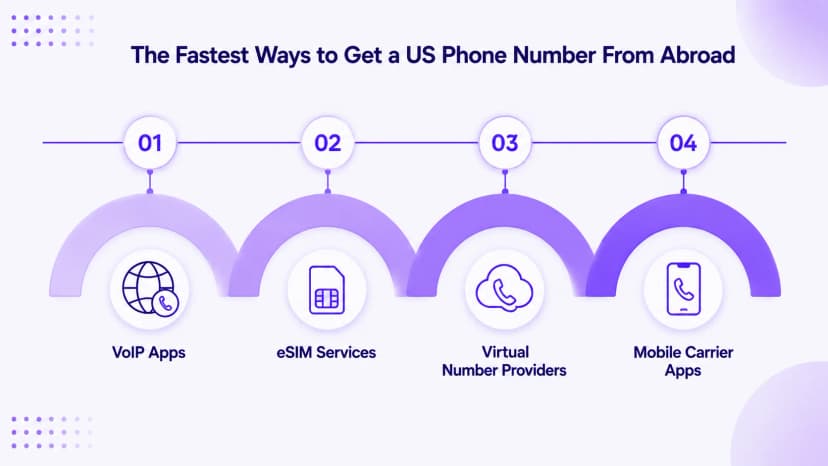
There are a few practical routes, and each fits a different need. VoIP apps assign a number tied to an internet connection rather than a physical SIM, and most work the moment you install them, which makes them a fine way to test the water. The tradeoff is thin: no call routing, no team lines, and little support if something breaks halfway through a busy week.
Virtual number services built for the US market go further, bundling calling, texting, and often voicemail transcription on a real US area code hosted entirely in the cloud. This is where most freelancers, remote hires, and small businesses land, since setup takes only minutes and the number works from any country with a stable internet connection, no matter the time zone.
- VoIP apps activate instantly but offer little beyond basic calling and texting
- Virtual number services like Ringflow add routing, voicemail, and a real US area code
- eSIM services work well for travelers who need a US number briefly
- Mobile carrier apps suit people who already own compatible hardware
- Cloud numbers skip roaming fees, local paperwork, and long carrier contracts entirely and for good
- A trial app is fine to start, but always confirm you can port the number out to another provider later
- Check the area code inventory before committing, since not every city code is available from every single provider
- Match the route to the actual job: personal chatting rarely needs what a full business line requires
What You Need Before You Apply
Providers only ask for a short list of details, and none of them require US citizenship or residency to complete. Expect to provide a full name, an email address, and sometimes a photo ID for business-grade accounts, while personal-use apps often skip identity checks entirely. A billing address from your home country is almost always accepted in place of a US one.
Payment verification is usually the fastest way a provider confirms you are a real applicant rather than a bot account, so keep a standard debit or credit card ready. Some providers block certain prepaid cards to reduce fraud, and if your first card gets declined, try a different card brand before assuming the provider has blocked your entire country from signing up.
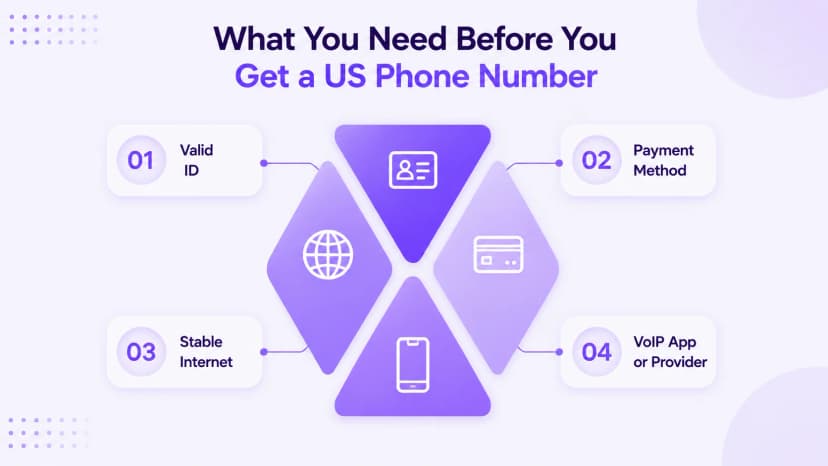
- A full name and working email address for account setup
- A photo ID, usually required only for business-grade accounts
- A billing address from your home country, no US address needed
- A standard debit or credit card for identity and payment verification
- A stable internet connection, since most numbers run entirely over VoIP
- A backup card ready in case the first one somehow gets declined at checkout
- Roughly 15 minutes total once identity and payment both fully clear
- A clear idea of your use case and expected call volume before you pick a provider or plan
The Compliance Gap Most Guides Skip
This is where a casual virtual number stops being a five-minute download and starts being real infrastructure. US carriers now score every call using STIR/SHAKEN, a framework that verifies a caller ID has not been spoofed. Numbers without proper attestation get flagged as spam likely even when the calls behind them are completely legitimate and made in good faith.
STIR/SHAKEN exists specifically to stop the kind of Caller ID spoofing that made scam calls so hard to filter out. Ask any provider directly whether your number carries full attestation, since that single detail decides whether calls get answered or quietly ignored before anyone even sees who is actually calling them.
- STIR/SHAKEN verifies that a caller ID has not been spoofed before a call connects
- Numbers without full attestation often get labeled spam likely by carriers
- 10DLC registration is required before sending more than a handful of business texts
- Skipping 10DLC is the top reason new numbers get throttled within 30 days
- Ask providers directly about attestation level rather than assuming it is included
- Compliance rarely appears in beginner guides, yet it decides whether outreach lands
- A Ringflow number that passes both checks behaves like a long-established, trusted line from the very first day
Virtual Number vs. a Full Business Line
A casual virtual number works fine for one-off verification codes or staying reachable while traveling abroad. It falls short the moment a team needs to answer the same line, when call recordings matter for training new hires, or when a number needs to sync with a CRM automatically instead of living quietly in one person's personal messaging app.
If the goal is a real US-facing sales or support process, the number itself is only step one. Routing rules, coaching tools, and reporting matter just as much as the digits themselves, and a platform built around that full layer keeps working as a team grows, instead of needing to be replaced entirely six months down the road.
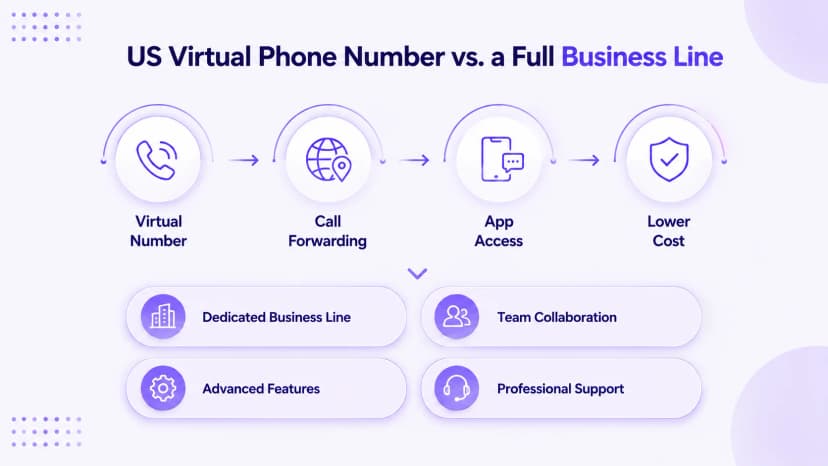
- A casual number works for verification codes and staying reachable while traveling
- A business line adds shared team access, not just one owner's device
- Call recordings and coaching tools support training in a way apps cannot
- CRM sync logs every call automatically instead of relying on manual notes
- Reporting shows volume, answer rates, and response times across a whole team
- A business-grade number scales with headcount instead of forcing a switch later
- Pick a business line early on if any team growth is even a realistic possibility this year
Common Mistakes to Avoid
Most failed setups trace back to the same handful of errors. Ignoring caller ID reputation is the biggest one, since a cheap number with no attestation gets marked as spam almost immediately, no matter how legitimate the calls actually are. Choosing an app with no upgrade path is a close second, since starting on a consumer app is fine, but only if the number can be ported out later.
Skipping business registration causes that same kind of damage in a slightly different form: teams that put off 10DLC business registration until after a campaign gets blocked end up losing days waiting on carrier approval they could easily have started much earlier. Forgetting time zone alignment and publishing a number before testing it round out the list of mistakes worth checking before launch.
- Ignoring caller ID reputation until calls start going unanswered
- Choosing an app with no path to port the number out later
- Delaying 10DLC registration until after a campaign is already blocked
- Forgetting to match the area code to customers' actual time zones
- Publishing a number before a real test call and text confirm it works
- Assuming every single provider includes attestation by default without ever asking directly
- Letting billing details lapse, which silently deactivates an otherwise working number
Keeping Your US Phone Number Active
Getting a US phone number is genuinely only the first milestone in the whole process. Most providers deactivate numbers after 30 to 90 days of total inactivity, so a dormant line can quietly disappear if nobody checks it. Renew billing details before each cycle, since an expired card is by far the most common reason a perfectly working number suddenly stops receiving calls or texts.
If switching providers, port the number out first rather than letting the old account lapse on its own. Revisit attestation status periodically too, since how STIR/SHAKEN works keeps evolving as carrier scoring models update. None of this takes more than a few minutes each month, but skipping it entirely is exactly how a number that worked perfectly on day one fails silently by month six.
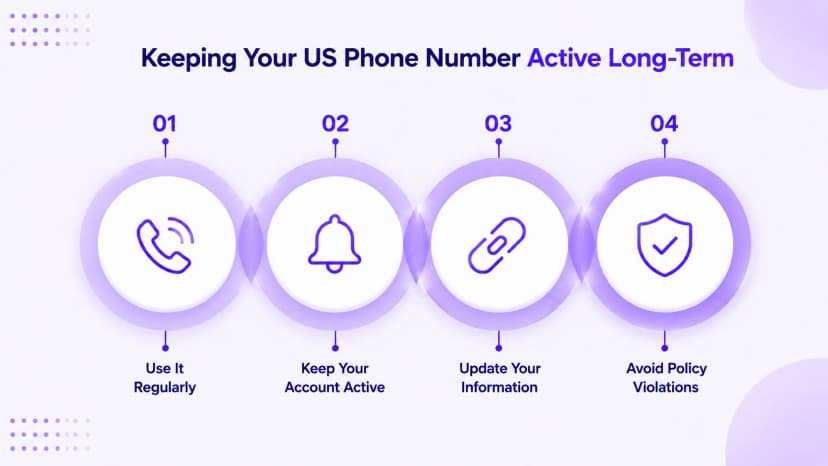
- Use the number regularly so providers never flag it as inactive
- Renew payment details before each billing cycle, not after a decline notice
- Port a number out before closing an old account, never after
- Recheck attestation status periodically as carrier scoring models change
- Update contact and business details whenever they change to avoid policy flags
- Watch for provider emails about verification, since ignoring them entirely risks account suspension
- Treat a Ringflow number as something to actively maintain, not something to quietly forget about
Conclusion
Getting a US phone number comes down to matching the number to the job it needs to do, not chasing the cheapest signup page. A casual number for personal use, a 10DLC-registered business line, and a full contact center number all solve different problems, and once the category is clear, signup itself takes minutes rather than the days it can otherwise stretch into.
Caller ID attestation and texting registration are what keep a number working long after day one, and skipping either one is the fastest way to watch an otherwise good number quietly stop performing. Verify both before publishing a number anywhere public-facing, then build the rest of the setup, from routing to coaching to reporting, around a number that already works and already has trust behind it.
Ready when you are
Get a US Number Built for Business, Not Just a Chat App
Ringflow gives you a verified, business-ready US line with caller ID attestation and routing built in from day one.
Frequently Asked Questions
A cloud-based virtual number service is the easiest route, since it needs no US address or SIM card. Most providers activate a number within about 15 minutes after identity and payment verification.
No. Providers only ask for basic identity and payment details, and a billing address from your home country is almost always accepted in place of a US address.
Register before sending your first batch of business texts, not after a campaign gets blocked. Carrier approval can take several business days once submitted.
Most providers accept international debit or credit cards, so a local bank account is not required. Keep a standard card ready in case a prepaid card gets blocked.
Yes, as long as the provider supports STIR/SHAKEN caller ID attestation. Confirm attestation status before publishing the number anywhere customers will see it.