
Introduction
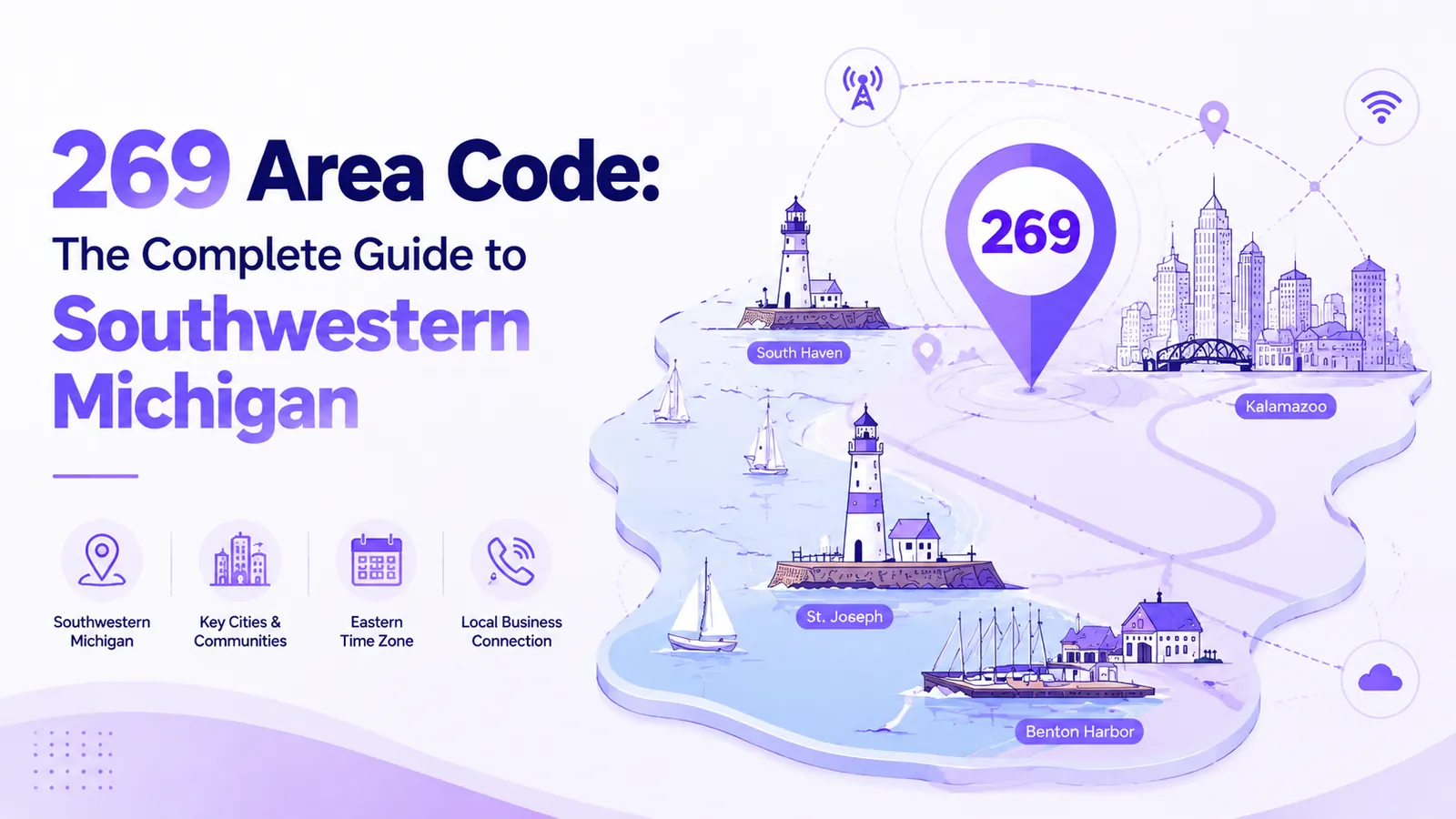
A 269 on a bill or caller ID points squarely at southwestern Michigan. This guide breaks down exactly what territory it covers, since knowing that boundary is the difference between dialing with confidence and second-guessing an unfamiliar number.
Ahead: the counties this code reaches, how it split off from 616 back in 2002, the scam patterns worth watching, and why growing companies across the region — from Kalamazoo's college campuses to South Haven's lakefront docks — are rethinking how they staff their phones.
The 269 area code serves 12 counties across southwestern Michigan, including Kalamazoo and Battle Creek. It went into service on July 13, 2002, when the region split from area code 616. Major cities include Kalamazoo, Battle Creek, Portage, South Haven, and Benton Harbor. Lakefront tourism, college move-in weeks, and healthcare hiring are pushing local businesses toward smarter call handling.
What Is the 269 Area Code?
269 identifies 12 counties across southwestern Michigan on the North American Numbering Plan — Kalamazoo and Battle Creek among them. It's covered this part of the state exclusively since 2002, with no overlay or second code ever added.
Landline, mobile, or business VoIP — a number opening with 269 traces back to this stretch of Michigan every time. Anyone outside the region seeing "269" flash on their phone already knows roughly where the call is coming from.
Where Is This Area Code Located?
The prefix covers 12 counties in the lower third of Michigan's Lower Peninsula, bordered by Lake Michigan to the west. It reaches communities shaped by universities, food manufacturing, and a mix of lakefront towns and inland cities.
Cities and Communities Covered
Kalamazoo drives most of the economic activity here as home to Western Michigan University, with the student population feeding downtown business growth year-round. Battle Creek, Portage, South Haven, Benton Harbor, and Dowagiac round out the map, and South Haven in particular leans hard into a quieter lakefront identity than the rest. More than 1.5 million people live across the 82 cities this prefix touches, making it one of Michigan's more populous stretches, with Battle Creek and Portage together carrying an outsized share as manufacturing, healthcare, and retail hubs.
Time Zone and Dialing Format
269 keeps Eastern Time along with the rest of Lower Michigan. Every local call now needs all ten digits, area code included, matching the standard nearly everywhere else in the country — leave the prefix off a saved contact and expect a dialing error on plenty of mobile carriers.
A Brief History of the 269 Area Code
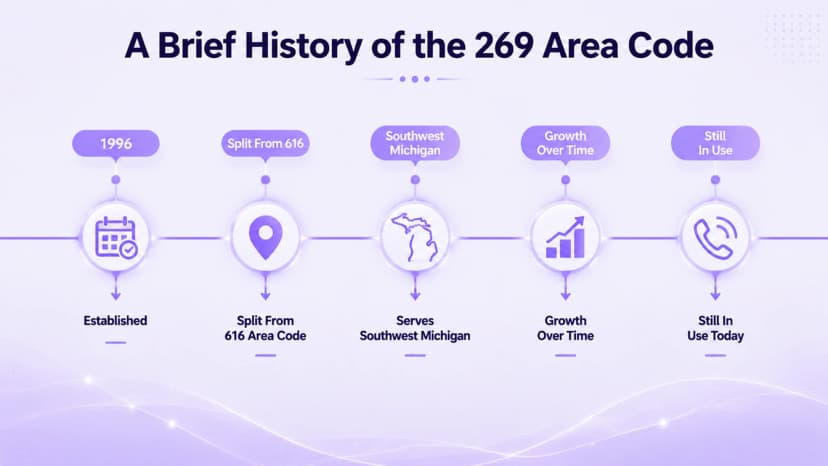
Michigan's 616 area code once covered the entire western half of the state, including Grand Rapids and Kalamazoo. As population and phone demand grew through the 1990s, regulators split the numbering plan. The 269 area code went into service on July 13, 2002, taking the lower third of 616 while Grand Rapids kept the original code.
That split gave southwestern Michigan its own runway of new numbers as the local economy expanded, rather than sharing an increasingly tight pool with Grand Rapids. It's stayed a clean, single-code region since, with no overlay ever layered on top.
What Drives the Local Economy
Western Michigan University alone drives thousands of jobs in Kalamazoo, plus a predictable wave of student housing calls every fall. Battle Creek's food and pharmaceutical plants add a second economic engine, pulling in workers from across the Midwest and generating steady call volume for manufacturers, staffing agencies, and the service businesses around them.
Bronson Healthcare and the region's other hospital systems near Kalamazoo layer a third employment base on top, one that touches local housing, retail, and support-line demand year-round. Education, manufacturing, and healthcare overlapping like this means call traffic rarely goes quiet — college move-in week, summer lakefront tourism, and holiday manufacturing pushes each bring their own spike.
Why Local Businesses Need Smarter Call Handling
College move-in rush, food plant hiring waves, and lakefront tourism weekends don't wait around for a business to get fully staffed. A missed call during fall enrollment, a busy South Haven summer weekend, or a seasonal manufacturing run is revenue that's gone for good.
That's a staffing and systems problem more than a numbering one. Ringflow's contact center platform routes inbound calls, coaches reps live, and keeps response times fast through the region's busiest stretches — the kind of structure a growing team would otherwise need a dedicated ops hire to build.
Neighboring Codes and How to Tell Them Apart
269 has three neighbors worth telling apart: 616 to the north for Grand Rapids and the rest of West Michigan, 517 to the east for Lansing and mid-Michigan, and Indiana's 219, 260, and 574 to the south near South Bend.
A business with locations in both Kalamazoo and South Bend needs routing logic that treats 269 and 574 as separate markets rather than one blended border region. Get that wrong and it shows up quickly as mismatched caller ID and support tickets landing in the wrong queue — a headache worth avoiding by sorting it out at intake rather than after the fact.
Choosing a Local Number for Your Business
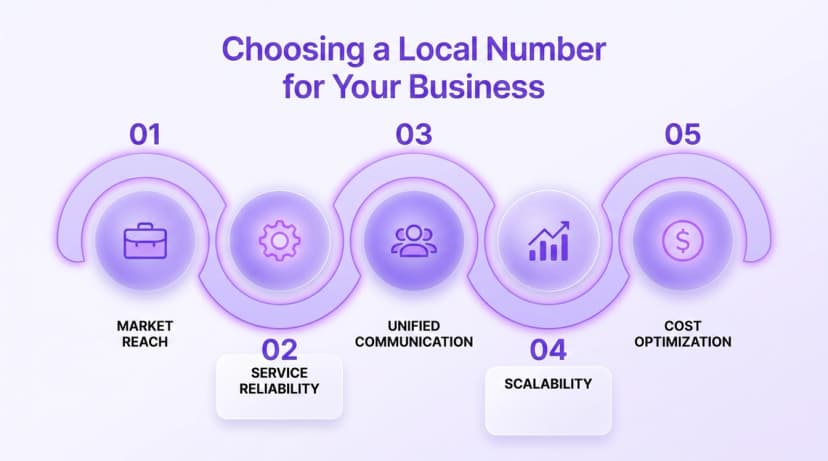
A local number still pulls its weight even now that most calls happen on mobile — it reads as "close by" before a word gets exchanged, and that translates directly into better pickup rates.
Getting picked up is only half the job, though. Satisfaction comes down to what happens after — a live rep, an AI receptionist, smart routing — and Ringflow's AI coaching keeps reps on their game through an unpredictable queue whether that's a property manager near campus in Kalamazoo or a rental agency in South Haven.
Fall enrollment, summer lakefront weekends, and manufacturing production cycles are all predictable enough to staff around ahead of time, and that planning is what actually separates a 269 business gliding through peak season from one caught flat-footed by it.
How to Spot and Avoid 269 Area Code Scams
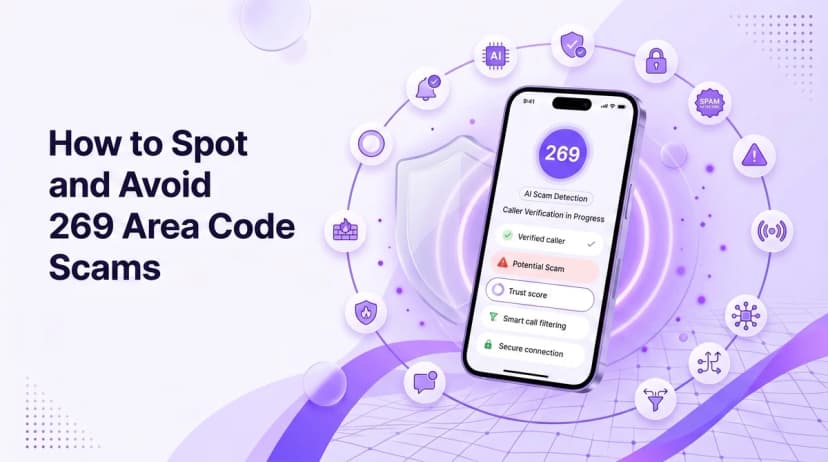
A familiar local prefix is exactly the kind of trust scammers try to borrow, and 269 sees its share of that too. Fake university housing notices, callers posing as utility companies, and rushed requests for gift cards or wire transfers are the patterns to watch for.
Whatever the caller ID displays, urgency plus an unusual payment request adds up to a scam — legitimate businesses and agencies here simply don't operate that way over the phone. Michigan callers get the same protection from the FCC's national spoofing guidance as anyone else in the country.
Conclusion
A dorm office in Kalamazoo, a food plant floor in Battle Creek, a marina desk in South Haven — three completely different businesses, one shared prefix. That's the practical value of knowing what 269 actually covers: a dozen counties of southwestern Michigan reading as one recognizable local identity to anyone who sees it.
Recognition alone doesn't answer the phone, though. Fall enrollment, food-plant hiring, and lakefront tourism weekends bring their own call spikes on their own schedule, and Ringflow's job is making sure a growing team handles that volume while still sounding like the same familiar business a customer's called before, not an overwhelmed call queue.
From here, it's mostly execution: spot the common scam patterns, choose a number that fits the market, and map call volume against the seasons that actually drive it in this region. Porting a number, training a team, or saving a Kalamazoo contact correctly each take only a few minutes — worth doing before the next enrollment rush or summer lakefront surge hits.
Ringflow's AI-assisted routing and live coaching help teams keep up without hiring ahead of demand.
Ready when you are
Fielding More Calls Than Your Southwestern Michigan Team Can Handle?
Ringflow's AI-assisted routing and live coaching help teams keep up without hiring ahead of demand. Get a free trial with Ringflow.
Frequently Asked Questions
The 269 area code is Michigan's regional telephone code for Kalamazoo, Battle Creek, and South Haven. It's been active since July 13, 2002.
It covers 12 counties in the lower third of Michigan's Lower Peninsula, including Kalamazoo, Battle Creek, and Portage. The region sits directly along Lake Michigan's eastern shore.
This area code went into service on July 13, 2002. It split off from Michigan's original 616 area code.
Dial the full 10-digit format: 269 plus the 7-digit local number. This applies whether you're calling from inside or outside the area.
No area code is scam-proof, and 269 numbers are sometimes spoofed for fake university or utility calls. Verify unexpected requests independently before responding.