
Introduction
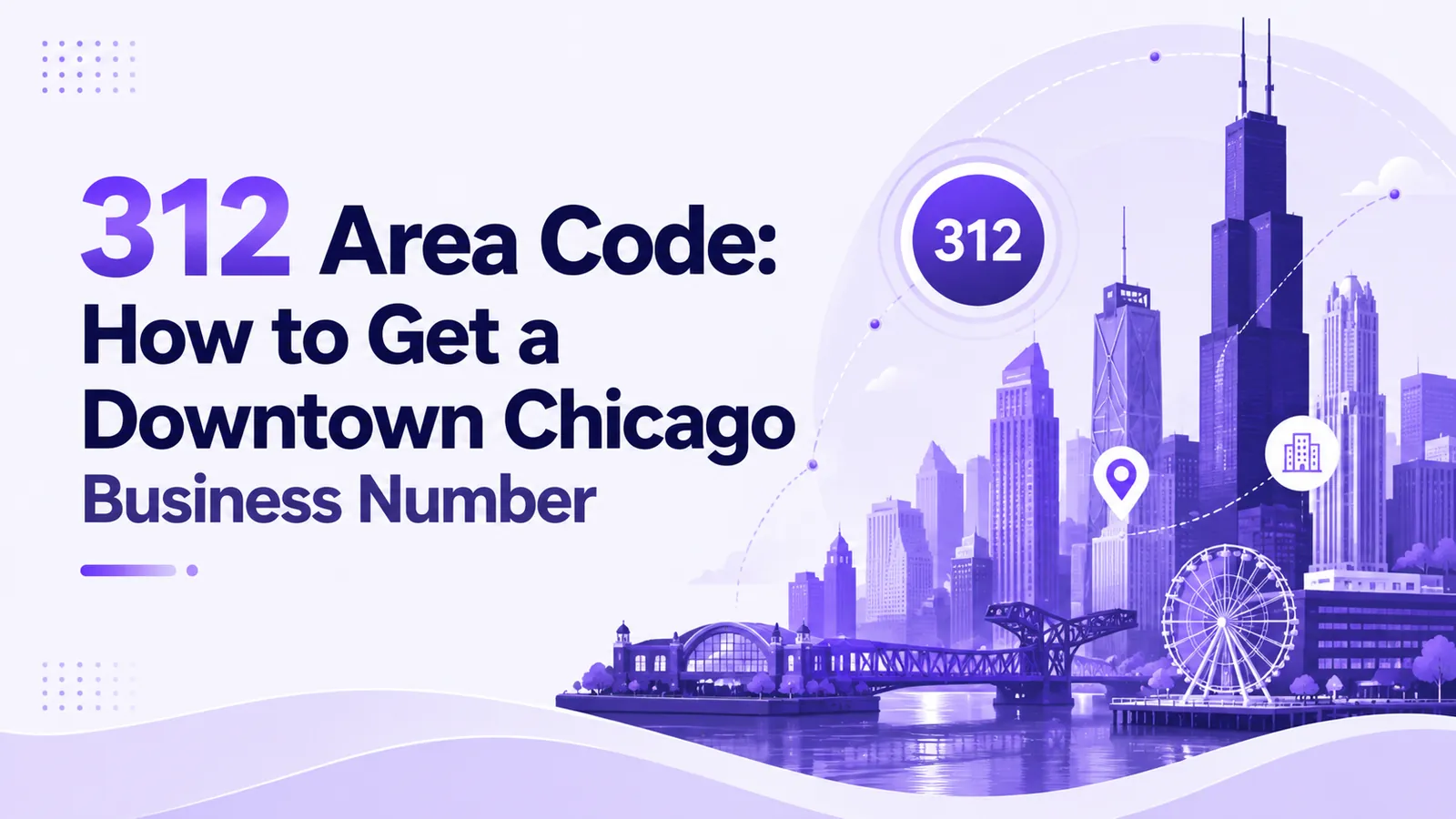
312 is the prefix stamped on downtown Chicago and the Loop, and anyone landing here after typing "buy 312 virtual number" almost certainly wants a working line, not a lecture on Illinois numbering history — so that's where this starts.
This runs through the exact footprint the code reaches, how activation actually plays out step by step, the scam angles to know about, and why firms scaling up downtown are re-thinking their call setup the moment that new line goes live. Save time for the last section especially — it's the piece almost every other guide on this leaves out.
The 312 area code covers downtown Chicago, the Loop, and its immediate surrounding neighborhoods. It dates back to 1947 and split into 312 and 773 in 1996 as the metro area's population grew. The prefix carries a prestige reputation because of its tight geographic footprint and association with Chicago's business core. High call volumes from finance, law, and corporate headquarters are pushing local businesses toward smarter call handling.
What Is the 312 Area Code?
312 marks downtown Chicago on the North American Numbering Plan — the Loop and the handful of neighborhoods around it, some of the densest business real estate anywhere in the country. It's carried this territory since 1947 and now shares its remaining numbers with overlay code 872.
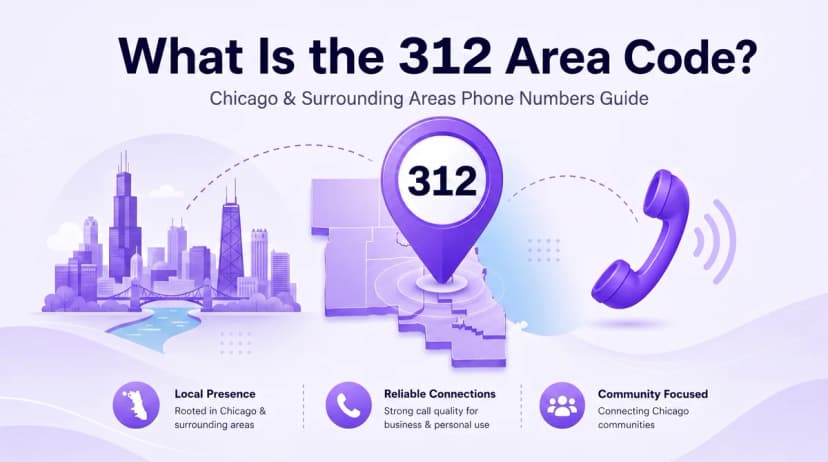
Landline, mobile, or business VoIP — a number opening with 312 always traces back to this same stretch of downtown Chicago. The people searching "VoIP numbers with 312 area code" are almost always after that exact downtown identity before they've placed a single call.
Where Is This Area Code Located?
The prefix covers a surprisingly small footprint: downtown Chicago, the Loop, and the neighborhoods immediately around it, rather than the entire city. It reaches communities shaped by finance, law, and corporate headquarters packed into a few square miles.
Cities and Communities Covered
The core of this coverage area sits in Chicago's central business district, including the Loop, River North, and the Near South Side. The wider city of Chicago mostly runs on 773 today, which split off in 1996 as demand outgrew the original numbering plan. Smaller pockets like West Loop and Streeterville lean into a dense, corporate-office identity.
Millions of calls route through this small footprint daily, making it one of the most call-dense area codes per square mile in the country. A Chicago business phone number 312 signals a downtown address more precisely than almost any other prefix in the state.
Time Zone and Dialing Format
312 keeps Central Time along with the rest of Chicago. Ten full digits — area code included — are required on every local call now, matching the national standard, and a contact saved without the prefix is a near-guaranteed dialing error on most mobile carriers.
A Brief History of the 312 Area Code
This prefix dates back to 1947, when it originally covered the entire Chicago metropolitan area under one of the country's earliest numbering plans. As the region's population and business density exploded over the following decades, that single code could not keep up.
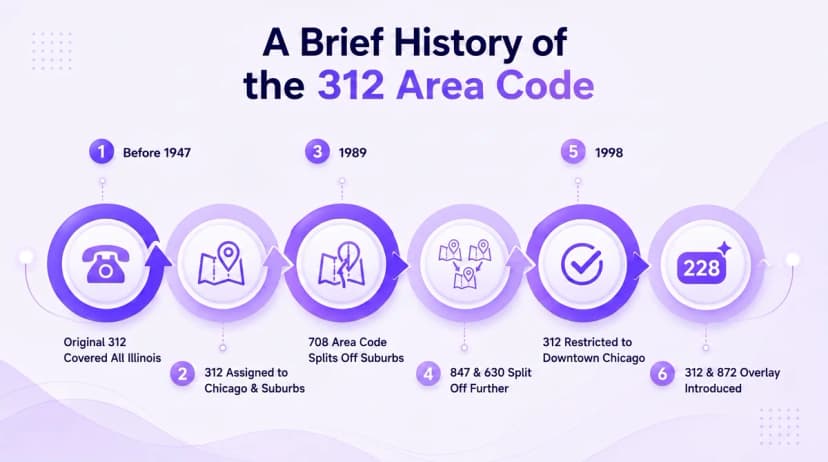
In 1996, regulators split the numbering plan, keeping 312 for downtown Chicago and assigning 773 to the rest of the city. Demand later required overlay code 872 as well, layered onto the same small footprint without displacing existing 312 numbers.
What Drives the Local Economy
Major banks, trading firms, and law offices packed into the Loop employ thousands on their own, and that's before counting convention and business tourism. McCormick Place and the downtown hotel corridor pull in visitors year-round, keeping hospitality, consulting, and event businesses on a steady stream of call volume.
Corporate headquarters scattered across West Loop and River North add yet another employment base, one that reaches into downtown housing, retail, and support-line demand well beyond office hours. Finance, law, and corporate activity all overlapping this densely means call traffic almost never sits flat — earnings season, convention weeks, and end-of-quarter business cycles each bring their own sharp surge.
Getting a 312 Number: What the Process Actually Looks Like
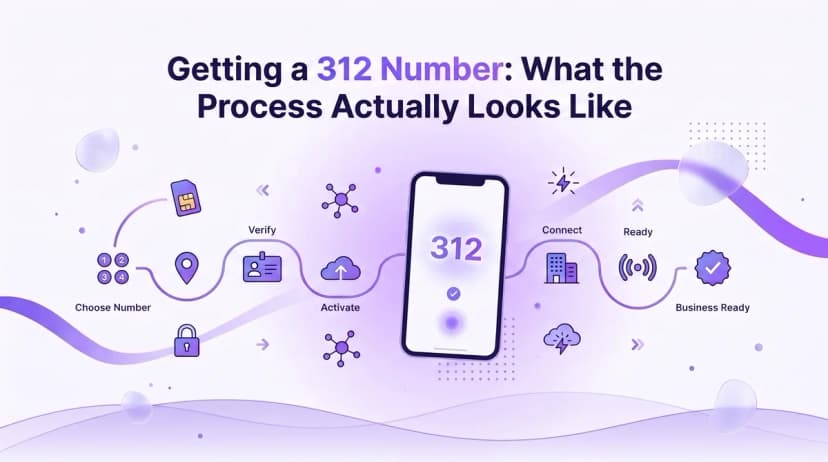
A quick, no-friction setup is a reasonable expectation for anyone searching for a downtown number, and it typically breaks down into five steps:
- 1Shortlist a provider. Look for one with real 312/872 inventory rather than a generic nationwide pool.
- 2Grab a number that sticks. Something a client can jot down after hearing it once, not a random ten-digit string.
- 3Hand over the basics. An email, a business name, and a card on file is usually the entire signup.
- 4Wire it to the team. Route it to a desk phone, a shared queue, or an auto-attendant — live in minutes for most carriers, longer if porting is involved.
- 5Dial it yourself first. A quick inbound and outbound test call catches routing problems before a client ever hits them.
Prestige rarely affects price here — most providers charge the same for a local prefix regardless of what neighborhood it signals — see typical business phone system cost ranges before picking a plan.
That fast activation buys nothing if the business can't keep up once the calls actually start rolling in. Earnings calls, convention traffic, and quarter-end deadlines all bring spikes to downtown offices, and a missed call during any of them costs revenue no matter how quickly the number itself went live.
That's the gap most number-buying guides never mention: the number just gets a business found. What decides whether the call actually turns into a customer is the system behind it — Ringflow's contact center platform routes inbound calls, coaches reps live, and keeps response times fast through the busiest stretches.
Neighboring Codes and How to Tell Them Apart
312 sits inside a ring of three other prefixes worth telling apart: 773 wraps around the downtown core for the rest of Chicago proper, 708 covers the south and west suburbs further out, and 847/224 handle the collar suburbs to the north and northwest.
A firm with a Loop office and a suburban one needs routing that treats 312 and 773 as separate markets, not one undifferentiated greater-Chicago region — skip that and mismatched caller ID or misrouted tickets turn up fast.
Picking a 312 Number: Timing Earnings Season and Conventions
A local prefix still does real work even in a mobile-first world — it reads as "nearby" before anyone's spoken a word, and that alone tends to move pickup rates.
Getting the call answered is only step one. Satisfaction hinges on what happens next — a live rep, an AI phone agent, smart routing — and Ringflow helps a rep stay steady through an unpredictable queue whether that's a law firm in the Loop or a consulting shop in River North.
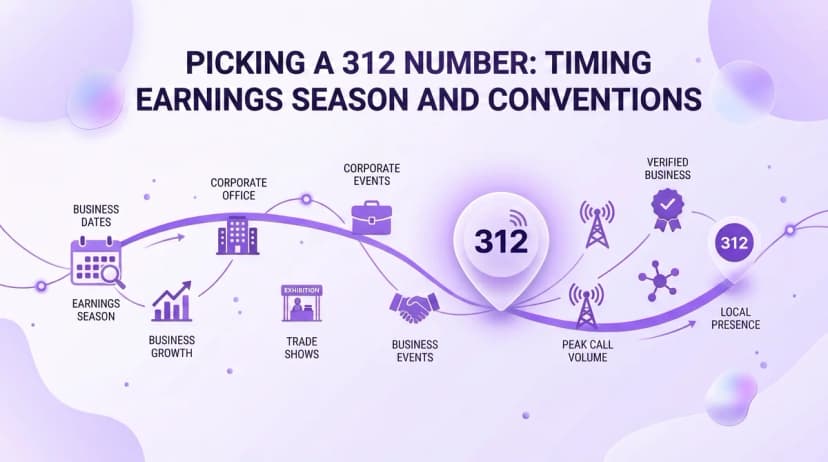
Earnings season, convention weeks, and quarter-end deadlines all run on a predictable enough calendar downtown that staffing around them is entirely possible — the difference between a 312 business that glides through peak season and one that's constantly catching up.
How to Spot and Avoid 312 Area Code Scams
312's trust factor draws the same scam attention any recognizable prefix does. Fake invoice confirmations, callers posing as downtown property managers, and rushed gift-card or wire-transfer demands are the tactics to watch for.
A call pushing for an immediate decision or an unusual payment method is a red flag regardless of caller ID — no legitimate downtown business or agency demands instant phone payment. The prestige 312 has built up since 1947 is precisely what spoofers are trying to borrow when they fake a local number, a tactic the FCC's caller ID spoofing guide covers in more detail.
Conclusion
A trading desk in the Loop and a law office in River North both signal something specific with 312 on the caller ID — downtown, not the suburbs, not "Chicago" in the vague citywide sense. That specificity is exactly what the number's been worth since 1947, and it's why 872 got layered on rather than splitting the territory again.
Specificity doesn't answer calls during earnings season or a convention week on its own, though. Ringflow's role starts there: routing calls, coaching reps, and absorbing rising volume so a downtown firm still sounds like the same operation a client dealt with last quarter, not a call center bracing for overflow.
The remaining steps are quick: recognize the common scam patterns, keep the number itself squared away, and map call volume against earnings season and convention weeks specifically, since those are what actually drive it here. Porting a number or training a team correctly takes minutes — better spent before the next surge than during it.
Ringflow's AI-assisted routing and live coaching help teams keep up without hiring ahead of demand.
Ready when you are
Fielding More Calls Than Your Downtown Chicago Team Can Handle?
Ringflow's AI-assisted routing and live coaching help teams keep up without hiring ahead of demand. Get a free trial with Ringflow.
Frequently Asked Questions
The 312 area code is downtown Chicago's telephone code, covering the Loop and its immediate surrounding neighborhoods. It's been active since 1947.
It covers downtown Chicago, including the Loop, River North, and the Near South Side. The rest of the city runs mostly on area code 773.
This area code dates back to 1947 and originally covered all of Chicago. It split into 312 and 773 in 1996 as the metro area grew.
Dial the full 10-digit format: 312 plus the 7-digit local number. This applies whether you're calling from inside or outside downtown.
No area code is scam-proof, and 312 numbers are sometimes spoofed for fake invoice or property calls. Verify unexpected requests independently before responding.