
Introduction
A quoted price rarely matches what lands on the first invoice. Setup charges, per-minute overages, and a compliance line nobody mentioned in the sales call can turn a tidy per-seat rate into a number that catches a small business off guard. Business phone system cost is simple in theory and messy in practice, mostly because the real total lives in places a pricing page never shows anyone in advance.
This guide breaks down what actually makes up the bill, what businesses of different sizes really pay, and the fees that quietly inflate a quote. It also covers how to estimate your own total, where to trim costs without losing features, and the compliance spend worth budgeting for. By the end, you will know exactly what a fair number looks like for a team your size.
What Goes Into a Business Phone System Cost?
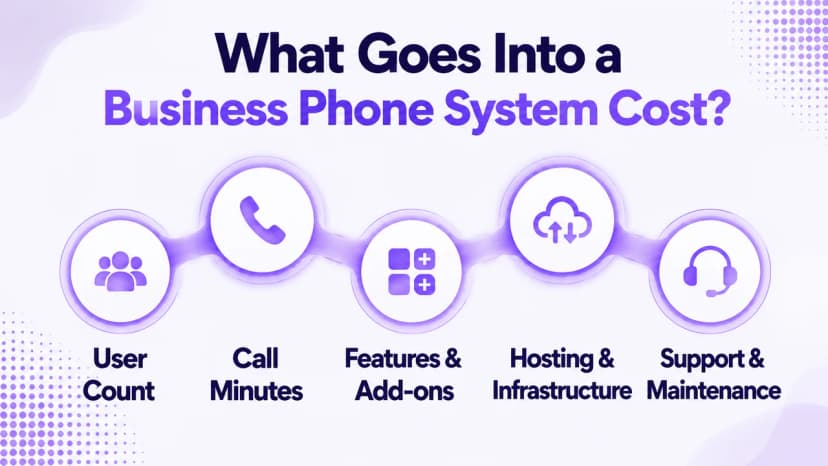
Every quote is really two separate numbers stitched together: a one-time setup cost and a recurring monthly charge. Cloud systems keep the upfront side small or free, since there is no PBX box, wiring, or technician visit involved. An older on-premise setup front-loads thousands of dollars into hardware, wiring, and installation before a single call ever goes through the system.
The recurring side is where most of the spending actually happens over time. Providers typically bill per user, per month, and that base rate is only the starting point. Call minutes, premium features, and support tiers can all add their own line to the bill, so the sticker price on a plan page is rarely the full picture of what a business actually pays each month.
- One-time setup costs are usually small or zero on a cloud phone system
- On-premise hardware, wiring, and installation can run into the thousands upfront
- Recurring monthly charges are billed per user and form the bulk of the spend
- Call minutes and international calling can be metered separately from the base plan
- Premium features like call recording or analytics often carry their own charge
- Support tiers can raise the monthly rate for faster response times
- Desk phones and headsets are optional extras, not a required cost
- The true total only appears once every line item is added together
Average Business Phone System Prices in 2026
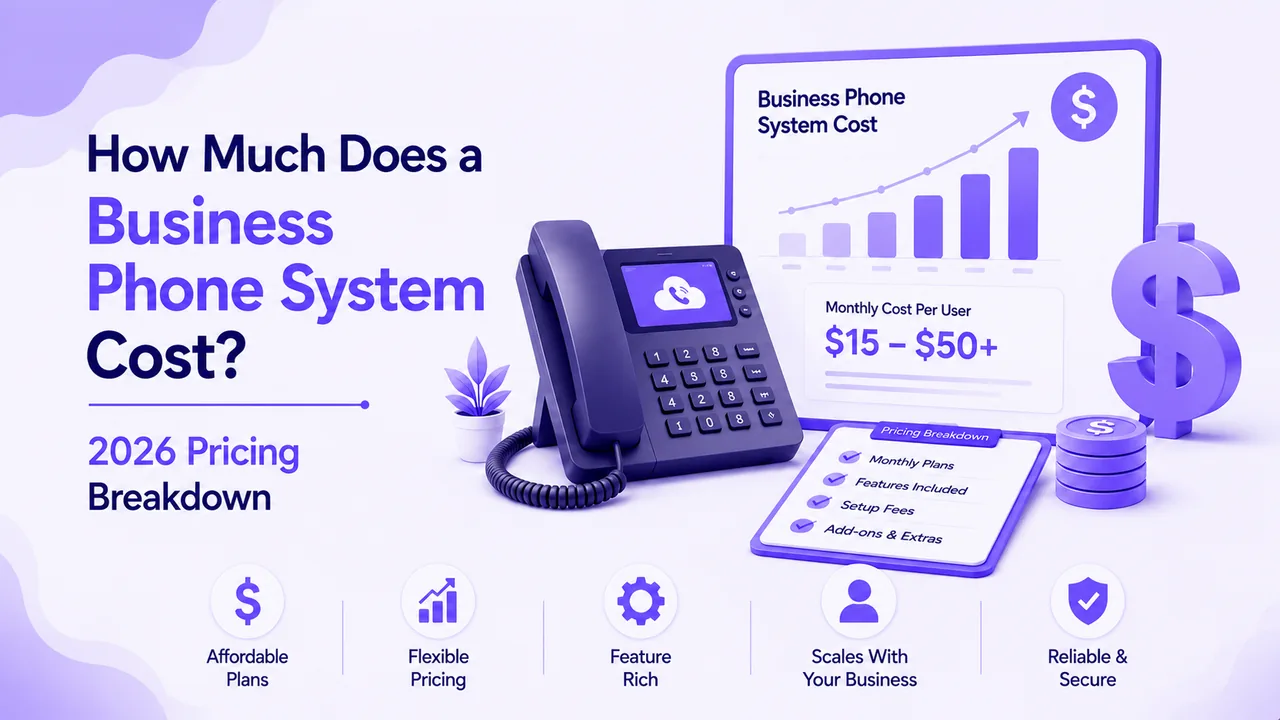
Pricing has settled into fairly predictable tiers, which makes comparing providers easier than it used to be. Entry-level plans typically run 8 to 15 dollars per user each month and cover calling, voicemail, and basic texting for a small team getting started. Mid-tier plans move into the 15 to 25 dollar range and add CRM sync, call recording, and detailed reporting dashboards for managers.
Enterprise plans built for larger teams usually land between 25 and 40 dollars per user, with advanced routing, analytics, and AI features bundled in. Most growing businesses settle somewhere in the middle tier, since that range balances price against the features people actually use every day without paying month after month for capacity that mostly sits idle and unused.
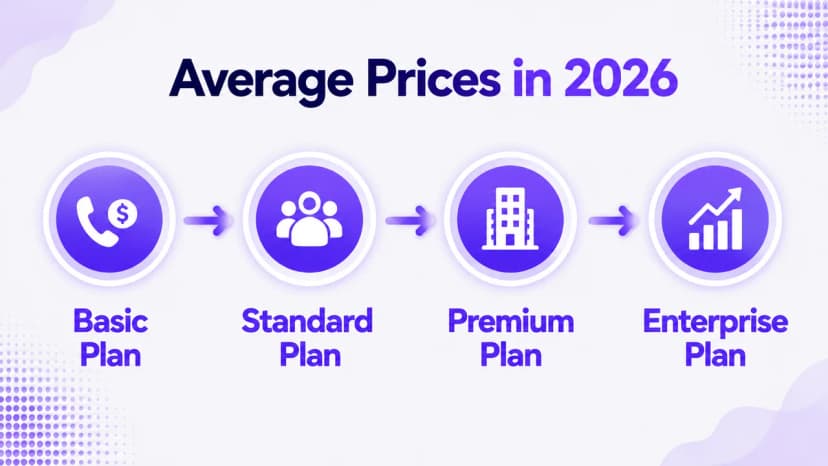
- Entry plans run about 8 to 15 dollars per user per month
- Mid-tier plans run about 15 to 25 dollars and add CRM and recording
- Enterprise plans run about 25 to 40 dollars with advanced routing and AI
- Annual billing typically costs less per seat than paying month to month
- A cloud system keeps the monthly rate flat and easy to forecast
- An on-premise system adds ongoing maintenance and upgrade cycles on top
- Most teams under 100 seats save money by choosing cloud over on-premise
What Small Businesses Actually Pay
A five to ten person team behaves very differently from a large call center, so the pricing math looks different too. Small teams rarely need enterprise routing, a predictive dialer, or dozens of third-party integrations bolted onto the plan, so a flexible entry or mid-tier plan usually covers everything the team touches during a normal working week.
In practice, a small business with five to ten users spends roughly 50 to 200 dollars a month in total. That range covers the base per-seat rate plus one or two genuinely useful add-ons, such as call recording, a shared team inbox, or a second local number. The goal is paying for what gets used, not for a feature list that sounds impressive but ends up sitting completely untouched month after month.
Hidden Fees That Inflate Your Bill
This is where most buyers get caught off guard, and where a lot of comparison guides go quiet. The advertised rate on a pricing page is rarely the final number, and a single overlooked fee can quietly add hundreds of dollars to a bill over the course of a year without anyone on the team noticing until the renewal invoice finally lands on someone's desk.
Setup and activation fees sometimes appear only after checkout, and overage charges hit teams that exceed bundled minutes or texts, often at steep per-unit rates. A locked-in annual contract can also hide the real cost of switching later. Premium extras like an AI receptionist add-on often carry their own line item, so confirm what is bundled before you sign anything.
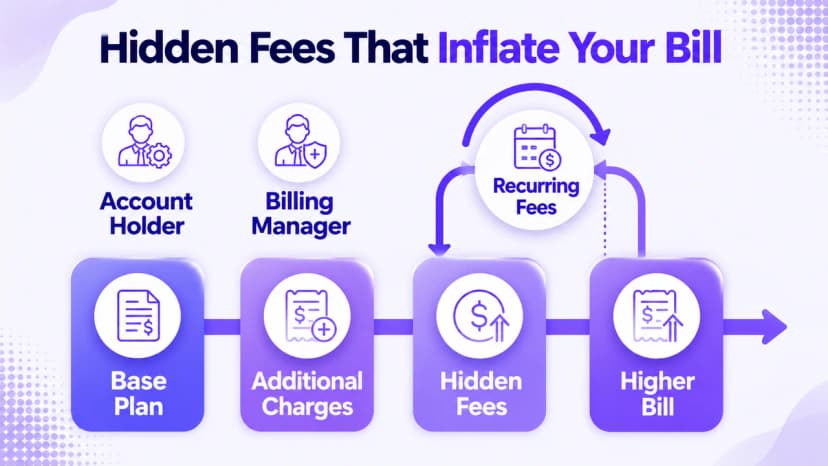
- Setup or activation fees that only appear after you have signed up
- Overage charges for minutes, texts, or international calls above the bundle
- Premium features billed separately even though they seemed included at first glance
- Contract terms that only unlock the advertised rate with an annual commitment
- Early termination fees that make switching providers more expensive than expected
- Compliance surcharges tied to number registration or emergency calling support
- A support tier upgrade required just to get timely help with an issue
How to Estimate Your Total Cost
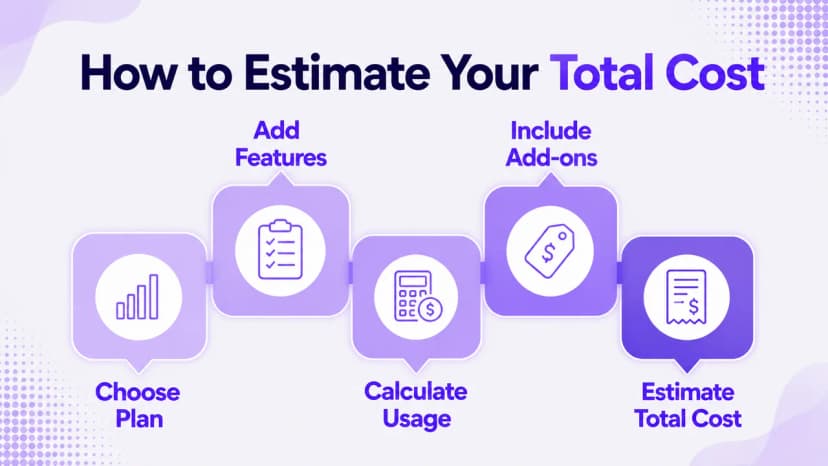
Sizing your real budget takes only a few minutes once you know the simple formula sitting behind it. Start with the advertised per-seat price multiplied by your current headcount, since that base number anchors every other cost you will layer on top of it as the real total, not the advertised headline number, slowly takes shape in front of you on paper.
From there, layer on the monthly cost of any paid features your team will actually use, then add expected overage charges for minutes, texts, or international calls. Finally, divide any one-time setup or hardware cost across twelve months so it does not distort a single month's number, and compare the same feature list across every provider you evaluate so the totals stay honest and easy to trust.
How to Lower Your Monthly Bill
Once you know your real total, a few practical moves can trim it without cutting any features your team actually depends on day to day. Annual billing usually reduces the per-seat rate by 20 to 40 percent compared with month-to-month, so it is worth committing once a trial has confirmed the platform is a genuine fit for your team's daily work.
Right-sizing seats matters just as much as the plan tier, since paying every month for licenses nobody actually uses adds up fast across a full year. Teams with heavy call volume can also look at how a SIP trunking connection prices channels compared with per-seat plans, since it sometimes works out cheaper at scale. Choosing a provider that bundles calling, SMS, and support in one plan avoids the slow creep of paid add-ons.
- Switch to annual billing once a trial confirms the platform fits your team
- Right-size seats regularly so you never pay for licenses nobody is using
- Compare SIP trunking against per-seat pricing if your call volume is high
- Choose a provider that bundles calling, SMS, and support in one plan
- Drop premium tiers your team has never actually needed in practice
- Negotiate pricing directly once you have a real quote from a competitor
- Review your bill every quarter to catch creeping add-ons early
Compliance and Security Costs to Budget For
A cheap plan that skips compliance work usually costs more later, either in fines, blocked text messages, or a real security incident. Business texting from local numbers increasingly needs 10DLC registration, and providers of voice service are expected to support reliable emergency calling, both of which can quietly carry their own separate line item on a monthly bill.
Security spend belongs in the same budget line. The NIST VoIP security guide outlines the protections a provider should already have in place, from encrypted calls to toll fraud monitoring, and it is a genuinely useful checklist when a quote looks suspiciously bare-bones. Paying slightly more for a provider that bundles these protections is usually cheaper than adding them piecemeal later.
- Ask whether 10DLC registration for business texting is included or billed separately
- Confirm the provider supports reliable emergency calling as part of the base plan
- Check for encrypted calls and toll fraud monitoring before you compare price alone
- Ask about STIR/SHAKEN caller ID authentication and who pays to enable it
- Request a written uptime commitment rather than a vague reliability claim
- Factor multi-factor sign-in and role-based access into the real cost of the plan
- Treat compliance and security as part of the total, not an optional upgrade
Conclusion
Business phone system cost comes down to more than the number on a pricing page. The base rate, the features your team actually uses, and the fees most quotes leave out together decide what you really pay each month. Small businesses do best by matching a plan to real usage instead of chasing the cheapest headline rate printed on the page.
Run the simple math from this guide against two or three providers, using the same feature list each time, and the winner usually becomes obvious. Ringflow publishes transparent per-seat pricing with the fees included up front, so the number you see is close to the number you pay. Start with a trial, confirm your real monthly total, and scale the plan up from there.
Ready when you are
Ready to see your real business phone system cost instead of a headline rate?
Test Ringflow against your own call volume and watch the full monthly number add up transparently.
Frequently Asked Questions
Most plans run 10 to 30 dollars per user each month, depending on the tier and features included. Entry plans can start under 10 dollars, while enterprise plans with AI and advanced routing run higher.
A five to ten person team usually spends 50 to 200 dollars a month in total, covering the base per-seat rate plus one or two genuinely useful add-ons.
Setup or activation fees, overage charges for minutes and texts, and compliance surcharges are the most common costs that do not appear on the advertised price.
Yes. Annual billing typically cuts the per-seat rate by 20 to 40 percent compared with paying month to month, once a trial has confirmed the platform is the right fit.
Not necessarily, but a very low price is worth double-checking. Confirm the provider still includes encryption, reliable emergency calling, and a clear uptime commitment.