
Introduction
Phone calls still decide whether a lead becomes a customer, yet small teams cannot answer every one. An AI phone agent closes that gap by picking up each call in a natural voice, understanding what the caller wants, and taking action without a person on the line. It books the appointment, answers the question, or routes the call — and it does so at two in the morning as smoothly as at noon. That reliability is why voice AI has moved from novelty to everyday business tool.
This guide explains what an AI phone agent really is, how the technology works behind the scenes, and where it performs well today. It is just as honest about where voice AI still stumbles and how to deploy it without frustrating callers. By the end, you will know which calls to automate first, which to keep with people, and what to check before choosing a provider. Whether you run a clinic, a home services company, or a growing sales team, the same principles apply.
What Is an AI Phone Agent?
An AI phone agent is software that answers inbound calls and holds a real conversation in human-like speech. It listens, works out what the caller needs, and completes the task, whether that means booking a slot, answering a question, or passing the call to the right person. Callers speak in plain sentences instead of pressing numbers, and the agent remembers what was said earlier in the call, so nobody repeats themselves.
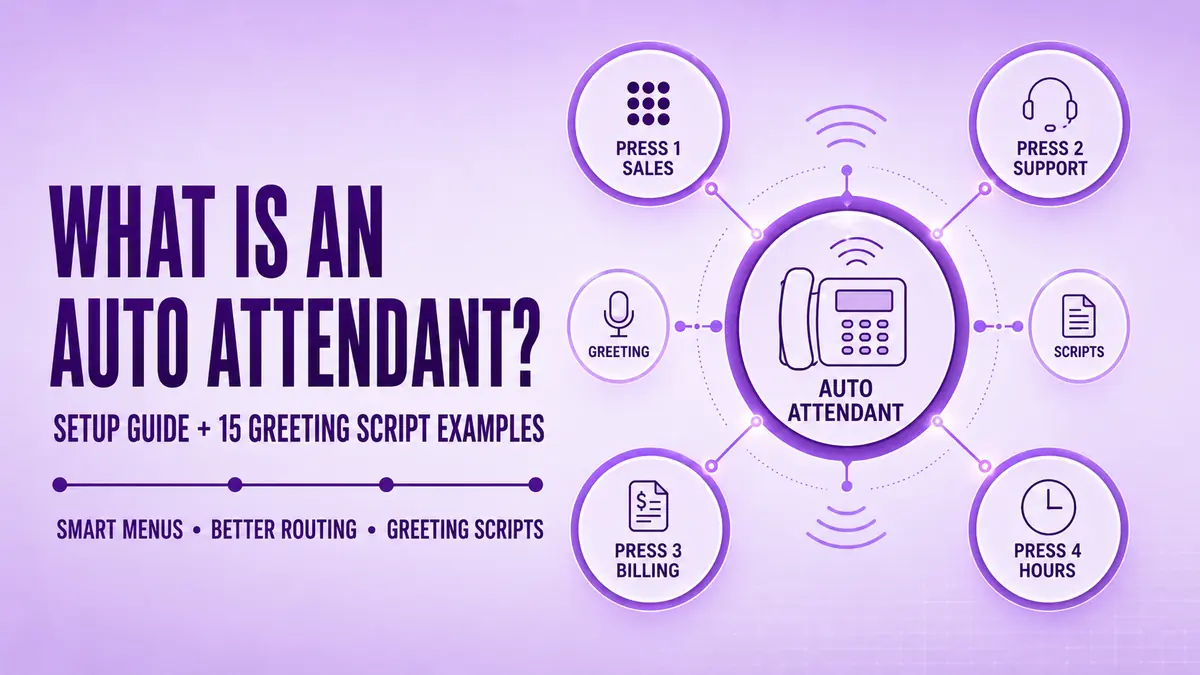
The practical difference from older tools is scale and consistency. One agent can handle many calls at once, so nobody waits in a queue, and it gives the same accurate answer every time. Unlike a text chatbot, it works over live voice in real time, and unlike a basic IVR, it understands full sentences instead of forcing menu choices. That turns a phone line from a bottleneck into a dependable front door.
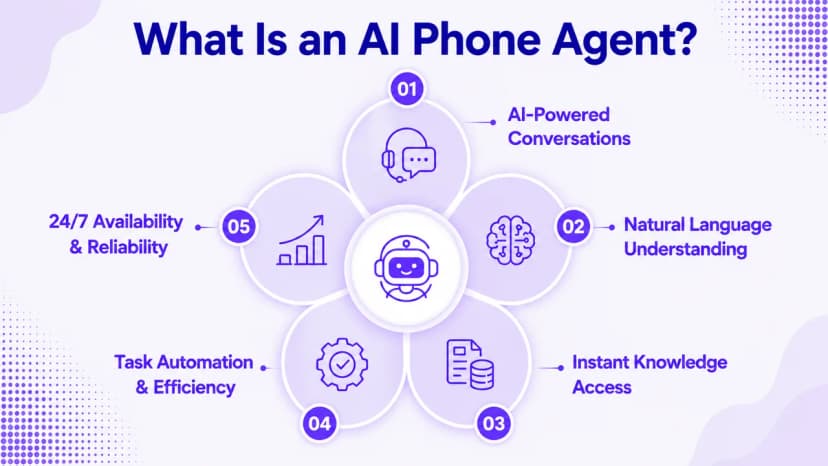
- Answers every inbound call on the first ring, at any hour of the day or night
- Understands plain spoken sentences instead of forcing callers to press menu numbers
- Handles many calls at the same time, so nobody waits in a queue or hears hold music
- Takes real action, such as booking a slot, answering a question, or routing to the right team
- Gives the same accurate answer on every call and every shift, without getting tired
- Works over live voice in real time, unlike a text chatbot that only replies in writing
- Fits industries as different as dental offices, law firms, home services, and property management
How an AI Phone Agent Works
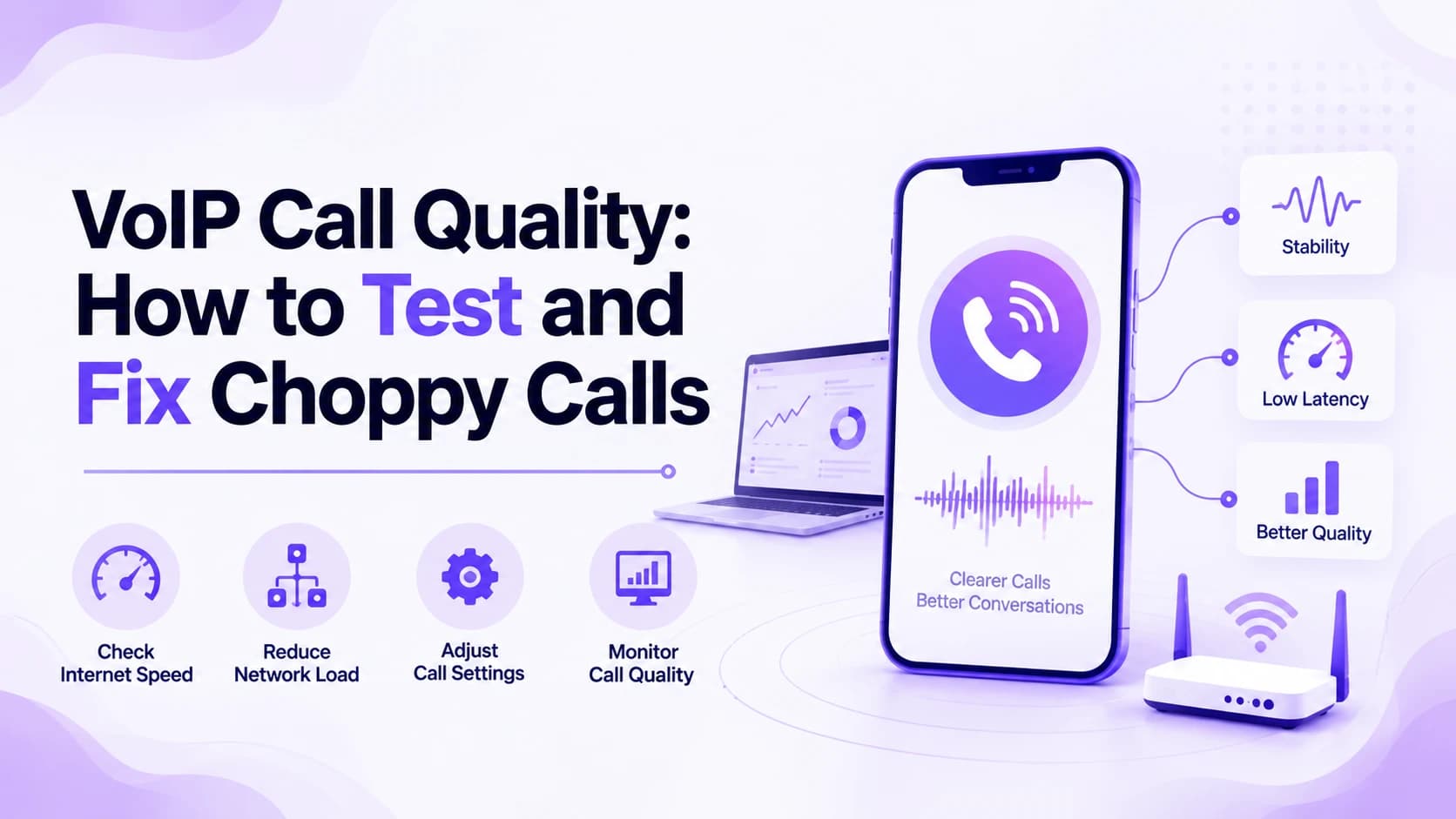
Three technologies work together in real time. Speech recognition converts the caller's words into text, language understanding works out the intent behind them, and text-to-speech replies in a natural voice. The whole loop finishes in under a second. Clear audio matters too, since VoIP call quality directly affects how accurately the agent hears each word, and a choppy connection means more mistakes.
Behind the scenes, a platform like Ringflow connects the agent to your calendar, CRM, and knowledge base. When a caller asks to move an appointment, it checks availability, confirms a new time, and logs the details automatically. The system is only as smart as the information it can reach, so accurate hours, prices, and policies keep its answers correct, while stale data produces confident but wrong replies.
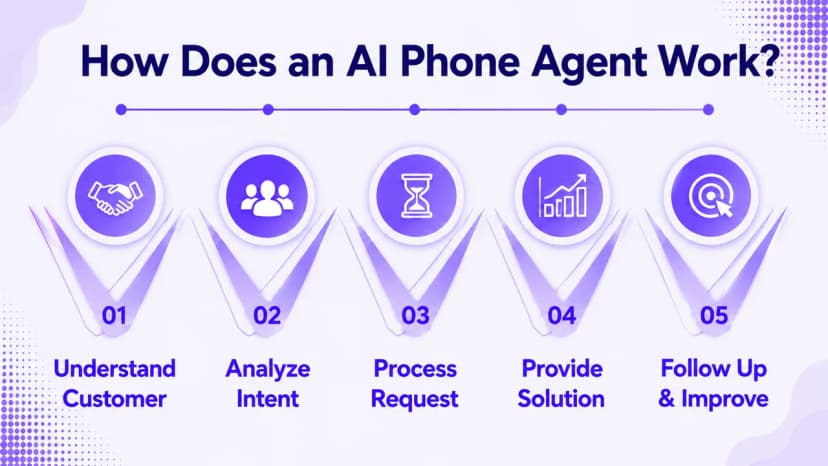
- Speech recognition turns the caller's spoken words into text as they are being said
- Language understanding works out what the caller actually wants, even when it is phrased loosely
- Text-to-speech replies in a natural, lifelike voice within a fraction of a second
- Calendar, CRM, and knowledge base connections supply the real answers and booking slots
- Call flows and rules define exactly what the agent may do on its own
- A live handoff sends the call to a person along with a short summary of what was discussed
- Monthly reviews of hours, prices, and policies keep answers correct as your business changes
What Voice AI Handles Well
For a wide range of everyday calls, voice AI now performs at or above human speed. These are the routine, high-volume tasks that eat up a team's day without needing real judgment. Anyone who has looked into an AI receptionist will recognize the pattern: the software takes the repetitive front-desk work, and people keep the conversations that need care. That split is where the technology consistently delivers its clearest gains.
Coverage is the other big win. Evenings, weekends, holidays, and sudden spikes after a marketing push all get answered instead of sent to voicemail. Each of those saved calls is a lead or a customer who would otherwise move on to the next result. The list below covers the calls where an AI phone agent earns its keep from the first week. Teams often notice the difference in their voicemail box within days.
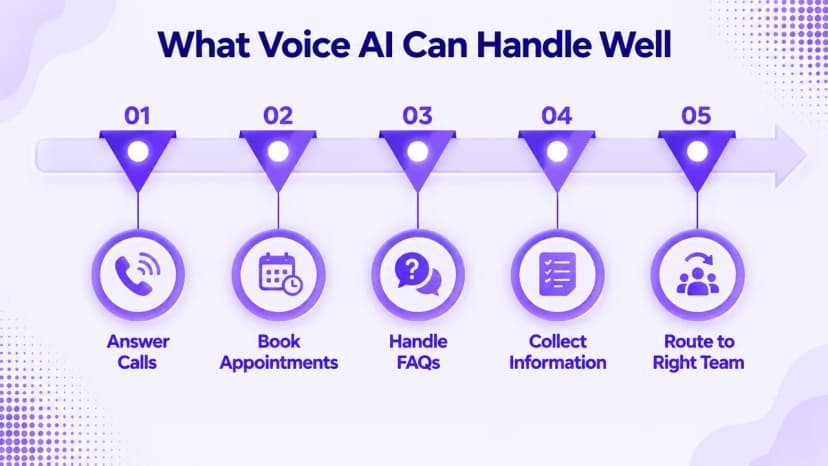
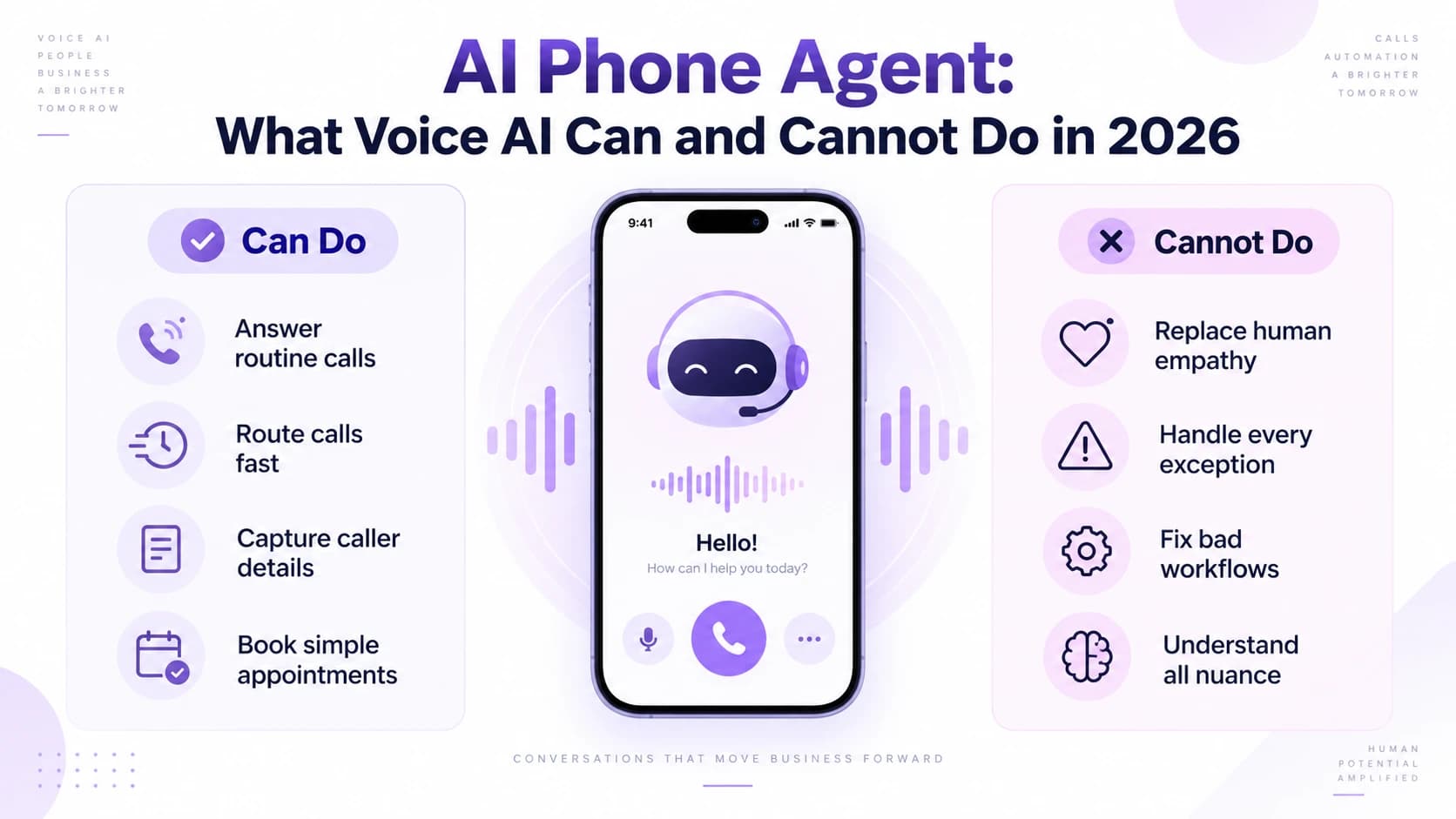
- Booking, rescheduling, and confirming appointments without hold time
- Routing callers to the right team based on what they say
- Answering common questions about hours, pricing, and location
- Capturing and qualifying leads with Ringflow, then logging them to the CRM automatically
- Covering after-hours and weekend calls so none reach voicemail
- Absorbing sudden call spikes without a hiring scramble
- Screening spam and wrong-number calls before they reach your team
What Voice AI Cannot Handle Yet
Voice AI is powerful, but it has real limits worth planning around. Knowing them protects callers and your brand, and it keeps the technology from being blamed for failures that were really design mistakes. The honest split is simple: structured, repeatable calls suit automation, while emotional or messy ones still belong with people. Planning that boundary in advance is far easier than repairing it after a bad call.
A grieving customer or an angry complaint needs genuine human warmth, and an agent can stay polite without truly sharing feelings. Calls that span several systems, exceptions, and judgment calls can also make AI lose the thread. The smart response, and how Ringflow is designed to work, is to detect complexity early and hand off with full context, so the customer never has to repeat themselves. That single habit separates a smooth hybrid setup from a frustrating one.
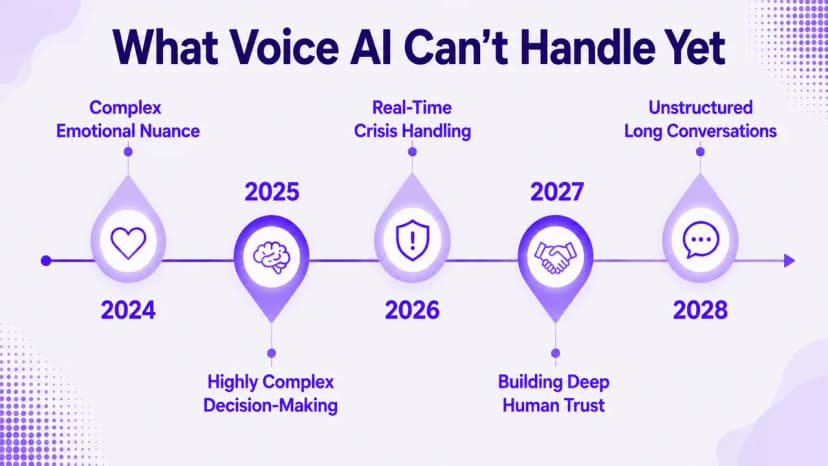
- Sensitive or emotional calls such as bad news, grief, or heated complaints
- Multi-step disputes that cross several systems or policy exceptions
- High-stakes negotiations that depend on judgment and trust
- Heavy background noise or several people talking at once
- Requests that fall outside the rules and knowledge you have provided
- Legal or medical advice that must come from a licensed professional
How to Deploy an AI Phone Agent Right
Value depends less on the voice and more on the setup around it. A thoughtful rollout captures the wins while sidestepping the limits above. Start narrow with one or two call types, prove the results, and only then widen the scope. That measured path beats switching every call to automation on day one. Each small win also builds the evidence you need to justify the next step. Ringflow makes this rollout simple, with guided setup and prebuilt call flows you can edit yourself.
Bring your team into the process early. Reps know exactly which calls turn tricky and where a script falls flat, and their feedback sharpens handoff rules faster than any dashboard. Within a few weeks, most teams stop watching the automation nervously and start trusting it with more of the routine load. That trust, earned step by step, is what makes the rollout stick.
- 1Map your top call types and decide which the AI should own
- 2Write clear handoff rules for empathy, complexity, and requests for a human
- 3Connect your calendar, CRM, and phone system so data flows both ways
- 4Test with real calls and listen to recordings each week
- 5Expand to new call types only after the first ones hit their targets
- 6Review call results monthly and update the rules as your business changes
Trust, Privacy, and Disclosure
Callers increasingly want to know when they are talking to software, and being upfront builds trust rather than eroding it. In the United States, regulators have also made clear that AI-generated voices on calls fall under existing robocall rules, so a clear disclosure at the start of the call is both good practice and a safeguard. Keep the wording short, friendly, and honest. A brief line at the start of the call is usually enough, and most callers respond well to it.
Privacy deserves the same attention. Ask any provider how calls are encrypted, how long recordings are stored, and whether you can delete them on request. Frameworks such as the NIST AI risk framework give a practical checklist for judging an AI system's reliability and safety before it ever speaks to your customers. Treat that review as part of the buying process, not a box to tick afterward.
Consent and record-keeping belong on your checklist as well. If calls are recorded or transcribed, tell callers, and check whether local rules require permission from everyone on the line. Keep a simple log of which calls the agent handled and which it escalated. That record helps you prove compliance, spot problems early, and show stakeholders exactly what the technology is doing for the business.
Conclusion
An AI phone agent has become a practical asset for handling routine calls, booking, and after-hours coverage at scale. The honest picture is that voice AI shines on structured tasks yet still needs people for empathy and messy problems. The winning setup is a hybrid one, where the agent absorbs the volume and hands hard calls to a person with full context. Set expectations that way, and you get the speed of automation without the frustration of a bot in over its head.
The fastest way to judge the technology is to hear it handle your own calls rather than read another overview. Ringflow lets you launch, train, and route an AI phone agent from one dashboard, so a test takes days instead of months. Start with one call type, measure what changes, The results from a focused pilot usually make the next decision obvious.
Ready when you are
Curious where an AI phone agent would help and where a human should step in?
Test Ringflow against real calls and hear it book, route, and hand off in a natural voice.
Frequently Asked Questions
It is software that answers phone calls and talks to callers in natural speech. It can book, route, and answer questions without a person on the line.
Start with booking, routing, common questions, and after-hours calls. These are high volume, easy to measure, and low risk.
Emotional, sensitive, or multi-step problems should reach a person quickly, with the full call context passed along.
A chatbot works over text and an IVR forces menu choices. An AI phone agent holds a live voice conversation and understands full sentences.
They can be, with a provider that offers encryption, clear retention rules, and SOC 2 compliance. Confirm these before sharing customer details.