
Introduction
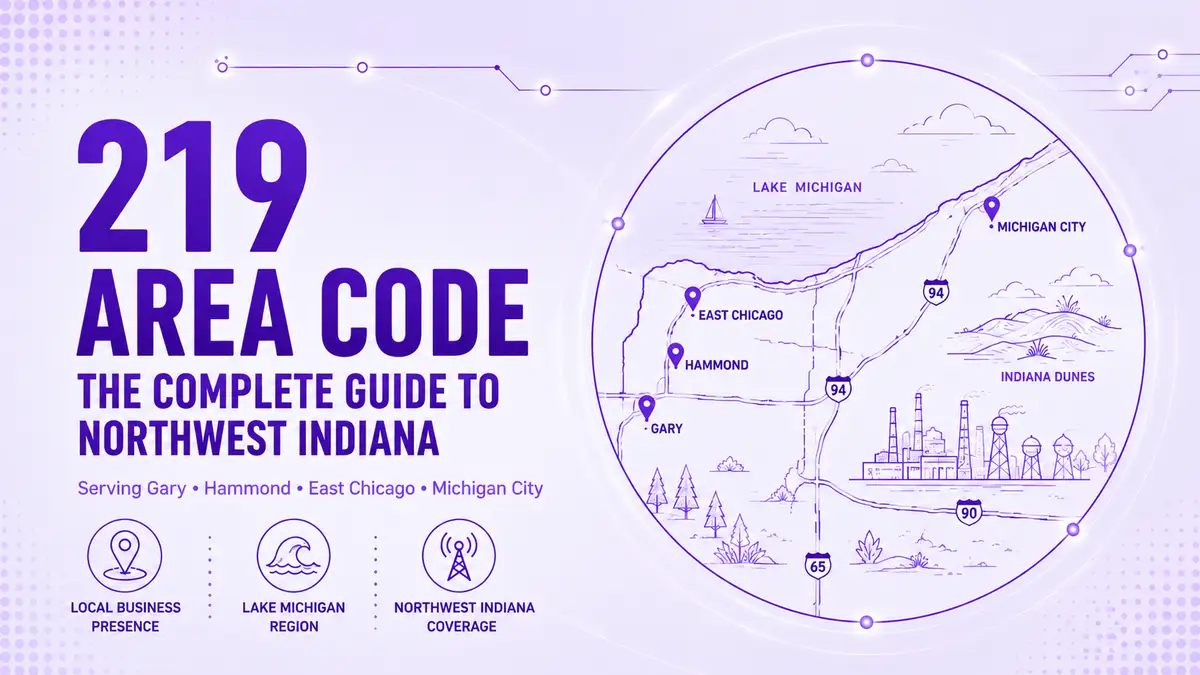
Gary, Hammond, and the rest of Northwest Indiana — the area locals just call "the Region" — all share the 219 prefix. An unfamiliar call or text from it raises the obvious questions: where it's actually based, what its history is, and whether it's safe to pick up.
This covers the coverage area itself, the 2002 split that redrew its borders, and how a business serving the Region can claim a local number of its own — everything needed to dial a 219 number, answer one, or set one up without any guesswork.
- This area code covers Gary, Hammond, East Chicago, and the rest of Northwest Indiana on Central Time.
- A 2002 split created area code 574 for South Bend, shrinking this code's original footprint.
- A call from this area code isn't automatically a scam, but caller ID spoofing makes any area code fair game for fraud.
- Businesses serving the Region can get a local number in minutes without opening a physical office there.
What Is the 219 Area Code?
It's one of Indiana's three original area codes from 1947, alongside 317 and 812, back when the whole state split into just a few calling regions. It originally covered a much larger swath of northern Indiana before later growth required splitting off new codes. Today it's limited to the northwest corner of the state, an area locals have nicknamed "the Region" for generations.
Search results for "219 area code northwest indiana" mostly stop at naming Gary and Hammond, without ever getting into why the borders shrank in the first place — regardless of whether it's written "219 area code" or flipped to "area code 219," both point at the same coverage area.
The Region's economy has long been tied to steel production, though healthcare and logistics have grown into major employers over the past two decades.
Why the Region Sits on Central Time, Not Eastern
Most of Indiana runs on Eastern Time, which surprises people who assume the whole state matches Chicago's neighbor status. This area code actually shares Central Time with Chicago, since the Region's economy and commuting patterns tie closely to the city next door.
Where Is This Area Code Located?
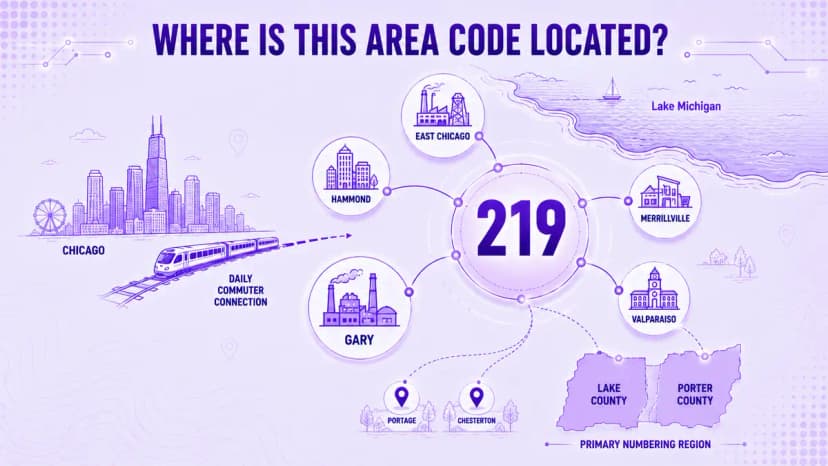
Gary anchors the region, but this area code stretches across several counties along Lake Michigan's southern shore.
Cities and Communities Covered
- Gary, historically the region's largest industrial city
- Hammond, bordering Chicago's southeast side directly
- East Chicago, home to major steel production for decades
- Merrillville, one of the area's largest retail and suburban hubs
- Valparaiso, a growing college town further from the lakefront
Together, these cities and their surrounding counties make up Indiana's most Chicago-connected calling region. Lake and Porter counties alone account for most of the numbers issued across the area.
Any carrier's lookup confirms the same Lake Michigan footprint — Chesterton and Portage among the smaller communities that fall inside it too.
Many residents commute into Chicago daily via commuter rail, which is part of why the area feels more connected to Illinois than to the rest of Indiana.
The 219/574 Split: Why the Map Changed in 2002
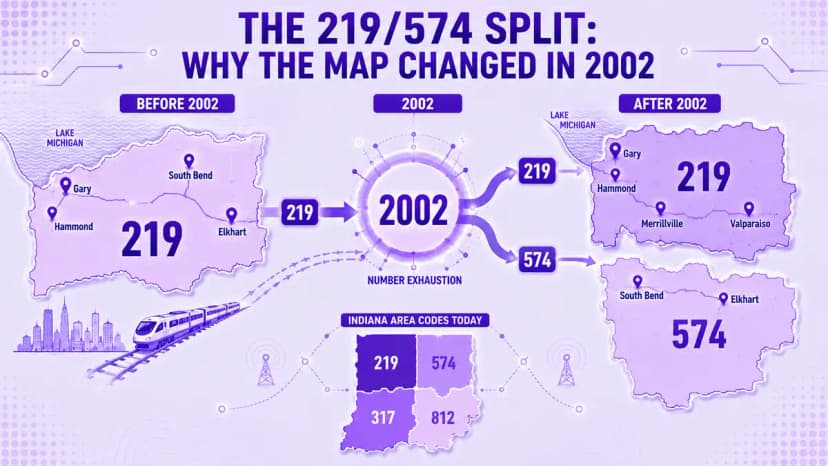
The original 219 numbering plan covered a much wider stretch of northern Indiana, reaching all the way to South Bend and Elkhart. Regulators split off area code 574 for those eastern cities in 2002, once the original numbering supply started running low.
That split is the exact detail most guides skip entirely, and it explains why South Bend residents dial 574 instead of the code their parents grew up with. No overlay exists in this region today, since the 2002 split freed up enough new numbers for the smaller remaining footprint.
Splits like this one typically require existing residents to update saved contacts once the new code takes effect, similar to what happens whenever any region's numbering plan gets redrawn.
Indiana now uses four area codes in total: this one, 574, 317, and 812, each covering a distinct part of the state.
How to Get a 219 Area Code Phone Number
A Region number, whether for someone living there or a business building a presence in it, comes together in a matter of minutes once the right provider is picked.
- 1Find a provider carrying Indiana numbers that's actually built for business, not just personal lines.
- 2Filter the available inventory by city or prefix.
- 3Claim a number and hand it off to a team member, device, or call flow.
- 4Configure voicemail, forwarding, and hours before it goes live.
- 5Bringing an old number along instead? Porting covers that without starting from scratch.
Ringflow shows the open prefixes before anything's locked in, so matching a number to a specific Region city is straightforward when that detail matters to customers.
A provider's search tool returns the full 219 inventory the instant someone looks, making it easy to zero in on something tied to Gary, Hammond, or Merrillville specifically.
A virtual phone number lets a business add a Region line without replacing its existing setup, and testing the number with a handful of real contacts before publishing it widely catches any forwarding or voicemail issues early.
Is This Area Code Associated With Scams?
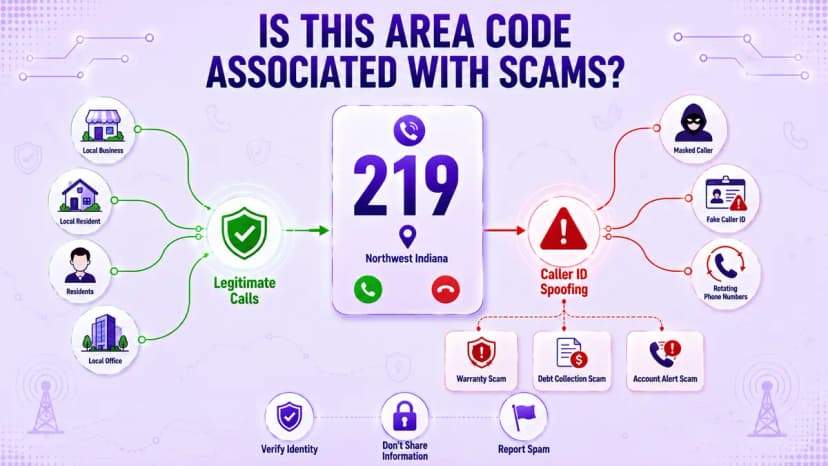
There's nothing inherent to 219 that makes a call more suspicious than one from anywhere else — the vast majority of calls and texts on this prefix come from genuine Region residents, local businesses, or companies with a real presence there.
Spoofing is the real threat, and it works on any prefix: scammers fake 219 to look local, then push urgency to get an answer — a warranty about to expire, a debt suddenly overdue, an account that supposedly needs verifying immediately.
Robocall complaints tied to spoofed local numbers have climbed nationally for years, and Indiana's regulators log complaints for this corner of the state the same way every other region does. A Gary or Hammond number on caller ID confirms nothing about who's really calling.
Blocking a spoofed number rarely sticks for long — scammers just rotate to the next one once the old one's flagged. Reporting to a carrier does more lasting good, since that's the pattern data carriers use to build better spam filters.
The playbook doesn't change based on area code: keep personal details off the call entirely, end it the moment an unsolicited payment request comes up, and confirm independently before responding to anything that feels rushed.
Should Your Business Get a Local Number?
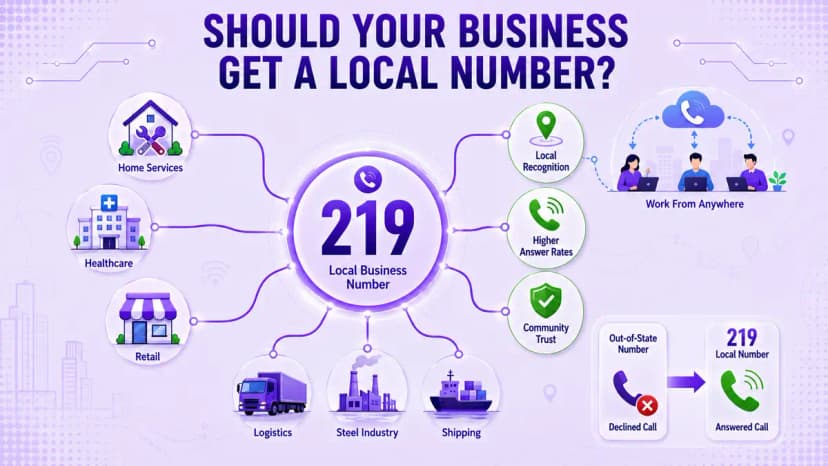
A local number tells Region customers something specific: this business gets the area and won't cost them a long-distance call to reach. That distinction carries extra weight here, since Region residents tend to draw a sharp line between a genuinely local business and one calling in from Chicago proper.
Home services, healthcare practices, and retailers see the sharpest lift from it, since those customers usually want someone who feels genuinely local before they'll book anything. Nothing about that requires the team to physically sit in the Region, either — the number is what reads as local, regardless of where the person answering it actually works from.
A logistics company shipping through the Region's ports, for example, often benefits from a local number just as much as a retail storefront does. Steel mills, freight yards, and the industrial supply chains built around them still drive a large share of daily calls placed into and out of this corner of Indiana.
Ringflow lets a business activate a local Region number without opening a physical office in Indiana, then route calls to wherever the team actually works. That's especially useful for a company testing the Northwest Indiana market before committing to a full local presence.
A second phone number for business use also lets a team keep an existing line intact while adding a Region number customers recognize on every call back.
Conclusion
219 answers for Gary, Hammond, and the rest of the Region on Central Time — a smaller footprint than it started with, ever since 574 split off to take South Bend in 2002. Beyond that history, a call from this prefix carries no more scam risk than one from anywhere else; that risk always traces back to spoofing, not the code itself.
Skip the consumer-grade plans and start with a provider actually built for business lines. Ringflow can have a Region number routing calls within minutes, complete with the tools a growing team needs on day one.
Ready when you are
Tired of Chicago-Area Customers Ignoring Out-of-State Calls?
See how Ringflow gets your Region number active in minutes, with call routing built in from day one. Get a free trial with Ringflow.
Frequently Asked Questions
It's one of Indiana's three original 1947 area codes, now covering Gary, Hammond, and the rest of the Region. Its footprint shrank in 2002 when regulators split off area code 574 for South Bend and Elkhart.
It covers Gary, Hammond, East Chicago, Merrillville, and Valparaiso, all in Northwest Indiana. The region runs on Central Time, matching nearby Chicago rather than the rest of the state.
The split took effect in 2002, moving South Bend and Elkhart to the new 574 code. Numbers already in use in the remaining Region stayed on this area code without any changes.
Choose a business phone provider that offers Indiana numbers, then search and select an available one. Most providers activate the number within minutes and let you set up forwarding right away.
Yes, answering is safe, since simply picking up a call can't compromise your information on its own. Stay cautious about sharing details or making payments if the caller pressures you urgently.