
Introduction
Anyone who's spotted 228 on a bill or an unfamiliar caller ID is looking at Mississippi's Gulf Coast — Biloxi's casino strip, Gulfport's port, and the shipyards further east in Pascagoula all share this one prefix. Knowing what it actually covers makes the difference between dialing with confidence and second-guessing every unfamiliar call.
What follows: the counties this code touches, how it came to exist in 1997, the scam patterns worth watching for, and why Gulf Coast businesses riding out tourist season and hurricane surges are rethinking how they staff their phones in the first place.
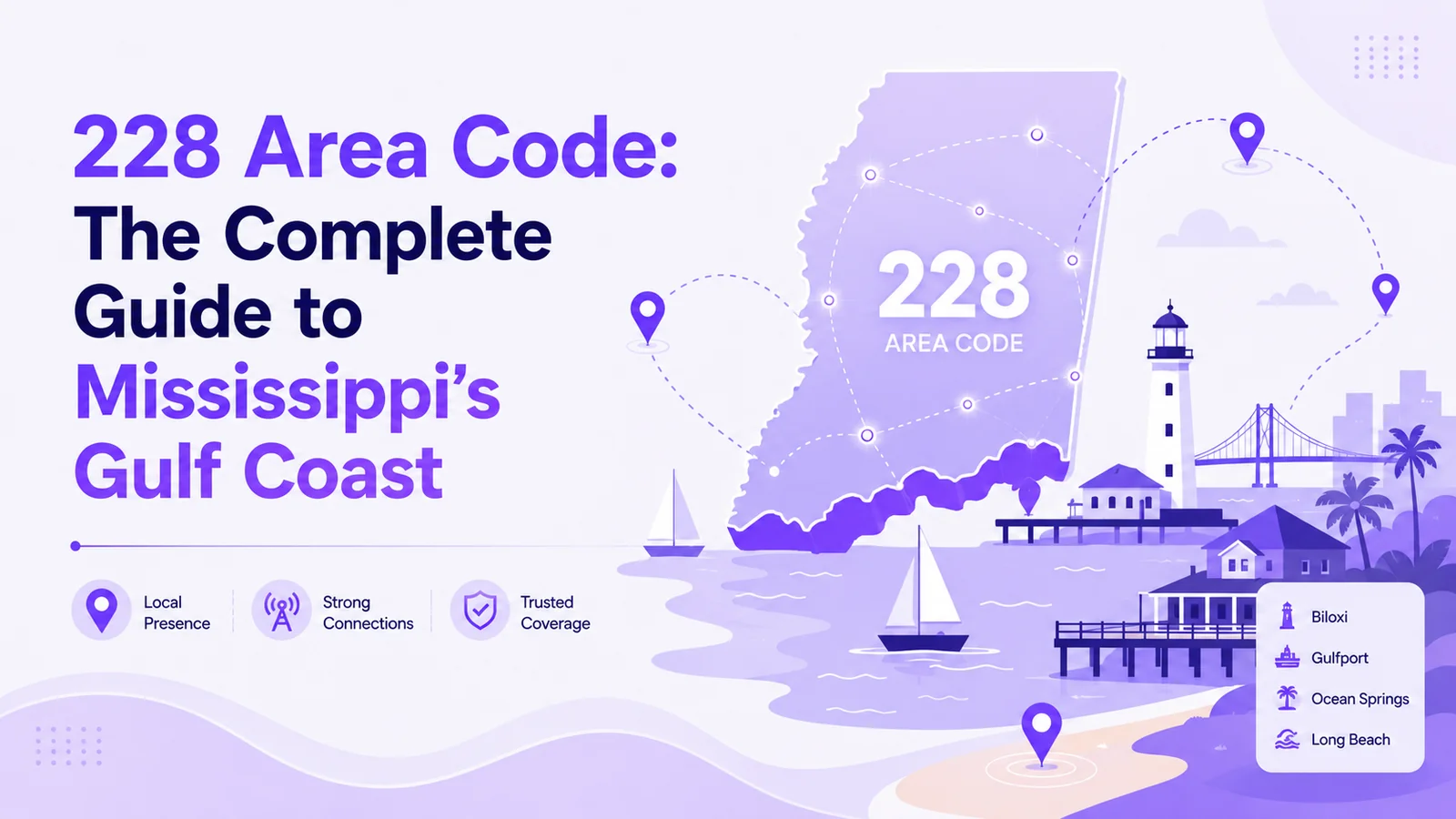
The 228 area code serves Hancock, Harrison, and Jackson counties on the Mississippi Gulf Coast. It went into service on September 15, 1997, when Mississippi split from the original 601 area code. Major cities include Biloxi, Gulfport, Pascagoula, Ocean Springs, and Bay St. Louis. Growing tourism, shipbuilding, and military activity are pushing Gulf Coast businesses toward smarter call handling.
What Is the 228 Area Code?
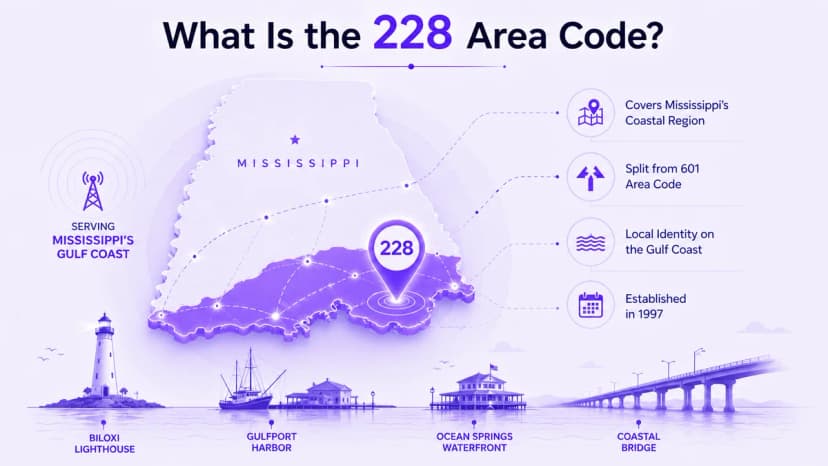
228 identifies Hancock, Harrison, and Jackson counties on the North American Numbering Plan — the three-county stretch that makes up Mississippi's Gulf Coast, home to Biloxi and Gulfport. It's been assigned to this coastline exclusively since 1997, with no other region ever sharing the prefix.
Landline, mobile, or a business VoIP line — every number opening with 228 traces back to this same stretch of coast. It's instantly recognizable to anyone outside the region as a Gulf Coast call before the phone is even answered.
Where Is This Area Code Located?
The prefix covers Mississippi's southeastern tip, right along the Gulf of Mexico. It spans three counties: Hancock, Harrison, and Jackson, an area shaped by beaches, ports, and a mix of small towns and mid-size cities.
Cities and Communities Covered
Biloxi and Gulfport carry most of the economic weight here, pulling in casino tourism and shipping traffic that dwarfs the rest of the coastline. Pascagoula, Ocean Springs, Bay St. Louis, and Long Beach round out the map, with Bay St. Louis in particular keeping a quieter, coastal-town feel. Around 390,000 people live across the zip codes this prefix covers — one of the denser coastal stretches in Mississippi — and Harrison County alone accounts for close to half of them, with Gulfport and Biloxi doing double duty as the region's retail, healthcare, and hospitality hubs.
Time Zone and Dialing Format
228 runs on Central Time along with the rest of Mississippi. Ten-digit dialing — area code plus the seven-digit number — is required for every local call now, the same as almost anywhere else in the country, and skipping the prefix in a saved contact is a reliable way to trigger a dialing error on most mobile carriers.
A Brief History of the 228 Area Code
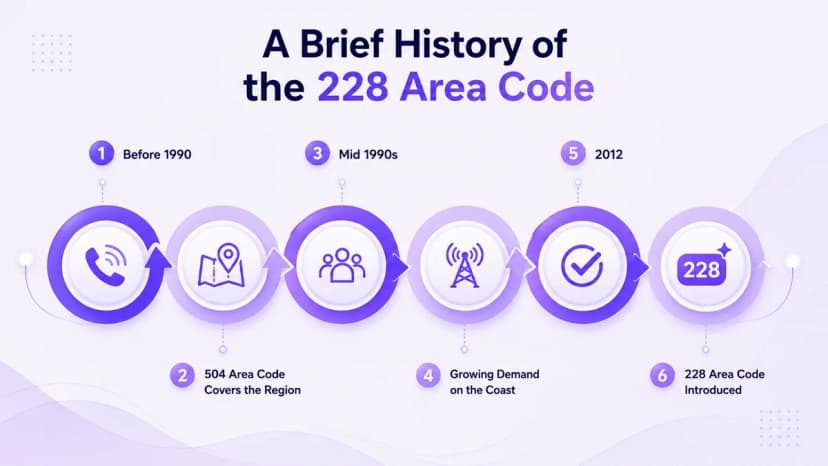
Mississippi originally ran on a single area code: 601. As the state's population and phone demand grew, regulators split the numbering plan. The 228 area code went into service on September 15, 1997. It was the second area code created in Mississippi, arriving two years before 662 covered the northern part of the state.
The split kept the region from running out of available phone numbers as the coastal economy expanded. Exhaustion studies since then show plenty of numbering capacity left, so a second overlay isn't expected anytime soon.
What Drives the Local Economy
Huntington Ingalls Industries alone employs thousands building Navy ships out of its Pascagoula yard, making shipbuilding one of the coast's biggest direct employers. Layer casino tourism on top of that — Biloxi and Gulfport's beachfront resorts draw visitors from across the Southeast — and call volume for hotels, restaurants, and service businesses spikes right along with the tourist season.
Keesler Air Force Base rounds out the picture with a steady military presence in Biloxi that ripples into local housing, retail, and healthcare demand. Between the base, the shipyards, and the casino floor, coastal call traffic rarely sits flat for long — spring break, peak summer tourism, and hurricane season alerts each bring their own noticeable surge.
Why Mississippi Gulf Coast Businesses Need Smarter Call Handling
Tourist season, shipyard hiring waves, and Keesler's PCS moves don't pause to let a short-staffed office catch up. Hurricane-season call spikes and casino promotion weekends hit Gulf Coast businesses hardest exactly when they can least afford a missed call.
That's where a system behind the number starts to matter more than the number itself. Ringflow's contact center platform routes inbound calls, coaches reps live, and keeps response times tight through the busiest stretches — the kind of structure a growing coastal business would otherwise need a dedicated ops hire to build.
Neighboring Codes and How to Tell Them Apart
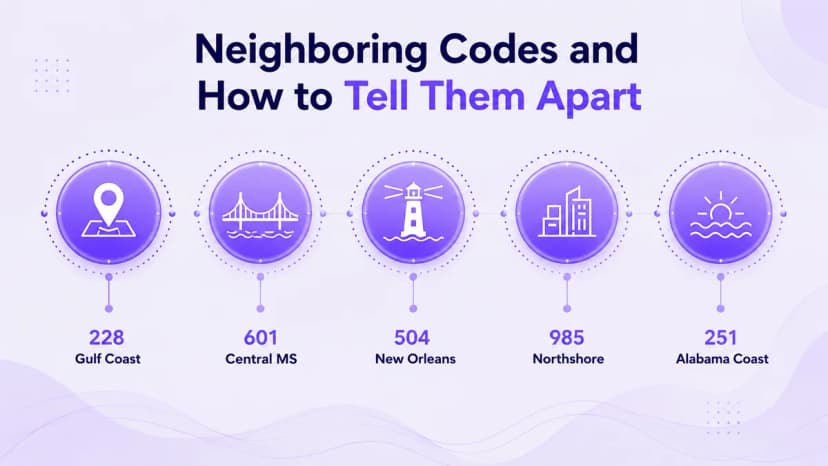
228's borders run up against three other prefixes: 601 and 769 to the north for central Mississippi and Jackson, 985 to the west for Louisiana's coastal parishes near New Orleans, and 251 to the east for Mobile and the Alabama coast.
A business running locations in both Gulfport and Mobile needs to treat 228 and 251 as genuinely separate markets in its call routing, not one blended coastal region — otherwise mismatched caller ID and misrouted tickets pile up fast. That's a mess that costs a sales or support team real hours every month if it isn't sorted out automatically at intake.
Choosing a Local Number for Your Business
A local number still earns its keep even now that most calls come through a mobile screen — a familiar prefix reads as "close by" to a customer before anyone's even spoken, which shows up directly in pickup rates.
But the number is only the front door. What happens once the call connects — a live rep, an AI receptionist, smart call routing — is what actually keeps a customer satisfied, and Ringflow's AI coaching helps a rep stay steady through an unpredictable queue whether that's a dental office in Ocean Springs or a real estate team in Gulfport.
Before committing to a 228 number, it's worth mapping out call volume across the year — tourist season, shipyard hiring waves, storm surges — since that pattern drives staffing and routing decisions far more than the prefix itself ever will. Businesses that plan around it scale smoothly through peak season; the ones that skip it scramble every time.
How to Spot and Avoid 228 Area Code Scams
A familiar local area code is exactly what scammers count on to lower someone's guard, and 228 is no different. Fake casino prize notices, callers posing as local government offices, and last-minute demands for gift cards or wire transfers are the patterns that show up most often here.
Any call pushing for an immediate decision or an unusual payment method deserves suspicion no matter what the caller ID shows — no legitimate Gulf Coast business or agency asks for instant payment over the phone. The FCC's national caller ID spoofing guidance covers this region the same as anywhere else in the country.
Conclusion
228 will keep tying Biloxi, Gulfport, and Pascagoula together as the Gulf Coast keeps growing around it. The history, the geography, and the seasonal traffic patterns behind three digits give residents and business owners a real edge, whether that's dialing a neighbor or juggling calls from all three counties at once.
A hotel front desk in Biloxi and a shipyard office in Pascagoula both lean on that same local weight. Ringflow's role is keeping pace with the growth behind it — handling rising call volume without losing the personal touch that built a business's reputation in the first place.
Understanding what 228 covers pays off in three ways: spotting scams faster, picking the right local number, and planning ahead for the volume swings that tourism and shipbuilding bring every year. From there it's a matter of acting on it — porting a number, training the team, or just saving a Gulf Coast contact the right way.
Hancock County's shoreline towns and Jackson County's industrial ports couldn't feel more different day to day, yet a single three-digit prefix ties that whole economic range together. Worth sorting out a modern call setup before the next tourist season or storm surge hits.
Ringflow's AI-assisted routing and live coaching help teams keep up without hiring ahead of demand.
Ready when you are
Fielding More Calls Than Your Gulf Coast Team Can Handle?
Ringflow's AI-assisted routing and live coaching help teams keep up without hiring ahead of demand. Get a free trial with Ringflow.
Frequently Asked Questions
The 228 area code is Mississippi's Gulf Coast telephone code, covering Hancock, Harrison, and Jackson counties. It's been active since September 15, 1997.
It covers Mississippi's southeastern coastline, including Biloxi, Gulfport, Pascagoula, and Ocean Springs. The region sits directly along the Gulf of Mexico.
This area code went into service on September 15, 1997. It split off from Mississippi's original statewide 601 area code.
Dial the full 10-digit format: 228 plus the 7-digit local number. This applies whether you're calling from inside or outside the area.
No area code is scam-proof, and 228 numbers are sometimes spoofed for fake casino or government calls. Verify unexpected requests independently before responding.
It operates on Central Time, the same zone used across the rest of Mississippi. Daylight saving time applies the same way it does statewide.
Costs vary by carrier and plan type, since pricing isn't standardized across providers. Business phone platforms typically bundle a local number into a broader service plan.
Tourism, casino promotions, and shipyard hiring cycles create sharp call volume spikes across the coast. Businesses without flexible routing and coaching tools often lose calls, and revenue, during these surges.