
Introduction
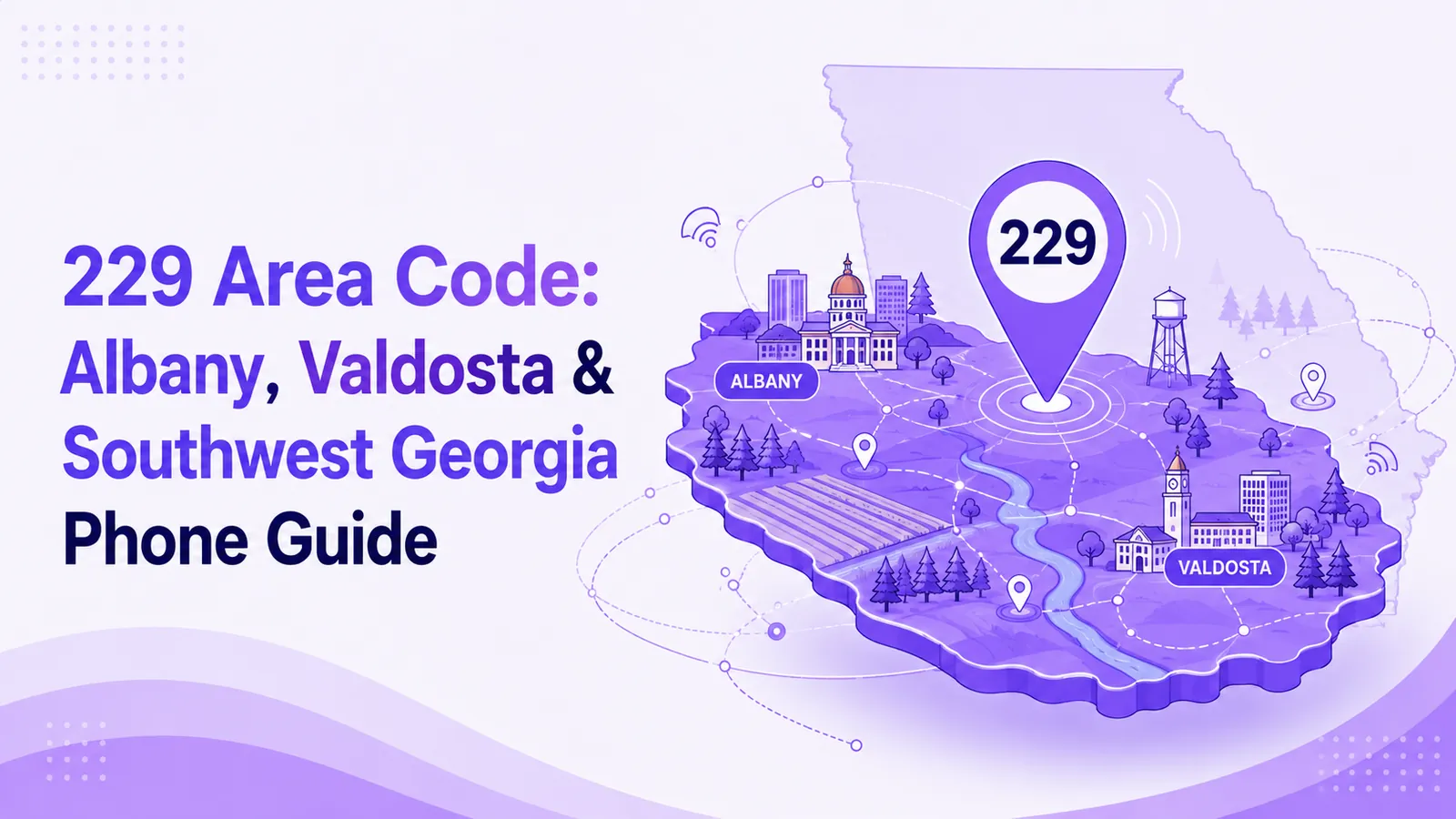
The 229 area code covers Albany, Valdosta, and dozens of smaller cities across the southwestern corner of Georgia, tying together one of the state's largest agricultural and healthcare regions under a single dialing prefix. Anyone opening a business, relocating, or fielding calls from this part of the state needs a clear picture of the boundaries and the trust that comes with the prefix.
Below is the county-by-county coverage, the story of the 2000 split, what a number actually costs to set up, and a look at why farm country calling habits make local presence matter more here than the average guide lets on — including a detail about answer rates that gets skipped almost everywhere else.
The 229 area code has covered the southwestern corner of Georgia since August 2000, when it split off from area code 912. It reaches 37 counties, anchored by Albany, Valdosta, Moultrie, and Thomasville. Getting a 229 area code number takes minutes online and costs nothing beyond a standard phone or VoIP plan. In a region built on farming and healthcare, rotating caller ID and a verified caller ID name change whether outbound calls even get answered.
What Is the 229 Area Code?
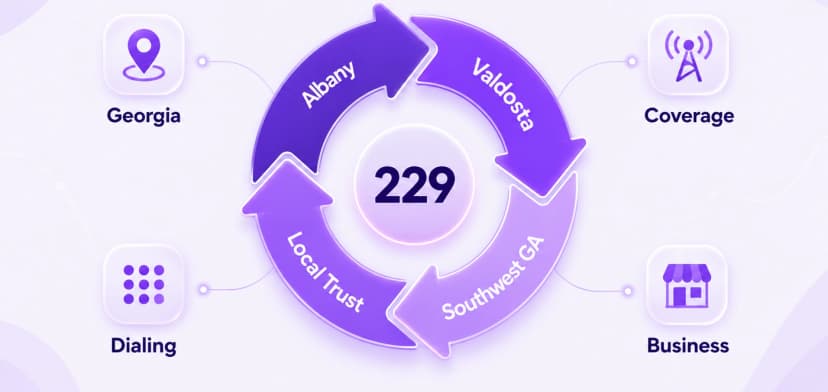
229 identifies Albany, Valdosta, and the surrounding region on the North American Numbering Plan, dialed as +1 (229) XXX-XXXX same as any US number. What sets it apart from regions of similar size is that it has never needed an overlay — every local number in the area still opens with those same three digits.
That single fact matters for planning ahead. Regulators projected in 2021 that the region wouldn't need a second code before 2029 at the earliest. Few area codes this size can say the same.
Where the Coverage Area Extends
Cities and Counties Covered
The 229 area code spans 37 counties, including Dougherty, Lowndes, Colquitt, Thomas, Tift, Crisp, Decatur, and Sumter. These counties make up the bulk of the region, stretching from the Alabama line to the edge of the Okefenokee area.
Major cities include Albany, Valdosta, Moultrie, Thomasville, Americus, Bainbridge, Tifton, and Fitzgerald, with smaller towns like Adel, Leesburg, Vienna, Ocilla, and Cairo filling in a map dominated by agriculture, small manufacturing, and regional hospital systems.
Albany and Valdosta — The Anchor Cities
Albany anchors the western half of the region as the seat of Dougherty County, home to Phoebe Putney Memorial Hospital and a large peanut and pecan processing industry. Valdosta anchors the east, driven by Valdosta State University and a busy logistics corridor along Interstate 75. Between the two, they're responsible for the lion's share of calls placed on this prefix.
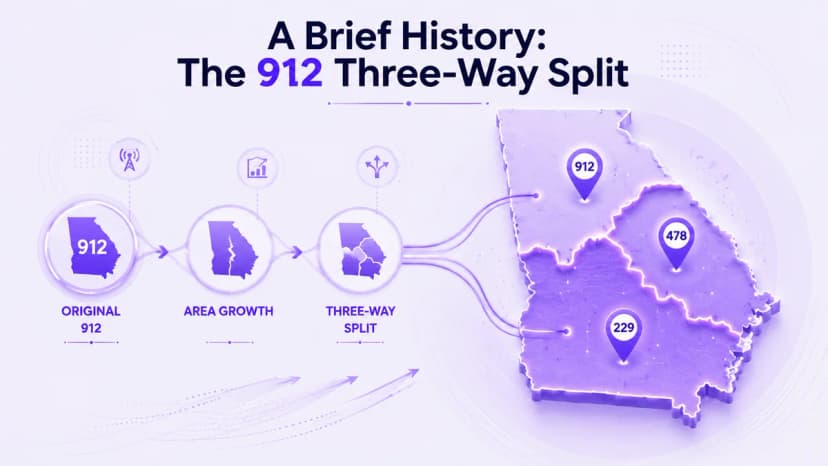
A Brief History: The 912 Three-Way Split
Created in the Year 2000
The 229 area code went live on August 1, 2000, as part of a three-way split of area code 912, which had served the entire southern half of Georgia for 46 years. Savannah and the coast kept 912, Macon and the middle of the state received 478, and the region's southwest corner became 229. Rapid growth in fax machines, pagers, and early cell phones had exhausted the old numbering supply well before the split.
Since 2000, this region has never needed a second code or an overlay. Careful number management has kept enough numbers in reserve for close to three decades and counting.
A Number Tied to Albany's Airport Code
On a telephone keypad, the digits 2-2-9 spell A-B-Y, matching the IATA code for Southwest Georgia Regional Airport in Albany. It's a small detail, but it's one locals notice, and it reinforces just how closely this area code is tied to Albany's identity in the region.
Time Zone and Dialing Format
Every county under 229 runs on Eastern Time — EST (UTC-5) in winter, EDT (UTC-4) once daylight saving kicks in. A full number breaks down as area code, three-digit exchange, then a four-digit line: (229) XXX-XXXX domestically, or +1-229-XXX-XXXX when dialing in from outside the country.
Because no overlay has ever been added, seven-digit dialing still works for many local calls inside the region, a feature fewer than 71 of the country's active area codes still offer. Dialing all ten digits, though, always connects without any risk of error.
Why This Area Code Matters for Businesses in the Region
Local Presence Across Agribusiness, Healthcare, and Logistics
A number from the 229 area code carries specific weight depending on who's calling. For an equipment dealer or supplier working farms across the southwestern corner of Georgia, it signals familiarity with planting and harvest schedules rather than a distant call center. For a healthcare recruiter reaching out to Phoebe Putney or a regional clinic network, it reads as a partner who already understands the area.
That familiarity affects whether a call even gets picked up. Rural callers screen unfamiliar numbers more aggressively than urban ones, largely because spam volume targeting agricultural communities has climbed steadily in recent years.
Rotating Caller ID and Answer Rates for Outbound Teams
What most guides to this code leave out: owning a 229 number by itself doesn't mean farms, clinics, and distributors will actually pick up. Dial the same line for every outreach push and carriers eventually flag it as spam once the volume adds up, local prefix or not.
Ringflow gets around that with Rotating Caller ID, which spreads outbound calls across a pool of numbers under one campaign so no single line racks up enough volume to trip a carrier's filters. Add a caller ID name that matches the business, and teams calling into Southwest Georgia's farm and clinic networks tend to see a real bump in connect rates over what one static number could ever manage.
How to Get a 229 Area Code Number
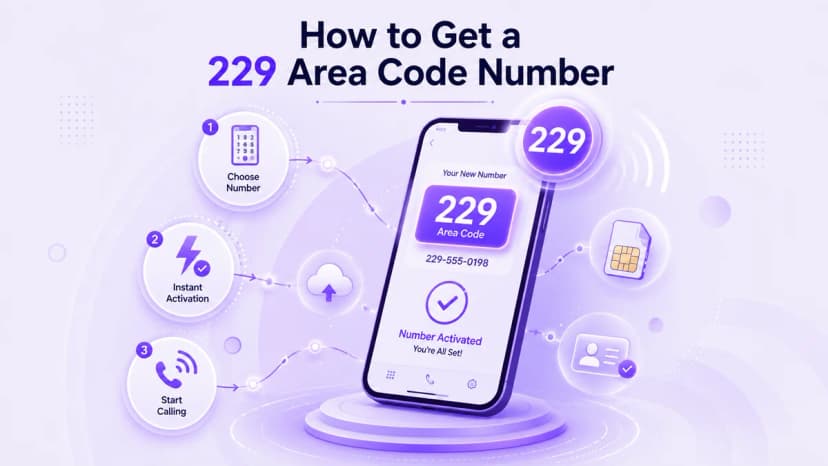
A Georgia mailing address is no longer a requirement for claiming a 229 number — see our area codes guide for how that works across states generally. Most providers hand over a reserved number within minutes of signing up online, and on Ringflow's side, an Albany or Valdosta number drops straight into an existing dialer and CRM without the usual separate porting forms. Here's what the setup looks like in practice:
- 1Choose a provider that supports Georgia numbers.
- 2Search available numbers by city or prefix.
- 3Select a number and confirm the plan.
- 4Connect the number to a phone, softphone, or contact center system.
- 5Test both inbound and outbound calls before going live.
A brand-new number is usually live the same day it's requested; porting an existing one over takes a handful of business days rather than the weeks it once did.
Is This Area Code Safe? Common Scams to Watch For
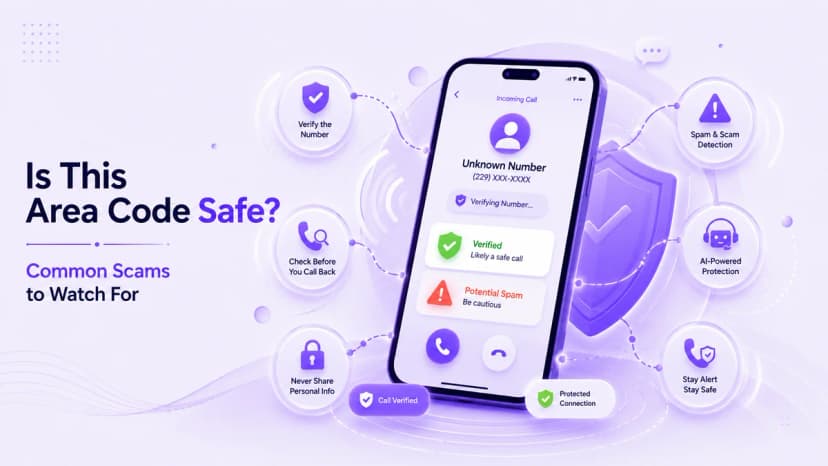
There's nothing dangerous about the 229 prefix itself — the risk comes from how much locals trust it, which is exactly what draws spoofers in. Fake calls dressed up as utility companies, county offices, or area hospitals bank on a familiar area code lowering someone's guard faster than an obviously out-of-town number would. Number reassignment and new prefixes get rolled out across the country constantly, and spoofed caller ID tags along with each one.
Watch for demands to pay something immediately, requests for a Social Security number or account details out of nowhere, or a caller claiming to be from a hospital or utility whose callback number doesn't match what's published. In nearly every case, hanging up and dialing the organization back using a number straight off a bill or its official site clears up whether the call was real within a minute.
Conclusion
Southwest Georgia has held onto the 229 prefix without a single split since 2000 — a quarter century of stability that's rare for a numbering plan this size. For businesses serving Albany, Valdosta, and the farm and hospital communities in between, a local number still reads as a genuine tie to the region rather than an outside call center.
Setting one up takes minutes with most providers, and the backstory — the 912 split, the Albany airport-code coincidence — gives 229 more character than most three-digit prefixes bother earning. But none of that regional goodwill counts for much if the calls it's attached to never get picked up.
Solving that answer-rate problem before it costs a deal is really the point. A 229 number combined with a rotating pool of caller IDs, a name that matches the business on the screen, and analytics on what each call actually does gets a business both a trusted local identity and the follow-through to justify it.
Ringflow bundles all of that into one platform, so a team working this region isn't forced to trade a local footprint for calls that actually connect. Whether it's a first Albany-area number or a fix for a campaign that's quietly losing steam, either one is set up faster than most people budget time for.
Ringflow pairs local numbers with rotating caller ID and real-time call analytics so calls across the southwestern corner of Georgia actually get answered.
Ready when you are
Tired of Your Outbound Calls to Southwest Georgia Going Straight to Voicemail?
Ringflow pairs local numbers with rotating caller ID and real-time call analytics so calls across the southwestern corner of Georgia actually get answered. Get a free trial with Ringflow.
Frequently Asked Questions
The 229 area code is a Georgia telephone code covering Albany, Valdosta, and 37 counties across the southwestern corner of Georgia. It has served the region without a split or overlay since August 2000.
It covers Albany, Valdosta, Moultrie, Thomasville, Americus, Bainbridge, and Tifton, along with dozens of smaller towns. The full coverage area sits entirely within the southwestern corner of Georgia.
The 229 area code launched on August 1, 2000, in a three-way split of area code 912. Savannah kept 912 and Macon received 478, while the southwest became 229.
Most VoIP providers let users search and reserve a 229 area code number online in minutes, with no Georgia address required. Full setup and number porting typically finish within a few business days.
The area code itself carries no risk, but scammers do spoof 229 numbers to impersonate hospitals, utilities, and county offices. Verifying any suspicious caller through an official callback number resolves most concerns quickly.