
Introduction
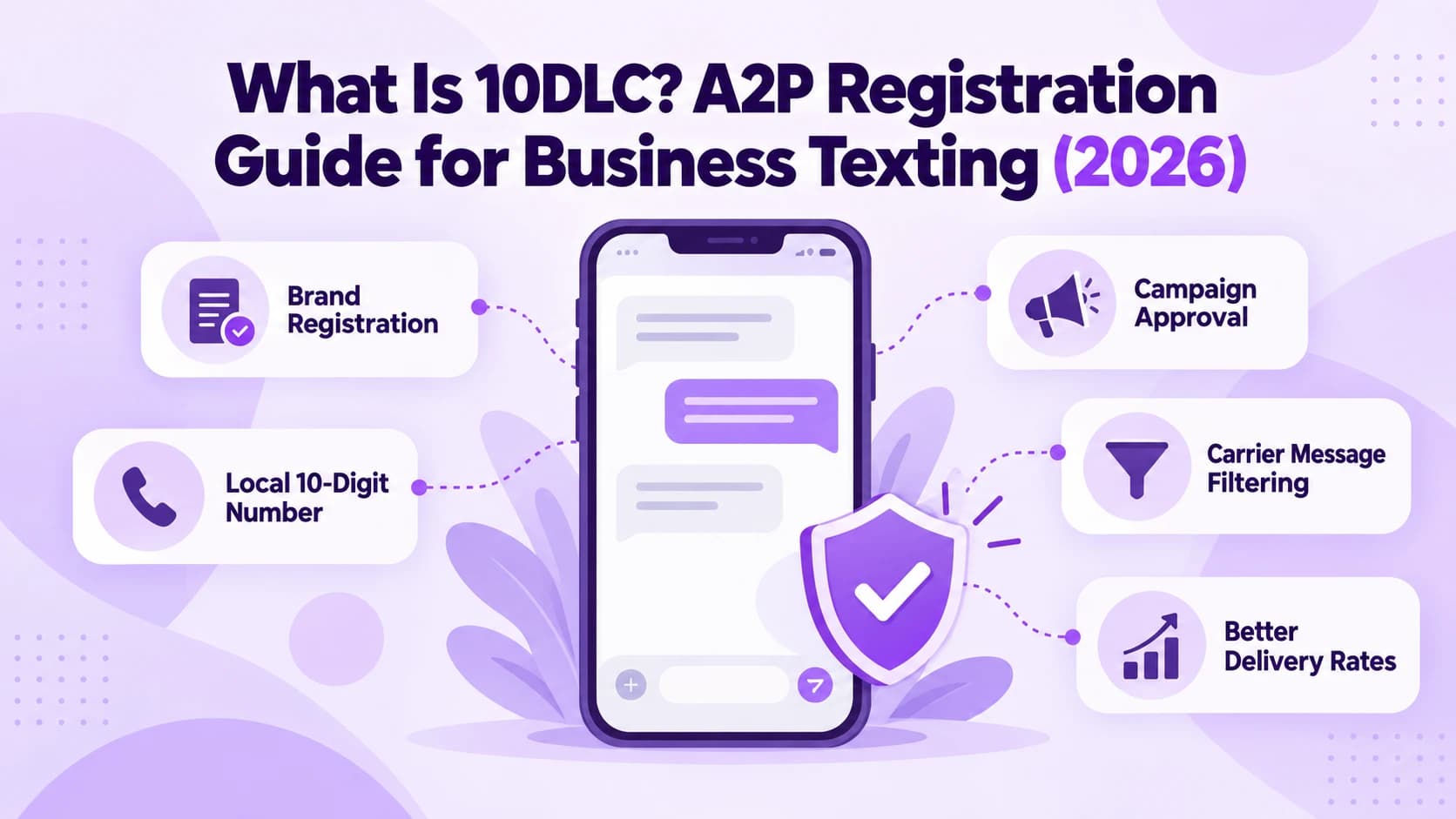
If you have ever wondered what is 10DLC and why your business texts suddenly stopped arriving, the answer is carrier registration. 10DLC is the system US carriers use to let companies send automated texts from a regular 10-digit number, and unregistered traffic is now filtered, delayed, or blocked before customers ever see it, regardless of message quality or how legitimate the business is.
This guide explains what is 10DLC in plain terms, then covers A2P messaging, the registration steps, the real fees, and the mistakes that get applications rejected. It also shows how to stay compliant after approval. By the end, you will know exactly what to submit, what it costs, and how to keep your campaign approved for the long term without surprises.
What Is 10DLC and Why Does It Exist?
10DLC stands for 10-digit long code, a messaging framework major US carriers built for application-to-person business texting. Before it existed, businesses either sent texts from ordinary long codes with no oversight or paid for expensive short codes. Carriers created a shared registry so every business text could be tied to a verified brand and a specific use case, which is what earns registered numbers better delivery.
Any business sending automated texts needs to register, from appointment reminders to order updates and verification codes, and carriers now filter unregistered traffic by default. If you are also comparing toll-free versus local numbers, note that toll-free numbers follow a separate verification process with their own throughput rules.
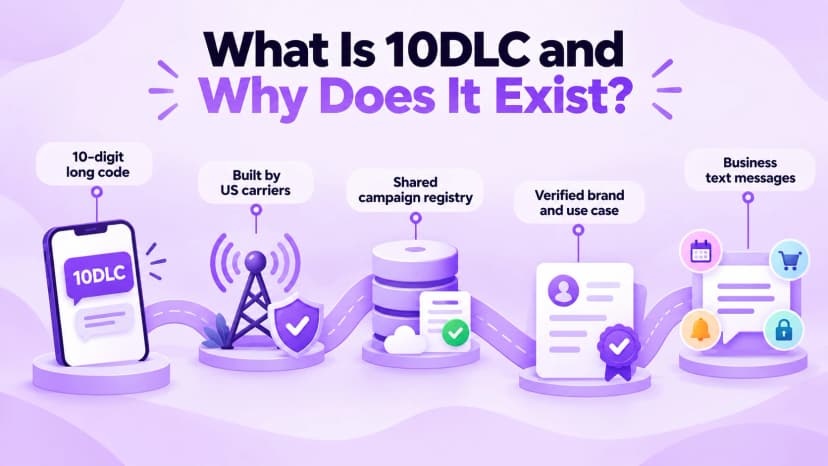
- Stands for 10-digit long code, meaning an ordinary local phone number that people already recognize
- Built by US carriers to separate legitimate business texts from spam and fraud
- Uses a shared database called The Campaign Registry to verify every sender before messages are delivered
- Ties every message to a verified brand and a specific campaign use case
- Covers appointment reminders, order updates, alerts, and verification codes for customers
- Costs far less than a short code, which often runs $500 to $1,000 monthly
- Toll-free numbers use a separate verification process instead of this one, so check which applies
- Short codes bypass most throughput limits but cost much more each month for the same number
What Is A2P 10DLC Messaging?
A2P stands for application-to-person, and it describes texts that software sends to people, as opposed to person-to-person texts between two individuals. Carriers treat this traffic differently because it is high volume and automated, which is exactly the kind of traffic spam filters watch most closely. Registering tells carriers upfront what your business does, who you text, and what your messages will say.
This distinction matters for delivery speed too. A2P traffic passes through extra carrier filtering layers built to catch bulk sending patterns, so registration and a clean sending history both affect how fast messages arrive. Consent still matters as well, since the Telephone Consumer Protection Act requires clear opt-in for marketing texts and registration provides no legal shortcut around that rule.
- P2P texts are sent by one person to another, usually at low volume and without any registration
- A2P texts are sent by software or platforms to many recipients automatically at scale
- Typical A2P uses include reminders, confirmations, delivery updates, and two-factor codes
- Carriers apply extra filtering layers to all high-volume A2P traffic before delivery
- Registered campaigns are trusted far more than unregistered ones by every major carrier
- Marketing texts always need documented opt-in consent before the first send, and those records must be kept
- Ringflow routes outbound texts through registered campaigns automatically
- Every campaign must state its use case before it can go live on any carrier
How to Complete 10DLC Registration Step by Step
Registration happens in two stages, brand first and campaign second. Start by gathering your legal business name, EIN, address, and website, since these details must match official records exactly. Many teams already run a business phone number for calls, and that same number can often carry a registered texting campaign too, which saves buying a second line and keeps customer conversations in one place.
Most delays happen at the campaign description, since vague or copy-pasted wording gets flagged for manual review. Expect the full process, from brand submission to campaign approval, to take roughly one to three weeks, depending on your provider and how complete your first submission is. Rushing the application usually costs more time than it saves in the end, especially when a rejection restarts the review clock.
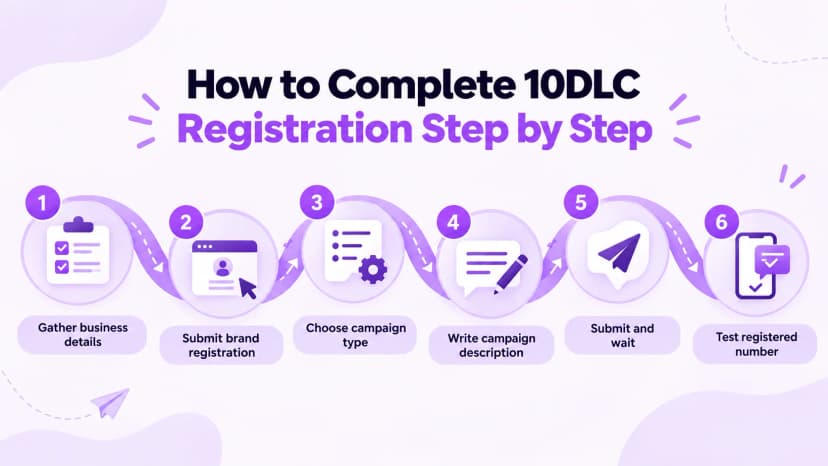
- Step one: gather your legal name, EIN, address, and website details in one place
- Step two: submit brand registration through your provider or directly with The Campaign Registry
- Step three: choose a campaign type that matches your real use case, not a broad one
- Step four: write a specific description with sample messages and opt-out language
- Step five: submit the campaign and wait for carrier vetting to finish, which can take days
- Step six: test the registered number with a few messages before launch to confirm delivery
- Many providers, including Ringflow, submit your brand and campaign details for you, saving your team time
10DLC Registration Fees and Trust Score Tiers
Registration is not free, and the ongoing cost catches many businesses off guard. Brand registration typically runs a few dollars as a one-time fee, while each campaign carries a monthly charge that varies by use case. Fees also differ by provider, so always check whether a quoted price already includes the required campaign fee before you compare plans or sign a contract.
Your trust score comes from how completely and accurately you fill out brand registration, not from how long you have been registered or how many messages you send. A sole proprietor with minimal verification usually lands in a low-throughput tier, while a fully verified business with a matching EIN and a clean registration history earns a much higher sending limit for the same campaign.
- Brand registration typically costs $4 to $10 as a one-time fee, though prices vary by provider
- Campaign registration typically costs $10 to $15 monthly per campaign, depending on the use case
- Low trust scores may cap sending near 75 messages per minute on shared throughput
- High trust scores can reach 500 or more messages per minute on dedicated throughput
- Each additional campaign adds its own separate monthly fee
- Consolidate similar use cases under one well-described campaign to save money and reduce paperwork
- Sole proprietors usually receive lower throughput than fully verified companies with matching records
- Some providers bundle campaign fees into a monthly platform cost, so read the invoice carefully
Common 10DLC Compliance Mistakes That Get Applications Rejected
Most rejections are not about breaking a rule. They happen because carriers lack enough information to trust that your texts are legitimate, and a vague or inconsistent application gives reviewers nothing to verify. The good news is that nearly every rejection can be fixed with a more specific and accurate resubmission that answers the reviewer's exact concern. If your texts are already failing, our guide to why a text message shows as not delivered covers the other common causes.
The most common cause is a mismatch between the business name on the application and the name on official tax records. The second is a generic description such as general business texting, which gets rejected far more often than a detailed use case that explains exactly who receives which messages, how they opted in, and why they expect to hear from you.
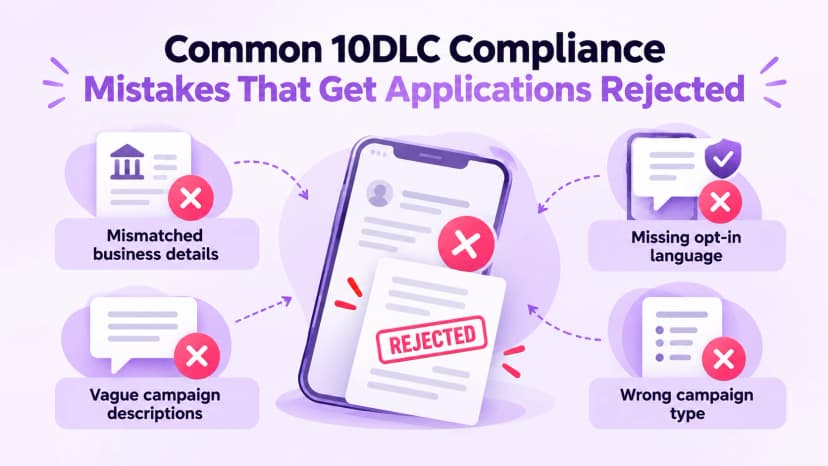
- Mismatched business details: the name must match your EIN records exactly, character for character
- Vague campaign descriptions: general texting is rejected far more often
- Missing opt-in language: every sample message needs visible opt-in and opt-out text
- Wrong campaign type: marketing texts under customer care cause ongoing filtering and blocked messages
- Copy-pasted descriptions: reused wording often gets flagged for manual review by carriers
- Inconsistent websites: reviewers often check that your site matches your brand
- Missing privacy or consent terms: reviewers frequently look for them on your site
- Resubmitting unchanged: always fix the stated rejection reason first before sending again
Staying Compliant After Your Campaign Is Approved
Compliance does not end once your campaign is approved. Carriers keep monitoring message content, complaint rates, and opt-out handling on an ongoing basis. A spike in spam complaints or a sudden change in volume can trigger a review even on a previously approved campaign, so treat approval as the start of an ongoing responsibility rather than the finish line, because carriers keep checking.
Keep your opt-out process working, since carriers actively test whether STOP requests are honored, and testing it yourself each quarter is wise. The CTIA messaging best practices document sets out the principles carriers use to judge every campaign, and it is worth reading before you write your first sample message or change an approved campaign.
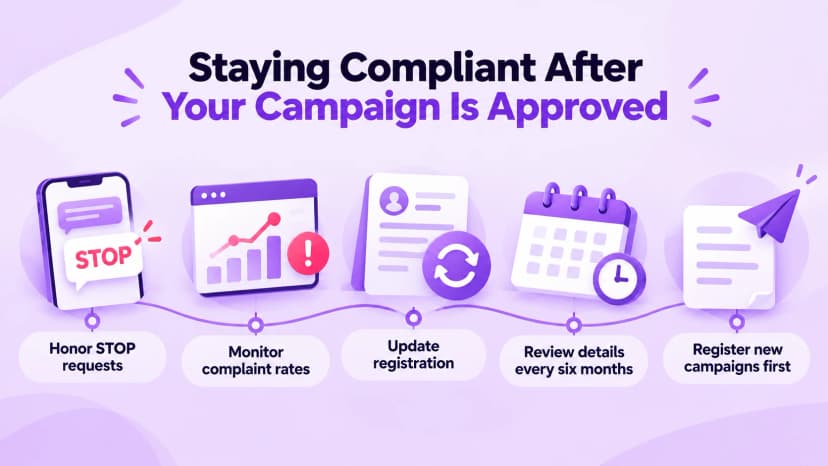
- Honor every STOP request immediately and confirm the opt-out to the sender in a short reply
- Monitor complaint rates and pause any campaign that suddenly spikes until you find the cause
- Update your registration whenever your actual use case changes, not months later
- Review your campaign details every six months with a calendar reminder
- Register new campaigns before launching any new type of message
- Keep consent records for every number your business texts, including the date
- Small senders can wait, but planned marketing pushes need registration first, before any launch
Conclusion
10DLC exists to let legitimate businesses text customers reliably without getting caught in the filters built to block spam. Registration takes two steps, a fee structure most businesses can budget for easily, and a level of detail that carriers reward with better throughput. Getting your business details and campaign description right the first time avoids the delays that trip up so many applications and keeps your messages moving.
Treat registration as a one-time setup cost that protects your texting program for years, not a hurdle to rush through. Review your campaign description periodically so it still matches how you actually text customers. Ringflow handles registered A2P 10DLC campaigns directly, so your team never manages carrier paperwork alone. Start a free trial and set up business texting the right way.
Ready when you are
Tired of Your Business Texts Getting Filtered Before They Reach Customers?
See how Ringflow handles your registration and compliance so your messages actually get delivered.
Frequently Asked Questions
It's a messaging framework for sending application-to-person texts from a standard 10-digit number. It requires brand and campaign registration through The Campaign Registry before carriers deliver messages reliably.
Yes, for any business sending automated texts from a standard 10-digit number. Carriers filter, delay, or block unregistered traffic by default, so unregistered messages often never reach customers.
Most businesses register through their texting provider, including Ringflow, which submits your brand and campaign details for you. You can also register directly through The Campaign Registry if you prefer to manage it yourself.
Register before sending any automated business texts, since unregistered traffic gets filtered more aggressively every year. Waiting until messages get blocked costs you weeks of delivery while registration catches up.
Submit brand details first, then register a campaign with a specific use case and sample messages. Carriers vet both submissions and assign a trust score that determines your sending throughput.