
Introduction
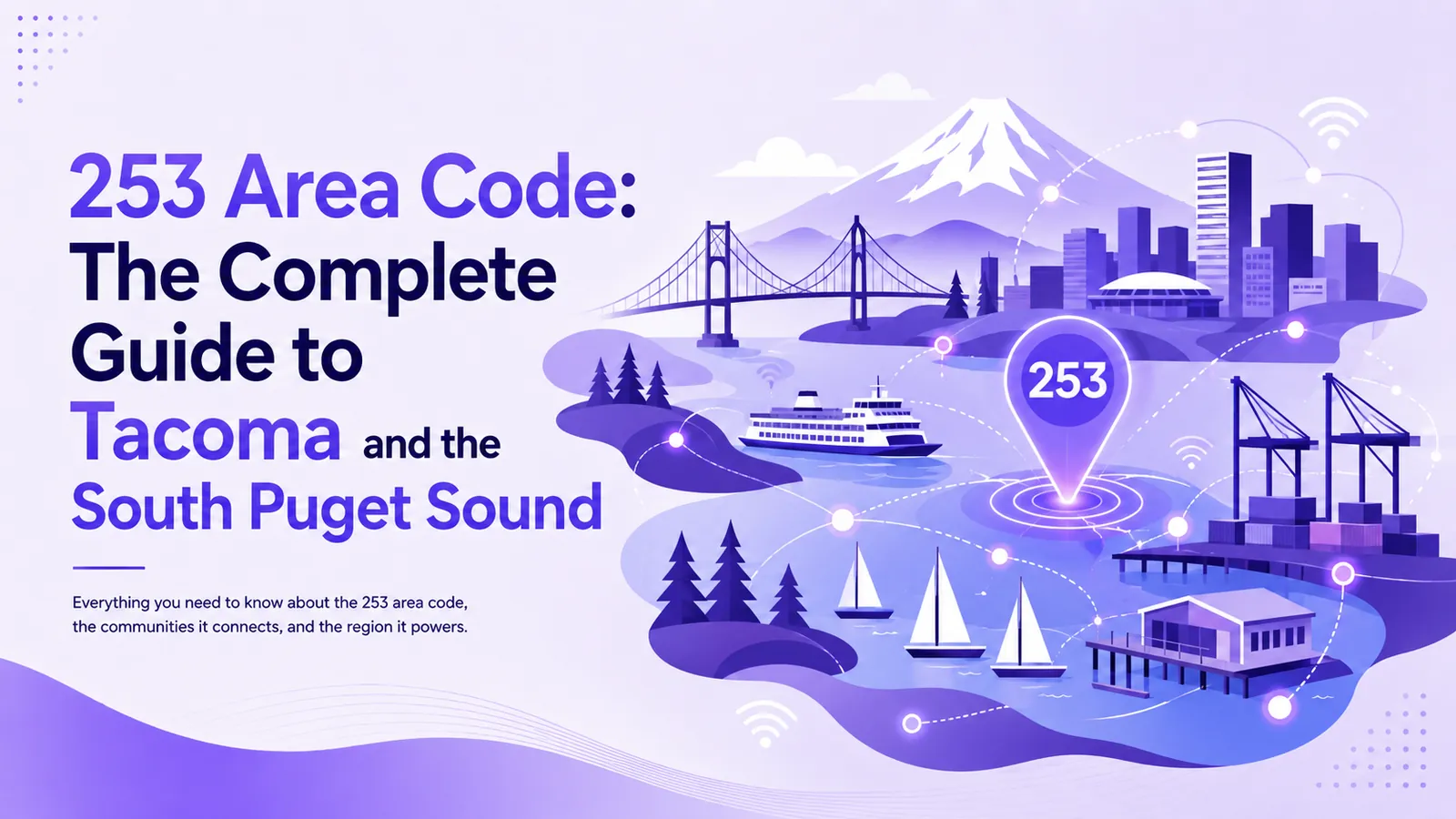
253 on a bill, a missed call, or a business card points to one place: Tacoma and the south Puget Sound. This guide covers what that prefix actually reaches, since knowing its boundaries is what separates confidently dialing, verifying, and routing calls from just guessing.
Coming up: the cities under this code, how it split off in 1997, the scam patterns to watch for, and why companies across the region — from the Port of Tacoma to Joint Base Lewis-McChord — are rethinking how they staff their phones as they grow.
The 253 area code serves Tacoma, Federal Way, Auburn, Lakewood, and the surrounding south Puget Sound. It went into service on April 27, 1997, when the original 206 area code split into three regions. Major cities include Tacoma, Federal Way, Auburn, Lakewood, Puyallup, and Gig Harbor. Military PCS moves, port shipping cycles, and tech commuting are pushing local businesses toward smarter call handling.
What Is the 253 Area Code?
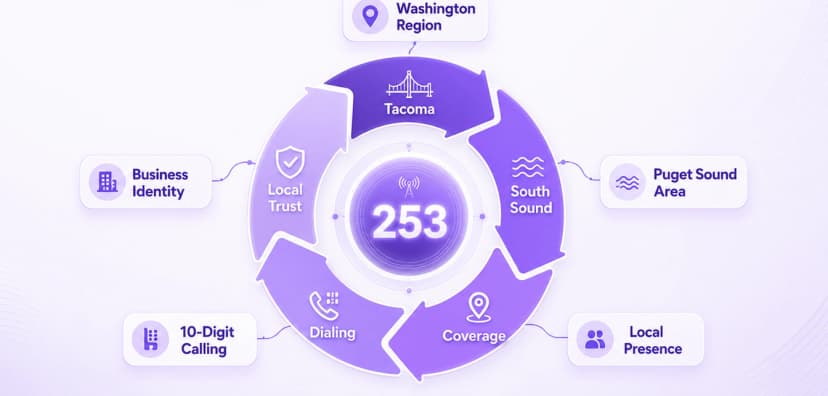
253 marks southern King County and western Pierce County on the North American Numbering Plan — Tacoma, Federal Way, and Auburn all fall inside this boundary. It's covered this exact stretch of Washington since 1997 without ever sharing the territory with another code.
A landline, a mobile line, a VoIP business number — whatever the connection, a 253 number ties back to this corner of the state. Outside the region, seeing "253" flash on a screen reads as an instant signal: someone near Tacoma is calling.
Where Is This Area Code Located?
The prefix covers southern King County and western Pierce County, stretching from Tacoma down through the region. It reaches communities shaped by shipping ports, military bases, and a mix of suburban and industrial land.
Cities and Communities Covered
Tacoma does the heavy lifting economically as Washington's third-largest city, pulling in port traffic and a growing downtown business scene. Federal Way, Auburn, Lakewood, Puyallup, and Gig Harbor fill out the rest of the map, with Gig Harbor holding onto more of a quiet waterfront character than the others.
More than two million people live across the cities and counties this prefix covers, making it one of the denser stretches of the Pacific Northwest outside Seattle proper. Federal Way and Auburn carry a disproportionate share of that population as retail, logistics, and healthcare hubs, while Tacoma's downtown core has been steadily adding tech and healthcare employers who commute into the wider Seattle job market.
Time Zone and Dialing Format
253 keeps Pacific Time, same as the rest of western Washington. Every local call needs the full ten digits now — area code included — which matches the national standard, and leaving the prefix off a saved contact is a common cause of failed calls on mobile carriers.
A Brief History of the 253 Area Code
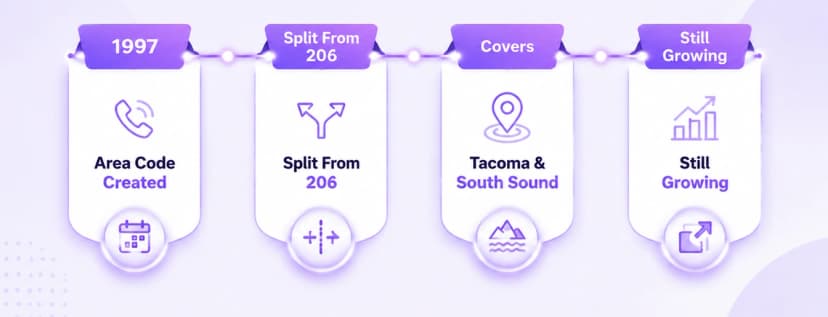
Washington state originally ran on a single area code covering the Seattle region: 206. As population and phone demand grew through the 1990s, regulators split the numbering plan into three parts. The 253 area code went into service on April 27, 1997, covering the region while 425 took the area north and east of Seattle.
Splitting off gave the region breathing room to keep issuing new numbers as the regional economy expanded, rather than running dry on combinations. It now sits inside overlay complex 564, so a second set of numbers can be layered in without touching any existing 253 number once capacity actually runs low.
What Drives the Local Economy
The Port of Tacoma ranks among the busiest container ports in North America on its own, employing thousands directly and feeding a network of warehouses and distribution centers across Auburn and Puyallup that pull freight traffic from up and down the West Coast — a steady source of call volume for logistics firms, staffing agencies, and the service businesses that support them.
Joint Base Lewis-McChord near Lakewood adds another layer entirely, a massive military presence that shapes local housing, retail, and healthcare demand well beyond the base gates. With shipping, logistics, and military activity all overlapping, call traffic across the south Puget Sound almost never sits flat — PCS moving season, port labor cycles, and holiday freight pushes each drive their own sharp surge.
Why Local Businesses Need Smarter Call Handling
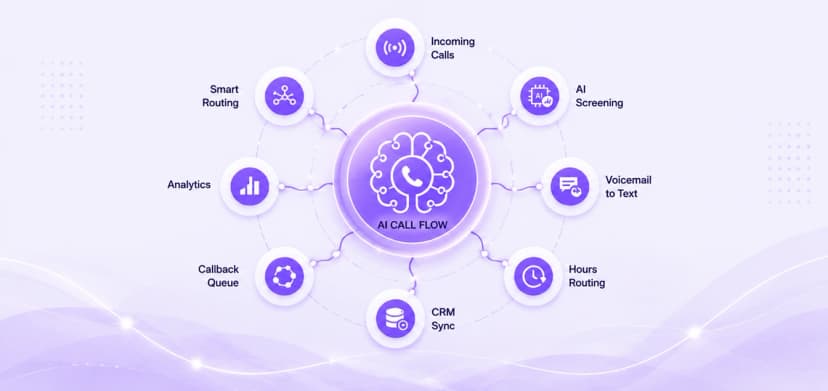
PCS move-in weeks, port contract renewals, and holiday shipping surges hit this region on their own schedule, regardless of whether a business has the staff to answer. A missed call during any of those windows is lost revenue that doesn't come back.
The number alone doesn't solve that — the system handling the call once it connects does. Ringflow's contact center platform routes inbound calls, coaches reps live, and keeps response times fast through high-volume stretches, giving a growing team that structure without hiring a dedicated ops person to build it.
Neighboring Codes and How to Tell Them Apart
253 sits between three other prefixes worth knowing apart: 206 and 564 to the north for Seattle proper, 425 to the northeast for the Eastside (Bellevue, Redmond), and 360/564 to the south and west for the Olympic Peninsula and southwest Washington.
A business with a Tacoma office and a Bellevue office needs routing logic that treats 253 and 425 as genuinely separate markets rather than one blended greater-Seattle region. Skip that step and the fallout lands as mismatched caller ID and support tickets routed to the wrong desk — the kind of manual cleanup that shouldn't need to happen if intake is set up correctly from the start.
Choosing a Local Number for Your Business
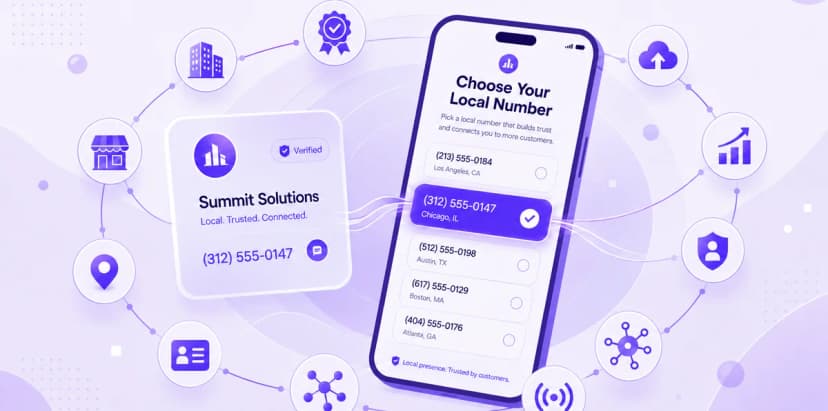
A local number still carries weight even now that most calls come in on a mobile screen — it reads as "nearby" before a word is exchanged, and that alone shows up in pickup rates.
But the number only gets a call answered; what happens next is what keeps the customer. A live rep, an AI receptionist, or smart routing all matter more once the line connects, and Ringflow's AI coaching keeps reps steady through an unpredictable queue whether it's a moving company in Lakewood or a logistics broker in Auburn.
PCS moving season, port shipping cycles, and holiday freight surges are all predictable enough to plan staffing around, well before committing to a 253 number — the businesses that map that out ahead of time are the ones that glide through peak season instead of scrambling through it.
How to Spot and Avoid 253 Area Code Scams
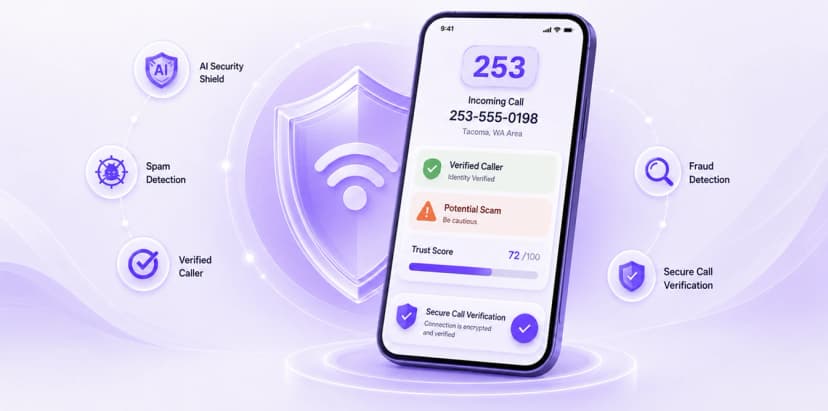
Trust in a familiar local prefix is exactly what scammers lean on, and 253 sees its share of it. Watch for fake port authority notices, callers posing as military housing offices, and sudden demands for gift cards or wire transfers.
A call pushing for an immediate decision or an unusual payment method is a red flag no matter what the caller ID shows — no legitimate business or agency here demands instant payment over the phone. The FCC's national spoofing guidance covers Puget Sound callers the same as anyone else.
Conclusion
Federal Way's retail corridors, Gig Harbor's waterfront offices, and the container cranes at the Port of Tacoma don't have much in common day to day — yet the same three-digit prefix answers for all of it, and understanding that spread is what turns 253 from a random set of digits into a real local signal.
That signal loses value fast if the phone behind it can't keep up. Military relocation waves and port shipping cycles don't wait for a business to staff up, which is exactly the gap Ringflow closes — routing calls, coaching reps, and absorbing rising volume so a warehouse office in Auburn or a housing desk near the Lakewood base still feels like the same team a customer talked to last time, even during the busiest stretch of the year.
Three things separate a business that's actually ready from one that isn't: knowing the scam patterns, picking a number that fits the market, and mapping call volume against the seasons that drive it here. None of that takes long to sort out — porting a number, training a team, or saving a Tacoma contact correctly are each a few minutes' work, best done before the next PCS moving season or freight surge lands.
Ringflow's AI-assisted routing and live coaching help teams keep up without hiring ahead of demand.
Ready when you are
Fielding More Calls Than Your South Puget Sound Team Can Handle?
Ringflow's AI-assisted routing and live coaching help teams keep up without hiring ahead of demand. Get a free trial with Ringflow.
Frequently Asked Questions
The 253 area code is Washington's regional telephone code for Tacoma, Federal Way, Auburn, and Lakewood. It's been active since April 27, 1997. It operates on Pacific Time, the same zone used across the rest of western Washington. Scheduling calls with local clients is straightforward.
It covers southern King County and western Pierce County, including Tacoma, Federal Way, Auburn, and Gig Harbor. The region sits directly along Puget Sound.
This area code went into service on April 27, 1997. It split off from Washington's original 206 area code alongside 425. Daylight saving time applies the same way it does statewide.
Dial the full 10-digit format: 253 plus the 7-digit local number. This applies whether you're calling from inside or outside the area. Costs vary by carrier and plan type, and business phone platforms typically bundle a local number into a broader service plan.
No area code is scam-proof, and 253 numbers are sometimes spoofed for fake port authority or government calls. Verify unexpected requests independently before responding. Military PCS moves, port shipping cycles, and holiday freight pushes create sharp call volume spikes across the region, so flexible routing matters.