
Introduzione
IL 210 prefisso copre San Antonio, Texas: questa guida illustra la sua copertura, la sua storia e come impostare un numero di attività commerciale locale. Un prefisso familiare cambia se i clienti nelle vicinanze rispondono effettivamente alle tue chiamate.
Imparerai quali parti della metropolitana rientrano in questo codice, come la numerazione è stata effettivamente divisa in tre parti nel 1997 e perché ha un peso reale per le attività militari, mediche e turistiche.
- Il prefisso 210 copre San Antonio e la maggior parte della contea di Bexar.
- L'overlay 726 (ottobre 2017) significa che ogni chiamata locale richiede la composizione di 10 cifre, anche all'interno dello stesso quartiere.
- 210 si separò da 512 nel 1992, per poi dividersi in tre modi nel 1997 in 210, 830 e 956, rendendo l'odierno territorio 210/726 un'enclave geografica circondata interamente da 830.
- Le basi militari, il centro medico e l'industria del turismo di San Antonio si basano tutti fortemente su un numero locale riconoscibile.
Dove si trova il prefisso 210?
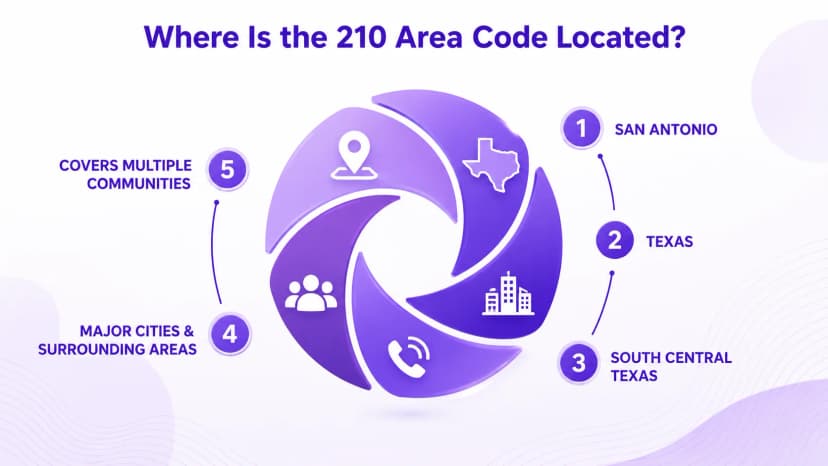
Il prefisso 210 copre la maggior parte della contea di Bexar, dal River Walk del centro fino alla periferia, oltre a piccole porzioni delle contee di Atascosa, Comal, Guadalupe, Medina e Wilson.
È il prefisso principale di San Antonio, la settima città più grande degli Stati Uniti, che serve un'area metropolitana di oltre due milioni di persone.
Downtown, Alamo Heights, Stone Oak e Southtown rientrano tutti in questa copertura. Le città più piccole di Hill Country come Boerne utilizzano invece il prefisso 830 circostante, quindi un numero 210 segnala specificamente San Antonio, non la regione più ampia.
Questa distinzione ha un peso reale dal punto di vista commerciale. San Antonio si trova al centro del commercio del Texas meridionale, ancorando un’economia metropolitana costruita sulla spesa militare, sulla sanità e sui dollari del turismo – tre settori in cui un numero locale riconoscibile funziona più che nella maggior parte degli altri mercati.
La sovrapposizione 210/726 e la composizione a 10 cifre
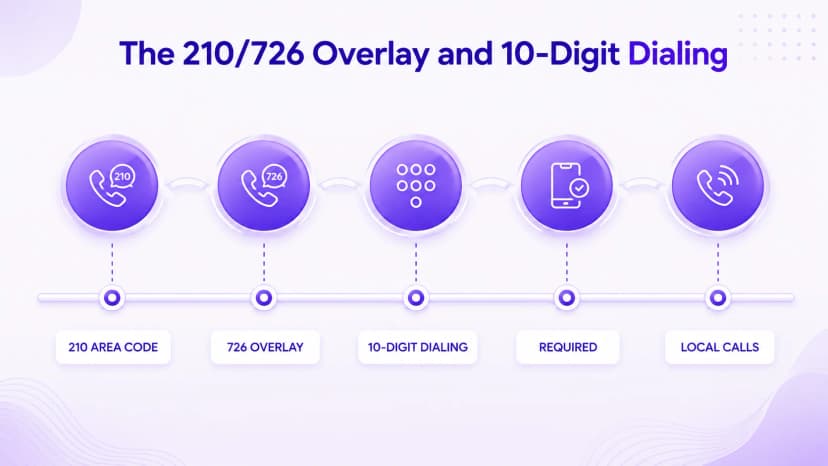
La crescita di San Antonio alla fine ha esaurito le combinazioni disponibili solo sotto 210, quindi i regolatori hanno annunciato 726 come overlay nell'agosto 2016 e l'hanno attivato nell'ottobre 2017 invece di dividere nuovamente la regione.
Poiché due codici ora condividono un'impronta, ogni chiamata locale richiede Composizione a 10 cifre, comprese le chiamate tra due numeri 210 nello stesso stabile.
Se la tua azienda stampa ancora un numero di 7 cifre su un cartello o su una fattura, aggiornalo: i clienti che compongono esattamente ciò che è stampato si ritroveranno in un vicolo cieco.
Sovrapposizioni come questa sono ora la soluzione nazionale standard quando una regione è a corto di combinazioni, favorita da una divisione geografica dirompente che costringerebbe tutti a cambiare numeri.
Una breve storia del prefisso 210
Il prefisso 210 ha cambiato forma due volte da quando è apparso per la prima volta, e quella storia modella ancora il modo in cui il numero viene percepito oggi:
- 1992 — Nasce 210. Non esisteva fino al 1° novembre 1992, quando si separò dal 512, che copriva un'enorme distesa del Texas centrale e meridionale, inclusa Austin, dal 1947.
- 1997: una divisione in tre. Solo cinque anni dopo, il 7 luglio 1997, 210 si sono divisi in tre parti: la contea di Bexar ne ha mantenuti 210, i sobborghi di Hill Country sono diventati 830 e la valle del Rio Grande è diventata 956.
- Oggi: un'enclave geografica. Questa divisione rende l’attuale territorio 210/726 un’enclave geografica, completamente circondata da 830 abitanti su ogni lato, e dà alle imprese locali un segnale inequivocabile di esattamente dove operano.
- I prefissi più recenti di un track record non possono corrispondere. Poche città del Texas possono rivendicare un’indipendenza così netta: alle aziende che hanno operato qui da prima del 1992 a volte viene ancora chiesto se il loro numero sia cambiato, decenni dopo.
210 contro 726 contro 830 contro 956
La cronologia della numerazione della contea di Bexar è facile da confondere. Ecco come si collegano effettivamente i quattro codici:
| Prefisso | Tipo | Regione coperta | Introdotto |
|---|---|---|---|
| 210 | Codice originale (post-1997) | La maggior parte della contea di Bexar - nucleo di San Antonio | 1992 / 1997 |
| 726 | Sovrapposizione di 210 | Ingombro identico al 210 | 2017 |
| 830 | Diviso da 210 | Hill Country e periferia di San Antonio | 1997 |
| 956 | Diviso da 210 | Valle del Rio Grande | 1997 |
In breve: 210 e 726 sovrapposizione sono due etichette per lo stesso territorio di San Antonio, mentre 830 e 956 sono regioni completamente separate che facevano parte di 210.
Nessuno dei quattro indica il quartiere esatto di chi chiama, solo su quale lato di una divisione trentenne si è fermato un numero.
Perché le aziende scelgono un numero 210
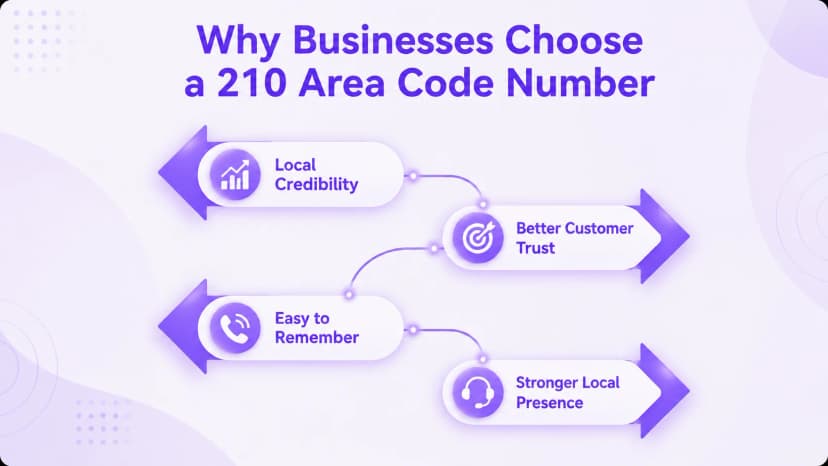
Un numero locale qui fa un vero lavoro oltre a sembrare familiare su un ID chiamante:
- Militare e governo. La base congiunta San Antonio si estende su Fort Sam Houston, Lackland e Randolph, una delle più grandi basi militari del paese. Gli appaltatori e i servizi di trasferimento beneficiano di un numero di personale in servizio attivo e di veterani immediatamente riconoscibili come locali.
- Medicina e turismo. Il South Texas Medical Center è l'ancora di uno dei centri medici più grandi dello stato, mentre Alamo e River Walk attirano milioni di turisti ogni anno: entrambi necessitano di servizi affidabili instradamento di volumi di chiamate elevati.
- Tecnologia e sicurezza informatica. San Antonio si è costruita la reputazione di centro di sicurezza informatica, in parte grazie alla sua vicinanza alle operazioni di intelligence militare. Le aziende con sede qui mantengono un numero locale per segnalare il root anche durante le assunzioni da remoto.
Ciò che lega insieme questi settori è la fiducia basata sul riconoscimento: un ID chiamante familiare risponde in modo più coerente di uno che non lo è, indipendentemente dal settore.
Come ottenere un prefisso 210
Per ottenere un numero aziendale per questa regione non è necessario un indirizzo fisico a San Antonio o un conto bancario locale: l'intero processo viene eseguito online e richiede pochi semplici passaggi.
- 1Scegli un fornitore. Scegli un servizio telefonico cloud che elenchi i numeri di San Antonio come inventario disponibile.
- 2Cerca il tuo numero. Sfoglia le combinazioni e scegline una facile da ricordare per i clienti.
- 3Verifica il tuo account. La maggior parte dei fornitori necessita solo di un nome, un'e-mail e un metodo di pagamento.
- 4Attiva e instrada le chiamate. Indica il numero al tuo team, a una coda o a un assistente automatico.
- 5Prova prima di pubblicare. Chiamalo e invialo tu stesso per confermare prima che il routing funzioni.
Se stai valutando un numero di San Antonio rispetto a a opzione gratuita, UN numero locale generalmente costruisce una fiducia più specifica per l'area. Ringflow emette 210 numeri attraverso lo stesso processo, in diretta lo stesso giorno.
Errori comuni nella scelta di un numero di San Antonio
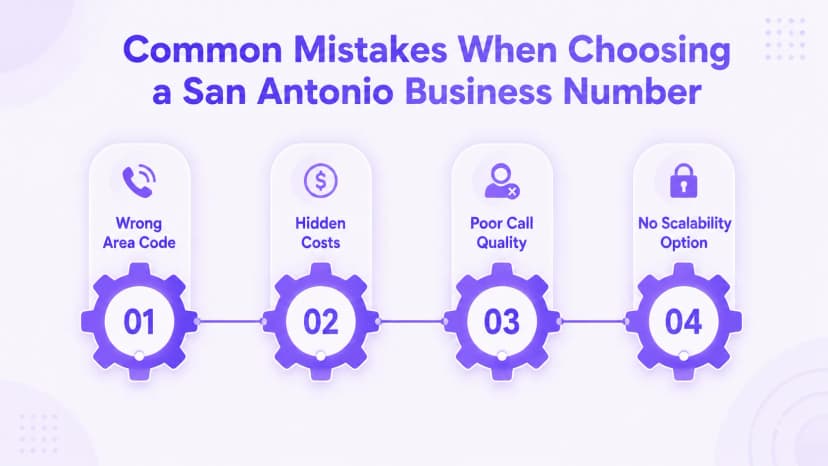
Alcuni errori evitabili fanno inciampare le aziende che impostano il servizio qui per la prima volta.
- Stampa di sole 7 cifre. L'overlay 726 richiede la composizione di 10 cifre, quindi un numero incompleto sul materiale di marketing semplicemente non si collegherà.
- Confondere 210 con 830 o 956. Tutti e tre risalgono allo stesso prefisso originale, ma solo 210 (e la sua sovrapposizione 726) significa San Antonio vero e proprio oggi.
- Ignorando il pubblico militare e medico. Le aziende che saltano questo segmento perdono una quota ampia e stabile della base di clienti locale.
- Saltare una chiamata di prova dopo l'attivazione. Conferma che il routing funzioni correttamente prima che il numero raggiunga i clienti.
Anche le cifre portano con sé qualche curiosità locale: sulla tastiera di un telefono, 726 corrisponde a S-A-N. Radio pubblica del Texas ha confermato con l'autorità di numerazione che si tratta di una coincidenza, non di un'intenzione, ma è un modo pratico per ricordare quale codice in sovrapposizione appartiene a San Antonio.
Conclusione
IL 210 prefisso offre alle aziende una linea diretta con una delle principali città in più rapida crescita del paese.
La sua storia – una divisione del 512 nel 1992, poi una divisione in tre nel 1997, quindi la sovrapposizione del 726 nel 2017 – spiega la maggior parte della confusione in cui si imbattono coloro che chiamano per la prima volta.
Poiché la regione fonde industrie militari, mediche, turistiche e tecnologiche, un numero locale qui funziona con una base di clienti veramente diversificata. Ringflow semplifica la richiesta di un numero che copre la contea di Bexar e l'inoltro al tuo team lo stesso giorno.
Sia che tu stia aprendo una prima sede o aggiungendo una presenza a San Antonio a un'attività esistente, la mappa di copertura, le regole di sovrapposizione e l'economia locale puntano tutti nella stessa direzione: un numero 210 riconoscibile vale i pochi minuti necessari per l'impostazione.
Pronto quando lo sei tu
Suono locale dal River Walk a Stone Oak
Ringflow ti aiuta ad attivare un prefisso 210 e a instradarlo al tuo team in pochi minuti: prova gratuita, nessuna carta richiesta.
Domande frequenti
Il prefisso 210 è il prefisso telefonico principale di San Antonio, Texas, creato il 1 novembre 1992 separandosi dal prefisso 512. Copre San Antonio e la maggior parte della contea di Bexar.
Non c'è differenza geografica: 726 è un overlay attivato nell'ottobre 2017 che condivide esattamente la stessa impronta di San Antonio del 210. Entrambi sono ugualmente locali; 726 è stato introdotto perché 210 ha esaurito le nuove combinazioni di numeri.
Tutti e tre risalgono a un'unica suddivisione in tre parti del prefisso 210 il 7 luglio 1997. Oggi solo 210 e la sua sovrapposizione 726 coprono San Antonio vero e proprio; 830 copre la periferia di Hill Country e 956 copre la valle del Rio Grande.
Copre San Antonio, Texas, compreso il centro, Alamo Heights, Stone Oak e la maggior parte dei sobborghi della contea di Bexar. Le vicine città di Hill Country come Boerne utilizzano invece il prefisso 830 circostante.
Sempre, poiché l'overlay 726 condivide la stessa regione e richiede la composizione di 10 cifre per ogni chiamata locale. La composizione di sole 7 cifre, anche per una chiamata nello stesso quartiere, non consentirà la connessione.