
Introduction
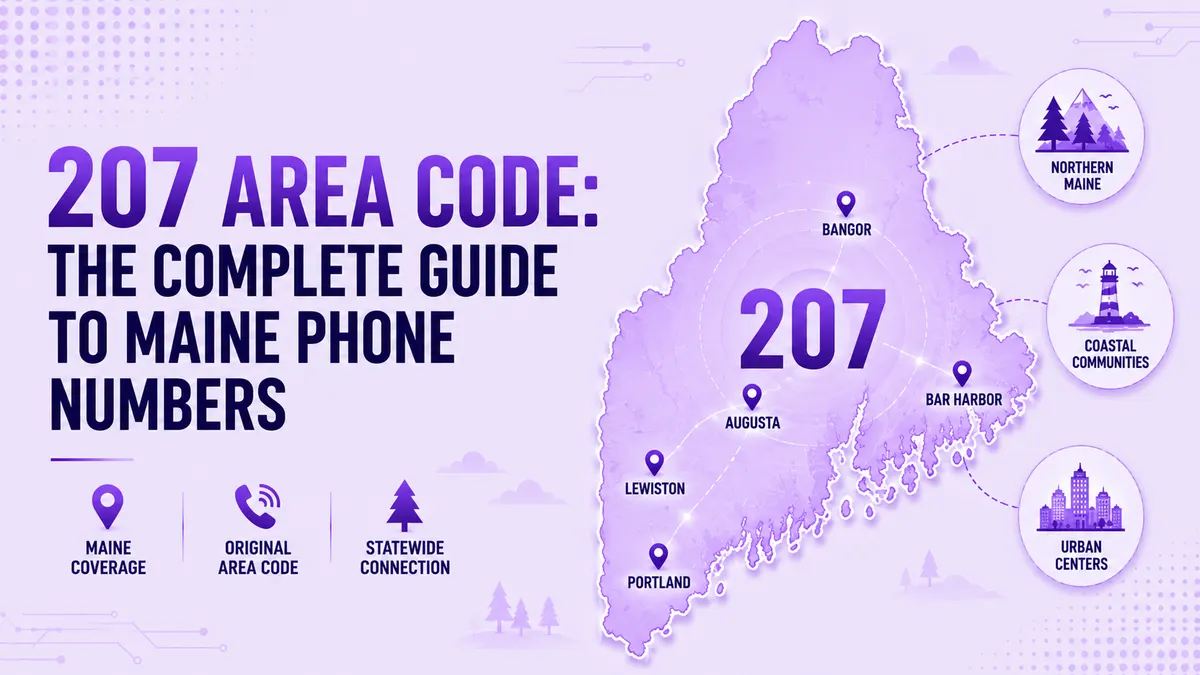
207 is unusual before anyone even dials it: one of the original 1947 codes, and it still covers the entire state of Maine rather than one city. Getting a call or text from it raises the same three questions any unfamiliar prefix does — where it's from, how it dials, and whether it's safe.
Ahead: the full coverage picture, the reason Maine never split this code even once, and how a business expanding into the state can claim a local number of its own — everything needed to dial a 207 number, answer one, or set one up with zero hesitation.
- This area code covers the entire state of Maine on Eastern Time, not just a single city.
- Maine is one of only 11 states still served by a single area code after nearly 80 years.
- A call from this area code isn't automatically a scam, but caller ID spoofing makes any area code fair game for fraud.
- Businesses expanding into Maine can get a local number in minutes without opening a physical office there.
What Is the 207 Area Code?
207 was assigned in 1947, part of the original batch of 86 codes the newly created North American Numbering Plan handed out that year. The middle digit — a 0, back then — flagged statewide coverage, and Maine's code carried exactly that marker. Nearly 80 years on, it's still true: one code, the whole state, unlike almost every other 1947 original.
Most references to "the 207 area code" (or, flipped around, "area code 207") stop at naming Maine as the coverage area and never get into why it never needed to split — which is the actual interesting part.
Calls and texts from this area code run on Eastern Time, the standard zone for the entire state. Maine's population sits around 1.4 million people statewide, which is part of why one single code has lasted this long without running out of numbers.
Where Is the 207 Area Code Located?
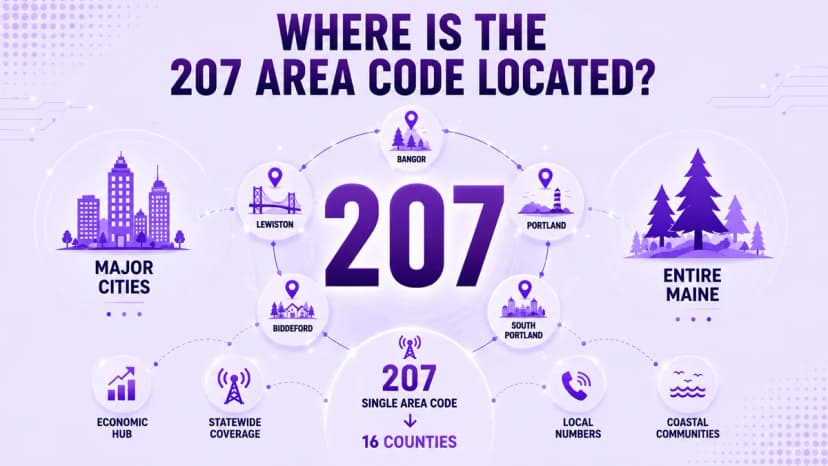
This code covers all of Maine, not one city or region — every carrier's lookup tool confirms the same statewide map, since there's no other way to slice it.
Major Cities Covered
- Portland, the largest city and economic center of the state
- Bangor, a hub for northern and eastern Maine
- Lewiston, the second-largest city in the state
- South Portland, just across the water from Portland proper
- Biddeford, a growing city along the southern coast
Together, these cities and 16 counties make up the full reach of this single code. Cumberland County, home to Portland, accounts for the largest share of numbers issued statewide.
A few small communities near the Canadian border fall outside standard coverage entirely, relying on different arrangements for local service. Anyone moving into the state for work will find the same local numbers available almost everywhere else.
Why Maine Never Needed a Second Area Code
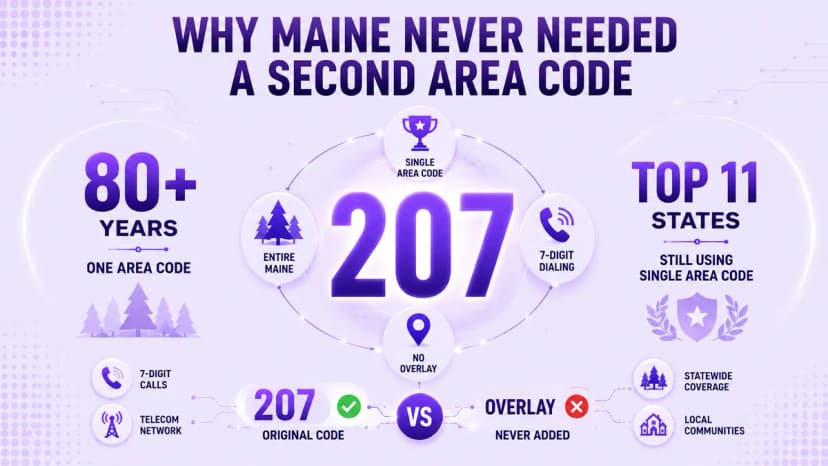
Most guides skip this part entirely, but it's the most interesting fact about this code. Maine is one of only 11 states in the country still served by a single area code, nearly 80 years after it was assigned.
The Overlay That Never Happened
Fast-growing states like Nevada and Texas split or overlaid their original codes years ago as demand for numbers climbed. Maine's population growth simply never forced that same math. Slower growth kept demand for new numbers well under the ceiling that triggers a split or an overlay.
Still on 7-Digit Dialing
This code is also one of fewer than 71 area codes nationwide that still allow 7-digit local dialing. Most of the country switched to mandatory 10-digit dialing years ago, often as a side effect of adding an overlay. Because this state never added one, residents can still dial a local number the old way, without the area code in front.
That detail alone makes this code an outlier worth knowing before you assume every US region dials the same way. A caller moving from a state with an overlay, like Alabama or Nevada, often assumes 10 digits are required everywhere, then gets confused when a shorter local number still works fine here.
Businesses printing marketing materials for a Maine audience can even lean into this, listing the shorter 7-digit form for a more local, familiar feel that out-of-state competitors can't easily copy.
How to Get a 207 Area Code Phone Number
Claiming a Maine number, whether for someone living in-state or a business building a Maine presence from elsewhere, is a matter of minutes rather than paperwork.
- 1Start with a provider that stocks Maine numbers and is actually built for business use, not just personal lines.
- 2Browse what's available by city or prefix until one fits.
- 3Claim it and assign it to a team member, a device, or a call flow.
- 4Set voicemail, forwarding, and business hours before the line goes live.
- 5Keeping an existing number instead? Porting handles the transfer without starting over.
Ringflow surfaces the available prefixes up front, which makes it easy to land on one tied to a specific Maine city or business district when that detail matters to customers.
A search on most providers' sites returns the full 207 inventory instantly, so narrowing down to a number tied to one particular city is a quick filter, not a project.
Before it goes anywhere near a customer, a softphone app makes it easy to place and receive a few real test calls straight from a laptop.
Is This Area Code Associated With Scams?
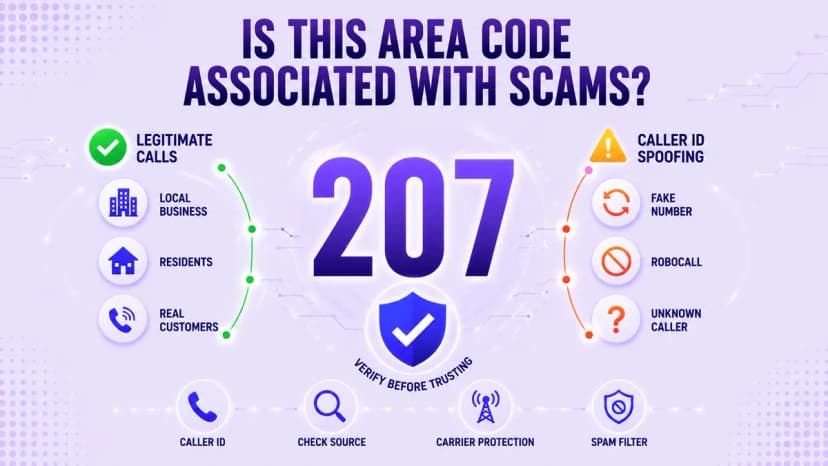
207 doesn't carry any extra risk just for being a recognizable prefix — the vast majority of calls and texts on it come from real Maine residents, local businesses, or companies with a genuine footprint in the state.
Spoofing is the actual concern, and it works on any area code, 207 included: a scammer fakes the prefix to look local, then leans on urgency — a warranty about to lapse, a debt suddenly overdue, an account that "needs verifying" right now.
Spoofed-number robocall complaints have trended upward nationally for years, and Maine's regulators log complaints the same way every other state's do. A Maine number on caller ID proves nothing about who's actually calling.
Blocking one number rarely helps for long, since a scammer just moves to the next one the moment the old one gets flagged. Reporting the call to a carrier is the more useful move — that feeds the pattern data carriers use to filter future spam automatically.
The safe habit applies no matter the area code: never share personal details mid-call, hang up on any request for unsolicited payment, and verify independently before acting on anything that feels urgent.
Should Your Business Get a 207 Number?
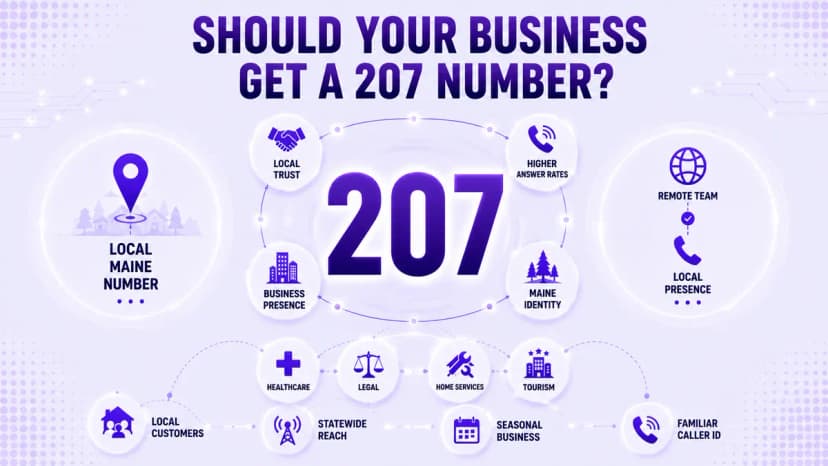
For Maine customers, a local number reads as a specific claim: this business gets the state and doesn't cost anyone a long-distance call to reach. Service businesses, local retailers, and anyone up against companies already rooted there get the most out of that claim.
Maine's tourism-heavy economy adds another layer: visitors and summer residents booking anything last-minute reach for a local number over an out-of-state one almost by instinct, which makes seasonal businesses disproportionate beneficiaries.
Home services, healthcare, and legal practices see the sharpest lift, since those customers tend to want someone who feels genuinely local before they'll commit to an appointment or sign anything. None of that requires the team to physically sit in Maine — a remote staff answers the same local-looking number just fine.
Search for 207-prefixed businesses and plenty of established local names turn up — exactly the kind of borrowed credibility a new number picks up on day one, even for a company with zero employees actually in Maine.
Ringflow activates a Maine number without requiring an actual in-state office, routing calls to wherever the team is really working.
Conclusion
One code, the whole state, no overlay and still seven-digit dialing nearly 80 years in — Maine remains one of just 11 states that never needed to split its original prefix. Nothing about that history changes the actual risk profile of a 207 call, either: spoofing is always the real threat, never the digits themselves.
A provider built for business, not a consumer-only plan, is the right starting point. Ringflow gets a Maine number active in minutes, with the routing tools a growing team actually needs.
Ready when you are
Ready to Sound Like a Local Business in Maine?
See how Ringflow gets your Maine number active in minutes, with call routing built in from day one. Get a free trial with Ringflow.
Frequently Asked Questions
It's one of the original 1947 area codes, covering the entire state of Maine. It has never been split or overlaid, making it one of only 11 single-code states left.
It covers all of Maine, including Portland, Bangor, Lewiston, South Portland, and Biddeford. The region runs on Eastern Time, matching the rest of the state.
It never has, going on nearly 80 years since it was assigned in 1947. Slower population growth kept Maine well under the number capacity that forces a split.
Choose a business phone provider that offers Maine numbers, then search and select an available one. Most providers activate the number within minutes and let you set up forwarding right away.
Yes, answering is safe, since simply picking up a call can't compromise your information on its own. Stay cautious about sharing details or making payments if the caller pressures you urgently.