
Introduction
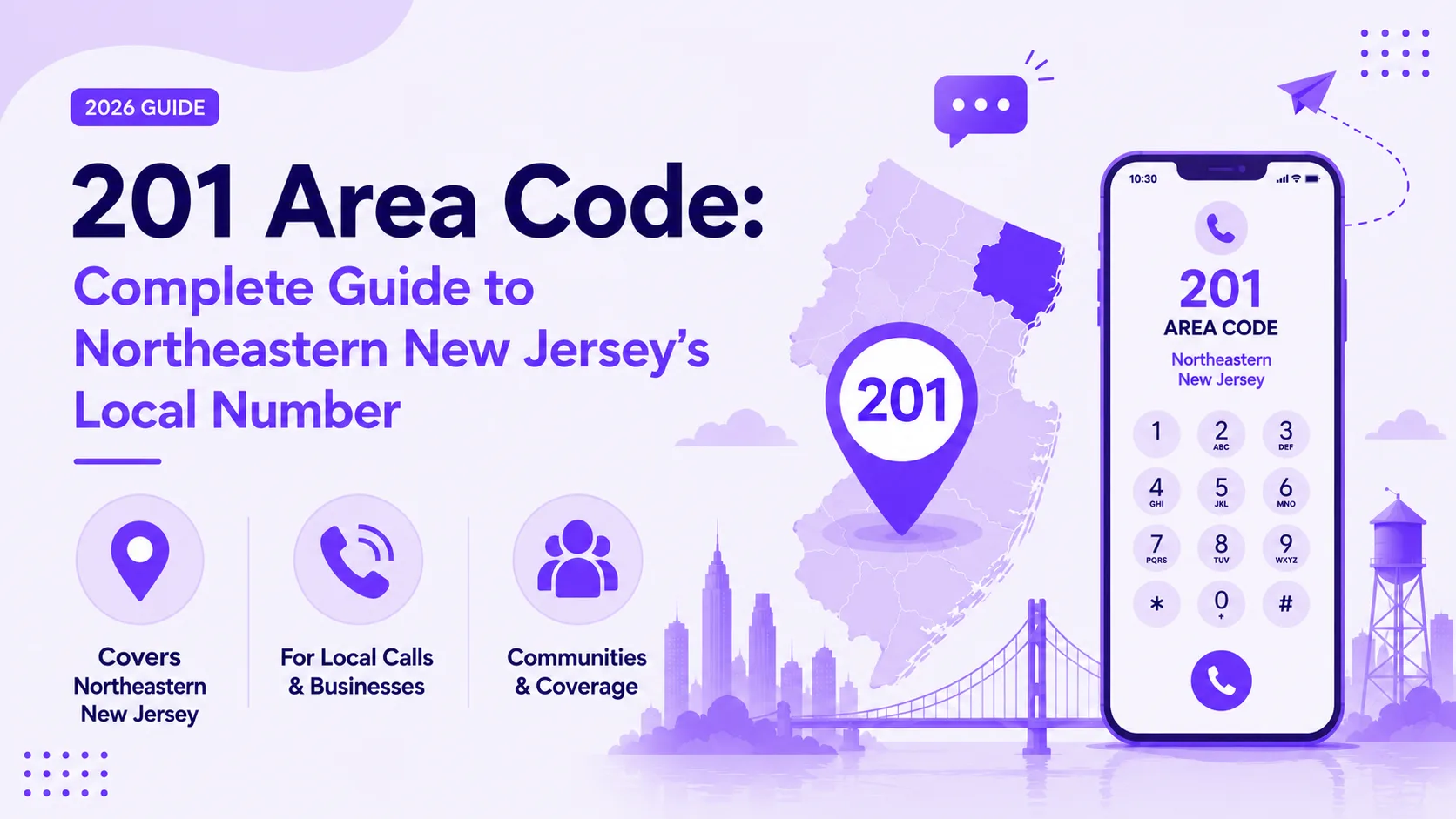
The 201 area code covers northeastern New Jersey, and this guide walks through its exact coverage, its history, and how to set up a local business number there. That matters if you run a business near New York City, since a familiar area code changes whether nearby customers answer your calls at all. You'll learn which cities fall inside this coverage area, how the 551 overlay affects dialing, and the real steps to get a number of your own. By the end, you'll know exactly whether this area code fits your business and how to claim one without guesswork.
- The 201 area code covers Bergen and Hudson counties, including Jersey City, Hoboken, and Fort Lee.
- It shares its region with the 551 overlay, so every local call requires all 10 digits, even next door.
- The 201 area code is one of the original 86 area codes created in 1947, making it one of the oldest in the country.
- Businesses near the Port of New York and New Jersey benefit most from a local number in this region.
Where Is the 201 Area Code Located?
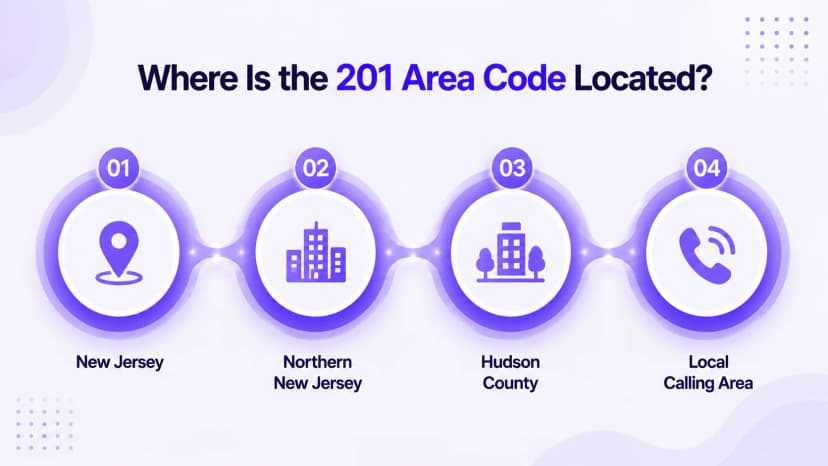
The 201 area code covers northeastern New Jersey, primarily covering Bergen and Hudson counties, directly across the Hudson River from Manhattan. It's one of the most densely populated corners of the state, packed with commuter towns, warehouses, and corporate offices that serve the greater New York City market. Businesses located here sit minutes from Manhattan without paying Manhattan rent, which is exactly why so many logistics and finance companies base local teams in this corridor.
These towns sit in the Eastern Time Zone and range from dense urban blocks in Jersey City to quieter residential streets in Fort Lee, so a single 201 area code number can represent a business across very different types of neighborhoods. Each town also has its own zoning mix of retail, warehousing, and office space, which is one reason a single area code covers such a wide range of business types.
The 201/551 Overlay and 10-Digit Dialing
This is the part most guides skip entirely. New Jersey added the 551 area code as an overlay on top of this region in 2001, once the original numbering pool ran out of available combinations — the same pattern as the 973/862 overlay just to the west. An overlay means both codes serve the exact same geographic footprint instead of splitting it into separate zones, so a Jersey City business and its neighbor across the street could carry different area codes without either one being wrong.
Because two area codes now cover one region, the state requires 10-digit dialing for every local call, even between two neighbors on the same block. Skipping the area code on a local call simply won't connect. If your business prints only a 7-digit number on a sign, invoice, or truck decal, update it now, since customers dialing exactly what's printed will hit a dead end instead of your office.
A Brief History of the 201 Area Code
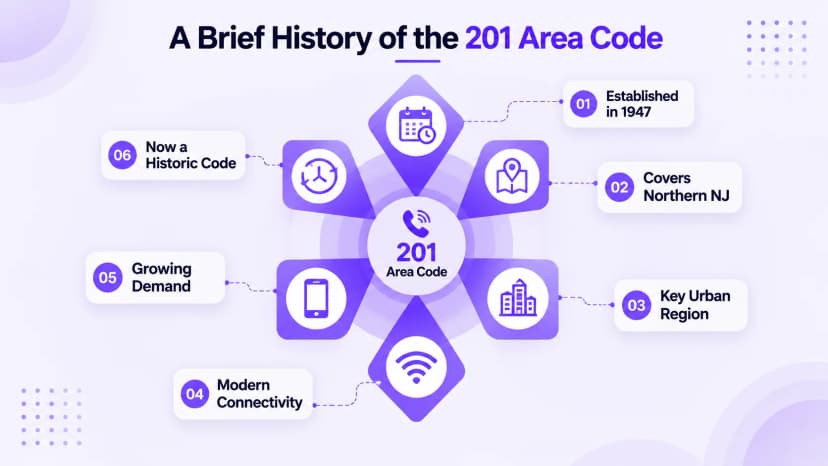
The 201 area code dates back to 1947, when AT&T and the Bell System split the country into its first 86 area codes. New Jersey originally used only two codes statewide, and 201 covered the entire northern half of the state, stretching well beyond today's footprint. Decades of population growth and rising phone demand eventually split that territory into smaller regions, leaving today's version focused tightly on Bergen and Hudson counties.
That history matters for businesses today because a number this old carries weight. Longtime residents recognize a 201 area code instantly, and that familiarity can shorten the trust-building step that newer, unfamiliar codes require. It also means the code has outlasted several rounds of number exhaustion that retired other, younger area codes entirely.
Very few business phone numbers anywhere in the country can claim that kind of continuity. A prefix that has stayed active and relevant for nearly eight decades tends to carry an unspoken credibility that a brand-new area code simply hasn't earned yet, especially with older, longtime customers who grew up dialing it.
How It Compares to Nearby New Jersey Codes
Just west of this region, the 973 and 862 overlay covers Essex and Passaic counties, while 908 serves parts of central New Jersey. None of these carry the same direct-across-the-river relationship with Manhattan that this coverage area has, which is why businesses specifically targeting Bergen or Hudson county customers rarely substitute a neighboring code. Picking the wrong regional code can quietly signal "not from around here" to a customer who knows the area well, even if the difference seems minor on paper.
Why Businesses Choose a 201 Area Code Number
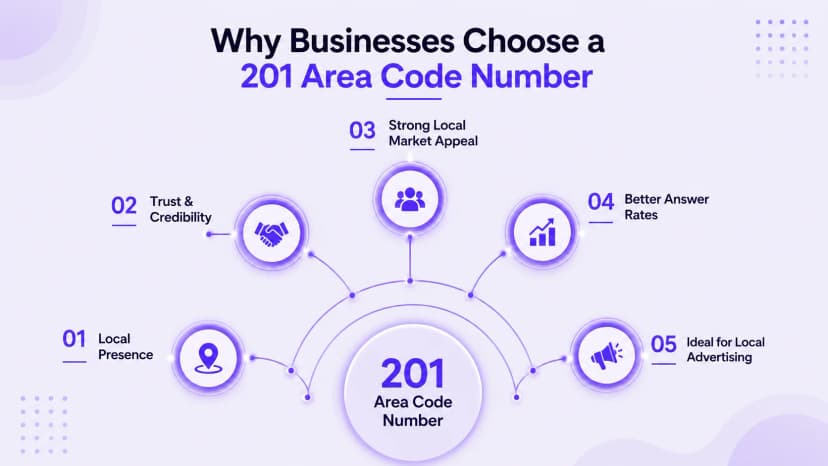
A local number here does real work beyond looking familiar on a caller ID.
Proximity to New York City
Companies serving Manhattan clients often want a number that signals easy access without the overhead of a New York office. A local number in this area tells callers your team is a short PATH train ride away, which matters for consulting, logistics, and professional services firms competing for the same regional clients.
A Logistics and Corporate Hub
The Port of New York and New Jersey, along with major rail and highway corridors, runs directly through this region — and that's exactly what most competing guides skip, focusing only on a list of cities instead of explaining why the area matters commercially. Bergen and Hudson counties host a disproportionate share of shipping, freight, and corporate back-office operations relative to their size.
A local number here is genuinely useful for dispatch lines, vendor coordination, and client-facing sales teams working this corridor daily. Ringflow's cloud phone platform supports exactly this kind of setup, letting a distributed team share one local number without needing a physical office in the area.
How to Get a 201 Area Code Number
Getting a business number in this region takes a few straightforward steps.
- 1Pick a provider. Choose a cloud phone service that lists numbers in this region as available inventory.
- 2Search for your number. Browse available combinations and pick one that's easy for customers to remember or repeat back.
- 3Verify your account. Most providers only need a name, email, and payment method to activate a business line.
- 4Activate and route calls. Point the new number to your team, a call queue, or an auto-attendant within minutes.
- 5Test before publishing. Call and text the number yourself to confirm routing works before printing it anywhere public.
Ringflow issues 201 area code numbers through this same process, so a distributed sales or support team can start answering calls from this region the same day they sign up.
Common Mistakes When Choosing a New Jersey Business Number
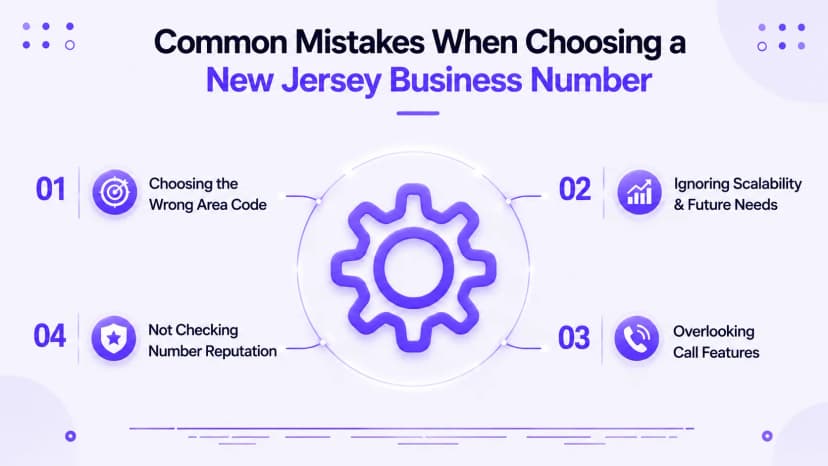
A few avoidable errors trip up businesses setting up service in this region for the first time.
- Printing only 7 digits. Since the 551 overlay requires 10-digit dialing, an incomplete number on marketing material simply won't connect.
- Ignoring the overlay when advertising locally. Always list the full area code so customers don't assume a typo.
- Picking a number with no connection to the region. A local number carries more trust than an out-of-state one for customers primarily covering Bergen and Hudson counties in their daily routines.
- Skipping a test call after activation. Confirm routing works correctly before the number reaches customers.
If you're weighing this region against a nearby option, a local number generally outperforms a toll-free line for area-specific trust, and pairing it with a cloud phone service keeps routing simple as your team grows.
Conclusion
The 201 area code gives businesses a direct line into one of the most connected corners of the country, spanning Jersey City to Fort Lee with a number customers instantly recognize. Its shared history with the 551 overlay means 10-digit dialing is mandatory, a detail that trips up businesses that print numbers without the area code. Choosing this region makes the most sense for companies serving northeastern New Jersey or the broader New York City market. Understanding the coverage, the overlay, and the history behind it helps you set up a number that actually works for your customers.
Your next step is simple: confirm which towns your customers call from, then activate a number that matches. Ringflow makes it easy to claim a number covering this part of New Jersey and route it to your team the same day. As your business grows past one location, you can add more local numbers without switching platforms or losing the one customers already know. Start now, and your next call from this region lands exactly where it should.
Ready when you are
Sound Local from Hoboken to Hackensack
Ringflow helps you activate a New Jersey number and route it to your team in minutes — free trial, no card required.
Frequently Asked Questions
The 201 area code is a New Jersey telephone prefix covering Bergen and Hudson counties, just across the Hudson River from Manhattan. It's one of the original 86 area codes created in 1947.
It covers cities like Jersey City, Hoboken, Bayonne, Fort Lee, and Hackensack in northeastern New Jersey. The region sits directly across from New York City in the Eastern Time Zone.
Always, since the 551 overlay shares the same region and requires 10-digit dialing for every local call. Dialing only 7 digits, even for a next-door call, won't connect.
Sign up with a cloud phone provider like Ringflow, search available numbers, and activate the line online. Most providers only need a name, email, and payment method to get started.
Yes, as long as your provider supports proper caller ID setup so calls don't get flagged as spam. Test the number with a real call before publishing it on your website or ads.