
Introduction
A Hong Kong virtual phone number lets you call, text, and receive calls on a real +852 line without an office, a local ID, or a Hong Kong bank account. That matters if you're selling into Hong Kong from abroad, hiring a remote team there, or just want a local number your Hong Kong contacts recognize instead of an unfamiliar international one.
This guide covers the actual dial format, how mobile numbers differ from landlines, the setup steps in order, and the time-zone and compliance details that shorter guides tend to skip. By the end you'll know exactly what to ask a provider before you commit to one.
Hong Kong uses the +852 country code with 8-digit local numbers and no area codes — the entire territory dials directly. A cloud-based virtual number activates in minutes with no Hong Kong address or ID required. Match your provider's coverage to whether you need voice, SMS, or both, since not every route supports two-way texting on a +852 number.
What Is a Hong Kong Virtual Phone Number
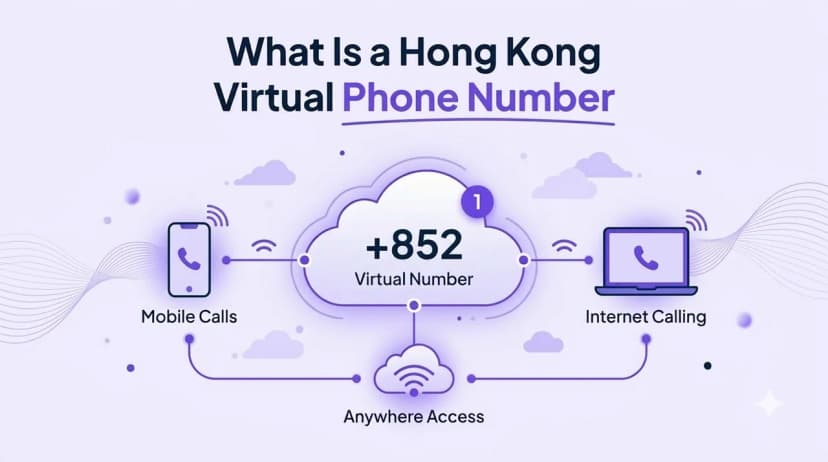
A virtual number is a real, dialable phone number that isn't tied to a physical SIM card or a desk phone at a fixed address. Calls and texts route over the internet to whatever device you choose — a mobile app, a desktop softphone, or a shared team inbox — so the number itself isn't limited by where you happen to be sitting. The concept works the same way whether the number is in Hong Kong or, as our US phone number guide covers, anywhere else.
For Hong Kong specifically, that means a business in London, Manila, or New York can hold a local +852 number that rings straight through to their existing team, with no physical presence in Hong Kong required. Customers see a familiar local number; your team answers wherever they already work.
Virtual Number vs. a Physical Hong Kong SIM
A physical Hong Kong SIM card locks the number to one device and one handset slot, which means it can only ring for whoever is physically holding that phone. Getting one from abroad also usually means either a Hong Kong visit or shipping a card internationally, then juggling a second phone or a dual-SIM setup just to keep the line active.
A virtual number skips all of that. It lives in the cloud rather than in a SIM tray, so it can ring on a laptop, a mobile app, or a whole team's shared inbox at the same time, and it never depends on one specific handset being switched on. For anyone managing the number remotely, that difference alone is usually enough to skip the SIM route entirely.
Hong Kong Phone Number Format
Hong Kong's numbering plan is simpler than most countries, which makes it easy to get right the first time.
Country Code and No Area Codes
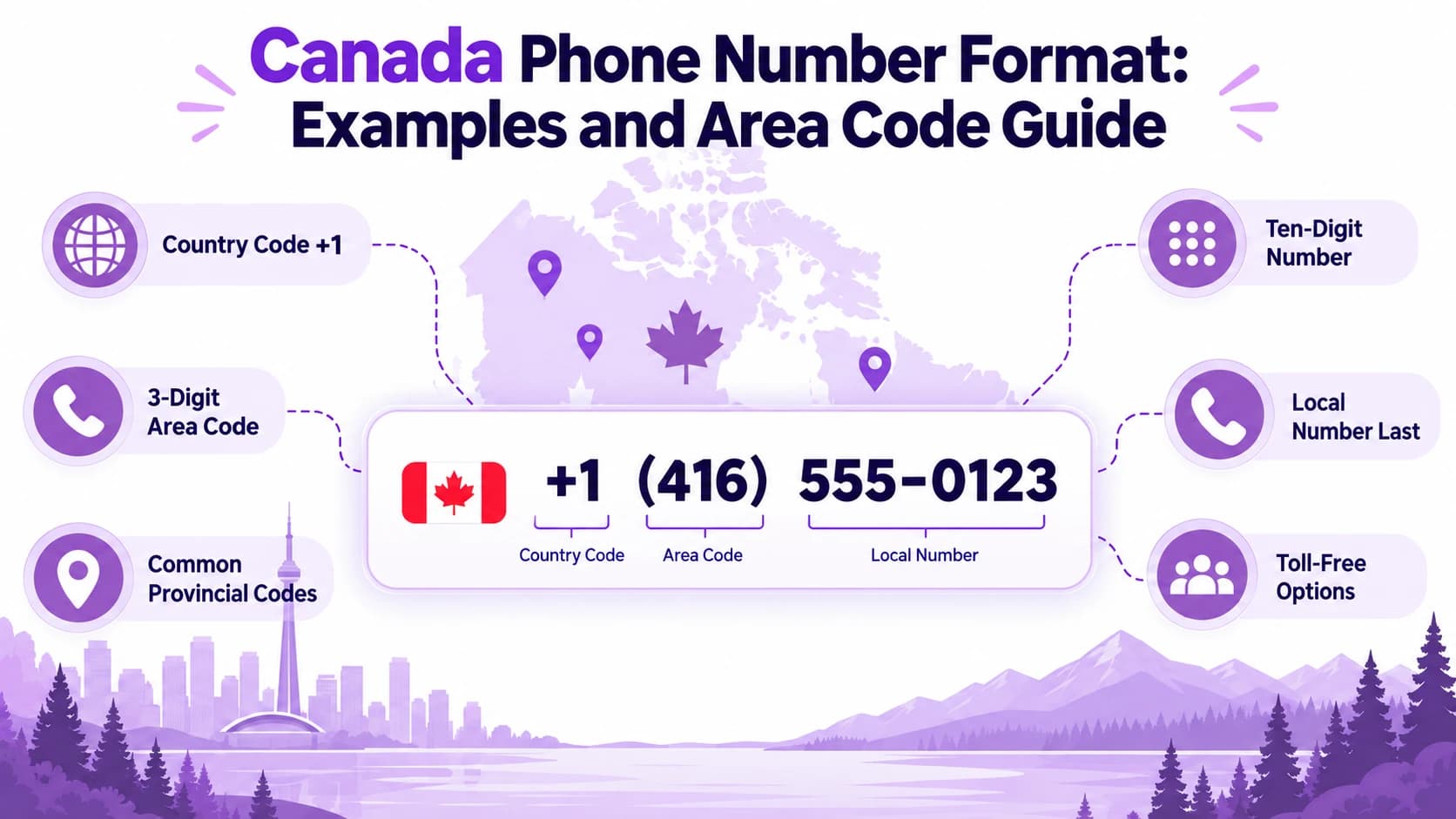
Every Hong Kong number starts with the +852 country code. Unlike the US or UK, Hong Kong has no regional area codes at all — the territory is small enough that every number dials directly on 8 digits, regardless of which district the line is registered in.
Mobile vs. Landline Prefixes
Landline numbers start with 2 or 3, while mobile numbers use the 4 through 9 range under the OFCA numbering plan, which expanded beyond the original 5/6/9 mobile blocks as demand grew. That first digit is still the quickest way to tell, at a glance, whether a Hong Kong number reaches a desk phone or a mobile handset — useful when you're deciding whether SMS delivery will even work on a given line.
How to Dial a Hong Kong Number
From outside Hong Kong, dial your country's international access code, then 852, then the 8-digit local number — for example +852 XXXX XXXX. From inside Hong Kong, the 8 digits alone are enough; there's no local prefix to add or drop.
Step-by-Step: Getting a Hong Kong Virtual Number
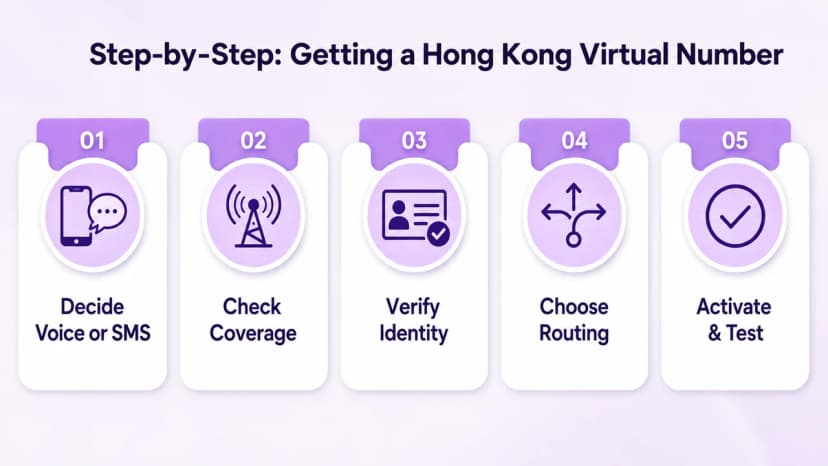
- 1Decide voice, SMS, or both. Some routes only support inbound/outbound calling — confirm two-way texting explicitly if outreach matters to you.
- 2Check provider coverage for Hong Kong. Not every global VoIP provider issues local +852 numbers directly; some resell through a third party, which can affect call quality.
- 3Verify your identity. Expect a name, email, and payment method — a Hong Kong address or ID is not required for a cloud-based virtual number.
- 4Choose how calls route. Point the number to a mobile app, a shared team line, or an AI-handled queue if volume is high.
- 5Activate and test. Most Hong Kong virtual numbers go live within minutes; place a test call and send a test text before sharing the number publicly.
Who Actually Needs a Hong Kong Virtual Number
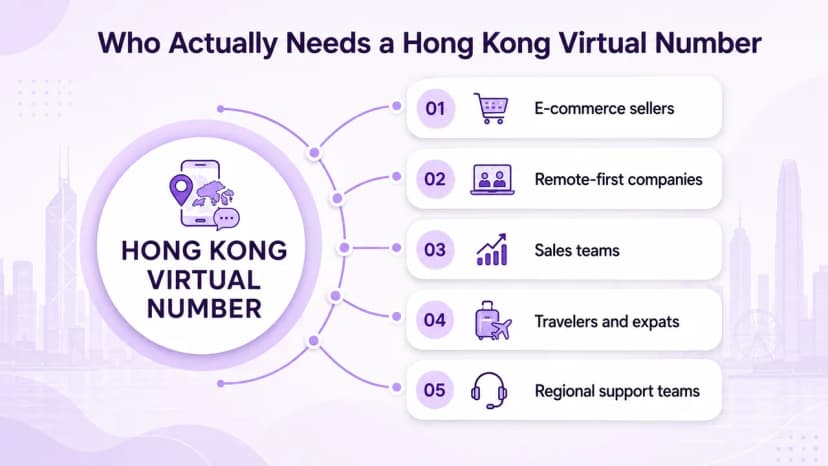
A few situations come up repeatedly, and each one benefits from a slightly different setup.
- E-commerce sellers shipping into Hong Kong or Greater China who want a local number for order confirmations and support, without opening a local office.
- Remote-first companies hiring Hong Kong-based staff who need a professional line that isn't their personal mobile number.
- Sales teams prospecting into the Hong Kong market, where a local number noticeably improves answer rates over an unfamiliar international one.
- Travelers and expats who want to stay reachable on a Hong Kong number while based elsewhere for part of the year.
- Regional support teams covering multiple Asian markets from one hub, who need a Hong Kong line alongside numbers for neighboring countries without opening a separate office in each one.
For teams doing more than occasional calls, the number itself is only step one — routing, call recording, and reporting matter just as much as the number when volume grows.
What a Hong Kong Virtual Number Typically Costs
Pricing varies more by feature set than by the number itself. A basic voice-only line from a consumer app can run only a few dollars a month, while a business-grade number with SMS, call recording, and team routing built in usually sits closer to a standard business phone system cost. The number rarely carries its own separate fee — it's bundled into whatever plan tier includes the features your team actually needs.
The cheapest option isn't always the right one. A voice-only line that can't send SMS, or one without caller ID that gets flagged by local carriers, ends up costing more in missed contacts than it saves in monthly fees. Weigh the plan against what you'll actually use it for before comparing the sticker price alone.
Time Zone and Call Timing
Hong Kong runs on Hong Kong Time (HKT), UTC+8, year-round — the territory doesn't observe daylight saving, so the offset never shifts. Check the time difference from your own time zone before you schedule outreach, since a call placed at a normal hour for you can land well outside business hours in Hong Kong.
- US-based callers: a 12-13 hour difference (Hong Kong is ahead), so Hong Kong's morning lines up with the US's previous evening.
- UK and European callers: a 7-8 hour gap — a late UK morning call lands in Hong Kong's mid-afternoon, one of the easier windows to hit.
- Australia and most of Southeast Asia: only 1-3 hours off, making same-day scheduling straightforward.
- Standard business hours: roughly 9am to 6pm HKT, Monday through Friday — the safest target regardless of where the call originates. Daylight saving on the caller's end can shift this math twice a year even though Hong Kong's own offset never moves, so it's worth a quick recheck each spring and fall.
Common Mistakes to Avoid
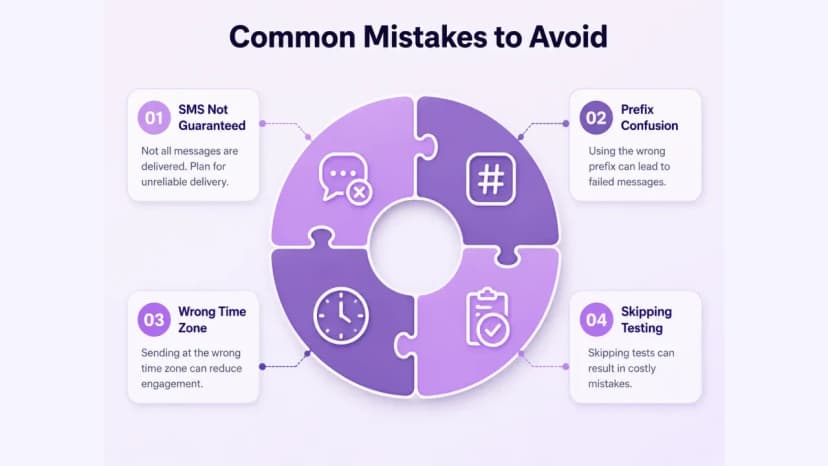
- Assuming SMS works on every route. Some Hong Kong virtual number providers support voice only — confirm two-way texting before you rely on it.
- Ignoring the mobile vs. landline prefix. A number starting with 2 or 3 won't receive texts the way a number in the 4-9 mobile range will.
- Scheduling calls in your own time zone by default. A quick UTC+8 check avoids calling contacts outside their working hours.
- Publishing a number before testing it. A test call and test text catch routing issues before a real customer does.
- Forgetting to recheck the offset around daylight saving changes. Hong Kong's UTC+8 never moves, but your own local offset might, quietly shifting the safe calling window twice a year.
- Treating every Hong Kong number the same for compliance. Business and marketing calls may fall under different local rules than a personal line — check what applies before running outbound campaigns at volume.
Conclusion
A Hong Kong virtual phone number is one of the simplest international numbers to set up, mainly because the numbering plan itself is so straightforward — one country code, eight digits, no area codes to get wrong. The details that actually matter are choosing a provider with real Hong Kong coverage, confirming SMS support if you need it, and keeping HKT in mind when you schedule outreach.
Ringflow issues local Hong Kong numbers as part of its global cloud phone platform, with the same call routing, recording, and CRM sync your team already relies on for other markets. Get the number set up right the first time, and it works the same way on day 300 as it did on day one.
Covering more of Greater China? Our China virtual phone number guide walks through the mainland's numbering plan and area codes in the same level of detail.
Ready when you are
Get a Hong Kong Number Without an Office in Hong Kong
Ringflow issues local +852 numbers with the same routing, recording, and CRM sync as every other market on the platform. Get a free trial with Ringflow.
Frequently Asked Questions
Hong Kong uses +852, followed directly by an 8-digit local number. There are no regional area codes to add on top of the country code.
No. A cloud-based virtual number activates from anywhere with just a name, email, and payment method — no Hong Kong address or ID is required.
Check the first digit after +852. Numbers starting with 2 or 3 are landlines; numbers in the 4 through 9 range are mobile.
It depends on the provider and route. Confirm two-way SMS support explicitly before you rely on text messaging for a Hong Kong number.
Basic voice-only lines can cost just a few dollars a month, while business-grade numbers with SMS and team routing are usually priced as part of <a href="/pricing/" style="color:#6f4ae5;text-decoration:underline">a standard cloud phone plan</a> rather than as a separate fee.