
Introduction
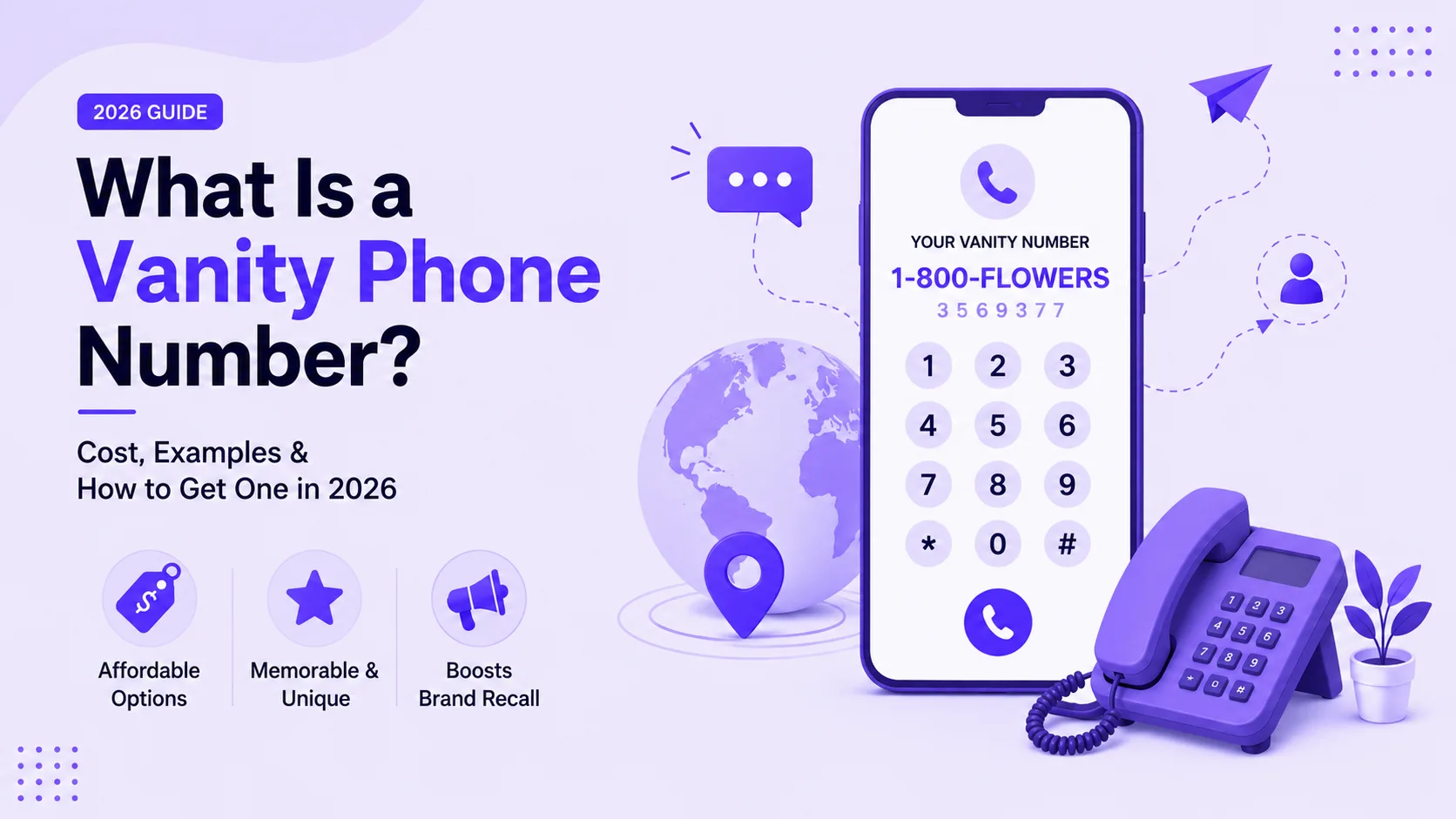
A vanity phone number replaces a random string of digits with letters that spell a word people already know, like 1-800-FLOWERS or 1-844-GET-HELP. For any business that lives on inbound calls, that small change makes the number easier to remember, easier to say out loud, and much harder to dial wrong after hearing it once on a radio spot or a podcast.
This guide explains how a vanity phone number works, what real examples look like, and what one actually costs. It also compares toll-free and local options, walks through the setup steps, and points out the mistakes that quietly waste money. By the end, you will know which format fits your budget and how to claim the number before a competitor does.
What Is a Vanity Phone Number, Exactly?
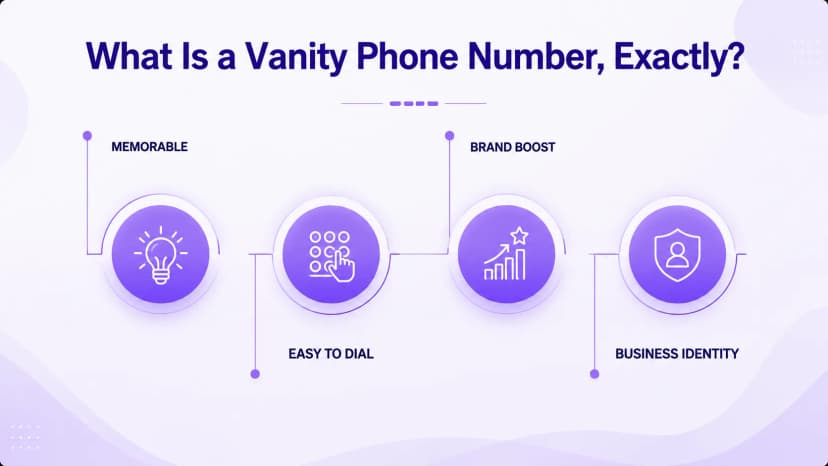
A vanity phone number is a business number chosen because its digits spell a memorable word, phrase, or pattern on a standard dialpad. The business picks or reserves the combination, and the network still routes the call using the plain digits underneath. The practice began with toll-free lines in the United States and has since spread to local numbers as well.
Words stick better than digits because people remember language far more easily than long numeric strings. A listener hears a radio ad once and has only a few seconds to retain what they heard, so a spelled word gives them something concrete to hold onto. That recall advantage is the whole reason businesses pay extra for a matching number instead of accepting a random one.
- The digit 2 covers A, B, and C, while the digit 3 covers D, E, and F
- The digit 4 covers G, H, and I, while the digit 5 covers J, K, and L
- The digit 6 covers M, N, and O, while the digit 7 covers P, Q, R, and S
- The digit 8 covers T, U, and V, while the digit 9 covers W, X, Y, and Z
- The digits 0 and 1 carry no letters at all, so words cannot use them
- Only ten digits actually dial, so any extra letters at the end are simply ignored
- A spelled number dials exactly like an ordinary number on any phone or carrier
- Letters are a memory aid for people, while the network only ever reads the digits
Vanity Number Examples That Actually Work
The strongest vanity phone number examples describe what the business does in one short word, which is why names like 1-800-DENTIST and 1-800-PLUMBER have lasted for decades. The caller never needs to write anything down, because the service and the number are effectively the same phrase, and that overlap is what makes the spelling worth paying for.
Notice that none of these examples spell out a full sentence. The best ones stay under eight letters, avoid awkward spellings, and sound natural when read aloud in a thirty-second ad. A local business can borrow the idea by pairing its area code with a short word, such as a neighborhood name or a core service, rather than chasing a national phrase.
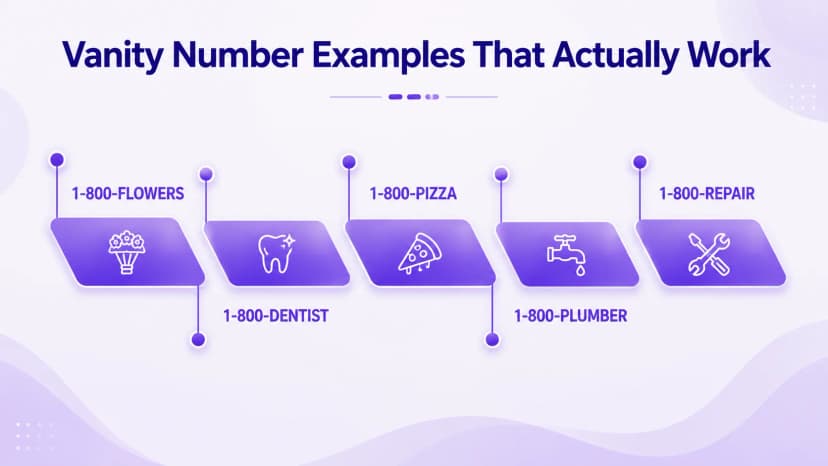
- Florists: numbers built around the product name, like 1-800-FLOWERS, are easy to recall
- Dental offices: a short word like SMILE paired with the local area code feels friendly
- Home services: PLUMBER, REPAIR, or CLEAN spelled out on a toll-free prefix say it all
- Law firms: an easy word tied to the practice area, such as INJURY, builds instant recall
- Restaurants: a menu word like PIZZA is something hungry guests remember on sight
- Real estate agents: HOMES or SELL matched to a local area code keeps the number short
- Repeating or mirrored digits still work well when no real word fits the business cleanly
- Short brand names that match a common word usually beat clever wordplay
Vanity Phone Number Cost: What You Actually Pay
Pricing for a vanity phone number splits into two parts: a one-time acquisition fee and a recurring monthly charge. Many combinations are free to reserve through a modern cloud phone provider, while highly contested words on the 800 prefix can cost hundreds of dollars or more when a broker or a previous owner controls them, so budgets vary widely from one word to the next.
What drives the price is demand. Short, common words in a popular industry attract the most bidders, while longer or unusual spellings often cost nothing extra. Monthly service is usually the smaller line item, so compare the total over twelve months, including any porting or activation charges, instead of judging by the sticker price alone.
- Free or low cost: unclaimed local combinations on a standard cloud phone plan
- Mid range: toll-free words that nobody else has reserved yet on that prefix
- Premium: short, in-demand words that a broker or a prior owner already holds
- Monthly fees are usually only a few dollars for the line itself each month
- Toll-free numbers typically add per-minute charges for every inbound call you receive
- Activation, reservation, or transfer charges may apply once at the very start
- Ask whether porting the number away to another provider later costs anything extra
- Compare quotes from a few providers, since premium words are often priced differently
Toll-Free vs Local Vanity Numbers: Which Fits?
Not every business needs a national 800 number. A toll-free vanity phone number signals scale and works well for franchises, national e-commerce, and support lines, since callers anywhere in the country pay nothing to reach you, which encourages more people to call. If you are still weighing the two formats, this toll-free versus local numbers comparison breaks down the differences.
A local vanity phone number pairs your area code with a spelled word, which builds trust with nearby customers who prefer dealing with a neighbor. It usually costs less, and it suits restaurants, clinics, and service trades that draw customers from one metro area. Many growing companies run both and route each one to the same team.
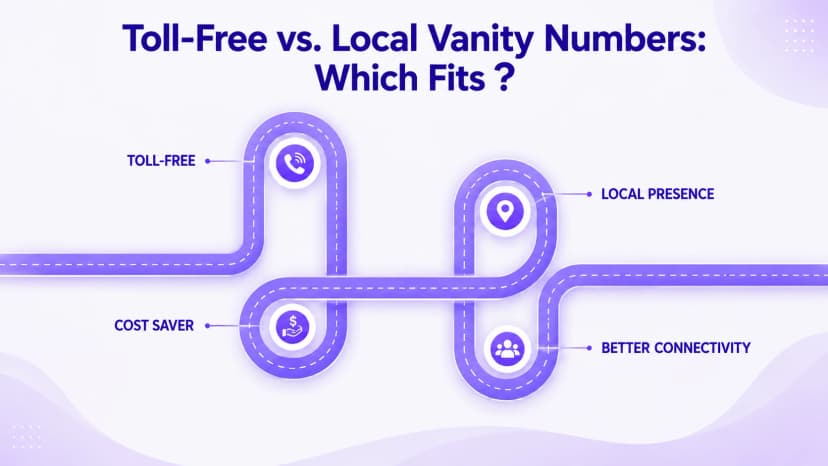
- Toll-free prefixes in North America include 800, 833, 844, 855, 866, 877, and 888
- Toll-free suits national reach, while a local number suits neighborhood trust better
- Toll-free numbers typically bill the business for inbound minutes on every single call
- Local numbers usually cost less to reserve and less to keep active each month
- Ringflow numbers of either type can forward to the same mobile phone, desk phone, or softphone app
- Running both numbers lets a single campaign track its results separately by number
- Local numbers often feel more familiar to callers who live in the same area code
- Many businesses start local and add a toll-free line once national demand grows
How to Get a Vanity Phone Number in Five Steps
A cloud phone provider makes the process far faster than dealing with a legacy carrier, because you can search combinations, reserve one, and activate it the same day without installing any hardware. Start by writing down three to five words that describe your business, then check which ones are available before falling in love with a single option.
Once you find a match, confirm the prefix, the monthly rate, any activation fees, and whether the number can be ported out to another provider later. Ringflow lets you search available combinations and route the finished number to any device, which pairs well with a complete business phone number setup instead of a standalone line that nobody else on the team can manage.
- Step one: choose a short word tied directly to what you sell or do
- Step two: decide between a toll-free prefix and a local area code for your market
- Step three: search available combinations with a trusted cloud phone provider
- Step four: reserve the number and check every one-time and monthly fee before paying
- Step five: route calls to your team, then test everything before you publish it
- Step six: print the digits beside the letters everywhere the number appears
- Track calls by source so you can see whether the number pays for itself
Common Mistakes to Avoid With a Vanity Number
A few vanity phone number mistakes come up again and again. Picking a phrase too long to read at a glance is the most common one, since anything beyond seven letters forces callers to count digits instead of remembering a word. Awkward spellings are the second problem, because a caller who has to ask how a word is spelled has already lost the benefit.
Many businesses also forget that some callers never see letters at all, since a mobile keypad or a text message shows only digits. Always print the numeric version beside the spelled version, and test the number by calling and texting it from several phones before it appears on a truck or a sign. The FCC toll-free guide explains how these numbers work.
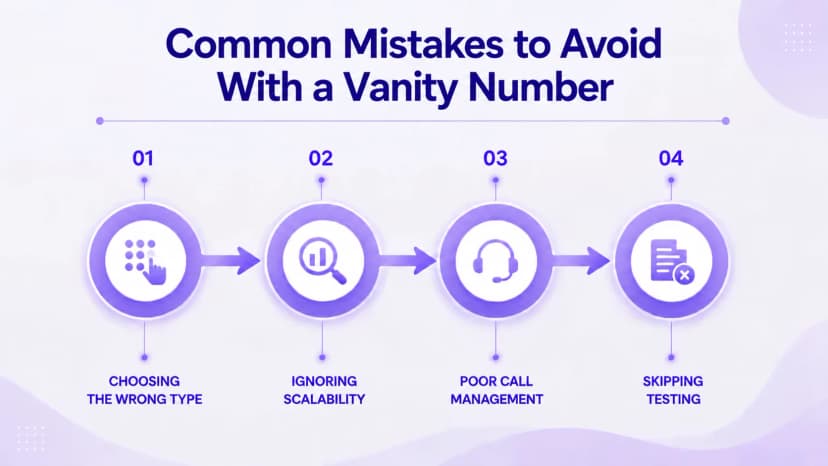
- Choosing a word longer than seven letters that callers must stop and count
- Spelling a word in an unusual or confusing way that invites a wrong dial
- Publishing the letters on a sign or ad without the matching digits beside them
- Skipping a test call and a test text message before the official launch
- Ignoring how the number sounds when read aloud on the radio or a podcast
- Paying for a premium number without first checking whether it can be ported later
- Forgetting to route after-hours calls to voicemail, an answering service, or a live team
- Ordering printed materials before confirming the number is live and working
Conclusion
A vanity phone number comes down to three decisions: the word, the prefix, and the real cost. Choose a short word that describes your business, match it to a toll-free or local prefix that suits your customers, and confirm the full twelve-month price before you commit to anything. Get those three right and the number keeps paying you back every single month.
Your next step is simple. Search a handful of combinations today, test your favorite on both calls and text messages from several different phones, and publish it everywhere with the digits beside the letters. With Ringflow, you can reserve and route the number in minutes, then let it work as an ad every time someone dials it, long after the first campaign ends.
Ready when you are
Turn Ten Digits Into Your Best Ad
Ringflow helps you search, activate, and route a custom phone number in minutes, all from one dashboard — free trial, no card required.
Frequently Asked Questions
A vanity phone number is a business line whose digits spell a memorable word or phrase on a standard dialpad. Examples include 1-800-FLOWERS and 1-855-DENTIST, both mapped from letters back to numbers.
Cloud phone providers, including Ringflow, let you search and reserve available vanity combinations online. You pick toll-free or local, check availability, and activate the line without visiting a carrier store.
Choose toll-free when you serve customers across multiple states or want to signal national scale. Choose local when neighborhood trust and area-code recognition matter more than reach.
Each digit from 2 through 9 maps to three or four letters, the same way across nearly every phone. A word like "PLUMBER" converts directly into its matching seven-digit sequence.
It can be, but always check whether the number carries old spam reports or robocall history first. Ask your provider to confirm the number's prior call history before you publish it anywhere.