
Introduction
Few things confuse people like seeing Level 3 on a caller ID or a number lookup. A Level 3 VoIP number sounds technical and a little suspicious, yet it usually just points to the network that carries the number. Understanding who Level 3 was, and why its name lingers, takes the mystery out of that lookup result and shows what to do next.
This guide from Ringflow explains what Level 3 Communications was, what a Level 3 VoIP number means, and why lookups still show the name. You will also see whether such a number is a problem, how the name survived the Lumen rebrand, and how to choose a business number. Each section stands alone, so skip to the part you need and return to the rest later.
What Was Level 3 Communications?
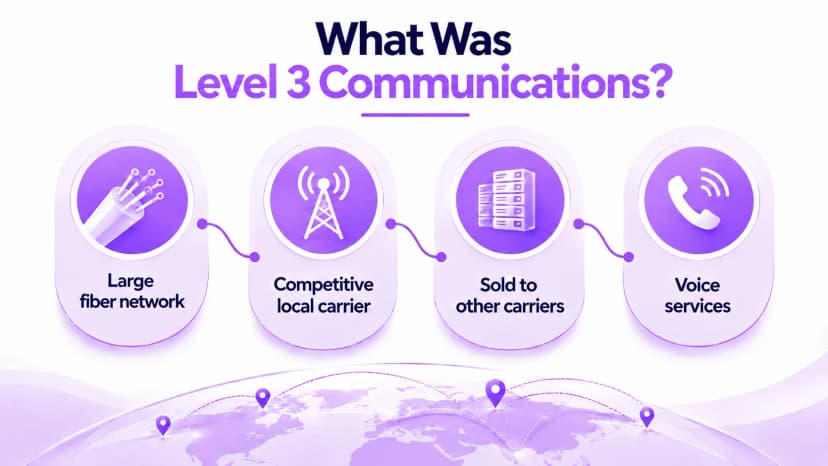
Level 3 Communications was an American telecom company that ran one of the largest fiber backbone networks in North America, with operations in other regions too. It was also among the biggest competitive local exchange carriers in the United States, supplying core network capacity that smaller providers used to build their own services on top of. That history explains much of what you see in a lookup today.
Rather than selling phone service directly to households, Level 3 mostly sold wholesale capacity to other carriers and VoIP providers, including voice termination, local inbound calling, and E911 connectivity. A provider could buy that capacity in bulk, add its own apps and support, and sell the result as a business VoIP number to its customers, without ever laying a cable of its own.
- Backbone: a large fiber network carrying traffic across North America.
- CLEC: a competitive local exchange carrier, created to compete with incumbents.
- Wholesale: it sold capacity to other carriers rather than to households.
- Voice services: termination, local inbound calling, and E911 connectivity.
- Provider base: VoIP companies built products on top of its network.
- Retail brand: Level 3 itself rarely sold directly to consumers.
- Scale: its network linked many cities and regions.
- Role: it was infrastructure that other brands relied on.
- Reach: its network extended beyond North America.
What a Level 3 VoIP Number Means
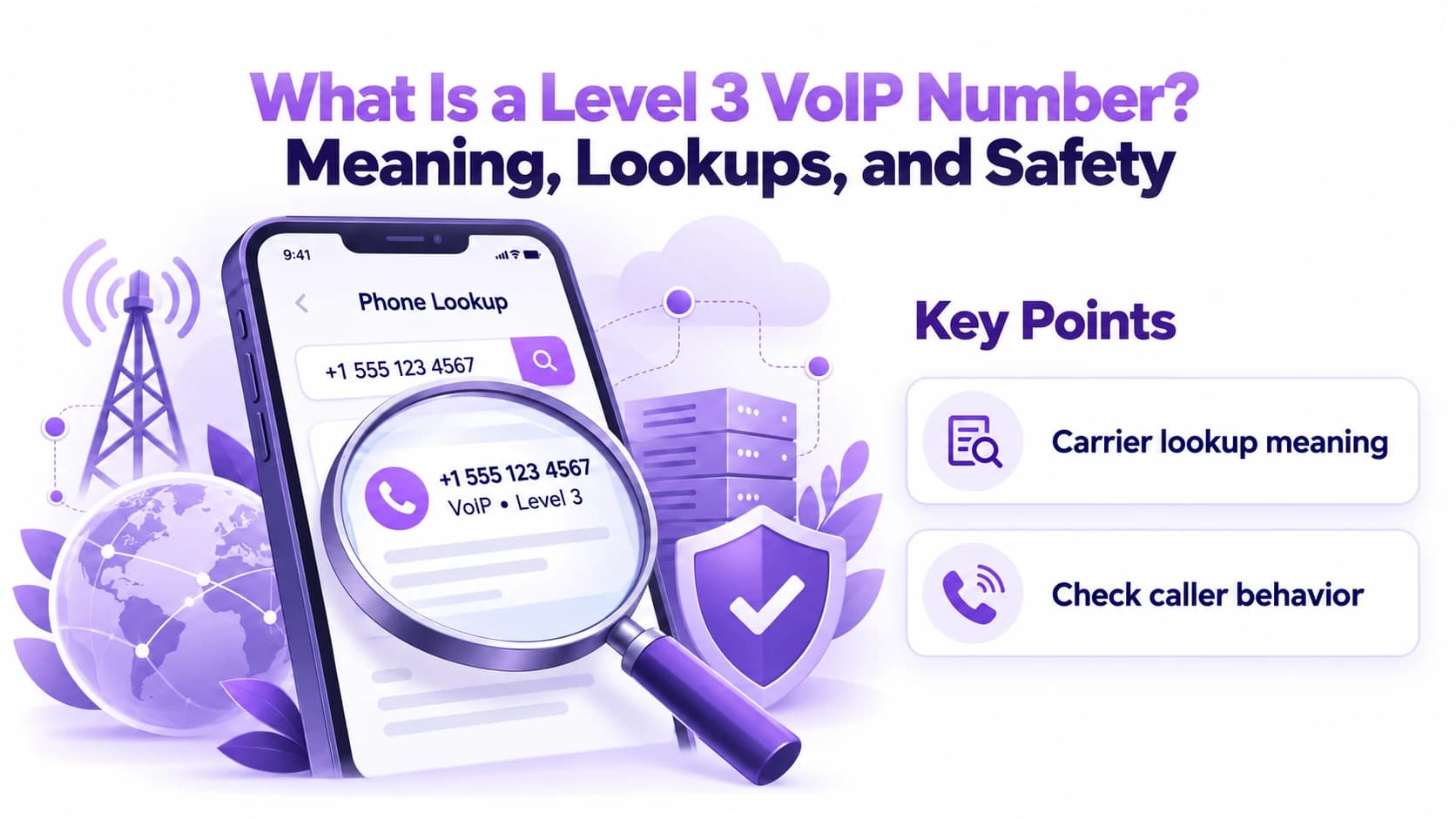
No official definition of a Level 3 VoIP number exists, but the practical meaning is clear. It is a phone number whose underlying network origination, or carrier of record, is Level 3, now part of Lumen, rather than a traditional local phone company. The number behaves like any other, and callers cannot tell the difference when they dial it. Nothing about the call quality or the features changes either.
A business or VoIP provider needs a network to connect its numbers to the wider phone system. Some providers use a traditional carrier, while others buy that connectivity wholesale from a network operator such as Level 3. Either way, the call, the caller, and the business work the same way. Only the underlying routing differs, and that detail stays hidden from callers.
- Carrier of record: the entity responsible for standard phone service on a number.
- Origination: the network that first carries the number onto the phone system.
- Same experience: callers and staff notice no difference in how a VoIP number works.
- Traditional carriers: AT&T and Verizon are examples of the other route.
- Wholesale route: providers buy capacity instead of building a network.
- Not a type: it describes the network, not a special kind of number.
- Portability: a number can usually move to another carrier later.
- Lookups: the carrier shown is the network, not the company.
Why Lookups Show Level 3
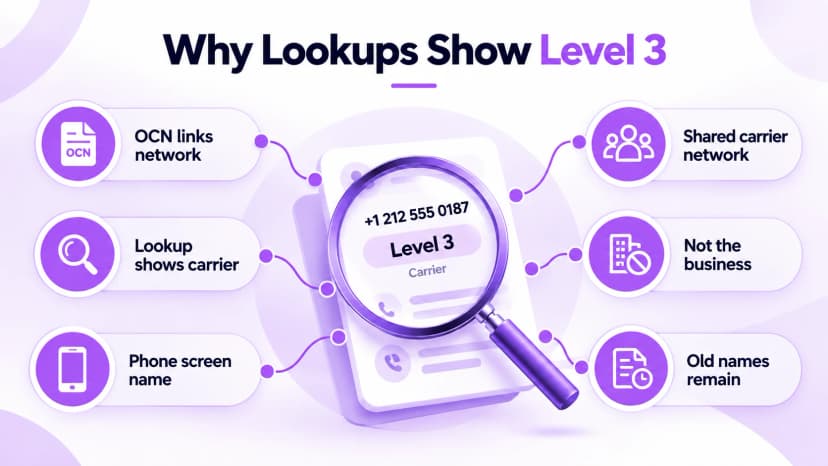
Caller ID and number-lookup services often take carrier details from records tied to the network that originates a number, known as its Operating Company Number, or OCN. Because Level 3's legal and network entities are still registered under names like Level 3 Parent, LLC, a number on that network can keep showing Level 3 long after the retail brand changed. The record simply has not been updated to match the new name.
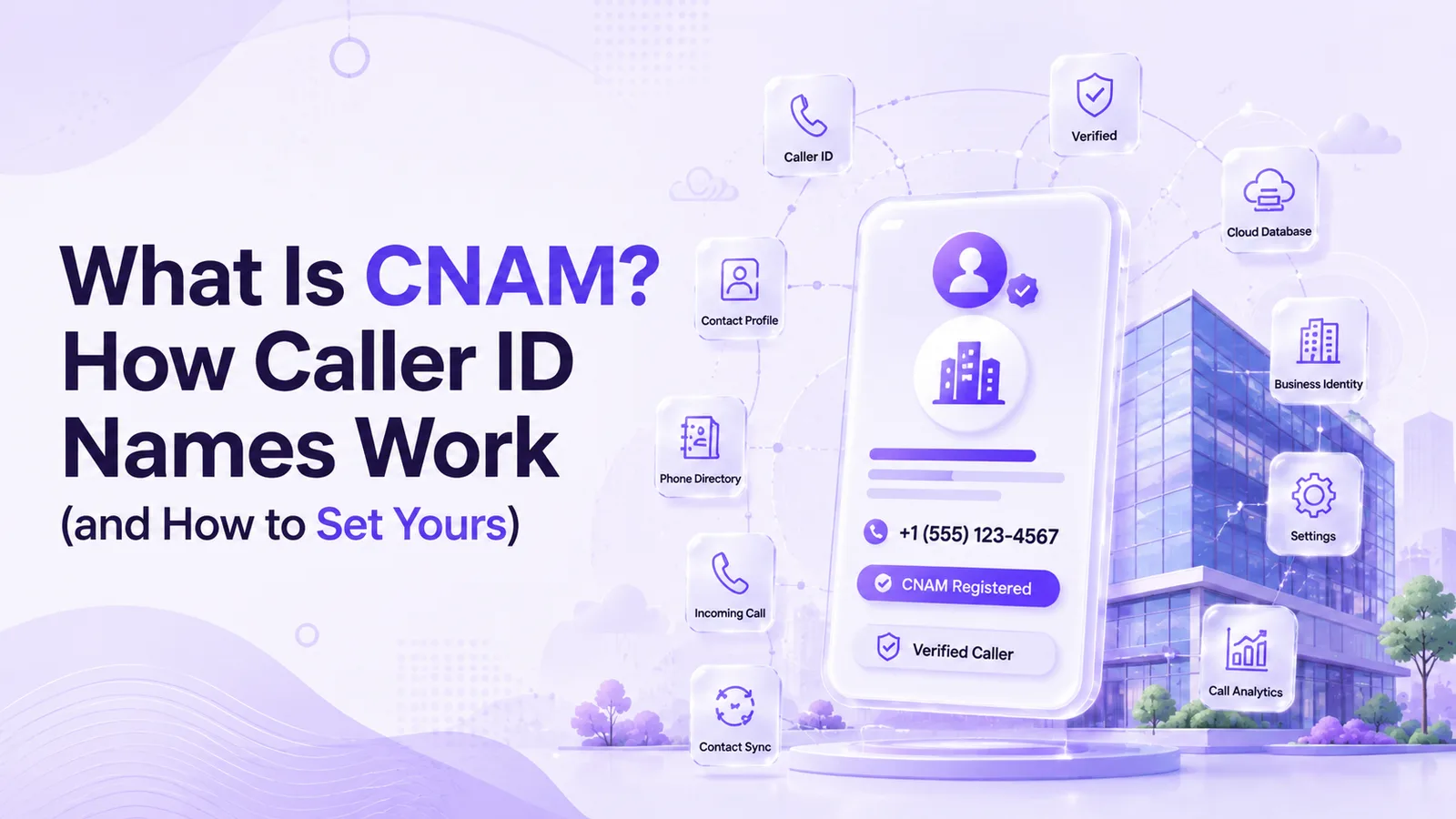
Carrier details are separate from the name callers see on screen, which comes from a different database that our guide to CNAM explains. A lookup tool and a phone screen can therefore show different things for the same number. VoIP providers often buy wholesale access from big carriers, so the same carrier name turns up across many unrelated businesses. That overlap is normal, and it says nothing about any single company.
- OCN: an operating company number ties a number to its originating network.
- Lookup tools: they report the carrier, not the business behind the VoIP number.
- Phone screen: the displayed name comes from a separate database.
- Shared network: many unrelated businesses appear under the same carrier name.
- Old names: legal and network records can outlast a retail brand.
- Check twice: compare two lookup tools when a result looks odd.
- Updates: records change slowly, so results can lag behind.
- Context: judge the number by how it behaves, not its label.
Is a Level 3 VoIP Number a Problem?
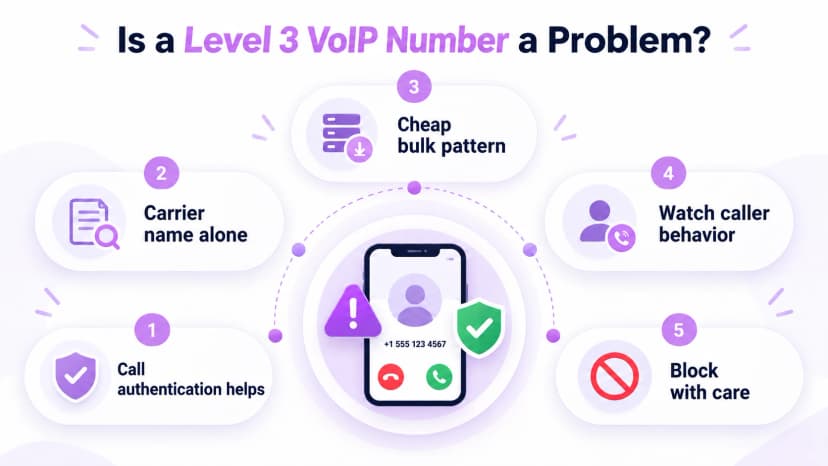
Not by itself. A Level 3 or Lumen listing describes the underlying network, the same way any other carrier name would. It does not mean the caller is spoofing, and it is not proof of a scam. Plenty of legitimate businesses run VoIP numbers on wholesale networks like this one, and many receive calls from customers every day, so a blanket reaction to the name would punish honest companies.
Wholesale VoIP capacity is inexpensive to buy in bulk, so blocks of numbers on such networks do appear often in robocall traffic. That is a pattern, not a rule. Carriers fight spoofing with STIR/SHAKEN call authentication, which checks that a call's number is genuine. Judge a call by its behavior, such as requests for money or codes, rather than by the network. A calm check of the facts beats an instant block.
- Not proof: a carrier name on a VoIP number does not show that a call is a scam.
- Pattern: cheap bulk capacity attracts both honest and dishonest senders.
- Behavior: urgent demands for money or codes are the real warning signs.
- Verification: call authentication helps confirm that a number is genuine.
- Block carefully: do not block a carrier name, since businesses use it too.
- Report abuse: flag unwanted calls through your phone or carrier.
- Spam apps: labels come from user reports, not from the carrier.
- Stay calm: unknown numbers are not always unsafe.
- Reviews: check recent reports for a number before you answer.
From Level 3 to CenturyLink to Lumen
CenturyLink announced its deal for Level 3 on October 31, 2016, and completed the acquisition on November 1, 2017. It then renamed itself Lumen Technologies, announcing the new name in September 2020 and moving to the new legal name in early 2021. Level 3 has not been a separate public brand since, but the name never fully vanished from the records that lookup tools read.
The FCC merger approval order cleared the deal in late October 2017, days before it closed. Level 3 Financing, Inc. remains a Lumen subsidiary, and the backbone is still registered with the American Registry for Internet Numbers as Level 3 Parent, LLC. That is why the name keeps appearing in lookups years later, even though the retail brand is gone.
- October 31, 2016: CenturyLink announces the deal for Level 3.
- November 1, 2017: the acquisition is completed.
- September 2020: CenturyLink announces the Lumen Technologies name.
- Early 2021: the legal name changes to Lumen Technologies.
- Today: Level 3 survives in legal entities and network registrations.
- Ticker: the stock symbol moved from CTL to LUMN in September 2020.
- Level 3 Financing: still a Lumen subsidiary used in debt filings.
- Registry: ARIN lists the backbone as Level 3 Parent, LLC.
Choosing a VoIP Number for Your Business
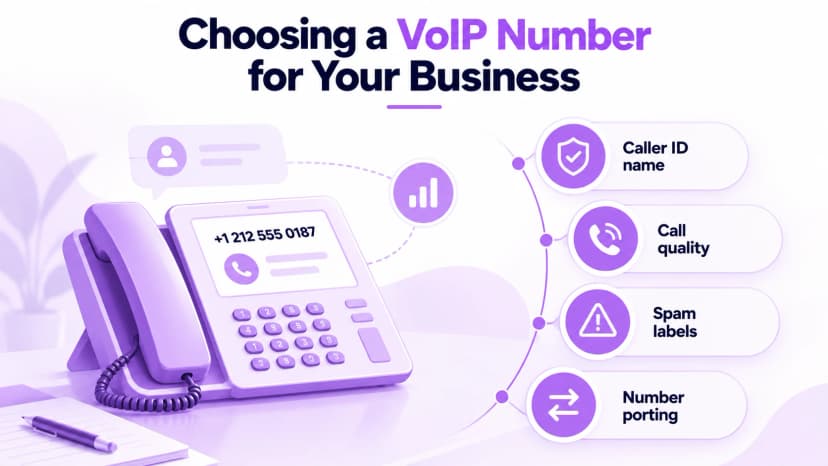
If you are setting up a number for your business, the wholesale network behind it matters less than the service on top. Look for a VoIP number with a clean, recognizable caller ID, reliable call quality, and clear terms. A provider that explains where its numbers come from, and how it handles spam labels, is easier to trust than one that stays vague. Ask direct questions before you buy, and keep the answers.
Ringflow gives a team local and toll-free numbers that ring on mobile and desktop apps, with business texting, forwarding, and number porting. Test any new VoIP number with calls to phones on different carriers, and register your business name where possible, so customers see a name they know instead of a bare carrier label. That small step builds trust before anyone answers.
- Caller ID: confirm the name customers will see on their screens.
- Call quality: place test calls from several phones and networks.
- Spam labels: ask how the provider handles flagged numbers.
- Porting: check that you can move your number later.
- Apps: staff should be able to answer from mobile and desktop.
- Free trial: test Ringflow on your own calls before you commit.
- Support: look for help that answers quickly.
- Terms: read the pricing and cancellation rules first.
Conclusion
Level 3 Communications was a major wholesale carrier that is now part of Lumen Technologies, and its name persists in lookups because the network is still registered under Level 3 entities. A Level 3 VoIP number simply rides that wholesale network instead of a traditional carrier's own lines, which is common for business numbers and not a cause for alarm.
When you choose a number for your own business, focus on caller ID, call quality, and a provider you can trust. Ringflow offers a free trial with a business number and mobile and desktop apps, so you can see how your calls appear before you commit. Test a few numbers, compare results, and pick the one that fits your customers and your budget.
Ready when you are
Want a Business Number That's Clearly Yours?
Ringflow gives your team a business number that works from mobile and desktop apps, with a caller ID your customers recognize. Start a free trial and test it on your own calls.
Frequently Asked Questions
Its underlying network is Level 3, now part of Lumen.
Not as a public brand; Lumen owns it.
Not by itself; it only names the network.
Lumen Technologies, formerly CenturyLink.
The entity responsible for phone service on a number.