
परिचय
अधिकांश व्यवसाय फ़ोन लाइनों के बारे में केवल तभी सोचते हैं जब बिल आता है या सिस्टम विफल हो जाता है।
यदि आप एक पीबीएक्स चलाते हैं, तो इसे बाहरी दुनिया से जोड़ने वाली लाइनें उस बिल का एक बड़ा हिस्सा हैं, और उन्हें अक्सर बंडलों में बेचा जाता है जो अब आपकी टीम के काम करने के तरीके से मेल नहीं खाते हैं।
तो एसआईपी ट्रंकिंग क्या है, और इतनी सारी कंपनियां अब पुराने तांबे के सर्किट को बदलने के लिए इसका उपयोग क्यों करती हैं?
यह मार्गदर्शिका बताती है कि एसआईपी ट्रंकिंग क्या है, एक कॉल कैसे गुजरती है, और यह कैसे पता करें कि आपको कितने चैनलों की आवश्यकता है। इसमें वास्तविक लाभ, प्रदाताओं से पूछे जाने वाले प्रश्न और आपकी कॉल की सुरक्षा करने वाले सुरक्षा कदम भी शामिल हैं।
अंत तक, आपको पता चल जाएगा कि क्या एसआईपी ट्रंकिंग आपके सेटअप में फिट बैठती है और अनुबंध पर हस्ताक्षर करने या किसी एक नंबर को स्थानांतरित करने से पहले क्या जांचना है।
एसआईपी ट्रंकिंग क्या है?
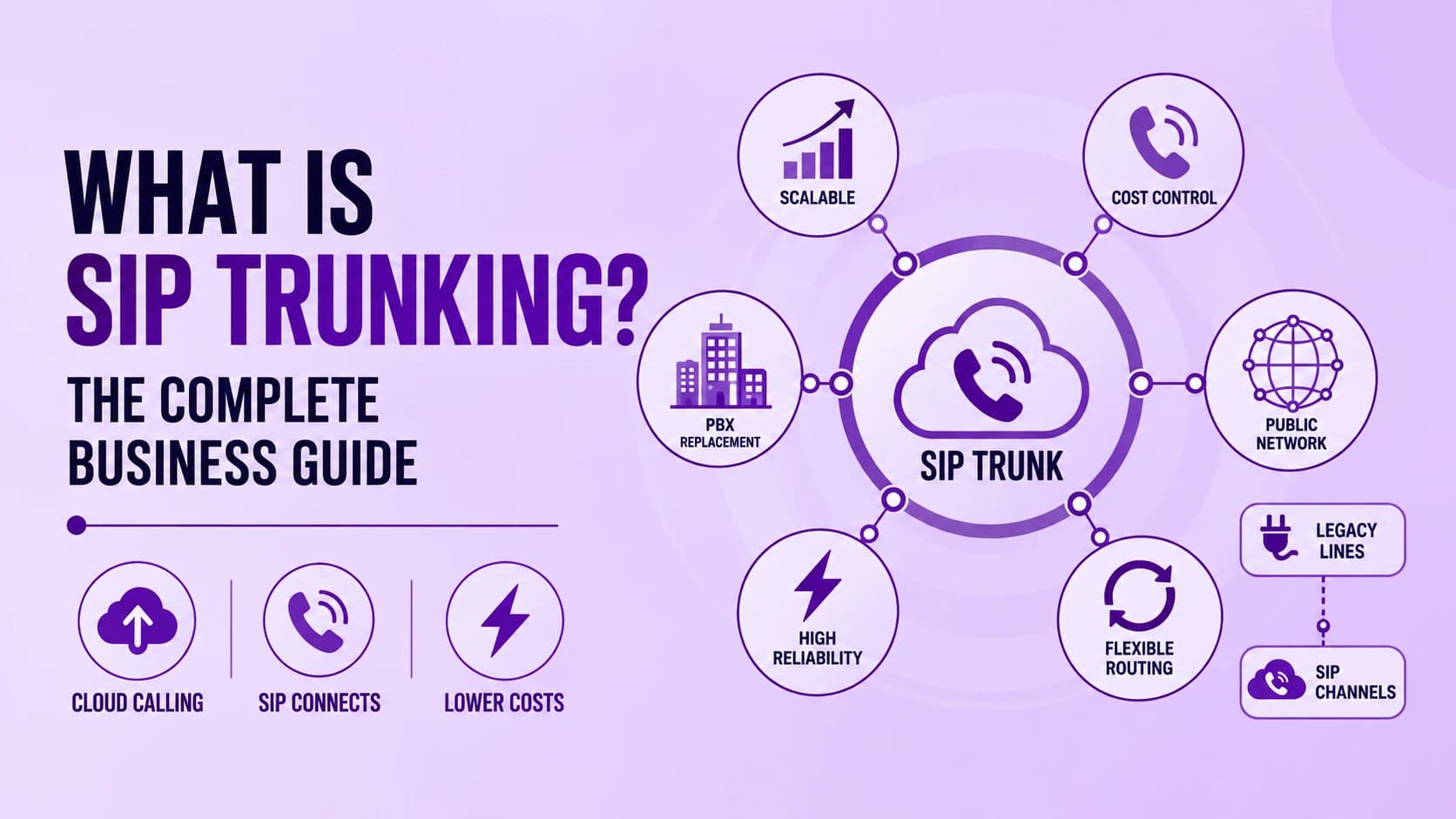
एसआईपी ट्रंकिंग आपके व्यावसायिक फोन सिस्टम को भौतिक फोन लाइनों के बजाय इंटरनेट कनेक्शन के माध्यम से सार्वजनिक फोन नेटवर्क से जोड़ने का एक तरीका है। एसआईपी का मतलब सेशन इनिशिएशन प्रोटोकॉल है, वह मानक जो आईपी नेटवर्क पर वॉयस कॉल शुरू, प्रबंधित और समाप्त करता है।
ट्रंक आपके पीबीएक्स और आपके प्रदाता के बीच आभासी लिंक है, और यह बाहरी दुनिया से हर कॉल को ले जाता है।
तांबे की लाइनों का एक निश्चित बंडल खरीदने के बजाय, आप चैनल खरीदते हैं, और प्रत्येक चैनल एक समय में एक कॉल करता है। यह एसआईपी ट्रंकिंग को लचीला बनाता है, क्योंकि क्षमता जोड़ना इंस्टॉलेशन विज़िट के बजाय सेटिंग्स में बदलाव है।
यह अपने आप में एक फोन सेवा नहीं है: यह साइट पर या क्लाउड में आपके पास पहले से मौजूद पीबीएक्स के साथ काम करती है, और इसे हर किसी तक पहुंचने का रास्ता देती है।
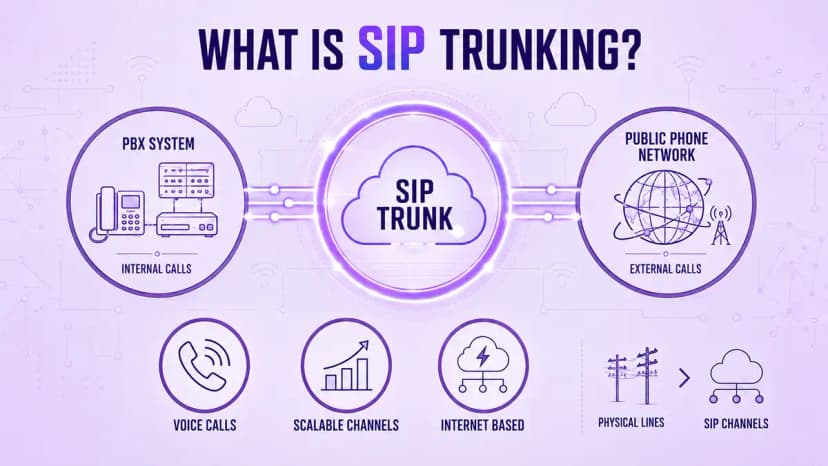
- आपके पीबीएक्स को इंटरनेट पर सार्वजनिक फोन नेटवर्क से जोड़ता है
- प्रत्येक कॉल को सेट अप करने, प्रबंधित करने और समाप्त करने के लिए सत्र आरंभ प्रोटोकॉल का उपयोग करता है
- पीआरआई सर्किट और अन्य भौतिक लाइनों को प्रतिस्थापित करता है जो निश्चित संख्या में कॉल ले जाती हैं
- चैनलों में क्षमता बेचता है, जहां प्रत्येक चैनल एक साथ एक कॉल करता है
- ऑन-साइट पीबीएक्स हार्डवेयर या क्लाउड-होस्टेड वर्चुअल पीबीएक्स के साथ काम करता है
- जब आप अपने मौजूदा फ़ोन नंबरों को नए प्रदाता में पोर्ट करते हैं तो आप उन्हें अपने पास रख सकते हैं
- होस्ट किए गए वीओआईपी से भिन्न है, जो फ़ोन सिस्टम और सेवा को एक साथ जोड़ता है
- आपको होस्ट की गई सेवा की तुलना में अधिक नियंत्रण देता है, जिसके बदले में अधिक सेटअप कार्य मिलता है
एसआईपी ट्रंकिंग कैसे काम करती है?
जब आपके कार्यालय में कोई नंबर डायल करता है, तो आपका पीबीएक्स एसआईपी प्रोटोकॉल का उपयोग करके आपके एसआईपी ट्रंक प्रदाता को कॉल अनुरोध भेजता है। प्रदाता अनुरोध की जांच करता है, फिर कॉल को सार्वजनिक फोन नेटवर्क या किसी अन्य एसआईपी एंडपॉइंट से जोड़ता है।
एक बार जब दूसरा व्यक्ति उत्तर देता है, तो आपकी आवाज़ इंटरनेट पर छोटे डिजिटल पैकेट के रूप में तब तक चलती रहती है जब तक कॉल चलती है।
सेटअप ऑन-साइट हार्डवेयर या क्लाउड सिस्टम के साथ काम करता है, और पीबीएक्स बनाम वीओआईपी तुलना बताता है कि वे दो विकल्प कैसे भिन्न हैं। दोनों ही मामलों में ट्रंक बाहरी दुनिया का पुल है।
क्योंकि प्रत्येक कॉल आपके इंटरनेट कनेक्शन पर चलती है, गुणवत्ता बैंडविड्थ, कम विलंब और स्थिर रूटिंग पर निर्भर करती है, इसलिए कटौती करने से पहले अपने वास्तविक नेटवर्क पर इन तीनों का परीक्षण करें, और दिन के अपने सबसे व्यस्त समय पर परीक्षण दोहराएं।
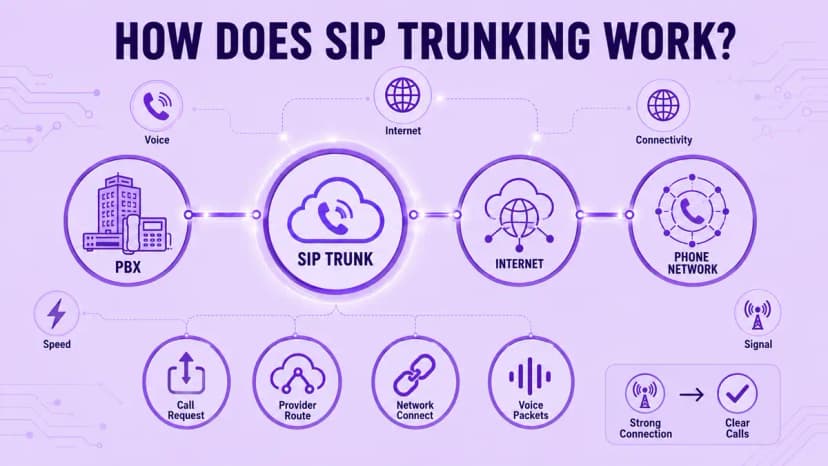
- आपका पीबीएक्स एसआईपी प्रोटोकॉल का उपयोग करके प्रदाता को कॉल अनुरोध भेजता है
- अनुरोध आपके इंटरनेट कनेक्शन के माध्यम से प्रदाता के नेटवर्क तक जाता है
- प्रदाता कॉल को सार्वजनिक फ़ोन नेटवर्क या किसी अन्य SIP एंडपॉइंट से जोड़ता है
- आवाज को डिजिटल पैकेट में परिवर्तित कर दोनों दिशाओं में भेजा जाता है
- प्रत्येक सक्रिय कॉल जब तक चलती है तब तक ट्रंक से एक चैनल का उपयोग करती है
- एक सामान्य कोडेक को प्रत्येक कॉल के लिए लगभग 80 से 100 केबीपीएस बैंडविड्थ की आवश्यकता होती है
- इनबाउंड कॉल नेटवर्क से आपके पीबीएक्स तक, विपरीत दिशा में उसी पथ का अनुसरण करती हैं
- कम विलंब और स्थिर रूटिंग उतनी ही मायने रखती है जितनी कच्ची इंटरनेट स्पीड
आपको कितने चैनल चाहिए?
चैनल की गिनती सबसे बड़ा आकार का निर्णय है, और कई व्यवसाय बस अनुमान लगाते हैं। एक चैनल एक समय में एक कॉल करता है, इसलिए आपको जिस नंबर की आवश्यकता है वह एक ही पल में आपकी अपेक्षित सबसे अधिक कॉल है, न कि दिन के लिए कुल संख्या।
बहुत कम खरीदने का मतलब है व्यस्त सिग्नल, जबकि यह सबसे ज्यादा मायने रखता है, जबकि बहुत अधिक खरीदने का मतलब है हर महीने उस क्षमता के लिए भुगतान करना जो बेकार पड़ी रहती है और कभी भी अपनी लागत नहीं कमा पाती है।
ट्रंक को आकार देने का सबसे अच्छा तरीका वास्तविक डेटा को देखना है। अपने व्यस्ततम समय से कॉल लॉग निकालें, ओवरलैपिंग कॉल की उच्चतम संख्या ढूंढें, और फिर विकास और स्पाइक्स के लिए कुछ हेडरूम जोड़ें।
उन कॉलों को भी गिनें जो कतार में हैं, वॉइसमेल, या फ़ॉरवर्डिंग, क्योंकि कनेक्ट होने पर भी प्रत्येक के पास एक चैनल होता है। आपके प्रदाता द्वारा बेचे जाने वाले निकटतम बंडल तक राउंड अप करें।
- पिछले कुछ महीनों में अपने सबसे व्यस्त समय से कॉल लॉग निकालें
- एक ही क्षण में ओवरलैप होने वाली कॉलों की अधिकतम संख्या ज्ञात कीजिए
- अग्रेषित कॉल, कतारबद्ध कॉल और कॉन्फ़्रेंस की गणना करें, क्योंकि प्रत्येक में एक चैनल होता है
- विकास और अप्रत्याशित उछाल के लिए लगभग 20 प्रतिशत हेडरूम जोड़ें
- यदि आपका प्रदाता उन्हें अलग-अलग बेचता है तो इनबाउंड और आउटबाउंड जरूरतों को विभाजित करें
- जांचें कि आपके इंटरनेट कनेक्शन में प्रत्येक चैनल के लिए पर्याप्त बैंडविड्थ है
- हर साल संख्या की समीक्षा करें, और किसी भी बड़े स्टाफ परिवर्तन के बाद फिर से
स्विच करने से आपको क्या हासिल होता है
सबसे स्पष्ट लाभ लागत है। एक भौतिक लाइन में निश्चित मासिक शुल्क होता है, चाहे वह व्यस्त हो या नहीं, जबकि एसआईपी ट्रंकिंग आपको उन चैनलों के लिए भुगतान करने की सुविधा देती है, जिनका आप वास्तव में उपयोग करते हैं, और कई योजनाएं कॉलिंग मिनटों को बंडल करती हैं।
जब आप तुलना करते हैं व्यवसाय फ़ोन सिस्टम लागत, लाइन किराये, रखरखाव, स्थापना और लंबी दूरी के शुल्क शामिल करें, न कि केवल प्रति चैनल मुख्य मूल्य, क्योंकि वे अतिरिक्त अक्सर उत्तर बदल देते हैं।
लचीलापन भी उतना ही मायने रखता है। किसी व्यस्त सीज़न के लिए दस चैनल जोड़ना, या बाद में उन्हें हटाना, आमतौर पर लंबे लीड समय वाले हार्डवेयर ऑर्डर के बजाय कॉन्फ़िगरेशन परिवर्तन होता है।
कई कार्यालयों वाले व्यवसाय भी चैनलों का एक पूल साझा कर सकते हैं और उन शहरों में स्थानीय नंबर रख सकते हैं जहां अब उनकी कोई भौतिक लाइन नहीं है। इससे विकास, चाल और समापन की योजना बनाना बहुत आसान हो जाता है।
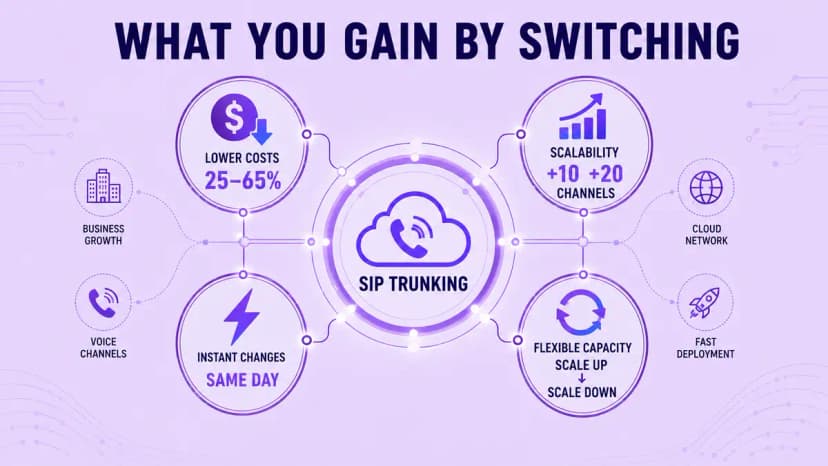
- भौतिक लाइनों के एक निश्चित बंडल के बजाय उन चैनलों के लिए भुगतान करें जिनकी आपको आवश्यकता है
- क्षमता शीघ्रता से जोड़ें या हटाएँ, अक्सर उसी दिन जिस दिन आप पूछते हैं
- कई कार्यालयों या स्थानों पर चैनलों का एक पूल साझा करें
- उन शहरों में स्थानीय नंबर रखें जहां अब आपका कार्यालय नहीं है
- कॉपर सर्किट से जुड़े लाइन रेंटल, इंस्टॉलेशन और रखरखाव शुल्क से बचें
- स्थानीय और लंबी दूरी की कॉलिंग को पूर्वानुमानित मासिक योजनाओं में बंडल करें
- अतिरिक्त भौतिक सर्किट खरीदे बिना फेलओवर के लिए दूसरा मार्ग जोड़ें
- नई लाइन स्थापित होने की प्रतीक्षा किए बिना कार्यालयों को स्थानांतरित या विस्तारित करें
प्रदाता चुनने से पहले क्या पूछें?
मूल्य निर्धारण पृष्ठ पर प्रदाता समान दिखते हैं, इसलिए आपके द्वारा पूछे जाने वाले प्रश्न प्रति चैनल मूल्य से अधिक मायने रखते हैं। अनुकूलता से शुरू करें: पुष्टि करें कि प्रदाता आपके पीबीएक्स मॉडल या क्लाउड फोन सिस्टम का समर्थन करता है, और यह कटओवर से पहले परीक्षण में मदद करेगा।
फिर नंबर पोर्टिंग के बारे में पूछें, इसमें कितना समय लगता है, और क्या आप आज उपयोग किए जाने वाले प्रत्येक नंबर को सेवा में किसी अंतराल के बिना रख सकते हैं।
इसके बाद, कॉल गुणवत्ता और समर्थन देखें। पूछें कि कौन से कोडेक्स और क्षेत्र समर्थित हैं, जहां प्रदाता का नेटवर्क सार्वजनिक फोन नेटवर्क से मिलता है, और आउटेज के दौरान उसकी टीम कितनी जल्दी जवाब देती है।
Ringflow जैसा प्रदाता, जो अपने संपर्क केंद्र प्लेटफ़ॉर्म में रूटिंग और रिपोर्टिंग बनाता है, आपके द्वारा प्रबंधित विक्रेताओं की संख्या को भी कम कर सकता है। हस्ताक्षर करने से पहले प्रत्येक उत्तर लिखित में प्राप्त करें।
- हस्ताक्षर करने से पहले अपने पीबीएक्स या क्लाउड फोन सिस्टम के साथ संगतता की पुष्टि करें
- पूछें कि नंबर पोर्टिंग कैसे काम करती है, इसमें कितना समय लगता है और इसकी लागत क्या है
- जांचें कि प्रदाता कौन से कोडेक्स का समर्थन करता है और यह कॉल गुणवत्ता की सुरक्षा कैसे करता है
- पूछें कि प्रत्येक स्थान के लिए 911 पते कैसे पंजीकृत और अद्यतन किए जाते हैं
- मूल्य निर्धारण मॉडल की तुलना करें: प्रति चैनल, प्रति मिनट, या असीमित कॉलिंग
- न्यूनतम शर्तों, शीघ्र निकास शुल्क और अधिक आयु शुल्क के लिए अनुबंध पढ़ें
- एक लिखित अपटाइम प्रतिबद्धता और एक सार्वजनिक स्थिति पृष्ठ के लिए पूछें
- खरीदने से पहले एक तकनीकी प्रश्न पूछकर समर्थन का परीक्षण करें
सुरक्षा और विश्वसनीयता
एसआईपी ट्रंकिंग आपके कॉल को डिफ़ॉल्ट रूप से एन्क्रिप्ट नहीं करता है, क्योंकि एसआईपी प्रोटोकॉल गोपनीयता के बजाय कॉल सेटअप को संभालता है। इसीलिए सुरक्षा की अपनी समीक्षा होनी चाहिए।
The एनआईएसटी वीओआईपी सुरक्षा गाइड यह छिपकर बात सुनने, सेवा से इनकार करने और टोल धोखाधड़ी जैसे खतरों का वर्णन करता है, और जब आप किसी प्रदाता की समीक्षा करते हैं तो यह आपको एक उपयोगी चेकलिस्ट देता है, इसलिए किसी भी बिक्री कॉल से पहले अपने प्रश्नों को आकार देने के लिए इसका उपयोग करें।
विश्वसनीयता पर भी उतना ही ध्यान देने की जरूरत है। एक सत्र सीमा नियंत्रक आपके पीबीएक्स तक पहुंचने से पहले खराब ट्रैफ़िक को फ़िल्टर करता है, और मुख्य लाइन विफल होने पर दूसरा इंटरनेट कनेक्शन या बैकअप रूट कॉल प्रवाहित रखता है।
यह मानने के बजाय कि यह काम कर रहा है, हर तिमाही में फेलओवर का परीक्षण करें, और खर्च की सीमा निर्धारित करें ताकि एक समझौता खाता रातोंरात या लंबे सप्ताहांत में कॉल का एक बड़ा बिल न चला सके।
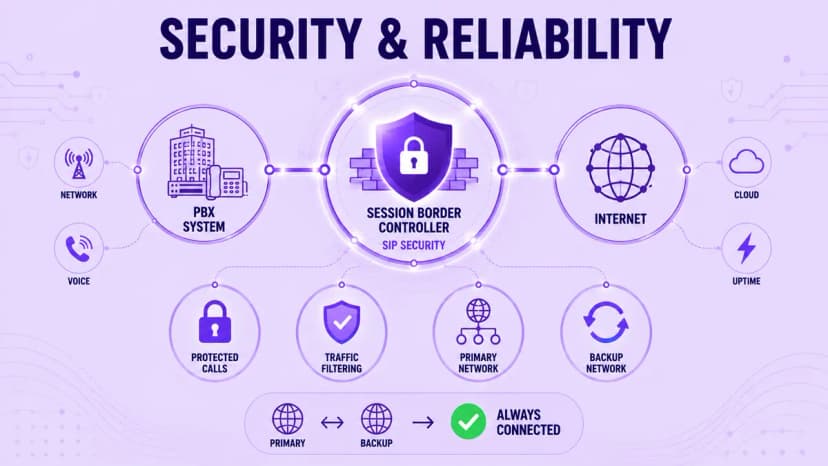
- कॉल सेटअप के लिए टीएलएस और वॉयस के लिए एसआरटीपी का उपयोग करें ताकि कॉल को इंटरसेप्ट न किया जा सके
- अपने पीबीएक्स और इंटरनेट के बीच एक सत्र सीमा नियंत्रक रखें
- स्वीकृत आईपी पतों तक ट्रंक पहुंच को प्रतिबंधित करें और मजबूत क्रेडेंशियल्स का उपयोग करें
- टोल धोखाधड़ी के जोखिम को कम करने के लिए उन अंतरराष्ट्रीय गंतव्यों को ब्लॉक करें जिन पर आप कभी कॉल नहीं करते
- असामान्य कॉल वॉल्यूम या गंतव्यों के लिए खर्च सीमा और अलर्ट निर्धारित करें
- फ़ेलओवर के लिए बैकअप इंटरनेट लाइन या दूसरा ट्रंक रूट जोड़ें
- यदि ट्रंक नीचे चला जाता है तो स्वचालित रूप से मोबाइल नंबरों पर कॉल अग्रेषित करें
- हर तिमाही में फेलओवर का परीक्षण करें और रिकॉर्ड करें कि पुनर्प्राप्ति में कितना समय लगता है
निष्कर्ष
एसआईपी ट्रंकिंग आपके पास पहले से मौजूद पीबीएक्स को इंटरनेट पर फोन नेटवर्क से जोड़ता है, और यह निश्चित भौतिक लाइनों को लचीले चैनलों से बदल देता है।
जब आप उन चैनलों को वास्तविक कॉल डेटा से आकार देते हैं, कुल लागतों की ईमानदारी से तुलना करते हैं, और हस्ताक्षर करने से पहले सुरक्षा और विफलता की जांच करते हैं, तो यह फोन सिस्टम को मिलने वाले अधिक व्यावहारिक उन्नयन में से एक बन जाता है।
चरण सरल हैं, लेकिन उनमें से किसी को भी छोड़ना महंगा पड़ सकता है।
अपने व्यस्ततम घंटे के कॉल डेटा से शुरुआत करें और अनुमान के बजाय उस नंबर को अपने चैनल की गिनती का मार्गदर्शन करने दें। फिर दो या तीन प्रदाताओं की एक साथ तुलना करने के लिए इस गाइड में दिए गए प्रश्नों का उपयोग करें।
कनेक्शन स्थापित होने के बाद Ringflow टीमों को रूटिंग, रिपोर्टिंग और कॉल हैंडलिंग प्रबंधित करने में मदद कर सकता है, ताकि व्यवसाय बढ़ने और कॉल पैटर्न बदलने के साथ-साथ आपका फ़ोन सिस्टम लचीला बना रहे।
तैयार जब आप हैं
चैनल गणना पर अनुमान लगाना अधिक भुगतान करने का सबसे तेज़ तरीका है
Ringflow का प्लेटफ़ॉर्म आकार और आपके कनेक्शन को सुरक्षित करता है ताकि आपकी क्षमता कभी खत्म न हो या इसके लिए अधिक भुगतान न करें।
अक्सर पूछे जाने वाले प्रश्नों
यह आपके व्यावसायिक फ़ोन सिस्टम को भौतिक फ़ोन लाइनों के बजाय इंटरनेट के माध्यम से सार्वजनिक फ़ोन नेटवर्क से जोड़ने का एक तरीका है। यह प्रत्येक कॉल को सेट अप करने, प्रबंधित करने और समाप्त करने के लिए SIP प्रोटोकॉल का उपयोग करता है।
बिल्कुल नहीं। एसआईपी ट्रंकिंग वीओआईपी का एक रूप है जो मौजूदा पीबीएक्स को फोन नेटवर्क से जोड़ता है, जबकि होस्ट किया गया वीओआईपी फोन सिस्टम और कॉलिंग सेवा को एक साथ बंडल करता है।
हाँ। एक एसआईपी ट्रंक एक पीबीएक्स से जुड़ता है, जो ऑन-साइट हार्डवेयर या क्लाउड-होस्टेड सिस्टम हो सकता है। पीबीएक्स के बिना, होस्ट की गई फ़ोन सेवा आमतौर पर आसान विकल्प होती है।
अपने व्यस्ततम समय के दौरान ओवरलैप होने वाली कॉलों की उच्चतम संख्या की गणना करें, फिर लगभग 20 प्रतिशत हेडरूम जोड़ें। आपके प्रदाता द्वारा प्रस्तावित बंडल आकार तक पूर्णांकित करें।
यह तब हो सकता है, जब प्रदाता टीएलएस और एसआरटीपी एन्क्रिप्शन का समर्थन करता है, सत्र सीमा नियंत्रकों का उपयोग करता है, और टोल धोखाधड़ी के लिए मॉनिटर करता है। हस्ताक्षर करने से पहले विशेष जानकारी पूछें।