
Введение
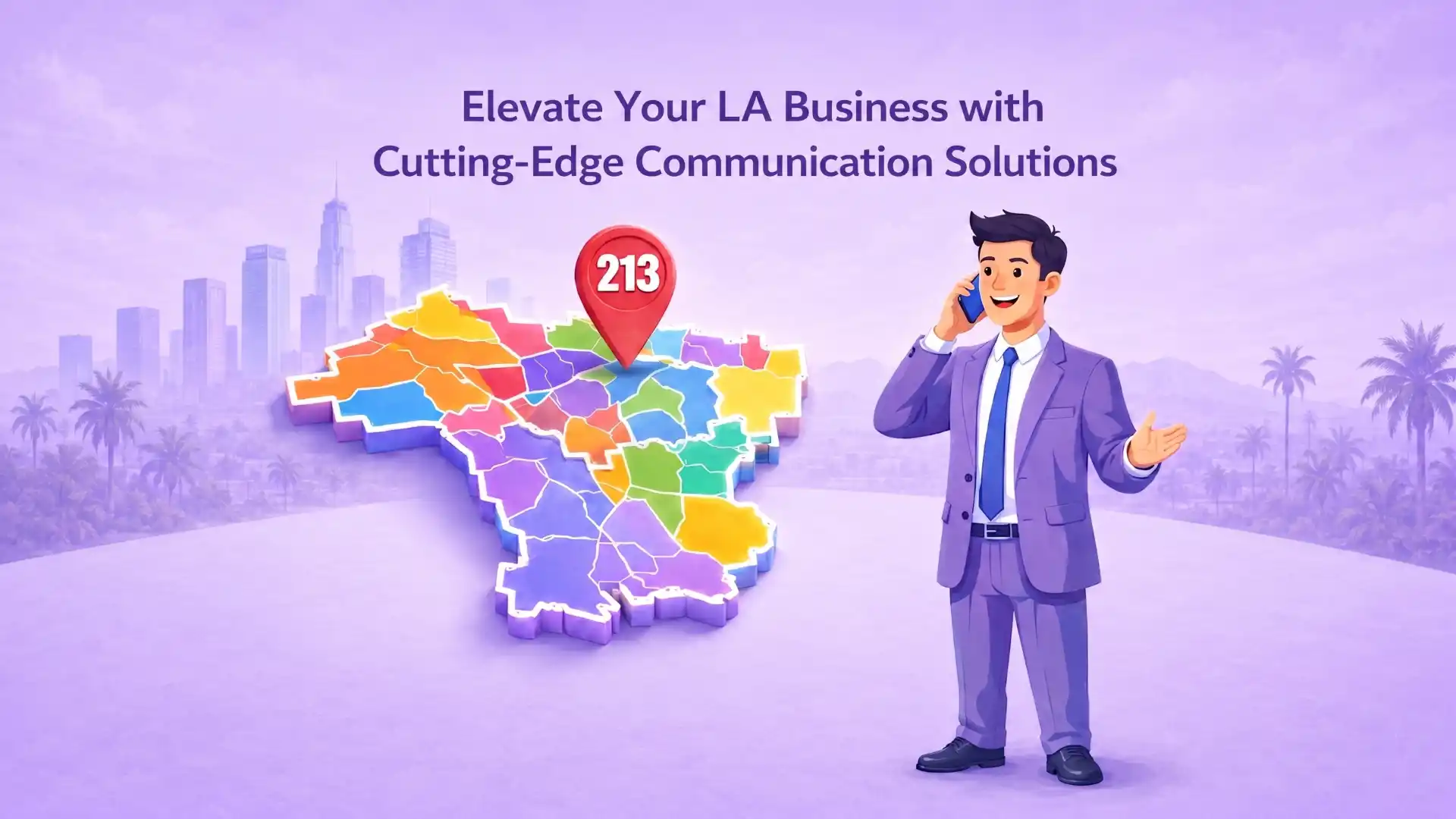
Код города 213 — это первоначальный телефонный префикс центра Лос-Анджелеса — один из трех кодов города, полученных Калифорнией в 1947 году, наряду с 415 для района залива и 916 для северной половины штата.
Спустя почти восемьдесят лет и пять территориальных разделений он по-прежнему является основой коммерческого ядра города, от башен Финансового района до переоборудованных складов Района искусств.
В этом руководстве рассказывается о том, куда на самом деле достигает сегодня код, о необычном решении регулирующих органов, которое объединило два разделенных кода обратно в одно общее наложение, о новом слое 738, добавленном поверх этого, а также о том, кто на самом деле полагается на номер 213 и почему.
Шаги настройки в конце занимают несколько минут, идет ли линия по визитке или по личному телефону.
- Код города 213 был создан в 1947 году как один из трех первоначальных кодов города Калифорнии, наряду с 415 и 916.
- В период с 1951 по 1998 год номер 213 разделялся пять раз (выделялись номера 714, 805, 818, 310 и 323), в результате чего его сократили до центра Лос-Анджелеса.
- В 2017 году регулирующие органы предприняли необычный шаг: устранили границу между 213 и 323, объединив их в общий слой, а затем в 2024 году добавили 738 в качестве третьего уровня.
- Развлечения, финансы, мода и технологии Arts District — все они полагаются на номер 213, обеспечивающий доверие к центру города.
Что такое код города 213?
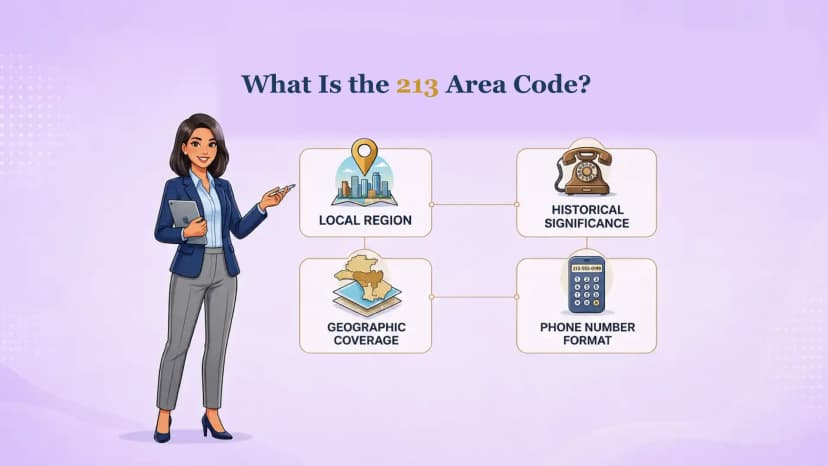
213 - один из трех первоначальных кодов городов Калифорнии 1947 года, выпущенных в той же партии, что и 415 для района залива и 916 для севера, когда впервые был запущен план нумерации штата.
Тогда он простирался почти на всю южную половину Калифорнии — от границы с Мексикой через центральное побережье и вглубь страны к пустыне.
Десятилетия бурного роста населения резко сократили это влияние, поскольку региональные планировщики создавали новые коды каждый раз, когда спрос на телефонные линии превышал количество, все еще доступное по старому коду.
Сегодня, после пяти отдельных разделений, 213 охватывает только центр Лос-Анджелеса и прилегающие к нему районы — часть первоначальной территории, но, безусловно, наиболее коммерчески насыщенную ее часть.
Это сокращение отражает то, что произошло в большей части городской Америки в течение тех же десятилетий: единый код города, созданный для населения середины века, просто исчерпал запас мощности, как только факсимильные линии, пейджеры,
и в конечном итоге сотовые телефоны увеличили количество линий, необходимых одному дому или предприятию.
Краткая история: пять расколов и воссоединение
213 изменил форму больше, чем почти любой другой код города Калифорнии, сократившись на пять отдельных частей, прежде чем необычный нормативный шаг снова объединил часть этой территории:
- 1951–1998: пять расколов. 714 отделились в 1951 году, чтобы прикрыть округ Ориндж, 805 последовали в 1957 году на Центральное побережье, 818 отделились в 1984 году на долину Сан-Фернандо, 310 отделились от Вестсайда и Саут-Бэй в 1991 году, а 323 прибыли в 1998 году, в конечном итоге сократив 213 до центра Лос-Анджелеса.
- 2017: необычное воссоединение. Вместо того, чтобы снова разделить сморщенную территорию 213, Калифорнийский PUC полностью устранил границу между 213 и 323, объединив два уже отдельных кода обратно в один общий наложение, охватывающее точно такую же зону.
- 2024 год: третье наложение. Эта воссоединенная территория 213/323 нуждалась в большей пропускной способности к началу 2020-х годов, поэтому регулирующие органы утвердили 738 в качестве третьего уровня, который был запущен в эксплуатацию в ноябре 2024 года.
- Общенациональный образец. Наложение нескольких кодов на идентичную географию вместо перерисовки границ стало стандартным решением, как только регулирующие органы осознали, что повторяющиеся разделения вынуждают людей менять номера только для того, чтобы оставаться доступными.
Куда достигает оверлей 213/323/738
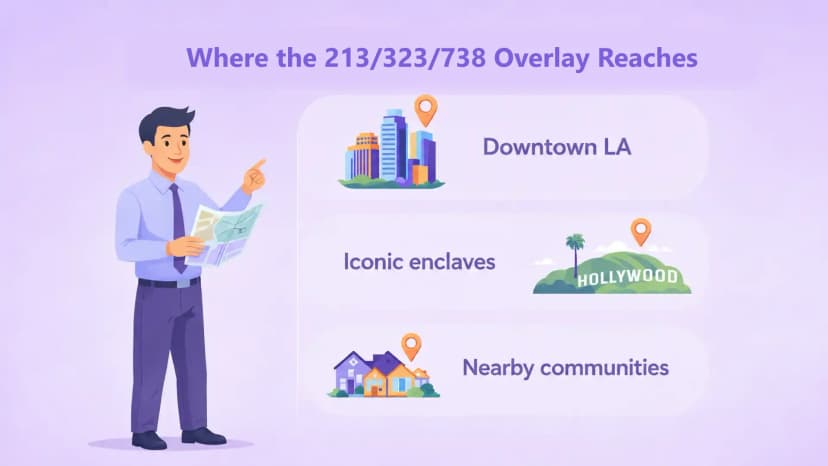
Наложение охватывает Финансовый район Лос-Анджелеса, Район искусств, Чайнатаун, Корейский квартал и Маленький Токио, а также Западный Голливуд, Беверли-Хиллз, Глендейл и Пасадину.
Он простирается дальше до Белла, Хантингтон-Парка, Вернона, Монтебелло и ряда других населенных пунктов в центре округа Лос-Анджелес, которые расположены недалеко от центра города, но все же попадают в ту же границу нумерации.
Номер любого из трех кодов сигнализирует об одном и том же любому, кто увидит его в идентификаторе вызывающего абонента или на визитной карточке: подлинное присутствие в центре Лос-Анджелеса, а не в Вестсайде, не в долине Сан-Фернандо, не в Вестсайде, не в долине Сан-Фернандо.
а не большой округ Лос-Анджелес в более широком смысле, как часто предполагают посторонние.
Это различие имеет большее значение в Лос-Анджелесе, чем в большинстве агломераций, поскольку разрастание города означает, что номер телефона является одним из немногих быстрых сигналов, которые местные жители действительно используют для географического размещения бизнеса, даже не взглянув на адрес.
213 против 323 против 738 против кодов соседних Лос-Анджелеса
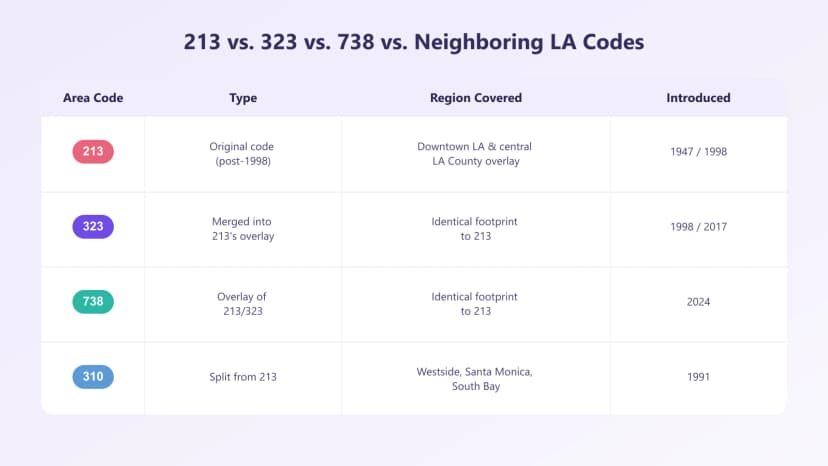
Карту нумерации Лос-Анджелеса легко перепутать. Вот как на самом деле связаны коды, относящиеся к центру города:
| Код города | Тип | Охваченный регион | Представлено |
|---|---|---|---|
| 213 | Исходный код (после 1998 г.) | Наложение центра Лос-Анджелеса и центральной части округа Лос-Анджелес | 1947 / 1998 |
| 323 | Слито с оверлеем 213 | Идентичен размеру 213 | 1998 / 2017 |
| 738 | Наложение 213/323 | Идентичен размеру 213 | 2024 |
| 310 | Отделение от 213 | Вестсайд, Санта-Моника, Саут-Бэй | 1991 |
Наложение работает иначе, чем разделение: вместо того, чтобы рисовать новую линию на карте, регулирующие органы просто разрешают нескольким кодам обслуживать одни и те же адреса, и новые номера присваиваются тому коду, который в данный момент еще имеет доступные блоки.
Краткая версия: 213, 323 и 738 — это три названия одного и того же района центра города, поэтому выбор одного — это исключительно вопрос того, что доступно, а не географии.
Вместо этого предприятиям, стремящимся к прибрежной идентичности, следует обратить внимание на 310 код города, который охватывает Беверли-Хиллз, Малибу и Санта-Монику — совершенно другой фрагмент карты нумерации Лос-Анджелеса.
Кто на самом деле пользуется номером 213
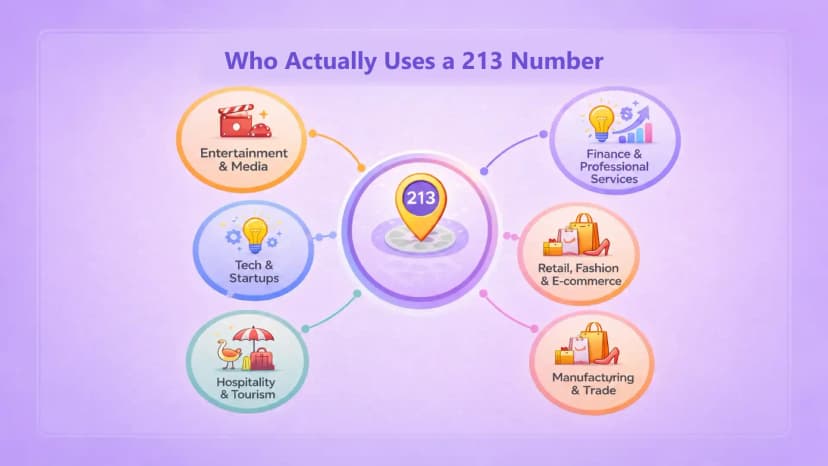
Есть практическая причина, по которой номер 213 выбирают вместо любого другого префикса: он сигнализирует о близости к конкретным отраслям, сгруппированным вокруг коммерческого ядра центра города, и эти отрасли склонны судить о незнакомом абоненте именно по таким деталям:
- Развлечения и СМИ. Агентства, продюсерские компании и потоковые платформы группируются в центре города и хотят получить соответствующее количество.
- Финансы и профессиональные услуги. Банки, юридические конторы и консалтинговые фирмы в Финансовом районе опирайтесь на 213 для обеспечения институционального доверия.
- Технологии и стартапы Arts District. Инновационные центры DTLA используют местный номер для обозначения корней даже при удаленном найме.
- Мода, розничная торговля и гостеприимство. Оптовая экосистема Fashion District, а также отели и заведения в центре города зависят от большого количества звонков.
Ничто из этого не требует фактической аренды офиса в центре города. Множество компаний, которые больше всего полагаются на идентификацию 213 распределенные или полностью удаленные командыи просто перенаправьте виртуальный номер туда, где сотрудники работают в этот день,
от домашнего офиса в Пасадене до коворкинга в трех штатах отсюда.
Как получить код города 213
Чтобы получить номер, не требуется никакого офиса финансового округа — все происходит онлайн, от начала до конца:
- 1Выберите провайдера. Выберите облачную телефонную службу, в которой номера центра Лос-Анджелеса указаны в качестве доступного инвентаря.
- 2Найдите свой номер. Просмотрите комбинации 213, 323 или 738 — все три одинаково локальны.
- 3Настройте биллинг. Поставщикам обычно просто нужно имя, адрес электронной почты и карточка в файле.
- 4Проложите линию. Направляйте вызовы на человека, в общую очередь или в меню автосекретаря.
- 5Сделайте тестовый звонок. Наберите и отправьте текстовое сообщение на новый номер, прежде чем передать его кому-либо.
Старый номер остается действующим на протяжении всего порта, а сам коммутатор обычно очищается через несколько рабочих дней после того, как предыдущий оператор подтвердит передачу.
Что на самом деле влияет на цену, так это набор функций — запись звонков, многоканальная маршрутизация, а не то, какой код города прикреплен; см. наш телефонная система для бизнеса разбивка затрат на реальные числа.
Распространенные ошибки, которых следует избегать
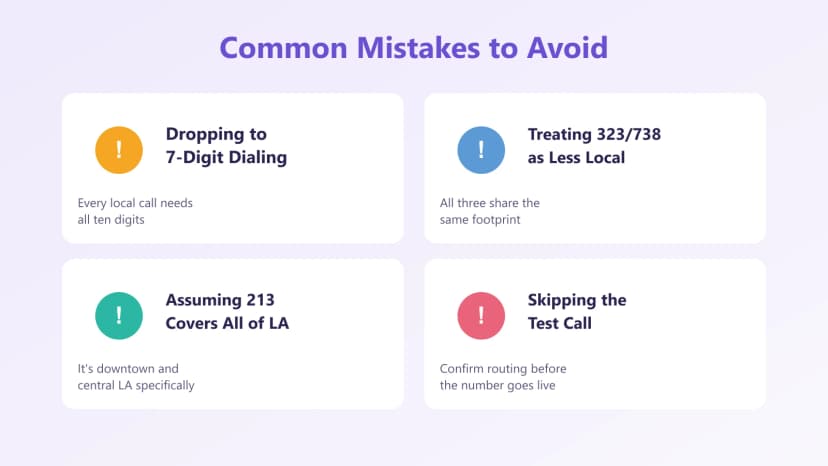
Совместное использование одного следа в трех кодах города открывает дверь для нескольких предсказуемых ошибок, которых можно избежать, если кто-то знает, что их нужно остерегаться:
- Переход на 7-значный набор. Поскольку номера 213, 323 и 738 имеют один и тот же след, для каждого местного вызова требуются все десять цифр, даже между двумя номерами 213.
- Считать 323 или 738 менее местными, чем 213. Все три используют один и тот же общий пул на одной и той же территории в центре города.
- Предположим, что 213 охватывает весь Лос-Анджелес. В частности, это центр и центр Лос-Анджелеса: в Вестсайде используется 310, в Долине — 818.
- Пропуск тестового звонка после активации. Прежде чем номер достигнет клиентов, убедитесь, что маршрутизация работает правильно.
Устранение границ в 2017 году, в результате которого были объединены 213 и 323, было одобрено Калифорния PUC, регулирующего органа штата, который контролирует каждое изменение кода города в Калифорнии, от обычного разделения до более редких слияний, подобных этому.
Заключение
Центр Лос-Анджелеса носит префикс 213 с 1947 года, и добраться сюда пришлось по-настоящему необычным путем: пять разбиений сократили его до компактного размера, столь же редкое удаление границ снова сшило его с 323,
и 738, наложенный поверх обоих, чтобы добавить место без перерисовки карты в шестой раз.
Любой из трех кодов активируется быстро — часто в тот же день, когда он запрошен — независимо от того, идет ли он по личной линии или по деловому номеру для звонков в центре Лос-Анджелеса, а существующий номер переносится в фоновом режиме без отключения обслуживания.
Готов, когда вы будете
Готовы получить свой собственный код города 213?
Получите мгновенный авторитет в центре Лос-Анджелеса по номеру 213 от Ringflow. Установите его за считанные минуты — бесплатная пробная версия, карта не требуется, а также бесплатный перенос номера, если он у вас уже есть.
Часто задаваемые вопросы
Код города 213 - это оригинальный телефонный префикс центра Лос-Анджелеса, созданный в 1947 году как один из первых трех кодов города Калифорнии. Теперь это часть трехстороннего наложения с 323 и 738.
Географической разницы нет — все три имеют одинаковую территорию в центре Лос-Анджелеса. Первоначально 323 был отдельным выделенным кодом, пока регулирующие органы не объединили его обратно с 213 в 2017 году; 738 был добавлен в качестве третьего наложения в 2024 году.
Оверлей 213/323/738 граничит с 310 (Вестсайд, Лос-Анджелес) и 818 (Долина Сан-Фернандо), оба из которых изначально отделились от самого 213.
Зарегистрируйтесь у поставщика облачных телефонов, например Ringflow, выполните поиск доступных номеров по номерам 213, 323 или 738 и активируйте линию онлайн. Большинству поставщиков требуется только имя, адрес электронной почты и способ оплаты.
Да, это один из трех первоначальных кодов города Калифорнии 1947 года, и он остается законным историческим префиксом центра Лос-Анджелеса.