
Introduction
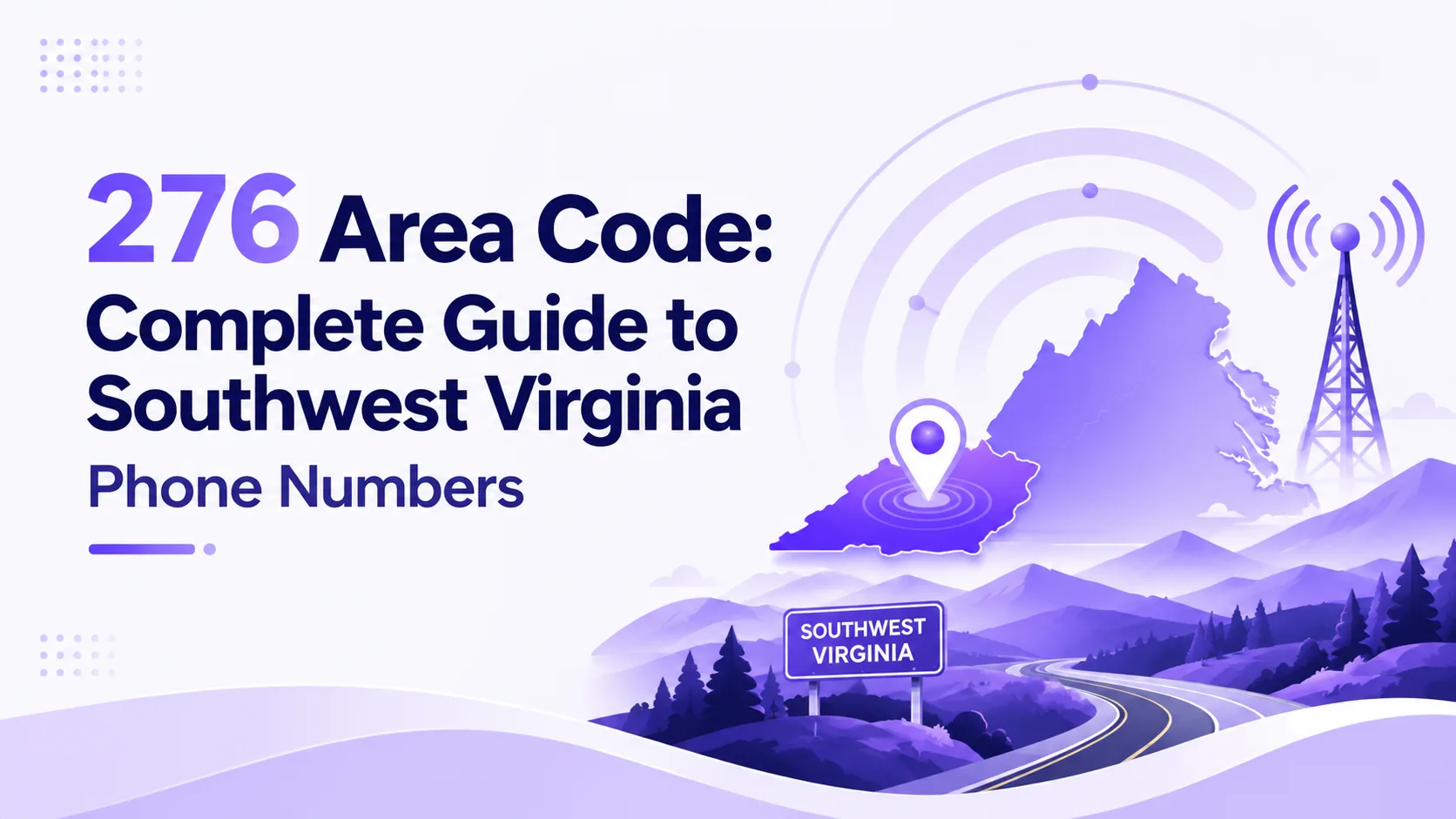
The 276 area code covers the southwestern corner of Virginia, and this guide covers exactly which towns it reaches, the split that created it, and the steps for activating a business line there. Getting this right matters for any business calling or serving customers in this part of the state, since a recognizably local number changes whether people actually pick up.
You'll learn how this code split cleanly from the older 540 area code, why the region's changing economy makes local numbers genuinely useful, and the exact steps to activate one. Stick around, because the split-versus-overlay distinction changes how you should dial, and almost no other guide explains it clearly.
- The 276 area code covers the southwestern portion of the U.S. state of Virginia, split cleanly from the older 540 area code.
- Unlike many newer codes, 276 does not overlay another code, so 7-digit local dialing still works inside it.
- The 276 area code was activated in 2001 once 540 numbers ran low across such a wide territory.
- The region's economy has shifted from coal mining toward tourism, healthcare, and logistics along Interstate 81.
The 276 Area Code Covers a Distinct Corner of Virginia
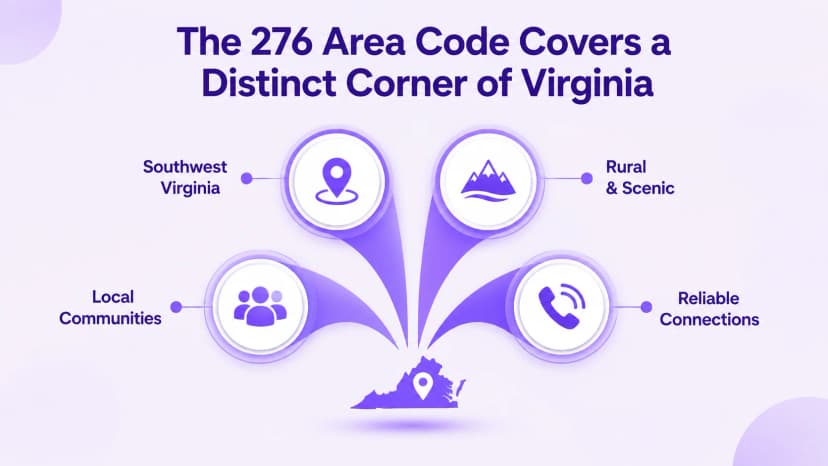
The 276 area code covers the southwestern portion of the U.S. state of Virginia, including Bristol, Abingdon, Wytheville, Pulaski, and the coalfields counties near the Kentucky and Tennessee borders. It's a defined territory of its own, not a second layer of numbers stacked onto an existing region.
Businesses located here sit within one of the most scenic stretches of the Appalachian Mountains, far from the congestion of northern Virginia. The prefix has become shorthand locally for genuine southwest Virginia roots, especially among businesses that serve customers who value that identity over a number that could belong anywhere.
- Covers Bristol, Abingdon, Wytheville, and Pulaski
- Reaches the far southwestern coalfields near Kentucky and Tennessee
- Borders the 540 area code rather than sharing its footprint
- Serves a mostly rural, mountainous stretch of the state
Why This Region Never Became an Overlay Zone
Most guides skip this detail entirely. The 276 area code is not layered on top of another code the way many newer area codes are. When it was created, regulators drew a new boundary and assigned every number inside it to 276, while everything outside that line kept the 540 area code.
How Splits Differ From Overlays
An overlay adds a second area code to the same footprint an existing code already serves, forcing 10-digit dialing everywhere. A split instead redraws the map, giving one piece of territory an entirely new code while the rest keeps the old one. Regulators tend to choose a split when a region is large, geographically distinct, and growing at a different pace than the rest of the original territory, which describes southwest Virginia's relationship to the rest of the old 540 footprint fairly well.
What That Means for Local Calls
Inside this territory, a call between two local numbers can still be dialed with 7 digits, since no second code shares the same footprint. Businesses moving here from an overlay region often need to unlearn that habit during their first week of local calls. Most phone systems and cloud platforms handle both dialing styles without any configuration changes, so the difference rarely causes real problems once staff know it exists.
From Coal Camps to Call Centers
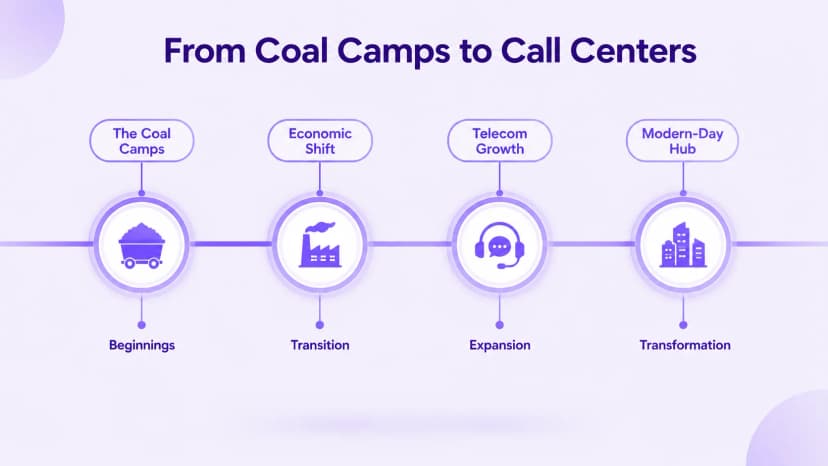
The 540 area code that 276 split from was created in 1995, carved out of the older 703 area code to relieve demand across western and southwestern Virginia. For a few years it stretched from the outer D.C. suburbs down to the Tennessee border, an area too large for one code to serve efficiently, as the area code 276 record notes.
That single territory covered mountain towns, small cities, and a coalfields economy that had almost nothing in common with the fast-growing suburbs closer to Washington, making a future split nearly inevitable once demand for new numbers picked up.
- 1995: The 540 area code is carved out of 703
- Late 1990s: 540 combinations begin running low across its huge territory
- 2001: Regulators activate 276 as a clean geographic split
- 2000s–today: The region shifts from coal mining toward tourism and logistics
Who Actually Benefits From a Local 276 Number?
A local number here carries real weight across a region whose economy has shifted dramatically since coal mining's decline decades ago.
Tourism and Outdoor Recreation
Southwest Virginia draws visitors to the Blue Ridge Parkway, the Appalachian Trail, and the Virginia Creeper Trail near Abingdon. A 276 number carries instant local credibility with tourists, event planners, and outfitters who'd rather book through a genuinely local vendor or guide. Seasonal businesses like cabin rentals and guided tours benefit most, since a recognizable local number reassures out-of-town visitors booking a trip months in advance.
Healthcare and Logistics Along I-81
The region hosts regional hospital systems in Bristol and Wytheville, plus steady freight traffic along Interstate 81. Ringflow helps businesses across the southwestern portion of Virginia route calls to the right department without managing separate physical lines for each office, which matters when teams are spread across several small towns instead of one hub.
Medical suppliers, trucking dispatchers, and equipment rental companies all rely on a number that patients and drivers instantly recognize as local, rather than an out-of-state call center that might not understand the region's geography.
Setting Up Your 276 Number in Five Steps
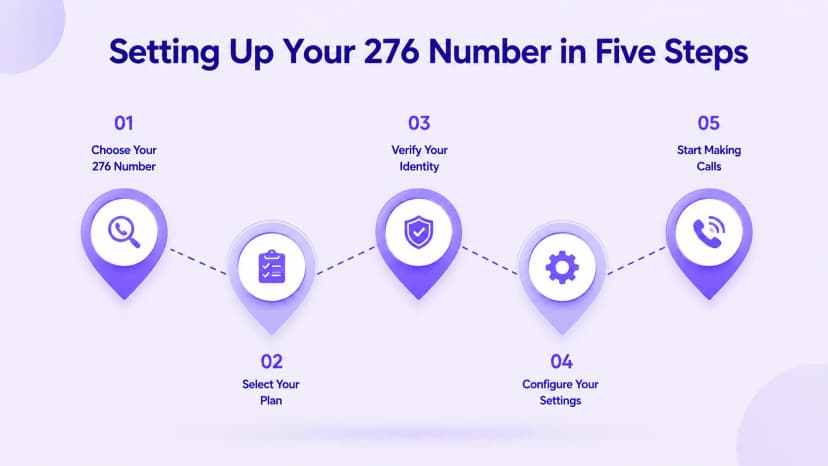
Activating a business number for southwest Virginia only takes a handful of steps, and most providers run the whole process online with no physical local address required. Claiming a 276 number rarely takes longer than fifteen minutes start to finish once you know which provider to use.
- 1Pick a provider. Choose a cloud phone service that lists 276 area code numbers as available inventory.
- 2Search for your number. Browse available combinations, including a vanity phone number that's easy for customers to remember or repeat back.
- 3Verify your account. Most providers only need a name, email, and payment method to activate a business line.
- 4Activate and route calls. Point the number to your team, a call queue, or an auto-attendant within minutes.
- 5Test before publishing. Call and text the number yourself to confirm routing works before printing it anywhere public.
Ringflow activates 276 numbers the same way, letting a Bristol or Abingdon team pick up calls the very day they sign up.
Three Mistakes That Cost Southwest Virginia Businesses Calls
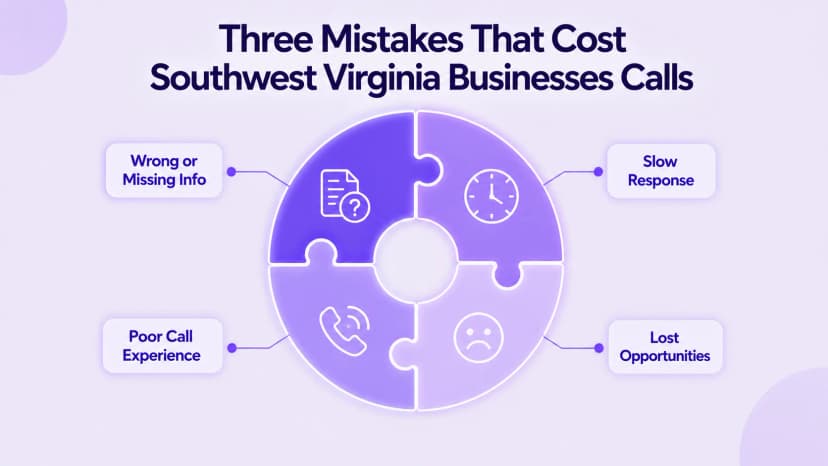
Businesses new to this region tend to stumble on the same handful of avoidable errors, often because owners carry over habits from overlay markets that don't apply here. Nearly all of these mistakes disappear once the specifics of this particular territory are understood.
- Assuming 10-digit dialing is required. Since 276 is a split rather than an overlay, 7-digit local dialing still works, though 10 digits are always safe.
- Assuming 276 covers less territory than 540 once did. The 540 area code still covers other parts of Virginia; 276 simply took over the southwestern corner.
- Ignoring the tourism and healthcare B2B audience. Businesses that skip this segment miss two of the largest customer bases in the region.
- Skipping a test call after activation. Confirm routing works correctly before the number reaches customers.
Weighing a local number against a toll-free option? For area-specific credibility, a local number usually wins on trust, and a cloud phone service behind it keeps call routing manageable as the team grows.
Conclusion
Businesses get a genuinely local presence with the 276 area code, covering the southwestern corner of Virginia after splitting cleanly away from the older 540 territory rather than sharing its footprint. Because that split was geographic rather than an overlay, 7-digit local dialing still works here — a detail that catches businesses coming from overlay regions off guard.
The local economy today blends tourism, healthcare, and logistics along I-81, so a local number reaches a genuinely valuable mix of customers. Knowing the coverage area, the split history, and what drives the local economy makes it much easier to set up a 276 number that actually serves them.
The next move is simple: figure out which part of the region your customers are dialing in from, then pick a number that fits what they expect to see. Sign up with Ringflow, and a southwest Virginia number is answering calls for your team before the day is out.
Ready when you are
Ready to Sound Local Across Southwest Virginia?
Ringflow helps you activate a 276 number and route it to your team in minutes. Get a free trial with Ringflow.
Frequently Asked Questions
The 276 area code is a telephone prefix activated in 2001 after splitting from the older 540 area code. It covers the southwestern portion of the U.S. state of Virginia, including Bristol, Abingdon, and Wytheville.
It covers the southwestern portion of the U.S. state of Virginia, stretching from the Blue Ridge Mountains to the Kentucky and Tennessee borders. The 540 area code covers other parts of the state instead.
Not necessarily, since 276 is a geographic split rather than an overlay, so 7-digit local dialing still works. Many providers still recommend 10 digits as a simple, universal habit.
Sign up with a cloud phone provider like Ringflow, search available numbers, and activate the line online. Most providers only need a name, email, and payment method to get started.
Yes, as long as your provider supports proper caller ID setup so calls don't get flagged as spam. Test the number with a real call before publishing it on your website or ads.