
Introduction
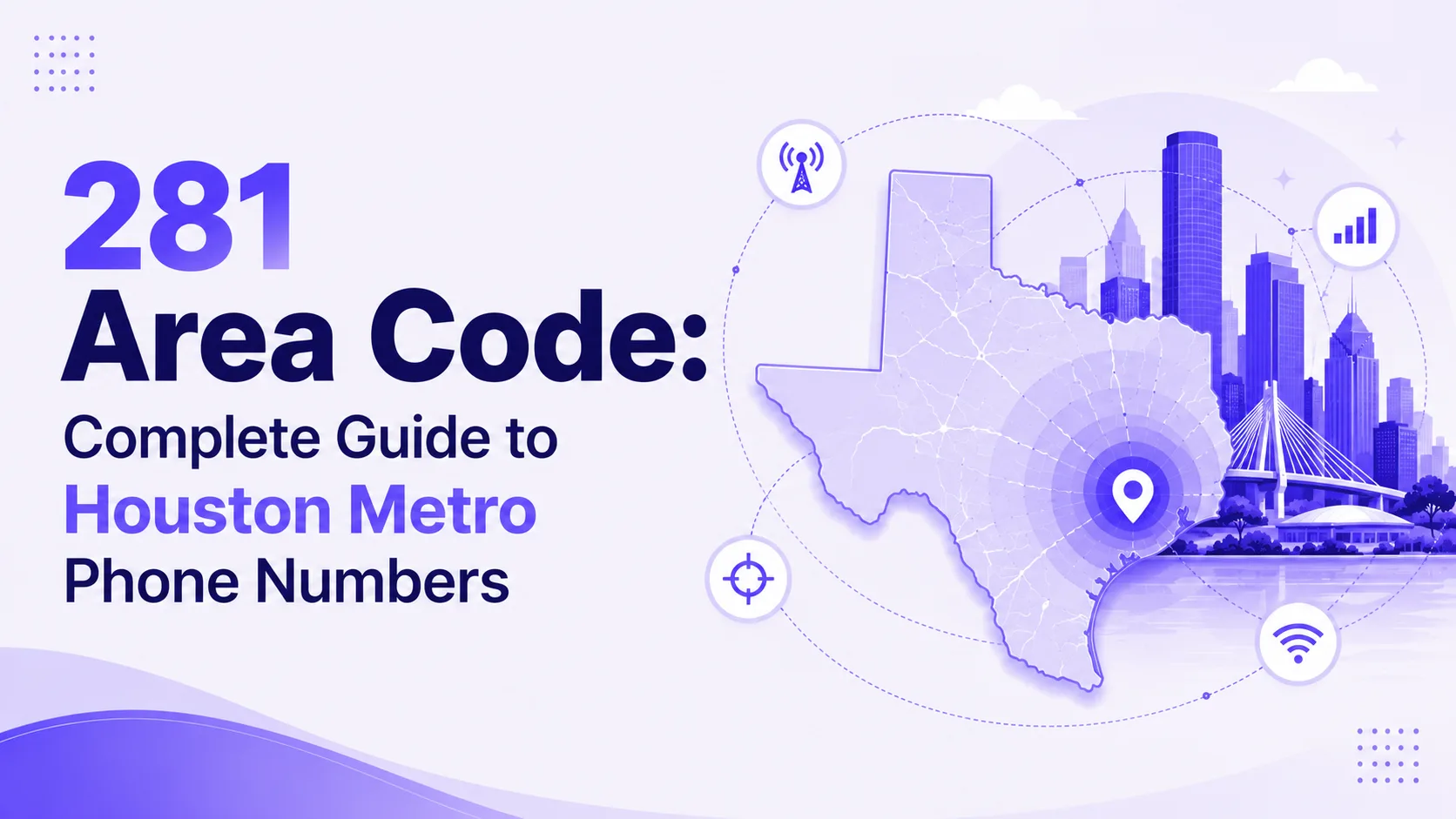
The 281 area code covers the suburban ring around Houston, and this guide breaks down exactly where it applies, how it came to exist, and how to set up a local business number there. That matters if your business calls or serves customers across the Houston metropolitan area in Texas, since a familiar number changes whether people actually pick up.
You'll learn how this code split from the older 713 area code, why two later overlays changed how everyone dials, and the exact steps to activate a number of your own. Stick around, because the split-then-overlay history explains a dialing quirk almost no other guide gets right.
- The 281 area code covers the suburbs surrounding Houston, split cleanly from the original 713 area code in 1996.
- Two later overlays, 832 and 346, now share the same footprint as both 713 and 281.
- Every call across the Houston metropolitan area in Texas requires 10-digit dialing today.
- The region's economy blends energy, petrochemicals, aerospace, and healthcare across a sprawling suburban footprint.
The 281 Area Code Maps Houston's Suburban Ring
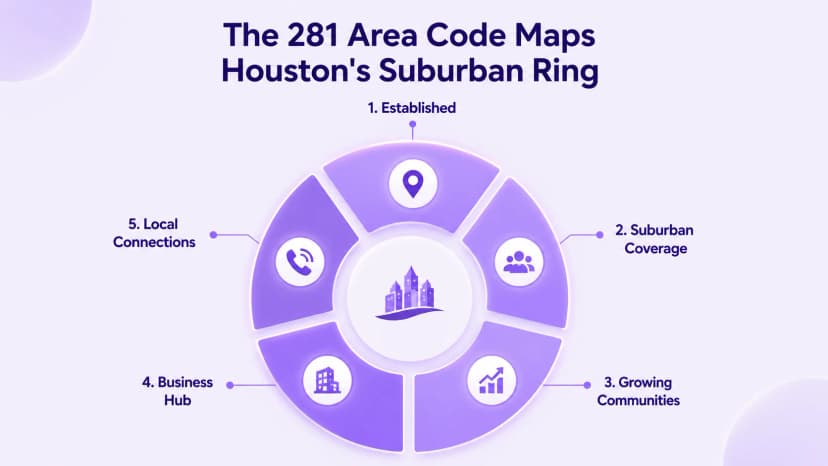
The 281 area code covers the ring of suburbs and smaller cities surrounding Houston's urban core, including Sugar Land, Pearland, Pasadena, and The Woodlands. It was never meant to cover downtown Houston itself, which kept the original 713 area code when the split happened.
Businesses located here sit inside one of the fastest-growing metro footprints in the country, and a 281 area code number instantly tells suburban customers that a business understands their part of town rather than the city center.
- Covers Sugar Land, Pearland, Pasadena, and The Woodlands
- Wraps around, but does not include, downtown Houston's original 713 territory
- Shares its footprint today with the newer 832 and 346 overlays
- Spans multiple counties across a sprawling suburban region
One Split, Then Two Overlays: How Houston Got Four Area Codes
Most guides treat Houston's numbering plan as one simple story, but it actually happened in two distinct stages. Understanding both stages explains exactly why dialing rules here changed over time.
The 1996 Split
Regulators created the 281 area code in 1996 by splitting it away from 713, giving Houston's suburbs their own dedicated code while downtown kept the original. At the time, this was a clean geographic split, and calls within each code could still use 7 digits. That arrangement worked well for several years, since the split gave each side of the metro area its own dedicated pool of numbers without forcing anyone to change how they dialed a neighbor.
The 832 and 346 Overlays
Suburban growth exhausted 281 combinations within just a few years, so regulators added 832 as an overlay in 2002, covering the exact same footprint as both 713 and 281. A second overlay, 346, followed in 2014 once demand climbed again, stacking a third layer of numbers across the entire metro area.
That back-to-back pattern is unusual even among fast-growing American metros, and it reflects just how quickly new households, businesses, and mobile lines kept arriving across the region.
A Fast-Growing Corridor Built on Energy and Space
The Houston metropolitan area has grown around a mix of energy production, petrochemical refining, and aerospace research that few other American regions can match. That mix is exactly why phone number demand outpaced the original 281 area code so quickly.
New subdivisions, office parks, and industrial sites kept appearing across the suburbs throughout the 1990s and 2000s, each one adding fresh demand for local business lines faster than regulators had originally planned for.
- Home to one of the world's largest concentrations of energy and petrochemical companies
- Anchored by NASA's Johnson Space Center in the southeastern suburbs
- One of the fastest-growing metro populations in the country since the 1990s
- A sprawling suburban footprint that keeps adding new business lines every year
Who Actually Needs a Local 281 Number?
A local number here does real, measurable work across a region built on industries that value trust and quick recognition. Two industry clusters in particular lean on that local credibility more than most, and both are large enough to support entire categories of supporting businesses.
Energy and Petrochemical Vendors
Suppliers, contractors, and logistics companies serving refineries and energy firms across the Houston metro benefit from a 281 area code number that reads as genuinely local to procurement teams. Ringflow helps these vendors route calls to the right department through an IVR system instead of juggling separate lines for every plant or office.
Equipment rental companies, safety inspectors, and specialty contractors all compete for the same procurement contracts, and a recognizable local number is often a small but real edge during vendor selection.
Aerospace and Healthcare Near NASA
Businesses supporting Johnson Space Center contractors, along with the hospital systems clustered around the Texas Medical Center's satellite campuses, benefit from a number patients and administrators instantly recognize. Ringflow gives these teams one system for routing calls across multiple suburban offices instead of managing separate physical lines.
Clinics, medical suppliers, and aerospace subcontractors alike often serve patients or partners spread across several suburbs at once, so a single number that routes intelligently saves real administrative time every week.
Claiming Your 281 Number in Five Steps
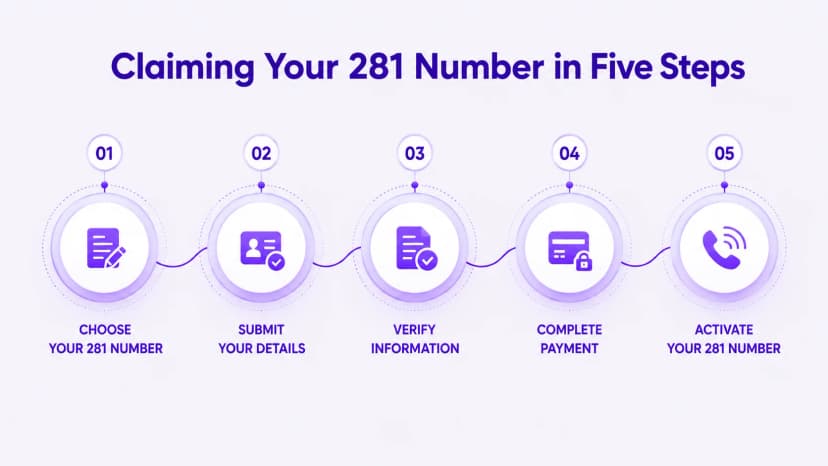
Getting a virtual phone number for the Houston suburbs takes a few simple steps, and most providers handle the entire process online without requiring a physical local address. Claiming a 281 area code number rarely takes longer than fifteen minutes once you know which provider to use.
- 1Pick a provider. Choose a cloud phone service that lists 281 area code numbers as available inventory.
- 2Search for your number. Browse available combinations and choose one that's easy for customers to remember or repeat back.
- 3Verify your account. Most providers only need a name, email, and payment method to activate a business line.
- 4Activate and route calls. Point the number to your team, a call queue, or an auto-attendant within minutes.
- 5Test before publishing. Call and text the number yourself to confirm routing works before printing it anywhere public.
Ringflow issues 281 area code numbers through this same process, so a Sugar Land or Pearland team can start answering calls the same day they sign up, without ever needing a physical office in the suburb the number represents.
The Dialing Habit That Still Trips Up Houston Callers
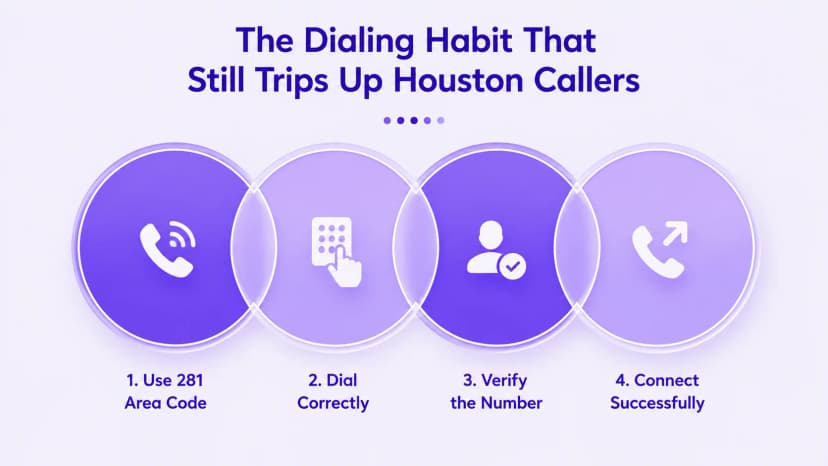
Because 832 and 346 now overlay both 713 and 281, every local call across the region requires all 10 digits, even between two neighbors with the same area code. Businesses that still print 7-digit numbers on signs or invoices are setting customers up to hit a dead end. This habit is especially common among businesses that have operated in the suburbs since before the overlays existed, since 7-digit dialing used to work perfectly fine here.
- Assuming a 281 area code number means only 7 digits are needed locally
- Believing 281 covers downtown Houston, when 713 still handles that territory
- Overlooking the region's energy and aerospace B2B audience when choosing a number
- Skipping a test call after activation to confirm routing works correctly
A quick audit of every printed number, website footer, and vehicle wrap before a launch catches most of these mistakes before a single customer ever notices.
Conclusion
The 281 area code gives businesses a genuine local presence across the Houston metropolitan area in Texas, having split cleanly from 713 before two later overlays reshaped how the whole region dials. Its two-stage history explains why 10-digit dialing is now mandatory everywhere, a detail that trips up businesses still printing short numbers.
Because the local economy blends energy, aerospace, and healthcare across a sprawling suburban footprint, a local number here works across a genuinely valuable customer base. Understanding the coverage, the split-then-overlay history, and the local economy helps you set up a 281 area code number that actually works for your customers.
Your next step is simple: confirm which part of the suburbs your customers call from, then activate a number that matches their expectations. Ringflow makes it easy to claim a number for the Houston suburbs and route it to your team the same day. Start now, and your next call from the suburbs lands exactly where it should.
Ready when you are
Set Up Your 281 Number Today
Search available 281 area code numbers and route calls to your team the same day you sign up. Get a free trial with Ringflow.
Frequently Asked Questions
The 281 area code is a telephone prefix created in 1996 when it split from the original 713 area code. It covers the suburban ring around Houston, including Sugar Land, Pearland, and The Woodlands. It operates in the Central Time Zone, matching the rest of the Houston region.
It covers the suburbs surrounding downtown Houston across the Houston metropolitan area in Texas. Downtown itself still primarily uses the older 713 area code.
Yes, always, since the newer 832 and 346 overlays now share the same footprint as both 713 and 281. Dialing only 7 digits, even for a next-door call, won't connect. Explosive suburban growth exhausted 281 combinations fast, so regulators layered 832 and then 346 on top of both 713 and 281, and the whole region now shares one dialing rule.
Sign up with a cloud phone provider like Ringflow, search available numbers, and activate the line online. Most providers only need a name, email, and payment method to get started. Most cloud phone providers include local numbers like 281 in standard monthly plans, often $10 to $30 per month, and premium combinations may carry a small one-time setup fee.
Yes, as long as your provider supports proper caller ID setup so calls don't get flagged as spam. Test the number with a real call before publishing it on your website or ads.