
Introduction
Every business phone rings at the worst possible moment: during a meeting, a job-site visit, or the lunch rush. An AI receptionist answers those calls instantly, greets the caller with your business name, and handles the request without a person picking up. It books the appointment, answers the question, or routes the call, and it does so at midnight as reliably as at noon. Small teams feel this most, because there is rarely anyone free to pick up.
This guide explains what an AI receptionist is, how it works, and the moments when it pays off fastest. It compares the technology honestly with a human receptionist, lists the benefits worth measuring, and shows how to choose one without regret. Whether you run a clinic, a law office, or a home services crew, the same logic applies. It also shows how to test one safely before you commit.
What Is an AI Receptionist?
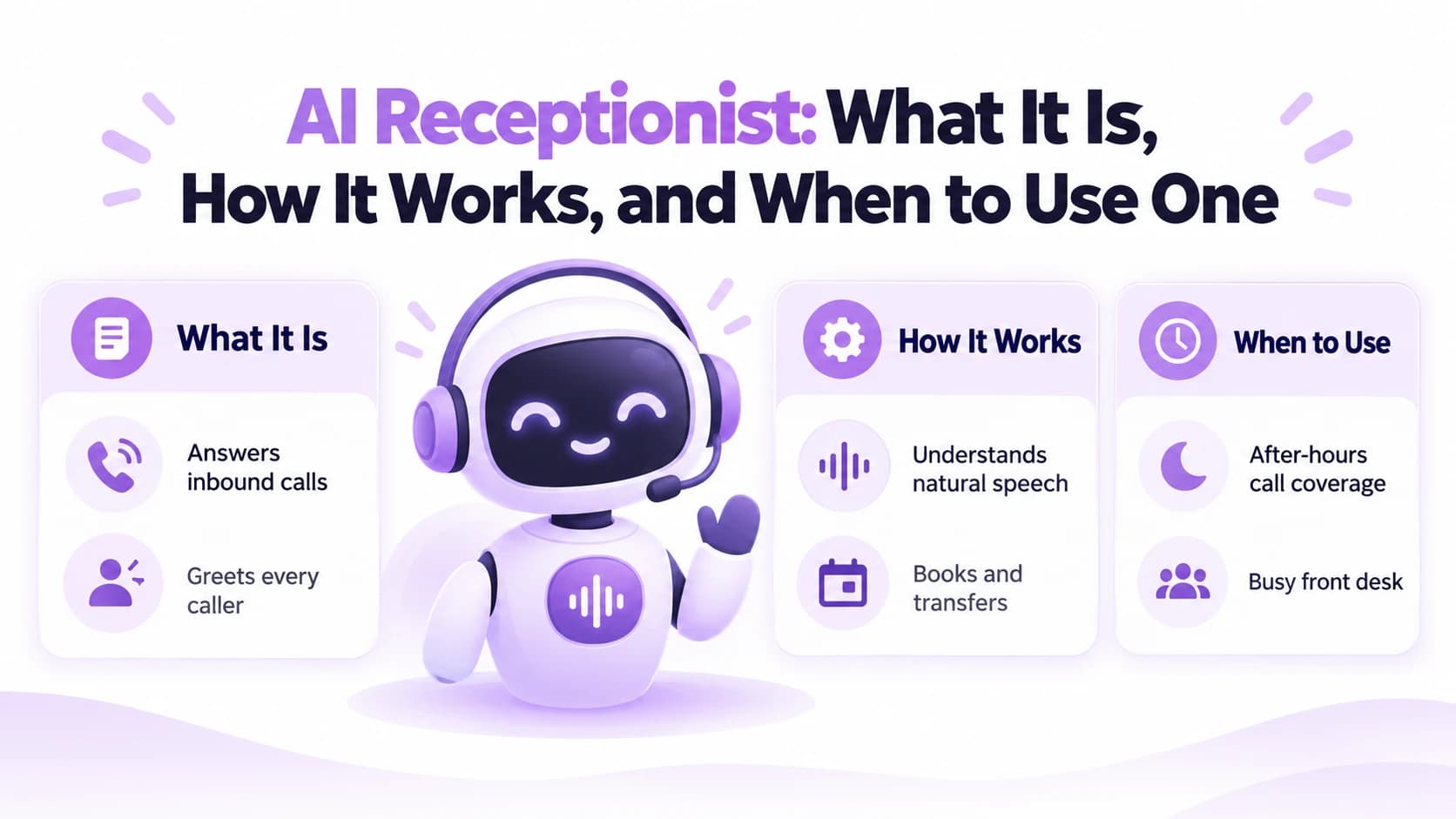
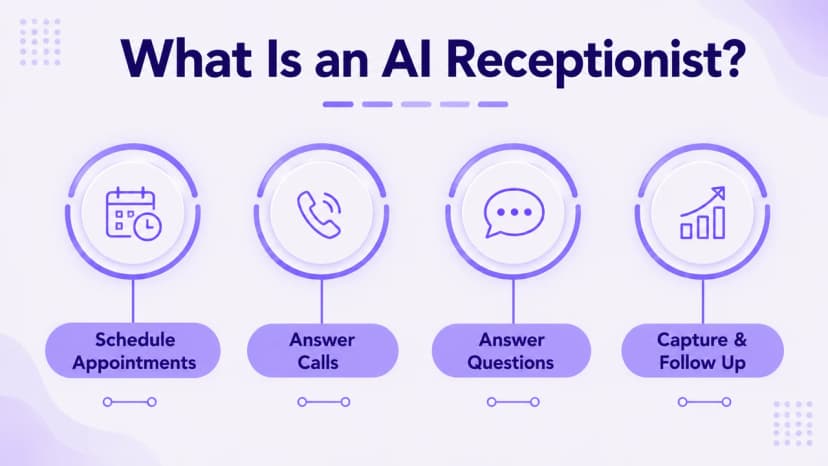
An AI receptionist is software that answers inbound calls and talks to callers in natural, human-like speech. It greets each caller, works out what they need, and takes action, whether that means booking a slot, taking a message, or transferring the call. Callers speak in normal sentences and never have to press a number to be understood. The result feels closer to talking with a front-desk employee than using a phone menu.
It is a different tool from a traditional auto attendant, which only plays a menu and routes by key press. An AI receptionist listens, understands context, and resolves many requests on its own. It can also handle several calls at once, so no caller waits in a queue or reaches a busy signal. That makes the experience faster for callers and far less stressful for your team.
- Ringflow greets every caller in a natural voice using your business name and a friendly tone
- Understands plain speech, including accents and mid-sentence corrections
- Books, reschedules, and confirms appointments in your calendar without any human help
- Answers common questions about hours, services, pricing, location, and booking rules
- Takes detailed messages and sends them straight to the right person by text or email
- Transfers complex or sensitive calls to a live team member
- Works across industries such as clinics, law offices, salons, and home services
How an AI Receptionist Works
Three technologies work together in real time. Speech recognition turns the caller's words into text, language understanding works out the intent behind them, and text-to-speech replies in a lifelike voice. The whole exchange takes well under a second, which keeps the conversation feeling natural instead of scripted. A stable connection helps too, since clear audio means fewer misheard words.
Behind the scenes, the receptionist connects to your calendar, CRM, and knowledge base. When a caller asks for an appointment, it checks real availability, confirms a slot, and logs the details for your team. You control what it says by feeding it your FAQs, price sheets, and policies. Every caller then hears the same accurate answer. Updating that information takes minutes, so the assistant never falls behind.
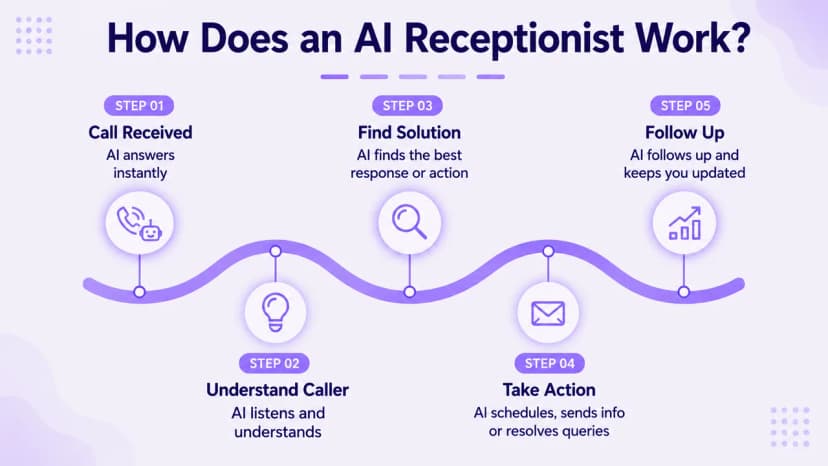
- Speech recognition converts spoken words into text as the caller talks
- Language understanding identifies whether the caller wants to book, ask, or reach someone
- Text-to-speech replies in a clear, natural voice within a fraction of a second
- Ringflow connects to your calendar and CRM for live availability and customer records on each call
- A knowledge base of your FAQs and policies keeps answers accurate and consistent on every call
- Handoff rules decide when a call should transfer to a person with full context
- Every call is logged with a transcript or summary so nothing is lost or forgotten
When an AI Receptionist Makes Sense
The right moment depends on your call patterns, your team size, and what a missed call costs you. If callers regularly reach voicemail during busy hours, the math usually favors automation quickly. A prospect who does not get an answer tends to call the next business on the list, and many never return to leave a message. Tracking your missed calls for a week shows the real number.
After-hours demand is the other clear signal. Customers call in the evening, over the weekend, and on holidays, and those calls often come from people ready to buy or book. A small team without a front desk gains the most, since one assistant covers reception duties that would otherwise pull staff away from real work. Seasonal rushes work the same way, since extra volume never needs extra hiring.
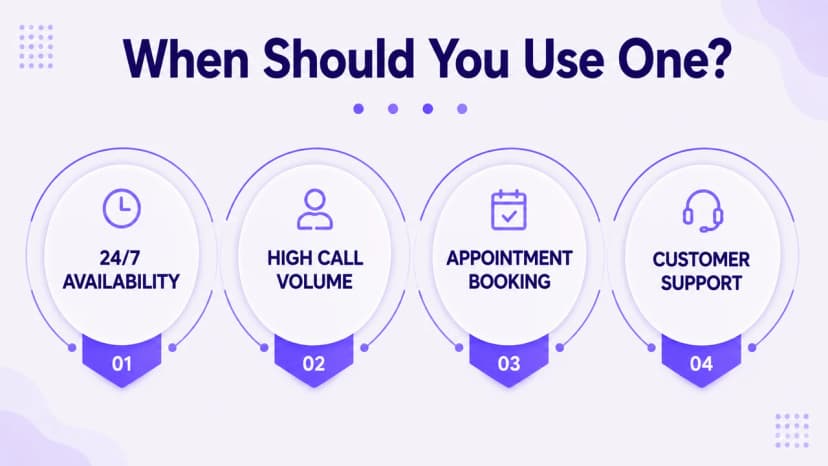
- Calls pile up during busy hours and callers reach voicemail
- Customers phone in evenings, on weekends, or on holidays when nobody is available
- Your team keeps dropping real work to answer routine questions all day
- A full-time receptionist is hard to justify at your current call volume and budget
- Seasonal spikes overwhelm the staff you already have, and hiring temporary help is slow
- You run a service business where a missed call means a lost job
- Your marketing brings in calls that deserve an immediate, professional answer
AI Receptionist vs. Human Receptionist
This is the comparison most buyers really want, and the honest answer is that each option wins in different places. An AI receptionist is faster, always available, and consistent, and it never needs a break. It scales to any number of simultaneous calls without a new hire, which a single person can never match. That gap matters most when several customers call at the same moment.
A human still wins on empathy, judgment, and unusual situations. A grieving customer or a complicated complaint deserves a real person who can read tone and improvise. The strongest setups combine both: the AI takes the first touch and the routine work, while people handle the calls where warmth and judgment matter most. Callers rarely mind a quick handoff when it comes with the full context.
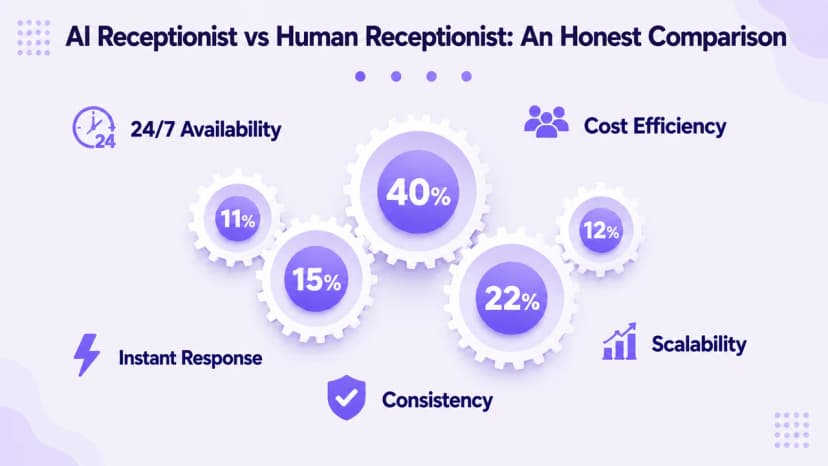
- AI wins on availability: it answers at any hour, including holidays
- AI wins on capacity: it handles many calls at the same time without any queue
- AI wins on consistency: every caller gets the same accurate greeting
- Humans win on empathy for sensitive, emotional, or upsetting calls that need care
- Humans win on judgment for unusual requests that break the usual rules
- A hybrid setup lets the AI filter routine calls and pass the rest to your team
- Cost favors AI for routine coverage, while people are worth paying for on high-stakes calls
The Real Benefits You Can Measure
Beyond answering calls, the payoff shows up in numbers you can track. Every answered call is a chance to book a job, a demo, or a sale, and calls that never reach voicemail become recorded leads instead of lost ones. For businesses that were missing calls, the return is usually easy to see in booked work. Even a handful of recovered calls each week can cover the monthly fee.
Cost is the other measurable benefit. A salaried hire brings pay, benefits, and training, while an AI receptionist typically runs on a flat monthly or per-minute plan. Comparing that with your current phone system costs shows how little the assistant adds once it covers calls that used to be missed. There is also no overtime, no sick leave, and no scramble to cover a vacation.
- More booked revenue because fewer calls reach voicemail or go unanswered
- Freed-up staff time, with fewer interruptions for routine questions and repeat requests
- A consistent brand voice on every call, at every hour
- Faster response times that improve the caller's first impression of your business
- Cleaner records, since Ringflow logs every call to your cloud phone system automatically
- Lower cost than a full-time hire for the same round-the-clock coverage
- Better data on why customers call, which helps you improve your services
How to Choose and Launch One
Picking the right tool comes down to practical checks. Match the features to how your callers actually behave, not to a polished demo. Confirm the voice sounds natural, understands accents and interruptions, and connects to your calendar, CRM, and existing phone system without extra tools. A short trial reveals more than any spec sheet. Ask to hear real call recordings, not only a scripted demo.
Security deserves its own check, since callers share personal details. Ask how calls are encrypted, how long recordings are kept, and whether you can delete them on request. The FTC cybersecurity guidance offers a practical baseline for protecting customer information. Also check that you can export or delete your call data if you ever switch providers.
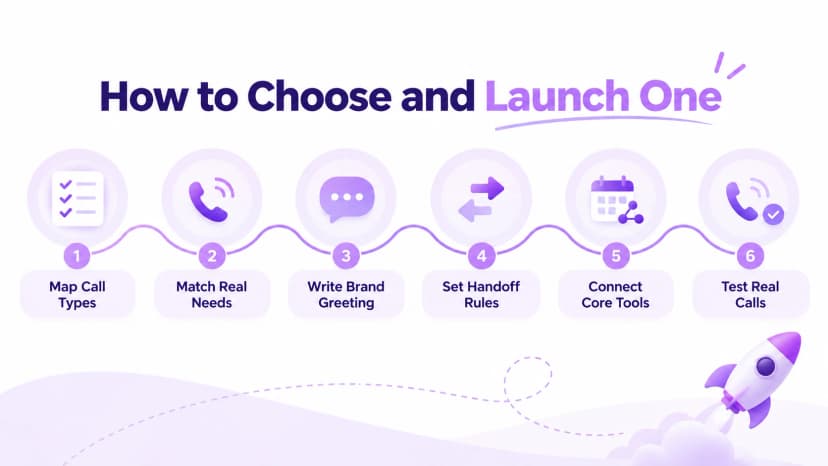
- 1List your top call types and decide which ones the receptionist should own
- 2Write your greeting, FAQs, and pricing answers in your own words and brand voice
- 3Set handoff rules for sensitive, complex, or urgent calls, including any request for a person
- 4Connect your calendar, CRM, and business phone number to Ringflow before the trial begins
- 5Test with real calls for a week and review the recordings with your team
- 6Expand to more call types once the first ones perform well and callers are happy
- 7Review results monthly and update the rules as your business changes
Conclusion
An AI receptionist gives every caller a fast, friendly answer without adding headcount. It works best as a first line of coverage: it takes routine calls, captures every lead, and hands sensitive conversations to your team with context. For small teams and busy front desks, that combination delivers coverage no single person can match. That reliability is what turns missed calls into booked business. Add a clear handoff rule and a weekly review, and the results tend to improve every month.
The quickest way to judge it is to hear it handle your own calls. Ringflow lets you launch, train, and route an AI receptionist from one dashboard, so a test takes days instead of months. Start with one call type, measure what changes, and expand from there. The first week of real calls will show you exactly where to tune the greeting and the rules.
Ready when you are
Curious how an AI receptionist would sound answering your own callers?
Test Ringflow against real calls and hear it book, route, and answer in a natural voice.
Frequently Asked Questions
It is software that answers phone calls, talks to callers naturally, and books or routes them. It works like a front desk that runs on its own, day and night.
An auto attendant plays a menu and voicemail records a message. An AI receptionist holds a real conversation and resolves many requests on the spot.
Switch when missed calls cost you leads or your team cannot answer fast enough. After-hours demand and small teams are the clearest signals.
Yes. It hands off to a live team member whenever a call needs a personal touch, and you set the rules for when that happens.
It can be, with a provider that offers encryption, clear retention rules, and SOC 2 compliance. Confirm these before sharing customer details.