
Introduction
Search for UCaaS meaning and most results either bury the answer under three paragraphs of vendor marketing or reduce it to a single dense sentence borrowed from an analyst report. Neither approach actually helps once a vendor starts using the word confidently in a sales call, so it is worth pinning the exact definition down before that conversation ever happens.
This guide breaks down what each part of the acronym means, where the term came from, and the fuller definition analysts actually use. It also covers what UCaaS gets confused with, why the exact wording matters when comparing vendors, and how to tell a genuine UCaaS platform from one stretching the label. By the end, you will be able to use the term with real confidence.
Breaking Down the Acronym
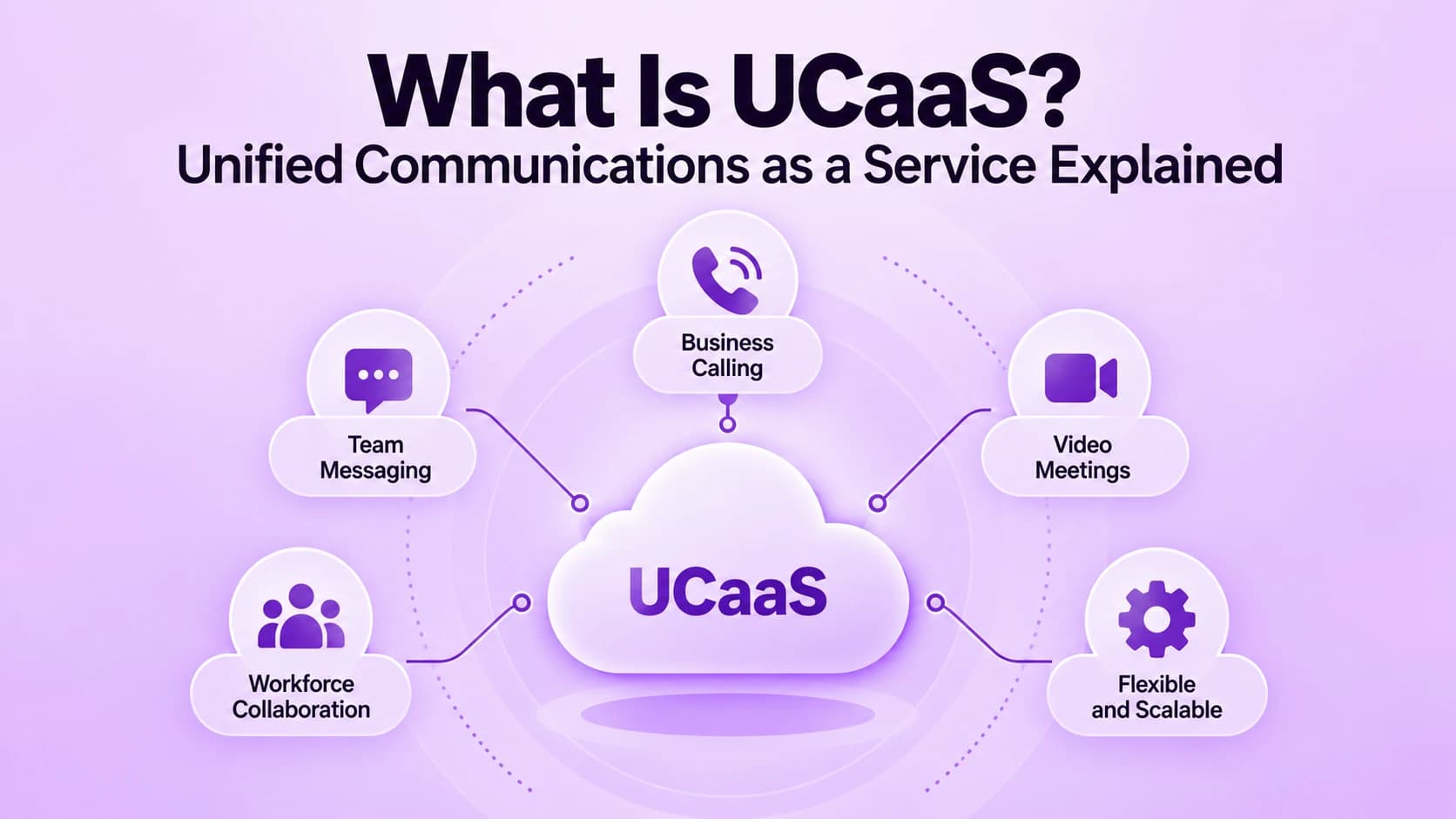
UCaaS stands for Unified Communications as a Service, and each part of that phrase describes a specific piece of what the category actually delivers to a business. Skip any one of the three parts and the meaning changes into something else entirely, which is exactly why vendors sometimes blur the lines on purpose in their own marketing copy.
Unified means voice calling, video, messaging, and presence live inside one platform instead of several disconnected tools. Communications covers the actual channels being unified: phone calls, video meetings, team chat, and file sharing, not just one of them alone. As a Service means it runs on a subscription, hosted by the vendor rather than on hardware the business owns and patches itself.
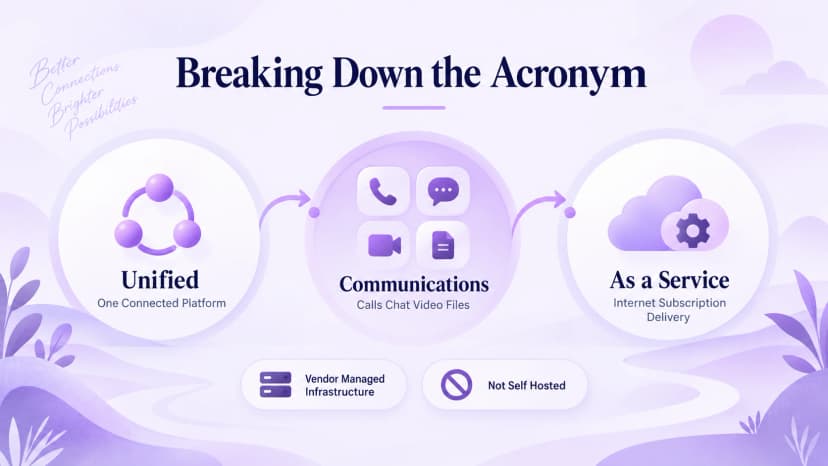
- Unified: voice, video, messaging, and presence in one connected platform
- Communications: phone calls, video meetings, chat, and file sharing together
- As a Service: delivered over the internet on a monthly subscription
- The vendor hosts and maintains the infrastructure, not the business itself
- A company running its own phone switch is not running UCaaS
- The delivery model matters as much to the definition as the features
- Skipping any one of the three parts changes what the term means
- Vendors sometimes stretch the wording to cover products that only meet part of it
- A genuine UCaaS platform never needs a second product bolted on for basic calling
- Ask how long the vendor has offered each of the three parts of the acronym
Where Did the Term Come From?
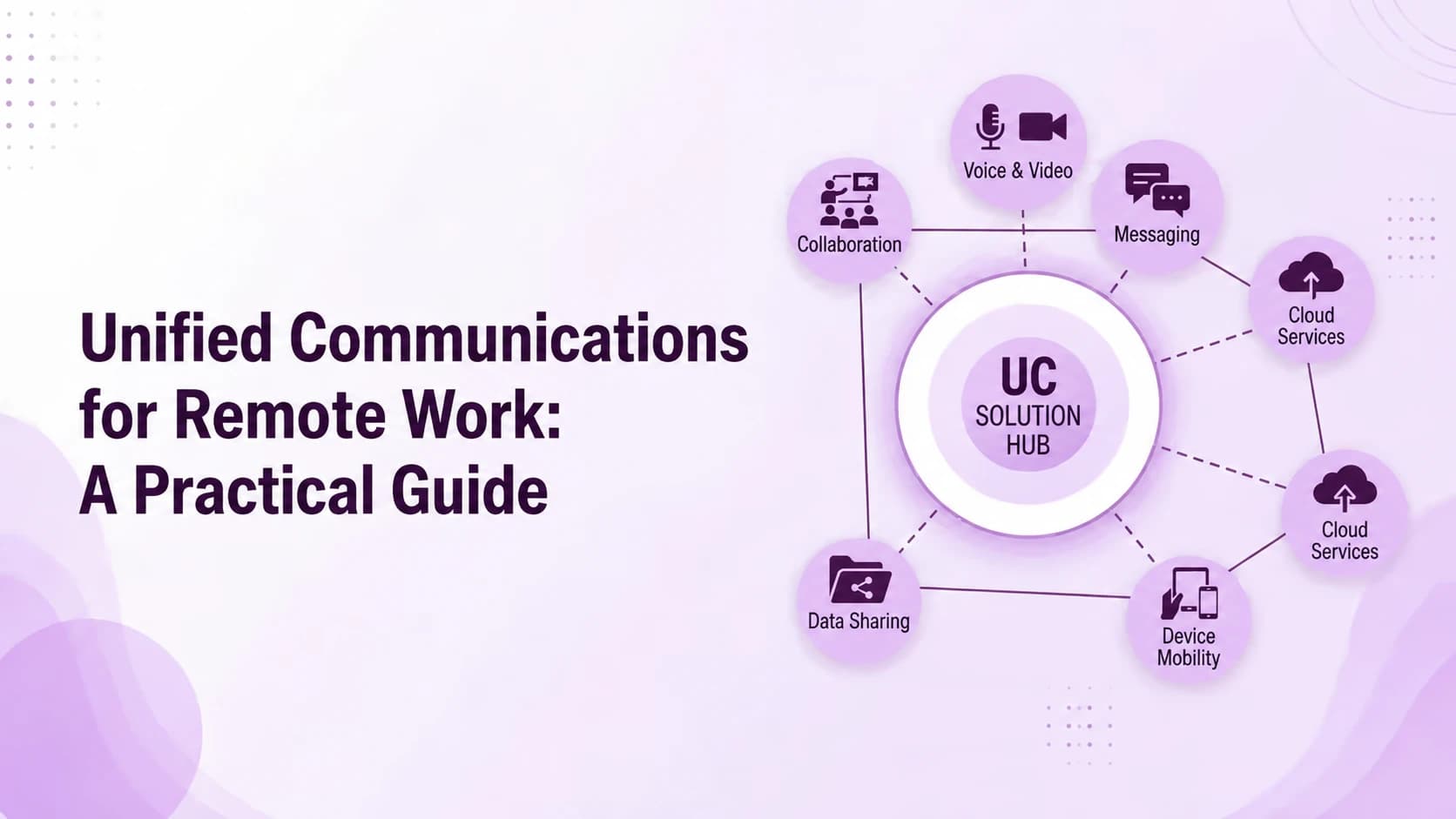
UCaaS did not start out as a marketing term at all. It grew out of unified communications, a phrase IT analysts were already using in the early 2000s for combining voicemail, email, and instant messaging into one interface, usually on hardware the business owned outright. This unified communications overview covers that earlier, broader concept.
As cloud computing matured through the 2010s, vendors began delivering that same bundle as a hosted subscription instead of on-premises software, and analyst firms added the as a Service suffix to mark the newer, cloud-delivered model. The underlying idea, calling and meetings under one roof, has not changed much. What changed most is who owns the infrastructure, and how fast a business can turn it on.
- The term grew out of the earlier unified communications concept
- Early unified communications ran on hardware a business owned outright
- Cloud computing matured through the 2010s and changed the delivery model
- Vendors began offering the same bundle as a hosted subscription instead
- Analyst firms added as a Service to mark the cloud-delivered version
- The core idea of one interface for calling and messaging stayed the same
- What changed most is who owns and maintains the infrastructure
- How quickly a business can turn a platform on also changed significantly
- Analyst reports from that period still use similar three-piece language today
The Fuller Definition
Analyst firms define UCaaS as a multitenant, subscription-based service that is cloud-delivered and includes three core pieces: business telephony, PSTN connectivity for external calling, and collaboration features like messaging and video meetings. In plain terms, it is the modern replacement for a company owning its own phone switch, video conferencing hardware, and internal chat server as three separate systems.
Different analyst firms word the definition slightly differently from one another. Some emphasize multi-device access, others lead with an any device, anywhere framing, but the core three-piece structure, telephony, external connectivity, and collaboration, shows up in nearly every widely accepted definition of the term, no matter which analyst firm is doing the defining.
- Multitenant: many customers share the same secure underlying platform
- Subscription-based: billed per user each month, not bought outright
- Cloud-delivered: hosted and run on the vendor's own infrastructure
- Business telephony handles calling tied to a real company number
- PSTN connectivity lets users call and receive calls from any phone
- Collaboration features cover messaging, presence, and video meetings
- One vendor, one login, one monthly bill replaces several separate systems
- The exact wording varies, but this three-piece structure rarely changes
- Ask a vendor to map their product against this three-piece structure directly
Key Components Every UCaaS Definition Includes
Regardless of which analyst firm's exact wording gets used, four components show up in essentially every accepted UCaaS definition, and a platform missing any one of them is arguably something else wearing the label. Business telephony is the ability to make and receive calls tied to a business phone number, not a personal cell line.
PSTN connectivity is a path to the traditional phone network, and a SIP trunking connection is one common way a provider delivers it. Video meetings means group conferencing built into the same login as calling. Presence and messaging round out the list, and none of these four pieces cover the queue management a contact center needs.
- Business telephony tied to a real company number, not a personal line
- PSTN connectivity to call and receive calls from any phone number
- Video meetings built into the same login as calling and chat
- Presence status showing who is available before a call or message
- Persistent messaging and file sharing alongside voice and video
- A single login covering every channel instead of separate apps
- No queue management or agent analytics, since that belongs to a different category
- A platform missing one of these four pieces is arguably something else
- Confirm each of the four pieces during a live demo, not from a slide deck
What UCaaS Is Not: Common Points of Confusion
The term gets confused with a few related categories worth separating out clearly, since vendors and buyers alike often blur the lines between them in casual conversation. UCaaS is not VoIP. VoIP, or Voice over Internet Protocol, is the underlying technology that carries calls over the internet, while UCaaS uses VoIP for calling but bundles in messaging, video, and collaboration on top of it.
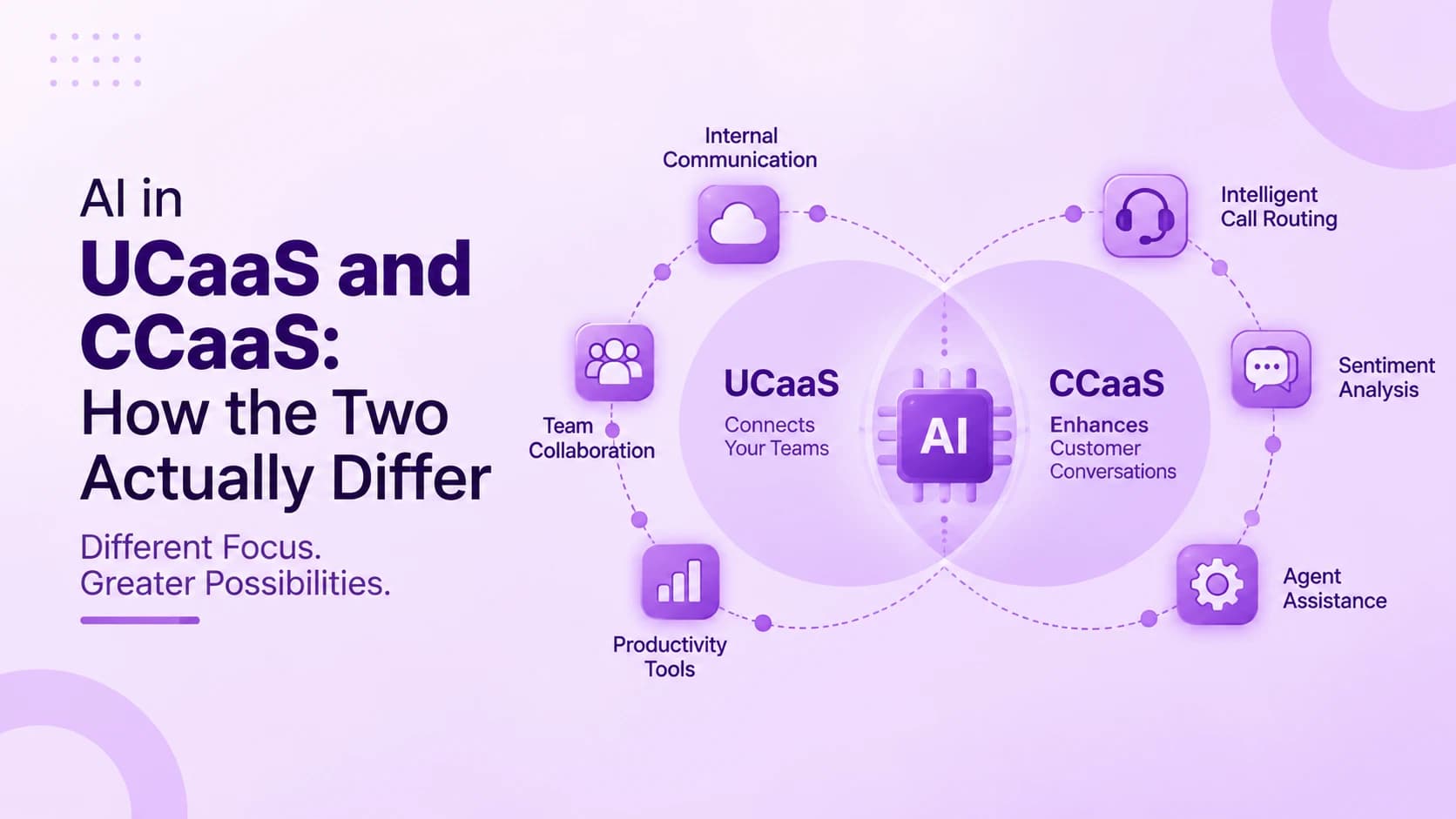
UCaaS is also not the same thing as CCaaS. Read more about that exact distinction in this comparison of UCaaS versus CCaaS, which covers how the two categories actually differ once AI features get added on top of each. Nor is UCaaS the same as CPaaS, which gives developers APIs to build custom communication features instead of a finished, ready-to-use application.
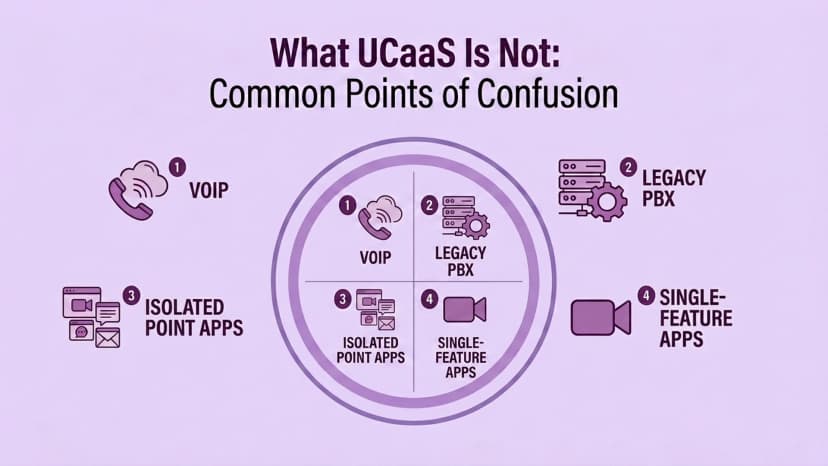
- VoIP is the underlying technology; UCaaS is the finished product built on it
- CCaaS is built for customer-facing call volume, not internal collaboration
- CPaaS gives developers building blocks instead of a ready-to-use application
- A legacy PBX is owned hardware, the opposite of a hosted service
- An isolated chat or video app covers only one piece of the definition
- A single-feature app rarely includes real PSTN connectivity
- Ringflow, for example, is a Cloud Contact Center rather than a UCaaS platform
- Vendors sometimes market a partial product using the full UCaaS label
- Checking all four core components is the fastest way to catch that gap
- Ask each vendor directly which of these categories their product actually falls into
Why the Definition Matters When Evaluating Vendors
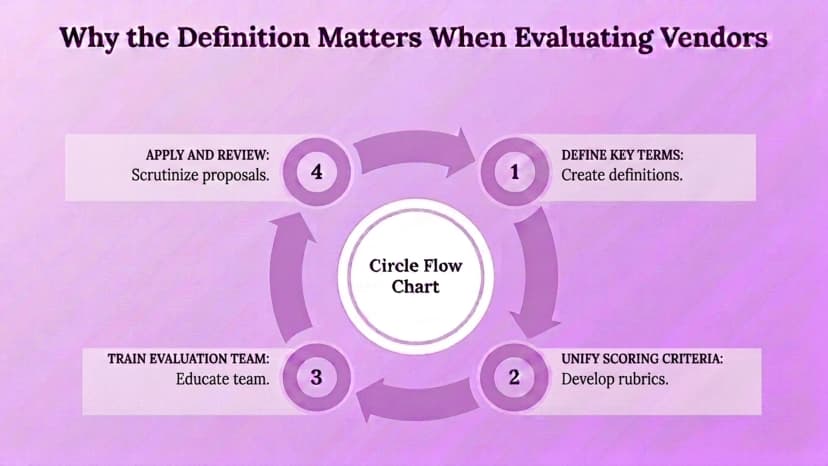
Getting this definition right is not just a vocabulary exercise reserved for analysts and IT teams. Vendors regularly stretch the term to cover products that only meet part of it, a video conferencing tool with basic chat bolted on, for instance, marketed as full UCaaS when it has no real telephony or PSTN connectivity behind it at all.
A business that confirms all four core components, telephony, PSTN connectivity, video, and messaging with presence, before signing a contract avoids the common trap of buying what is really a video tool and discovering months later that it cannot actually replace a phone system the way the label implied it would. That checklist matters more during procurement than the acronym itself.
- Ask a vendor to confirm all four core components directly, not just imply them
- Request a live demo of business telephony, not only the video meeting tool
- Confirm real PSTN connectivity, not calling limited to other app users
- Check that messaging and presence are built in, not a bolted-on add-on
- Compare the written definition against the actual product demo you see
- Watch for marketing language that implies more than the product delivers
- A missing component discovered after signing is expensive to fix later
- The checklist matters more during procurement than the acronym itself
- Put the four-component checklist in writing before any contract gets signed
- Revisit the checklist again at renewal time, not only during the first purchase
Conclusion
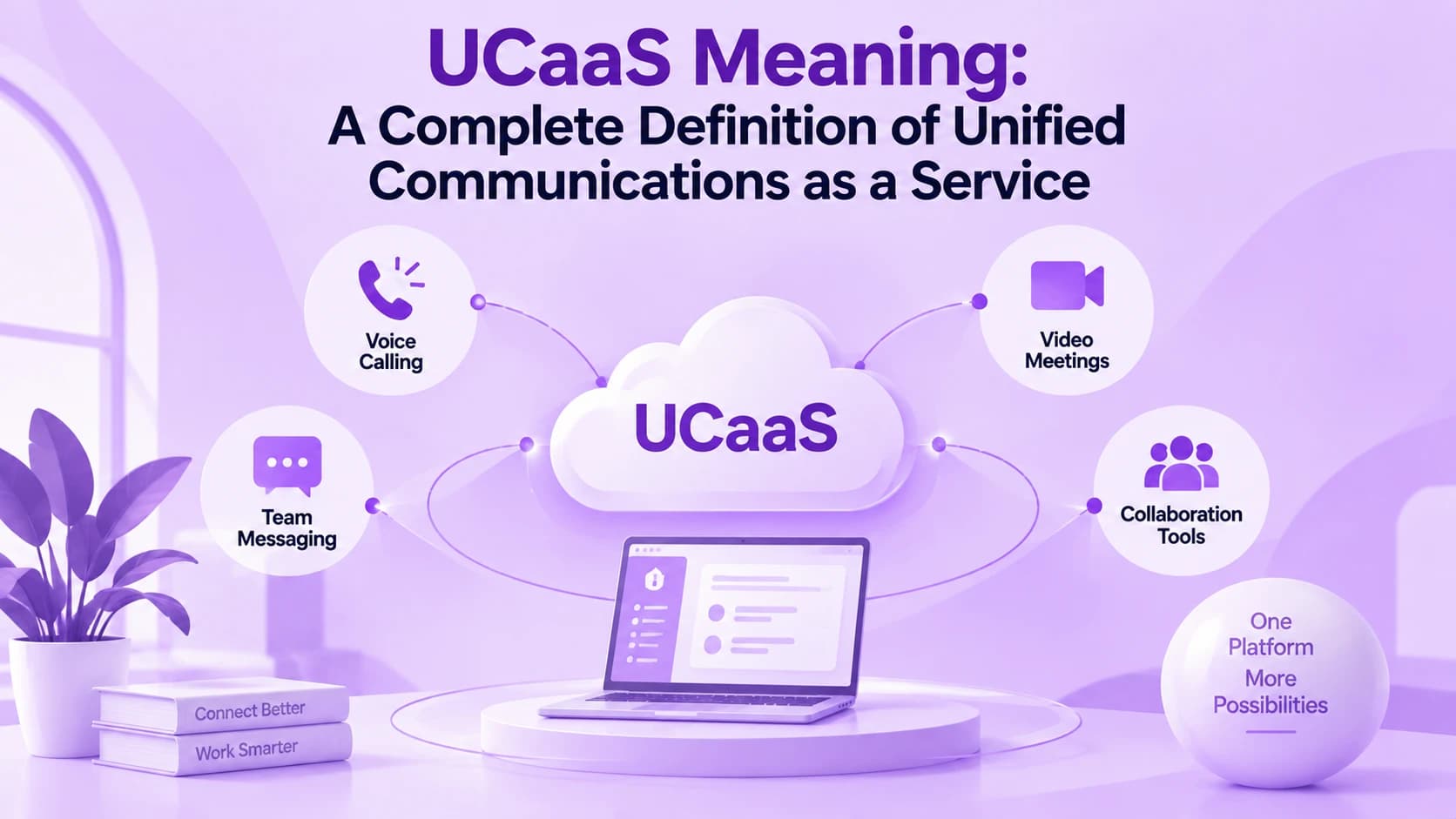
UCaaS has a precise, checkable definition once the marketing language is stripped away: a cloud-hosted, subscription-based platform combining business telephony, PSTN connectivity, video meetings, and messaging under one login. Anything missing one of those four pieces is really something else wearing the same label.
For a business evaluating vendors, that checklist matters more than the acronym itself, since it is the fastest way to spot a genuine UCaaS platform. Ringflow is not a UCaaS platform, and it is worth being direct about that: it is a Cloud Contact Center and AI Sales Platform for customer-facing calling, so many businesses run a UCaaS tool for internal collaboration alongside it.
Ready when you are
Ready to See What Ringflow Can Do for Customer-Facing Calling?
See how Ringflow's Cloud Contact Center and AI Sales Platform handles the customer-facing side while your team keeps using UCaaS for internal collaboration.
Quick FAQ
Unified Communications as a Service. It is a cloud-hosted platform combining business telephony, PSTN connectivity, video meetings, and messaging into one subscription.
A cloud-hosted platform that combines a business's phone calls, video meetings, and internal messaging into one login, billed per user each month and hosted entirely by the vendor.
Not exactly. A cloud phone system usually just covers calling. UCaaS adds video meetings, team messaging, and presence status into the same subscription, all under one login.
Not by default. Those features belong to CCaaS, a related but separate category built specifically for customer-facing call volume, queue management, and agent analytics.
UCaaS is a ready-to-use application businesses subscribe to directly. CPaaS gives developers APIs to build custom communication features into their own software from scratch.