
Introduction
The voip vs landline debate shapes one of the first real infrastructure decisions a growing business makes, and picking wrong can cost thousands of dollars a year. This voip vs landline decision affects more than your phone bill — it shapes call quality, uptime during outages, and how easily your team can scale.
This guide breaks down real 2026 pricing, outage reliability, and a practical decision framework most comparisons skip. By the end, you will know whether the cost math favors your business, or whether a hybrid setup makes more sense. Keep reading to see the total cost of ownership, not just the sticker price, because that is the number that actually decides your contract.
VoIP typically cuts business phone costs by 40 to 60 percent versus a landline, even after equipment and setup fees. Landlines still win on raw reliability during power outages, but battery backup and mobile failover close most of that gap for VoIP. A fair landline vs voip cost comparison must include hidden fees like per-line installation, maintenance contracts, and long-distance rates. Most businesses can switch from landline to VoIP with zero downtime by porting numbers and running both systems in parallel briefly.
VoIP vs Landline: How Each Phone System Actually Works
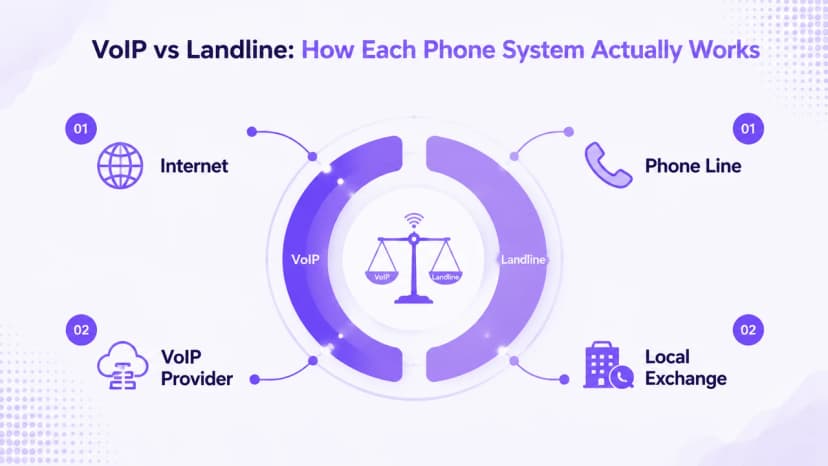
Before comparing price tags, it helps to know what you are buying. VoIP and landline systems route calls in different ways, and that gap explains most other differences between them.
How VoIP Phone Systems Work
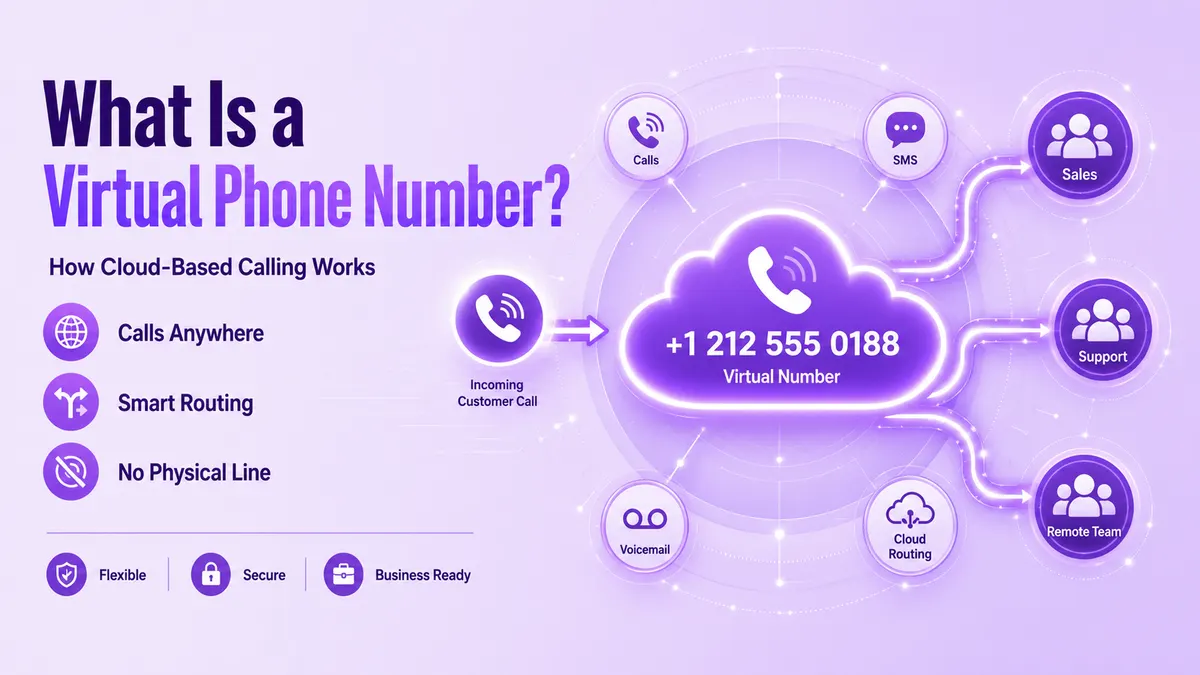
VoIP, short for Voice over Internet Protocol, converts your voice into data packets and sends them over your internet connection using VoIP termination infrastructure. There is no dedicated copper wire per line, so calls travel the same network as your email and web browsing. You can make calls from a desk phone, a laptop softphone, or a mobile app, all tied to the same business number. Adding a new employee usually means assigning a license, not scheduling a technician visit.
How Traditional Landlines Work
A landline runs on the Public Switched Telephone Network, using dedicated copper wiring into your building. Each line is circuit-switched, opening a physical, exclusive path for the call's duration. Because the phone company's central office supplies the current, a basic landline handset can keep working even during a power outage. That reliability costs flexibility, since every new line typically needs new wiring and a service call.
VoIP vs Landline for Business: Feature and Quality Comparison
Once you understand how each system works, the real question becomes which one performs better for daily business use — this is where the voip vs landline comparison gets concrete. Here is how they stack up on the factors that matter most.
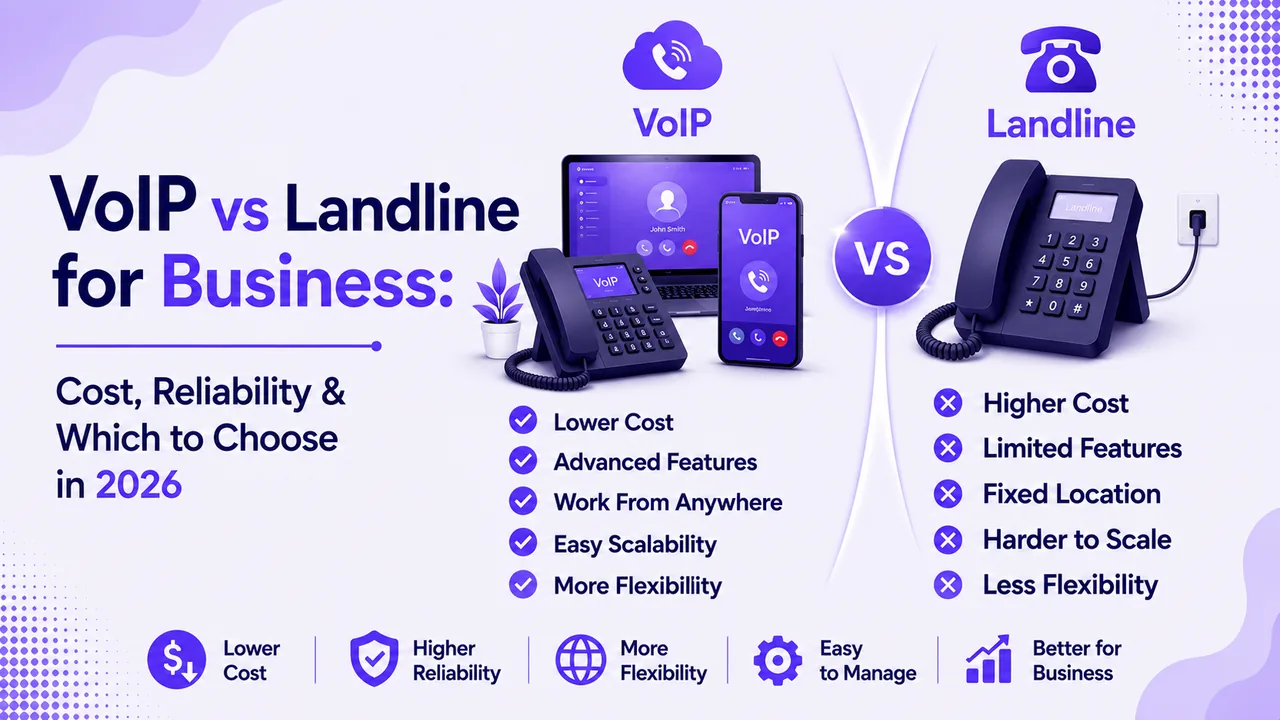
| Factor | VoIP | Landline |
|---|---|---|
| Setup time | Same-day activation | Days to weeks for new lines |
| Call quality | HD voice with a stable connection | Consistent, but limited to voice only |
| Scalability | Add seats instantly online | Requires new physical wiring |
| Mobility | Works from any device, anywhere | Tied to a physical location |
| Extra features | SMS, video, CRM sync, voicemail-to-text | Voicemail only, no texting |
Call Quality and Uptime
Modern VoIP call quality matches or beats landline quality as long as your internet connection is stable, thanks to HD voice codecs. A shaky or congested connection is the one scenario where a landline still has an edge, since it never depends on bandwidth. Most business-grade VoIP phone service now includes quality-of-service monitoring that prioritizes voice traffic automatically.
Scalability and Add-On Features
VoIP wins decisively here because seats and features are software settings, not physical installations. A landline system needing five new extensions might wait a week for a technician, while VoIP adds them in minutes from an admin dashboard. VoIP also bundles SMS, video, and CRM integrations that a landline cannot offer without bolting on separate services.
Landline vs VoIP Cost: What You'll Actually Pay
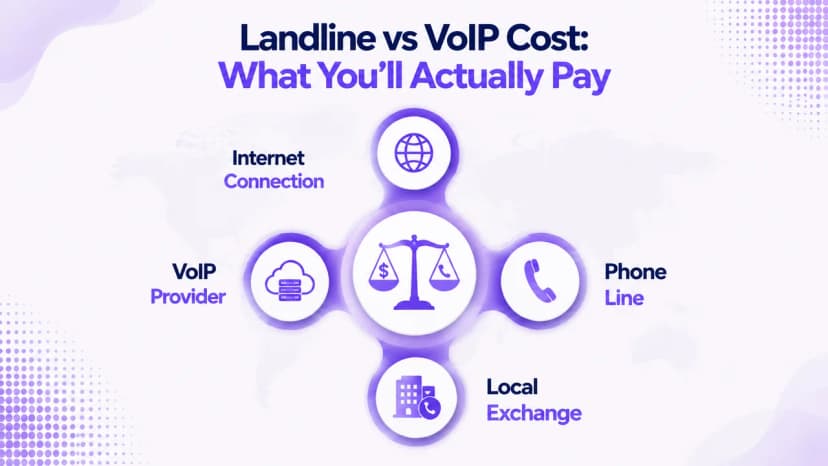
Sticker prices rarely tell the full story, which is why a proper landline vs voip cost comparison has to look past the monthly rate card.
Upfront and Equipment Costs
Landline installation often includes wiring fees, a truck-roll charge, and hardware leasing costs per line. VoIP setup usually only needs desk phones or headsets you may already own, since the "line" itself is a software license. Businesses switching to a modern VoIP phone service often report near-zero setup costs beyond the devices themselves.
Monthly Bills and the 3-Year Total Cost of Ownership
A single landline can run $30 to $50 per line each month before taxes, long-distance charges, and maintenance contracts are added in. Ringflow's published pricing starts at $7.99 per seat per month on an annual plan, which already includes unlimited US and Canada calling, SMS, and an AI receptionist. Any real voip vs landline decision needs three-year math, not monthly rates, because the gap widens even further in VoIP's favor once maintenance, added lines, and long-distance fees are factored in. For a ten-person team, that difference alone can total tens of thousands of dollars over three years.
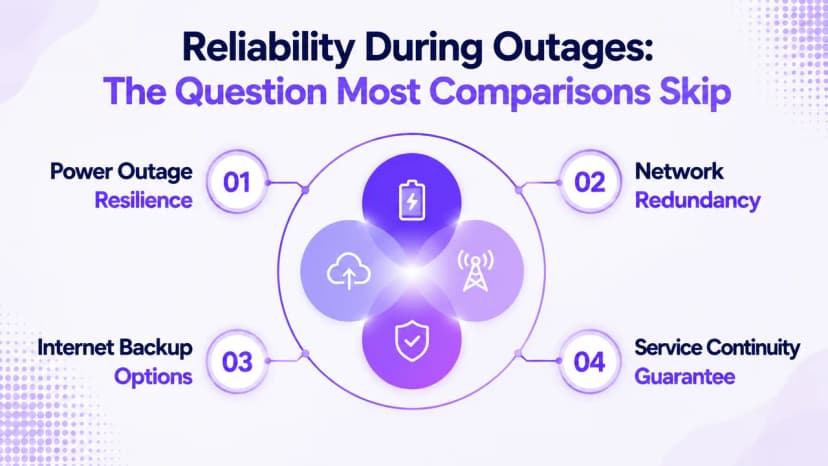
Reliability During Outages: The Question Most Comparisons Skip
Nearly every voip vs landline comparison online skips the one scenario that keeps business owners up at night: what happens when the power or internet goes down.
Landline Reliability During Power Outages
A basic corded landline phone draws power directly from the telephone company's central office, so it can keep ringing during a local blackout. This is a genuine advantage landlines hold over early VoIP systems, worth taking seriously if your area has frequent outages. The FCC guidelines on VoIP note that internet-based phone services can lose function during an outage unless backup measures are in place.
How VoIP Handles Internet and Power Disruptions
Modern VoIP providers close this gap with battery-backed routers, automatic failover to 4G or 5G data, and mobile apps that keep working over cellular data even if office internet drops. Ringflow's cloud phone system shifts active calls to a mobile app during an outage, so a dropped office connection does not mean a dropped customer call. Businesses pairing a wired connection with cellular backup rarely notice a meaningful reliability gap against a landline anymore.
VoIP vs Landline for Business: Which One Fits Your Team?
There is no universal winner in the voip vs landline decision — the right answer depends on your location, your team structure, and your growth plans.
When a Landline Still Makes Sense
A landline can still be the right call for a single-location business with unreliable internet, or for a dedicated fax or alarm line that never moves. Highly regulated environments that require a fixed, non-portable line may also prefer to keep one in place. If your team never grows past a handful of extensions, simplicity can outweigh the missing features.
When VoIP Is the Better Choice
VoIP is the clear choice for remote or hybrid teams, multi-location businesses, or any company expecting to add staff soon. Built-in VoIP termination infrastructure, CRM syncing, and mobile apps let reps take business calls from anywhere without carrying a second phone. If your team already relies on a CRM or shared inbox, VoIP's ability to sync with that stack outweighs the small reliability edge a landline offers.
How to Switch from Landline to VoIP Without Downtime
Once you've made the voip vs landline call, the switch itself does not have to be risky. A staged migration keeps your business reachable the entire time.
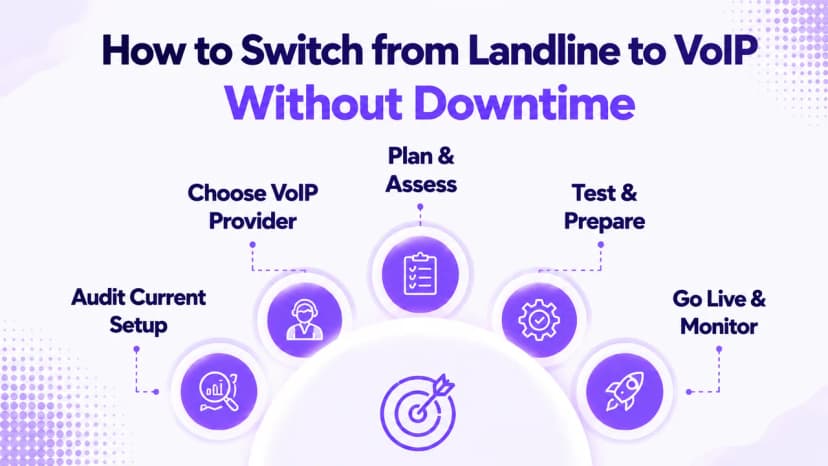
- 1Request number porting from your current landline provider so your business keeps its existing number.
- 2Set up your new VoIP phone service and run it in parallel with the landline for one to two weeks.
- 3Train your team on the new softphone or desk phone before the landline is disconnected.
- 4Cut over fully once porting confirms and call quality checks out, then cancel the landline contract.
Ringflow ports existing numbers for free within three to seven business days, so you are rarely stuck paying for two systems longer than necessary. Reviewing a dedicated VoIP phone service guide before you migrate helps you avoid missing a feature your team depends on.
Conclusion
Weighing voip vs landline comes down to matching the system to how your team works today and where it is headed next. VoIP wins on cost, scalability, and features for most businesses, while a landline keeps a narrow edge in raw outage reliability.
Ringflow's free porting, built-in backup routing, and per-seat pricing under $8 make the switch easy for teams of any size. Whichever way you lean on voip vs landline, start with a free trial and see the difference for yourself.
Ready when you are
Still weighing voip vs landline for your next phone system upgrade?
See real call quality, admin controls, and outage backup for yourself before you commit to anything.
Frequently Asked Questions
VoIP sends calls as data over the internet, while a landline uses dedicated copper wiring through the phone network. That single difference drives most of the gaps in cost, features, and setup speed.
A VoIP number works anywhere you have an internet or cellular data connection, including desk phones, laptops, and mobile apps. A landline number, by contrast, is tied to the physical location it was wired into.
Switching makes sense once you plan to add staff, support remote work, or need features like SMS and CRM sync. Businesses in areas with unstable internet may want to wait or keep a landline as backup.
Request number porting from your new VoIP provider, who coordinates the transfer with your old carrier. Porting typically takes three to seven business days and both lines can run in parallel until it completes.
Yes, reputable VoIP providers encrypt calls and follow STIR/SHAKEN caller ID authentication standards. Look for a provider with SOC 2 compliance and documented uptime guarantees before signing up.
Yes, a VoIP number is not tied to a physical location, so remote teams across time zones can share one business line. Call routing rules can even send calls to the right time zone's team automatically.
VoIP plans typically start under $10 per seat monthly, while a single landline often runs $30 to $50 before taxes and add-ons. Over three years, VoIP is usually the cheaper option by a wide margin once maintenance and long-distance fees are included.
A basic corded landline can keep working in a blackout because the phone company supplies its power. Modern VoIP closes most of that gap with battery-backed routers and mobile failover over cellular data.