
Introduction
When a customer calls, they want to reach someone who can help, quickly. Behind that simple expectation sits a set of decisions: which number they dial, what menu they hear, which queue they join, which agent answers and what that agent sees when the call connects.
That system is an inbound call center. This guide explains how it works, how it differs from outbound, which metrics show whether it is doing its job, and the software needed to run one.
What Is an Inbound Call Center?
An inbound call center is a team, and the technology behind it, that handles calls customers start. Typical calls include support questions, orders, billing, bookings, technical help and complaints. The goal is to answer quickly and resolve the issue on the first contact.
Many inbound teams now handle more than voice. Chat, email and text messages often arrive in the same workspace, which turns a call center into a contact center. A shared omnichannel inbox lets a customer switch channels without repeating themselves.
How an Inbound Call Flows
- 1The customer dials your number. It might be a local number or a toll-free number; see toll-free vs local numbers for how to choose.
- 2A menu sorts the request. An IVR or an auto attendant asks what the call is about, and may let callers solve simple tasks themselves.
- 3Routing picks a queue. Automatic call distribution sends the call to the right queue based on the menu choice, the caller's language, account type or agent skills.
- 4The caller waits or gets a callback. If no agent is free, the caller hears hold messages or chooses a callback instead of waiting.
- 5An agent answers. The agent sees the customer's record and history from the CRM as the call connects.
- 6Wrap-up. The agent logs the outcome and notes, and the call is recorded for quality review.
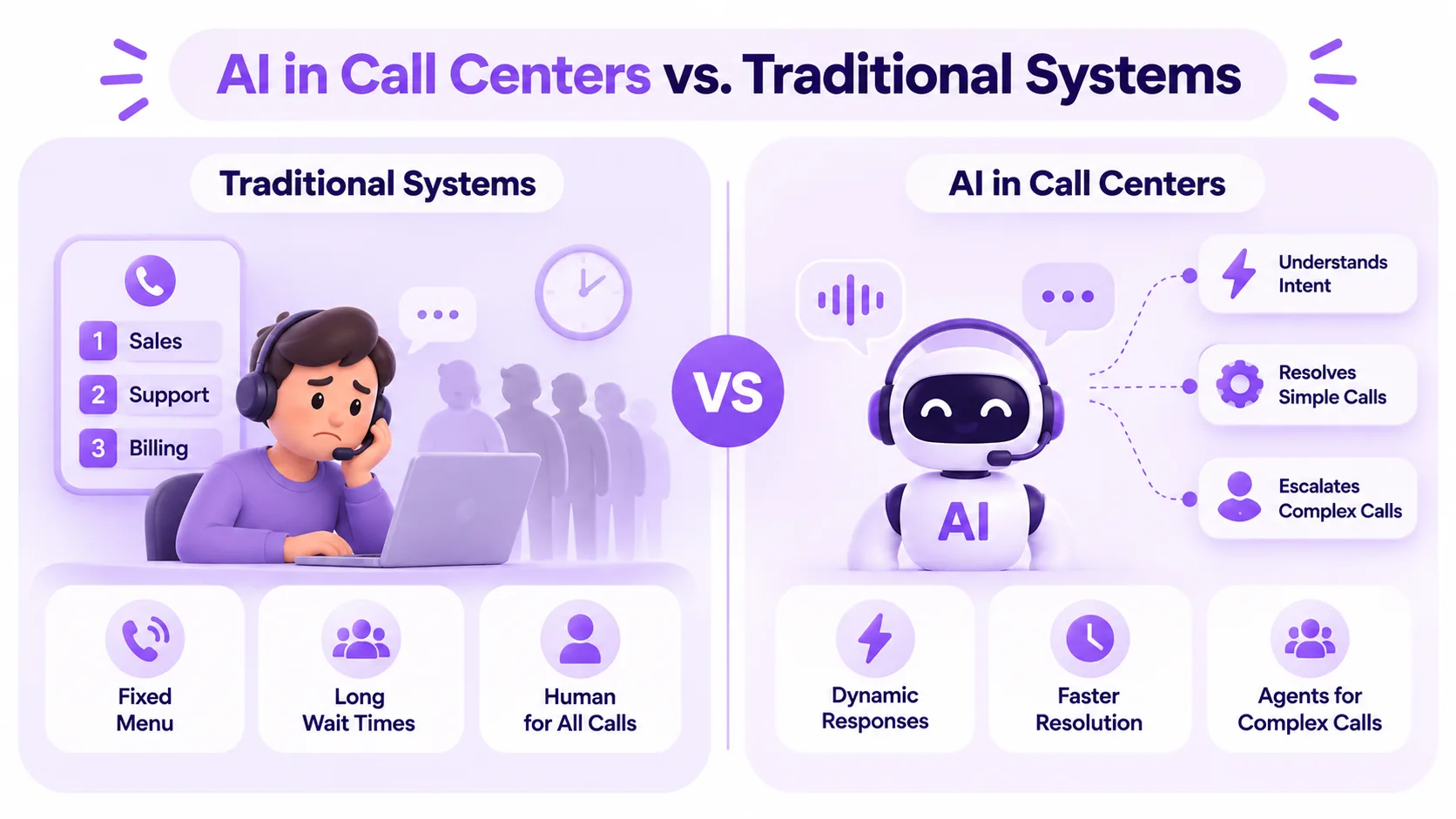
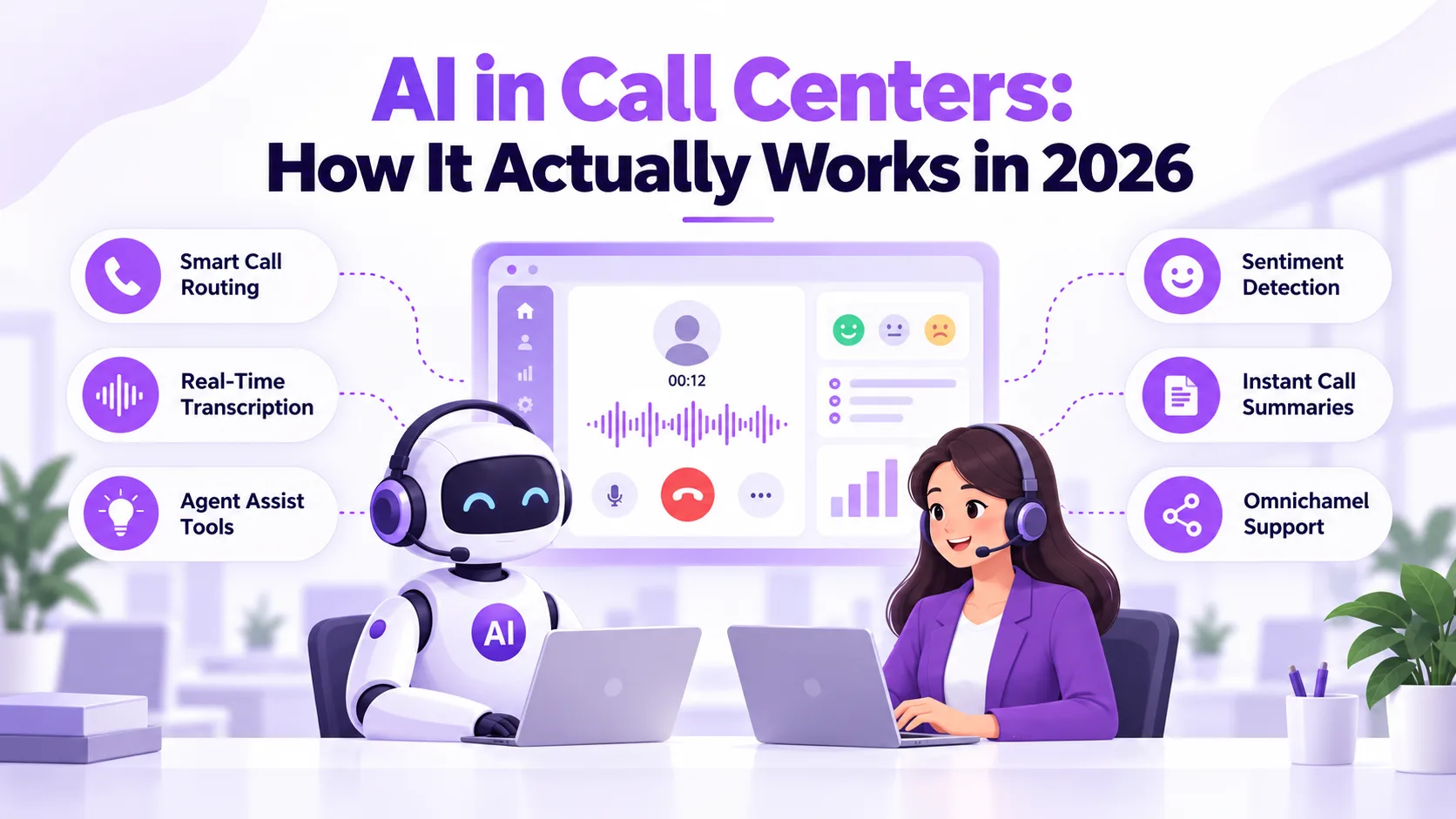
Not every call needs a person. AI answering services can handle routine requests and after-hours calls, and pass the rest to agents with context.
Inbound vs Outbound Call Centers
| Inbound | Outbound | |
|---|---|---|
| Who starts the call | The customer | The agent or dialer |
| Typical work | Support, orders, billing, bookings | Sales, renewals, collections, follow-ups |
| Core technology | IVR, routing, queues, callbacks | Dialers, list management, caller ID tools |
| Main goal | Fast answers and first-contact resolution | Conversations and conversions |
| Key rules | Recording consent, data protection | Do Not Call, calling times, abandoned-call limits |
For the outbound side, see the guide to outbound call center software. Some teams run a blended model, where agents take inbound calls and work outbound campaigns when queues are quiet.
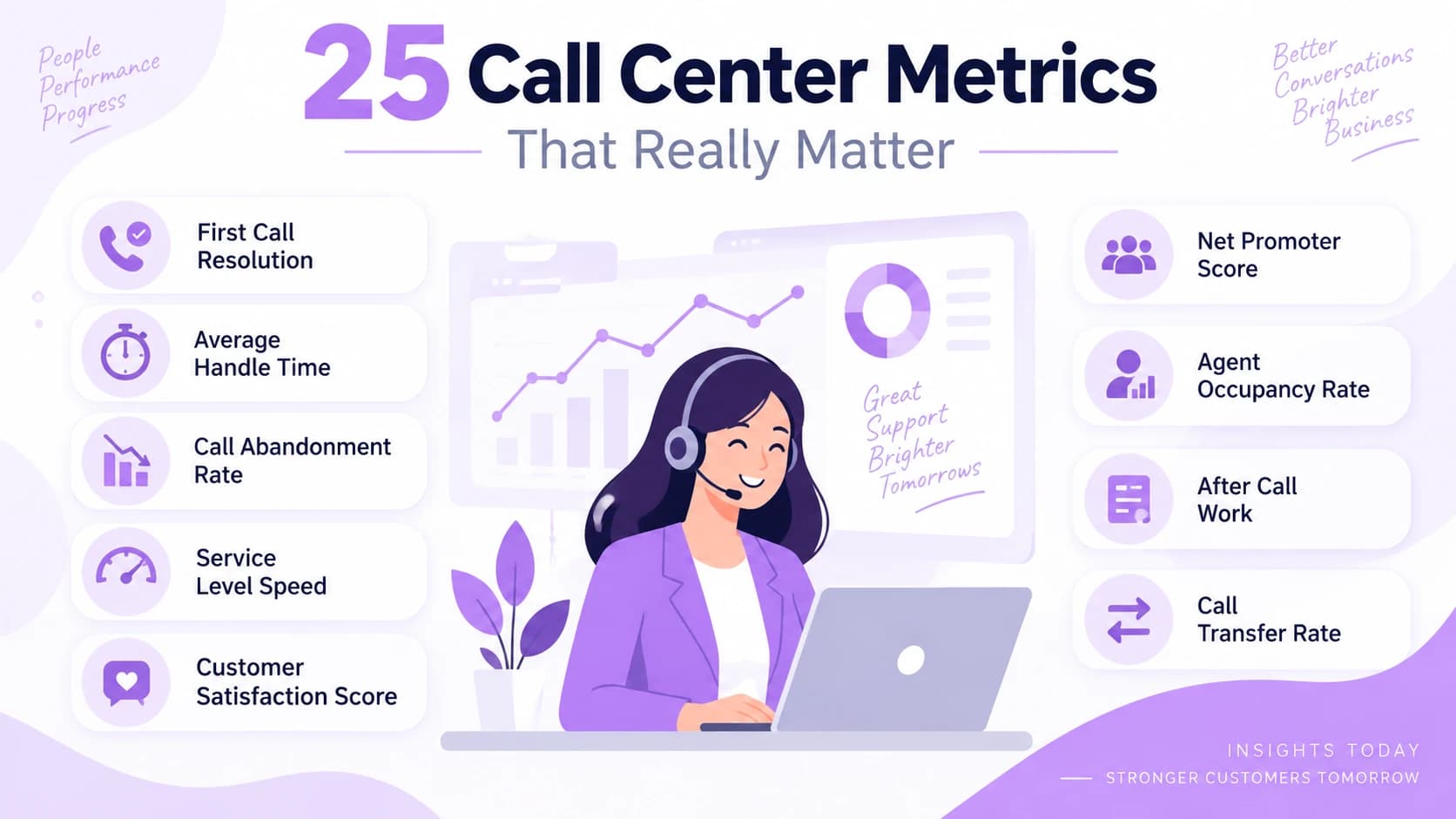
Key Inbound Call Center Metrics
| Metric | What it measures |
|---|---|
| Service level | Share of calls answered within a target time; 80% in 20 seconds is a widely used target |
| Average speed of answer | How long callers wait before an agent picks up |
| Abandonment rate | Share of callers who hang up before reaching an agent |
| First contact resolution | Share of issues solved on the first call |
| Average handle time | Talk, hold and wrap-up time per call |
| Occupancy | Share of logged-in time agents spend handling contacts |
| Customer satisfaction | How callers rate the experience after the call |
No single number tells the whole story. Fast answers with poor resolution just move the problem to a second call. The full list of call center metrics explains how these fit together.
Staffing an Inbound Call Center
Inbound demand comes in peaks: Monday mornings, lunch breaks, the day after a bill goes out. Staffing has to follow those peaks, not the daily average.
- Forecast by interval: use past call volumes in 15- or 30-minute intervals, not daily totals.
- Account for handle time: more calls of the same length need more agents, and longer calls do too.
- Plan for time off the phones: breaks, training, meetings and absence reduce the agents actually available.
- Use a staffing model: workforce tools commonly use the Erlang C formula to estimate the agents needed to hit a service level.
- Keep a release valve: callbacks and self-service in the IVR protect service levels when a spike hits.
The Software You Need
- IVR and auto attendant to sort calls and offer self-service.
- Automatic call distribution with skills-based routing to send each call to the right agent.
- Queues and callbacks so callers are not stuck on hold.
- CRM integration so agents see the caller's history as the call connects.
- Omnichannel inbox for chat, email and text alongside voice.
- Recording and quality review with consent prompts set by state.
- Real-time dashboards showing queue length, wait times and agent status.
- AI assistance for answering routine calls and helping agents during conversations.
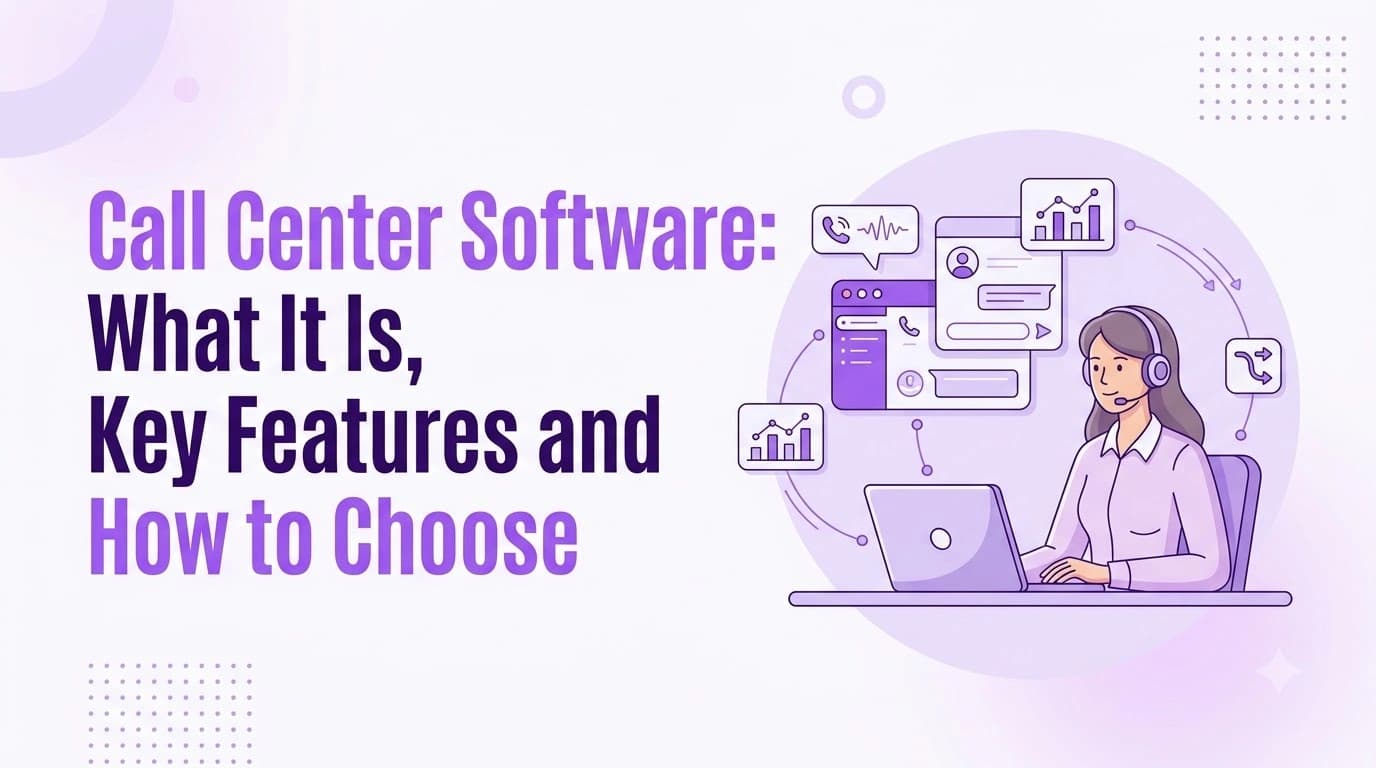
Cloud platforms bring all of this into one system, so teams can add agents without hardware and change routing without an installer. Ringflow's contact center combines routing, queues, an omnichannel inbox and AI tools, and support teams can try it on their own call flows. For a wider buying checklist, see call center software.
Conclusion
A good inbound call center is mostly invisible to customers. They call, reach the right person quickly and get their problem solved. Getting there takes a clear call path, the right metrics, staffing that follows real demand and software that ties it together.
Start by mapping how calls flow today, measure service level and first contact resolution, and fix the biggest bottleneck first.
Ready when you are
Ready to answer every customer call faster?
Set up menus, routing, queues and dashboards, and take your first inbound call the same day with a 14-day free trial.
Frequently Asked Questions
It is a team and system that handles calls customers start, such as support questions, orders, billing and bookings, with the goal of answering quickly and resolving the issue on the first contact.
Inbound centers answer calls that customers start and focus on routing, queues and resolution. Outbound centers place calls to customers or prospects and focus on dialing, lists and compliance.
A widely used target is answering 80% of calls within 20 seconds. The right target depends on your customers and the type of call, so set it alongside first contact resolution, not on its own.
At minimum: an IVR or auto attendant, automatic call distribution with skills-based routing, queues and callbacks, CRM integration, call recording and real-time dashboards.
It depends on call volume per interval, average handle time and your service-level target. Workforce tools commonly use the Erlang C formula to estimate it, plus an allowance for breaks, training and absence.