

Invoering
De meeste bedrijven die op zoek zijn naar een 'geïntegreerd communicatieplatform', wegen eigenlijk drie beslissingen tegelijk af. Welk implementatiemodel past bij hun opzet? Welke functies zijn echt geïntegreerd en welke zijn aan elkaar gekoppeld? En welke leverancier is over drie jaar nog steeds de moeite waard?
Door deze drie vragen met elkaar te combineren, komen bedrijven terecht in een platform dat op papier werkt, maar nooit bij het bedrijf past.
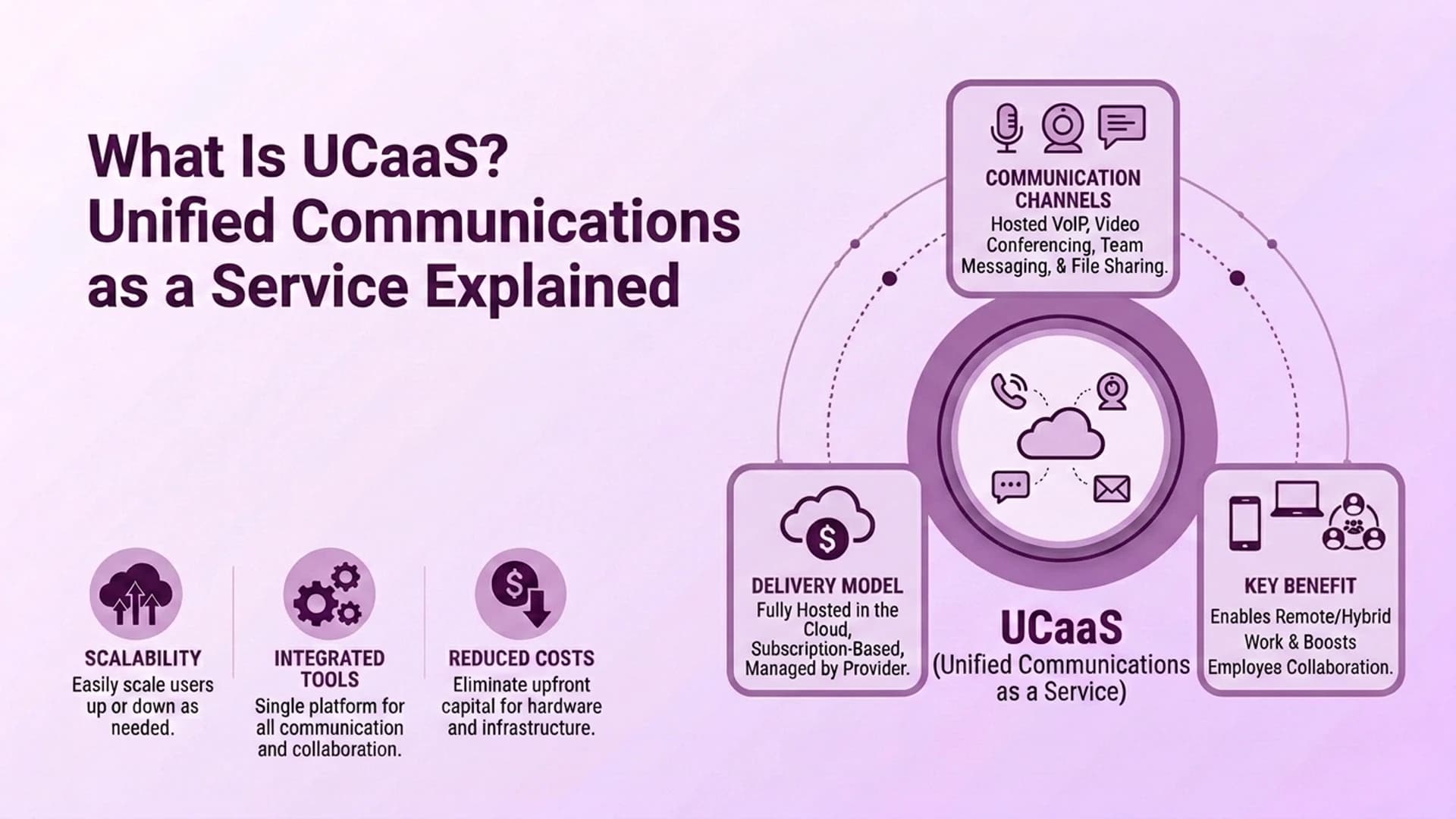
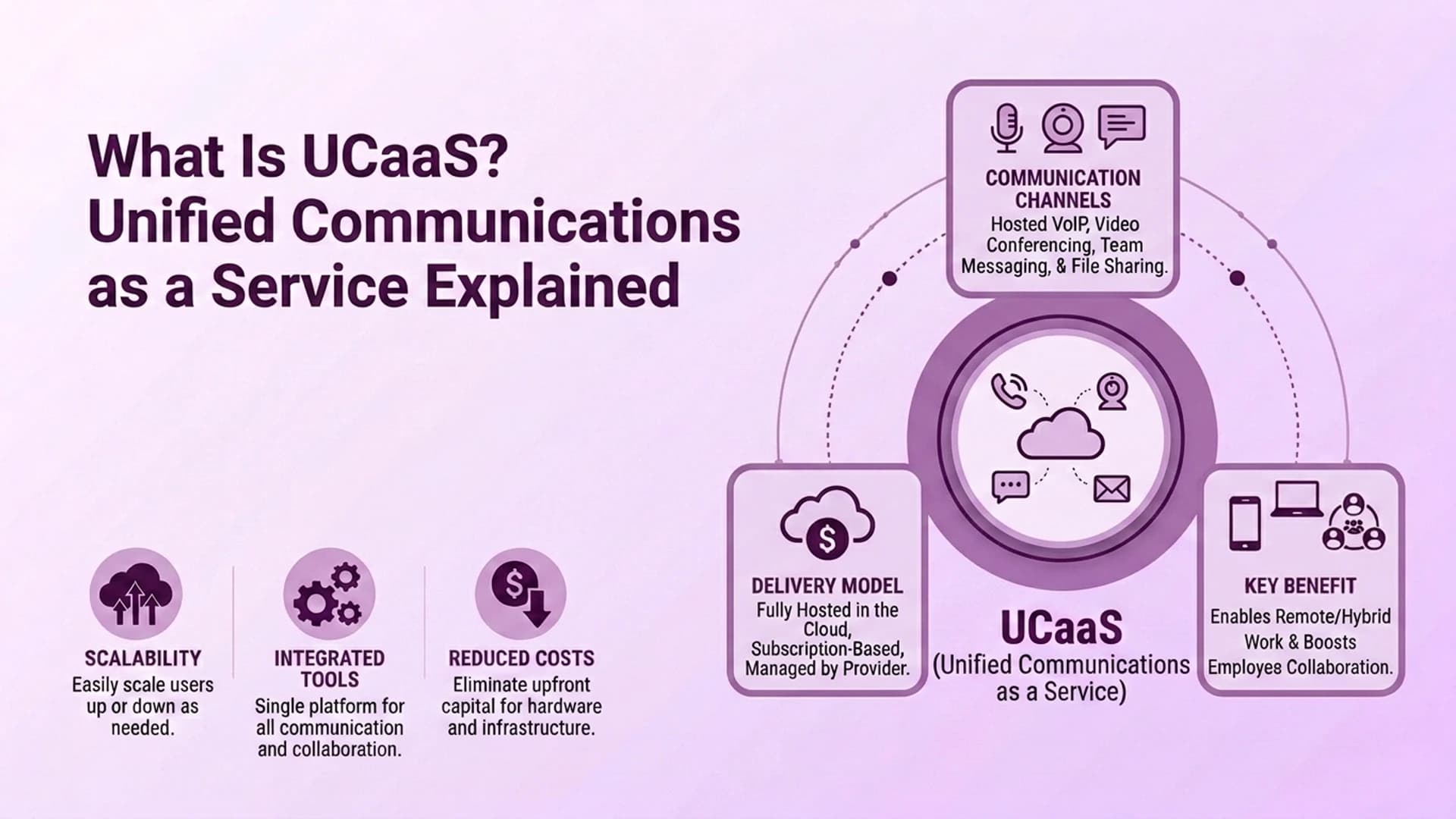
Een Unified Communications-platform is software die de belangrijkste communicatiemiddelen van een bedrijf combineert. Zakelijke telefonie, messaging en audio- of videovergaderingen bevinden zich allemaal in één geïntegreerd systeem, niet in een stapel afzonderlijke apps. Het woord dat er het meest toe doet is ‘geïntegreerd’.
Met een echt UC-platform kan iemand bellen, berichten sturen en vergaderen vanaf dezelfde klant, met gedeelde geschiedenis en aanwezigheid. Geen schakelen tussen drie logins.
Deze gids behandelt wat een echt UC-platform onderscheidt van een bundel punttools. Het doorloopt de drie implementatiemodellen, de kernfuncties die u kunt verwachten en hoe u leveranciers kunt beoordelen op basis van een functiechecklist.
Het behandelt ook wat deze platforms werkelijk kosten, en waar een CCaaS-platform zoals Ringflow in past.
Wat maakt iets eigenlijk tot een ‘Unified Communications Platform’?
Het woord ‘verenigd’ doet echt werk in die zin. Het is ook het onderdeel dat leveranciers het vaakst tekortschieten.
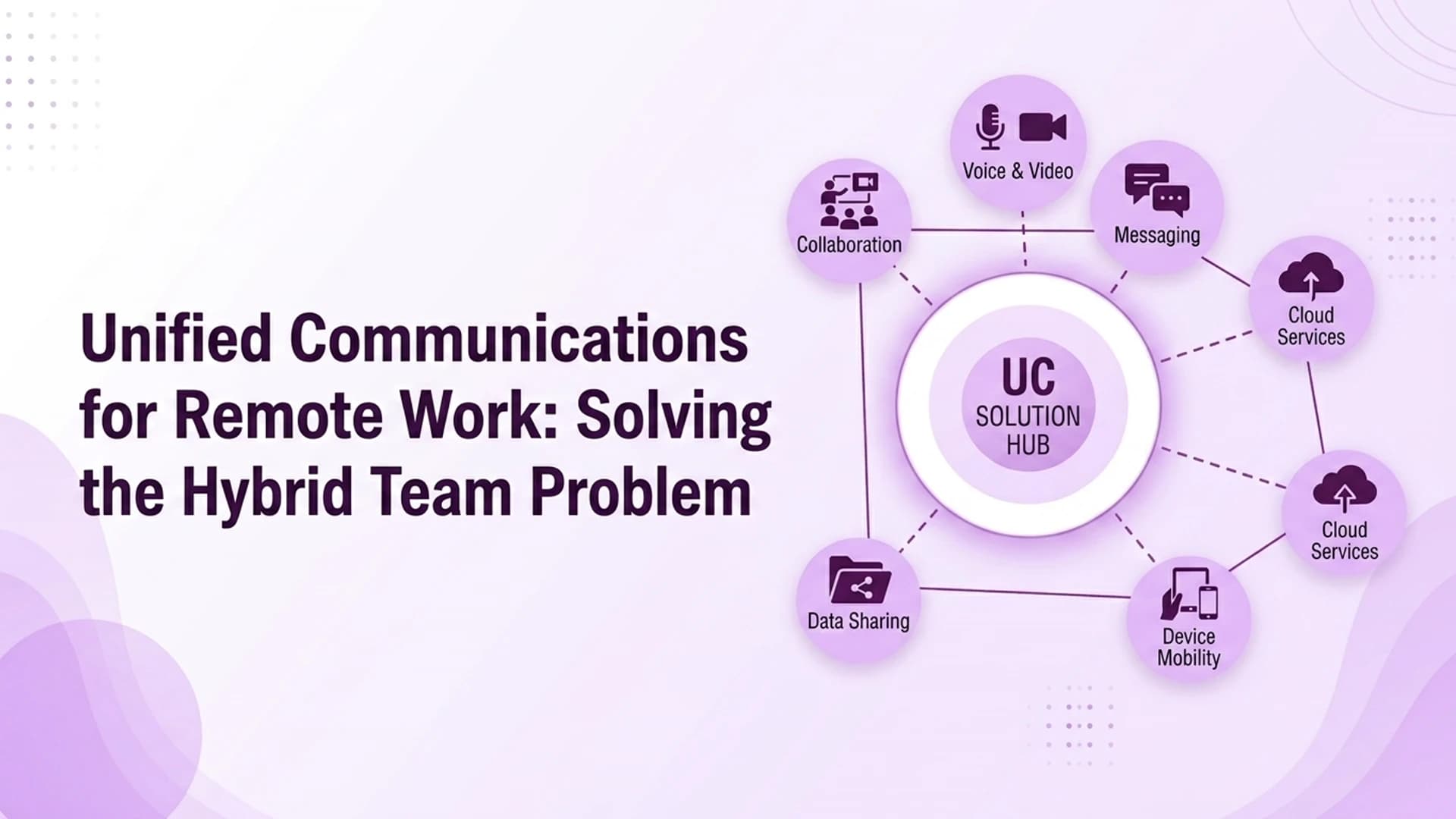
Een echt UC-platform combineert drie dingen in één client: telefonie (spraakbellen, voicemail, doorschakelen), messaging (één-op-één en groepschat met opgeslagen geschiedenis en volledige zoekfunctie) en vergaderingen (audio- en videoconferenties). Bestanden delen en tools zoals whiteboards gaan vaak gepaard.
De test is eenvoudig. Kan iemand een chat van zes maanden geleden doorzoeken, direct in een videogesprek met dezelfde groep stappen en zien wie er beschikbaar is? Kunnen ze dat allemaal doen zonder de app te verlaten of in te loggen op een andere tool?
Als het antwoord drie afzonderlijke logins omvat, is het een reeks punttools met een uniform label.
Wat zijn de drie implementatiemodellen en hoe verschillen ze?
Elke beslissing over een UC-platform komt uiteindelijk neer op een van de volgende drie implementatiemodellen:
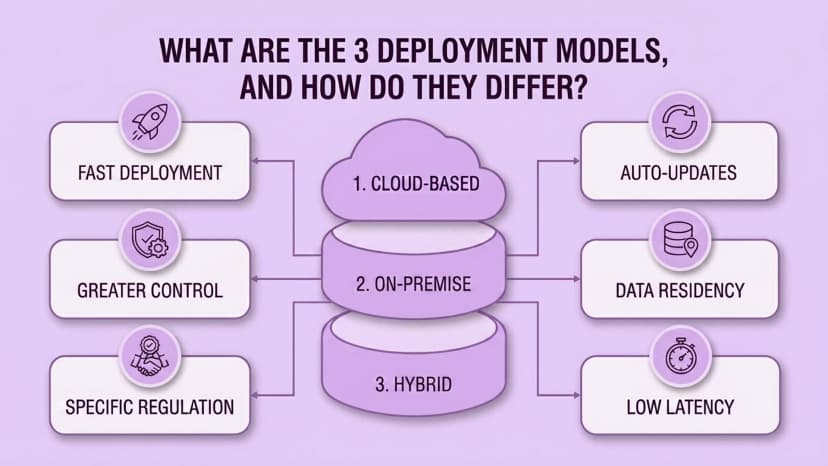
- 1Cloudgebaseerd — de aanbieder host en beheert het platform; de implementatie is snel, updates gebeuren automatisch en voor op- of afschalen is geen nieuwe hardware nodig
- 2Op locatie — het bedrijf bezit en beheert de infrastructuur rechtstreeks, en ruilt een snellere implementatie in voor meer controle over apparatuur, netwerkconfiguratie en waar gegevens zich fysiek bevinden
- 3Hybride – in de cloud gehoste services gecombineerd met lokale gateways of sessiegrenscontrollers, meestal gebruikt om te voldoen aan een specifieke regelgeving of latentievereiste, terwijl toch het grootste deel van de schaalbaarheid van het cloudmodel wordt benut
Hybride implementaties lossen een reëel probleem op. Maar ze voegen ook echte complexiteit toe. Iemand moet zowel de clouddienst als de lokale hardware beheren. Het oplossen van een probleem met de gesprekskwaliteit betekent nu dat u twee systemen moet controleren in plaats van één.
Welke kernfuncties moet een echt UC-platform bevatten?
Een UC-platform moet minimaal zakelijke telefonie omvatten: bellen, voicemail, doorschakelen en routeren. Het zou berichten moeten bieden met opgeslagen geschiedenis waarin je daadwerkelijk kunt zoeken, niet alleen maar scrollen. En het moet audio- en videovergaderingen voor groepen ondersteunen, en niet alleen één-op-één.
Naast deze basislijn kunt u bestanden delen, scherm delen en aanwezigheidsindicatoren verwachten die laten zien wie beschikbaar, bezet of afwezig is.
Het meest over het hoofd geziene kenmerk tijdens de evaluatie is de integratiediepte. Sluit het platform goed aan op de agenda-, CRM- en helpdesktools die het bedrijf al gebruikt? Of is het een apart eiland dat medewerkers handmatig moeten vergelijken met al het andere?
Hoe moet een bedrijf UC-platformleveranciers evalueren en vergelijken?
Reliability is the first checkpoint. Enterprise-grade providers usually publish an uptime target in their service-level agreement. Look for "five nines" — 99.999% availability. That works out to roughly five minutes of downtime a year.
Anything well below that deserves hard questions about what actually happens during an outage.
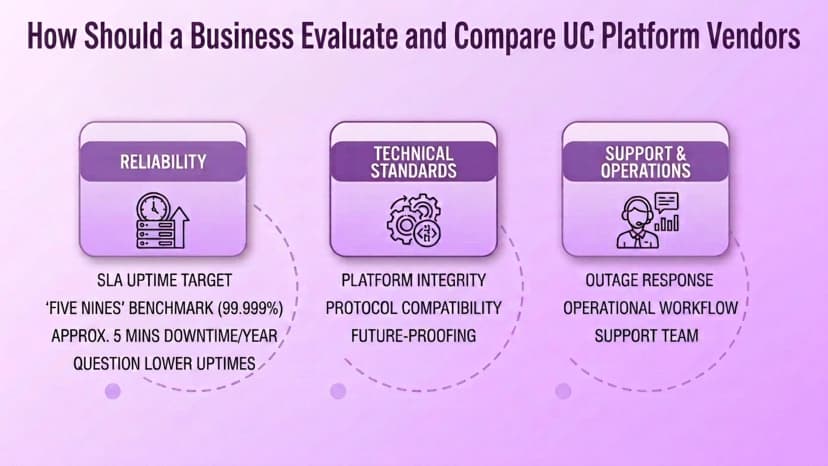
Beyond uptime, technical standards matter more than most feature comparisons. Does the platform follow SIP and WebRTC protocols? Does it publish REST APIs for custom integration? Does it stay compatible with any SBCs or PBX equipment the business is not ready to replace?
Also weigh factors that never show up in a demo: financial stability, support quality, and whether the roadmap actually ships. A platform built for true Enterprise-scale reliability tends to show those tradeoffs upfront, not bury them in the contract.
ComputerWorld's UCaaS buyer's guide makes a similar point worth repeating. The best platform matches your real use cases, security model, and capacity for change. It is not the vendor with the longest feature list on its pricing page.
Wat kost een Unified Communications Platform eigenlijk?
The headline subscription price is rarely the full cost. Total cost of ownership should also count SIP trunking fees, international dialing rates, and higher-tier support plans. Add professional services for custom setup, plus any network upgrades needed to keep call quality high under real traffic.
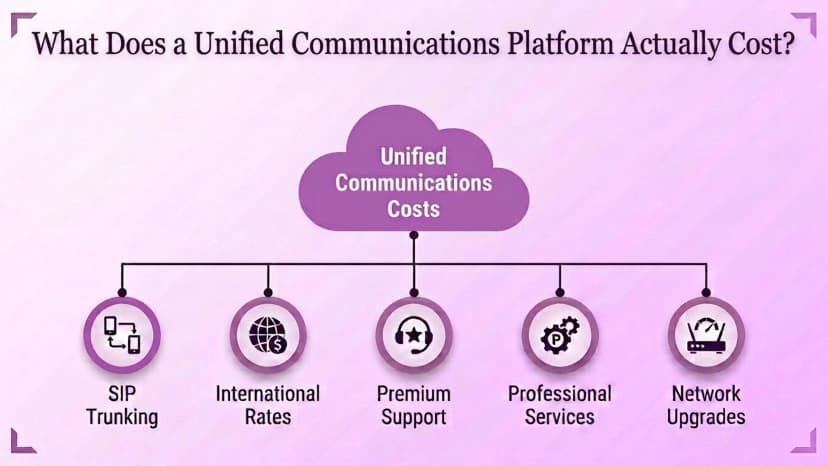
Deployment model shapes that cost more than almost anything else. On-premise systems usually carry a larger upfront capital expense for equipment and installation. Cloud platforms turn that into a smaller, recurring operating cost. Consolidation itself is a real savings lever too.
Replacing separate phone, video, and messaging contracts with one platform removes duplicate hardware, maintenance, and support-line costs. Those add up quietly across a year.
UCaaS versus CCaaS: welk type platform heeft een bedrijf eigenlijk nodig?
This is the fork in the road most buyers hit without noticing. UCaaS is built for internal, employee-to-employee collaboration. That means the calling, messaging, and meetings between coworkers. CCaaS (Contact Center as a Service) is built for external, customer-facing interactions at scale.
These are the tools a support or sales team uses to handle high call and message volume with people outside the company.
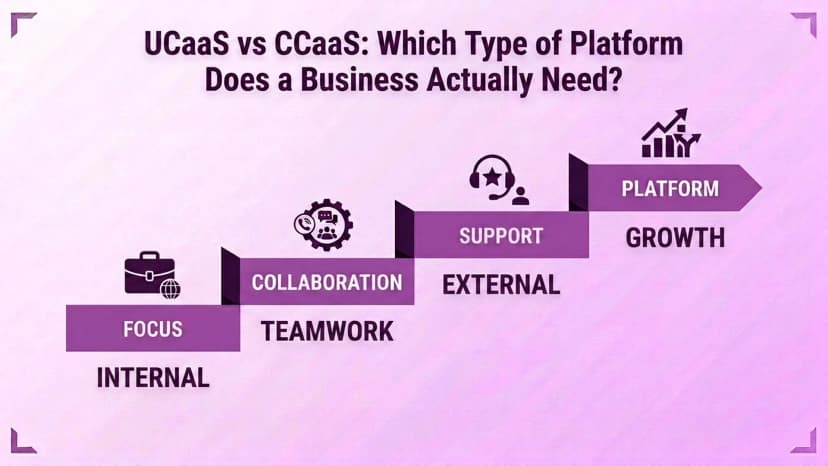
Is the priority helping employees work with each other? Then UCaaS is the right category. Is it managing customer-facing call and sales operations? Then look at CCaaS. A UCaaS feature list will not answer the questions that matter for that use case.
Past Ringflow in deze categorie?
Not as a UCaaS platform. Ringflow is a Cloud Contact Center and AI Sales Platform. It is built for the customer-facing half of the decision above, not internal employee collaboration.
A business comparing unified communications platforms for internal messaging and meetings is shopping in a different category entirely.
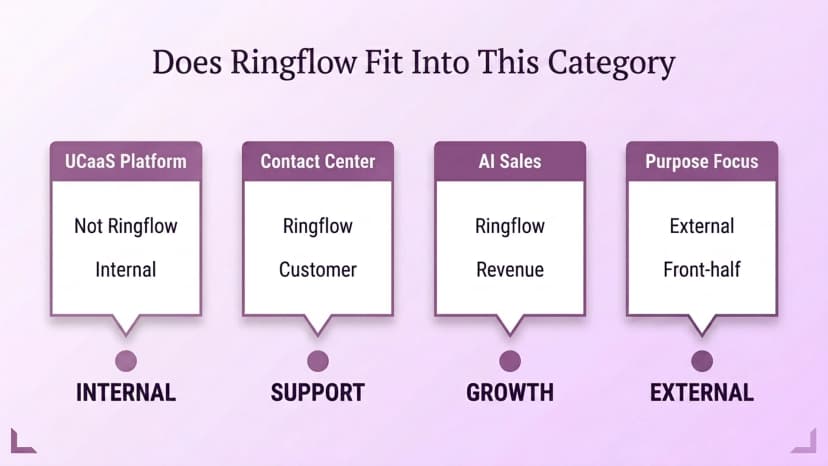
Ringflow becomes relevant on the CCaaS side of that same evaluation. It manages inbound and outbound customer call volume, routing, and CRM Integrations for sales and support teams. The vendor questions from earlier in this guide still apply. Check integration depth and reliability.
Match the tool to the real use case, not the longest feature list. The category differs from general-purpose UC platforms, but the method is the same.
Conclusie
The businesses still happy with a unified communications platform two years in split the three decisions upfront. They match the deployment model to their real infrastructure. They match features to how the team actually works.
And they weigh vendor stability against a five-year horizon — instead of picking whichever demo had the flashiest feature list.
Klaar wanneer jij dat bent
Handling the Customer-Facing Side of Communication?
See how Ringflow's Cloud Contact Center and AI Sales Platform manages customer-facing call volume and routing alongside whichever UC platform your team chooses.
Veelgestelde vragen
A genuine UC platform combines telephony (voice calling, voicemail), messaging with saved history and search, and audio/video meetings in one integrated client. It is not a bundle of separate, disconnected tools. If you switch between three apps to call, message, and meet, that is a set of point solutions, not a unified platform.
The three models are cloud-based, on-premise, and hybrid. Cloud is fast to deploy, and the provider manages scaling and updates. On-premise gives more control and customization, but the business manages the equipment and network directly. Hybrid pairs cloud services with local gateways to meet regulatory or latency needs, at the cost of added complexity.
Many enterprise-grade providers offer "five nines," or 99.999% uptime, in their service-level agreement. That works out to roughly five minutes of downtime a year. Anything well below that should prompt questions about what actually happens during an outage, not just what the contract says.
It depends on how you measure cost. On-premise usually means a larger upfront capital expense for equipment. Cloud turns that into a smaller recurring operating cost. Total cost of ownership should also count support tiers, international dialing, SIP trunking fees, and any network upgrades needed for call quality.
UCaaS is built for internal, employee-to-employee collaboration: calling, messaging, and meetings between coworkers. CCaaS is built for external, customer-facing interactions at scale — the tools a support or sales team uses to handle high call and message volume with people outside the company. The right choice depends on which side of that line you are solving for.
Beyond the feature list, check technical standards (SIP, WebRTC), REST APIs for integration, and compatibility with existing phone equipment. Also weigh factors that never show up in a demo: financial stability, support quality, and how often the roadmap actually ships. The best platform matches your real use case, not the longest spec sheet.
No. Ringflow is a Cloud Contact Center and AI Sales Platform. It is built for customer-facing call and sales operations, not internal employee-to-employee collaboration. A business comparing UCaaS platforms for internal communication is looking at a different category than Ringflow's contact center and sales tooling.