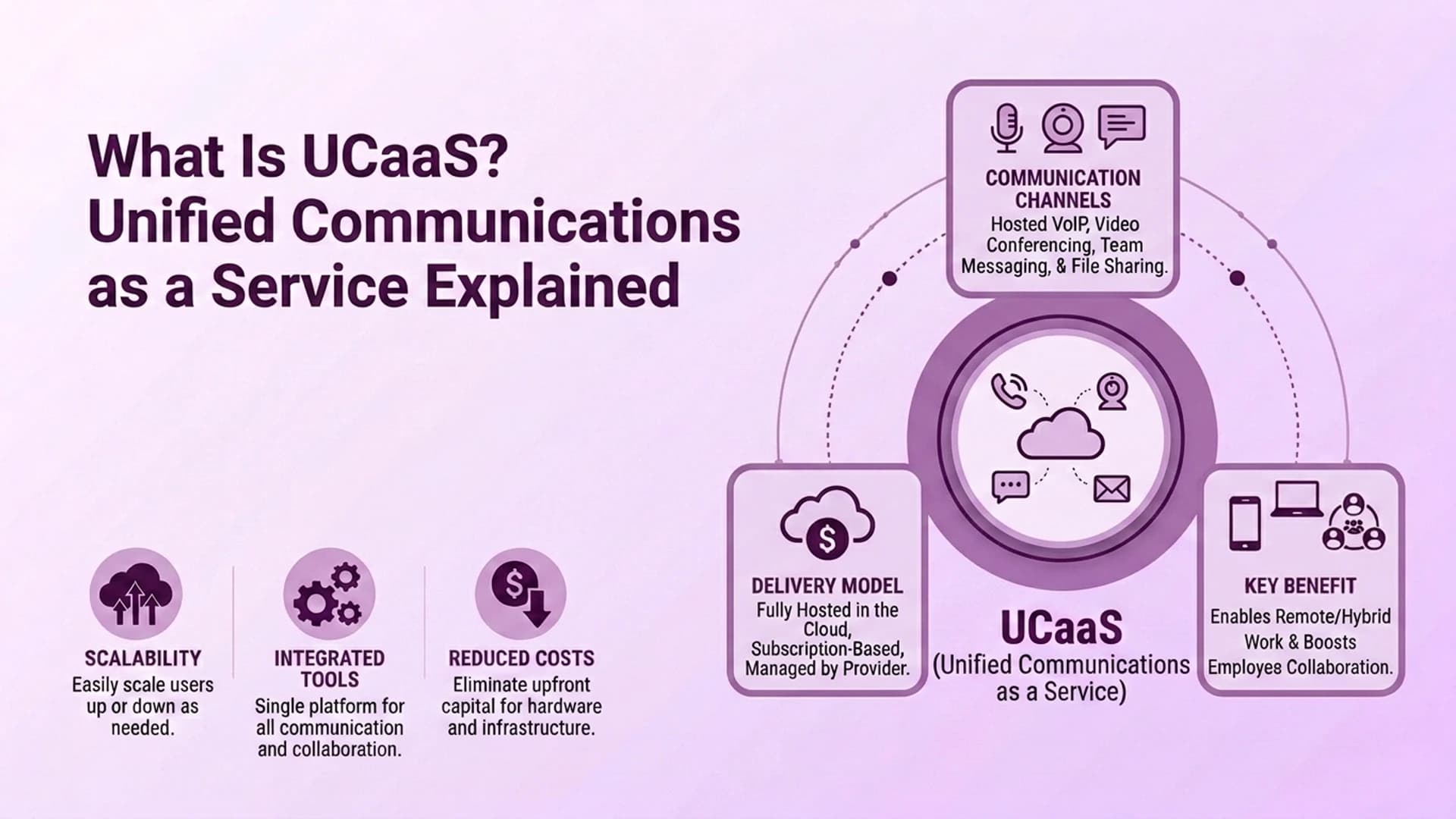

Введение
Most businesses shopping for a "unified communications platform" are really weighing three decisions at once. Which deployment model fits their setup? Which features are truly integrated, and which are bolted together? And which vendor will still be worth using in three years?
Mixing those three questions is how companies end up locked into a platform that works on paper but never fit the business.
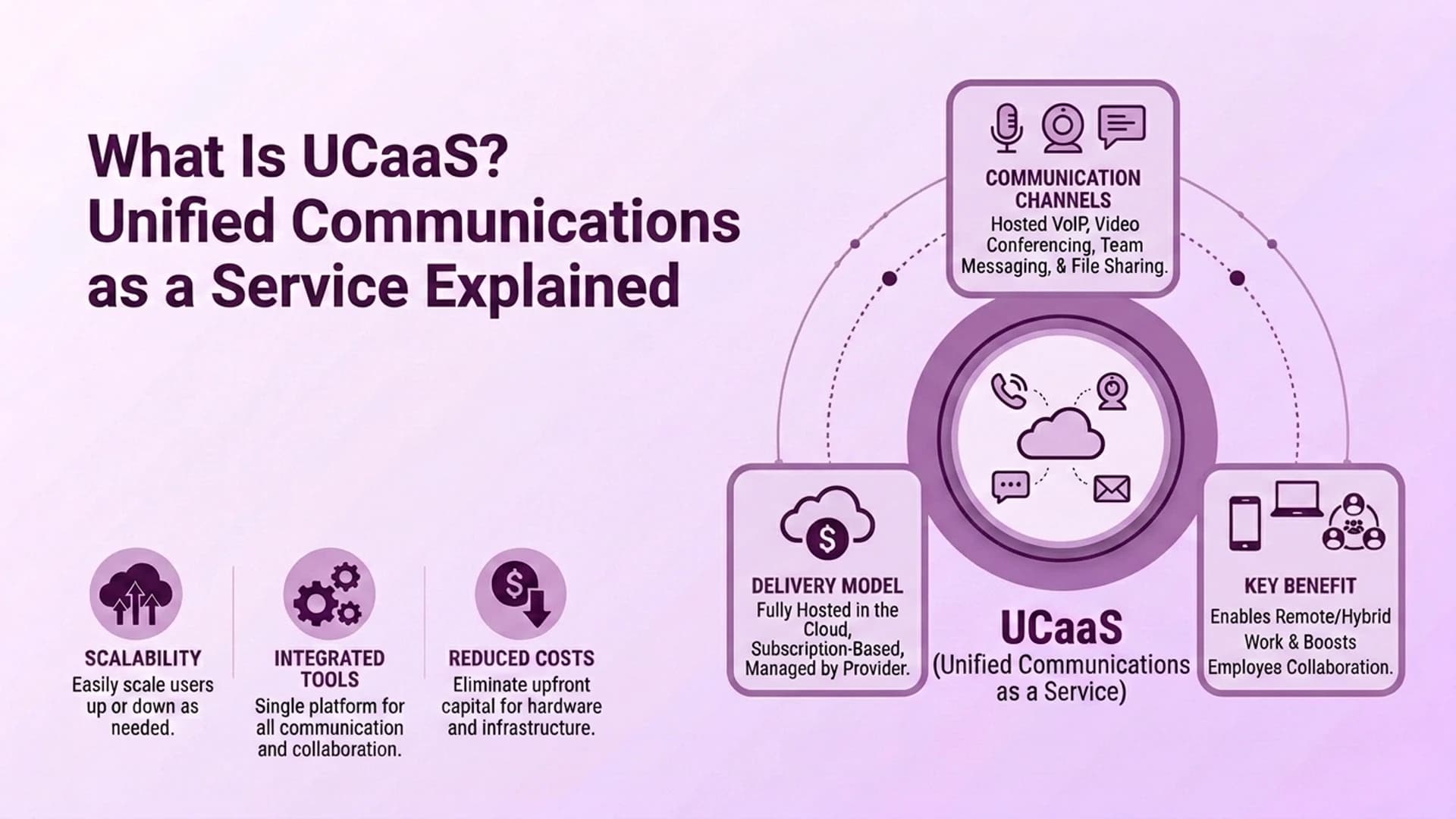
A unified communications platform is software that combines a company's core communication tools. Business telephony, messaging, and audio or video meetings all live in one integrated system, not a pile of separate apps. The word that matters most is "integrated."
A genuine UC platform lets someone call, message, and meet from the same client, with shared history and presence. No switching between three logins.
This guide covers what separates a real UC platform from a bundle of point tools. It walks through the three deployment models, the core features to expect, and how to judge vendors beyond a feature checklist.
It also covers what these platforms really cost, and where a CCaaS platform like Ringflow fits in.
What Actually Makes Something a "Unified Communications Platform"?
The word "unified" does real work in that phrase. It is also the part vendors most often cut short.
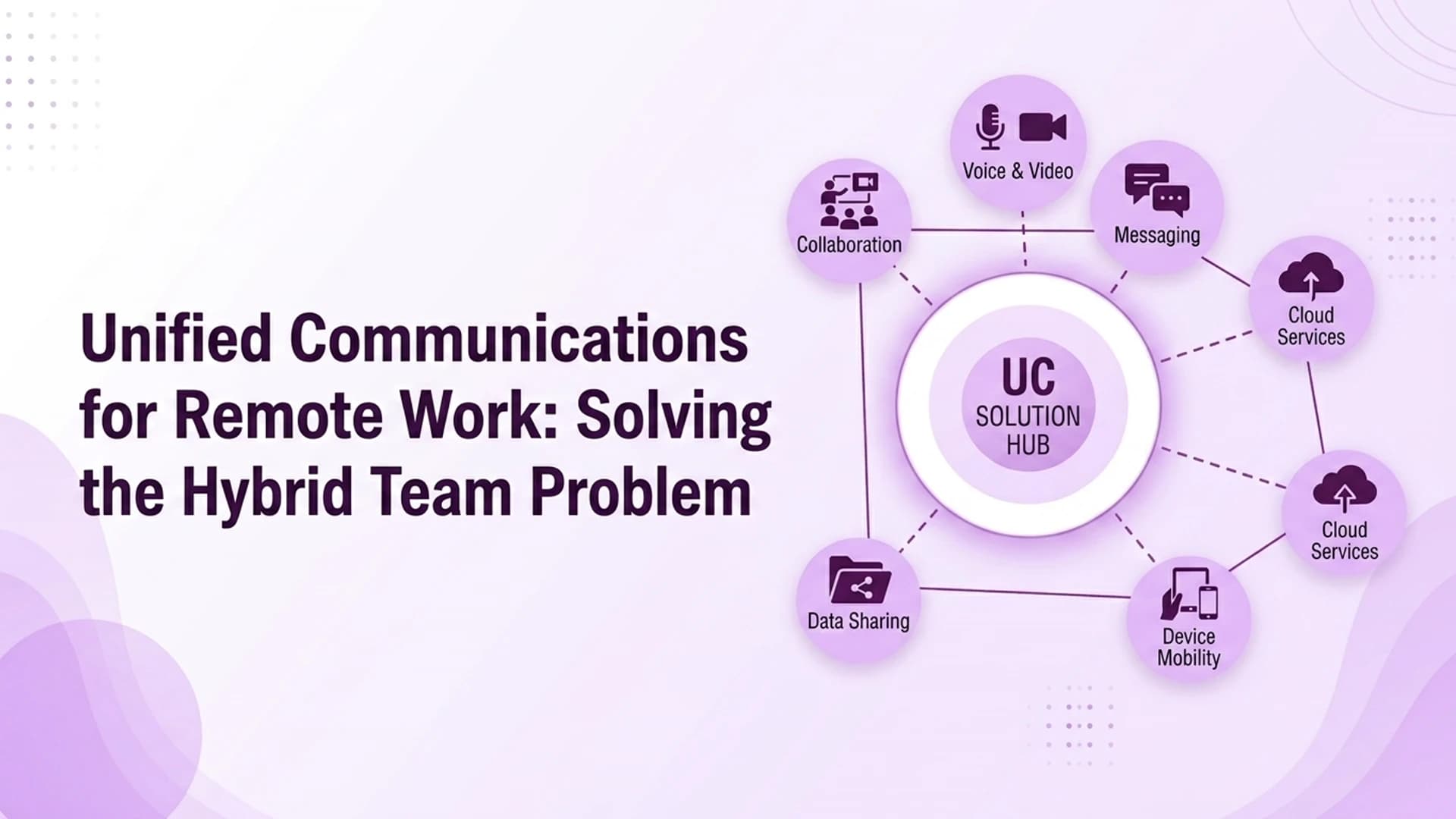
A genuine UC platform combines three things in one client: telephony (voice calling, voicemail, call forwarding), messaging (one-on-one and group chat with saved history and full search), and meetings (audio and video conferencing). File sharing and tools like whiteboards often come alongside.
The test is simple. Can someone search a chat from six months ago, jump straight into a video call with the same group, and see who is available? Can they do all that without leaving the app or logging into another tool?
If the answer involves three separate logins, it is a set of point tools wearing a unified label.
What Are the 3 Deployment Models, and How Do They Differ?
Every UC platform decision eventually comes down to one of three deployment models:
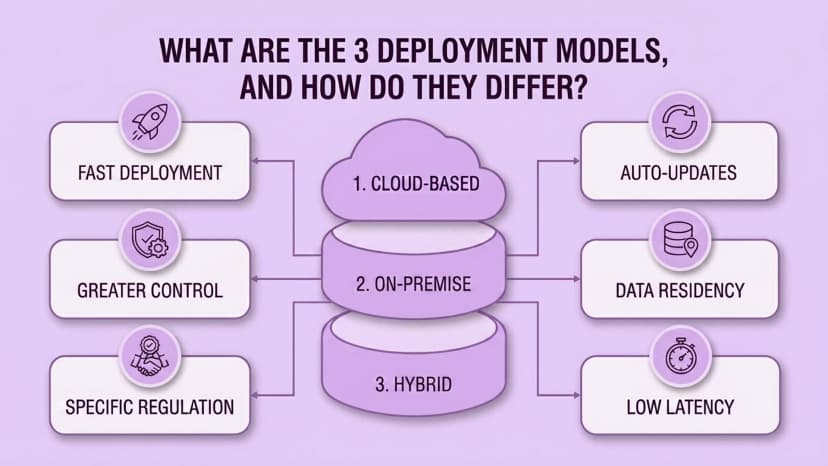
- 1Cloud-based — the provider hosts and manages the platform; deployment is fast, updates happen automatically, and scaling up or down doesn't require new hardware
- 2On-premise — the business owns and runs the infrastructure directly, trading faster deployment for greater control over equipment, network configuration, and where data physically resides
- 3Hybrid — cloud-hosted services paired with local gateways or session border controllers, usually adopted to meet a specific regulatory or latency requirement while still getting most of the cloud model's scalability
Hybrid deployments solve a real problem. But they add real complexity too. Someone has to manage both the cloud service and the local hardware. Troubleshooting a call quality issue now means checking two systems instead of one.
What Core Features Should Any Genuine UC Platform Include?
At minimum, a UC platform should include business telephony: calling, voicemail, call forwarding, and routing. It should offer messaging with saved history you can actually search, not just scroll. And it should support audio and video meetings for groups, not just one-on-one.
Beyond that baseline, expect file sharing, screen sharing, and presence indicators showing who is available, busy, or away.
The most overlooked feature during evaluation is integration depth. Does the platform connect cleanly to the calendar, CRM, and helpdesk tools the business already runs? Or is it a separate island that employees must cross-check against everything else by hand?
How Should a Business Evaluate and Compare UC Platform Vendors?
Надежность – это первая контрольная точка. Поставщики корпоративного уровня обычно публикуют целевое время безотказной работы в своем соглашении об уровне обслуживания. Ищите «пять девяток» — доступность 99,999%. Это составляет примерно пять минут простоя в год.
Все, что значительно ниже этого уровня, заслуживает серьезных вопросов о том, что на самом деле происходит во время отключения электроэнергии.
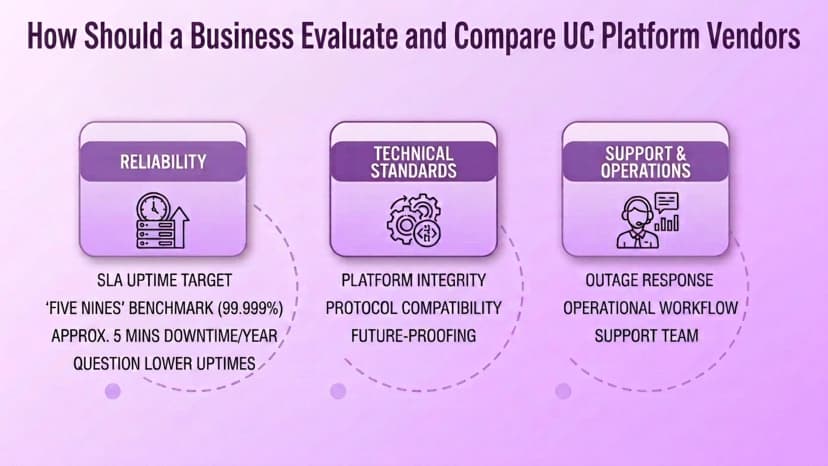
Помимо времени бесперебойной работы, технические стандарты имеют большее значение, чем сравнение большинства функций. Соответствует ли платформа протоколам SIP и WebRTC? Публикует ли он REST API для индивидуальной интеграции? Будет ли он совместим с любым оборудованием SBC или PBX, которое компания не готова заменить?
Также взвесьте факторы, которые никогда не отображаются в демо-версии: финансовая стабильность, качество поддержки и факт реализации плана действий. Платформа, созданная для истины ПредприятиеМасштабная надежность обычно показывает эти компромиссы заранее, а не скрывает их в контракте.
Руководство покупателя UCaaS от ComputerWorld делает аналогичную точку зрения заслуживающей повторения. Лучшая платформа соответствует вашим реальным сценариям использования, модели безопасности и способности к изменениям. Это не поставщик с самым длинным списком функций на странице цен.
What Does a Unified Communications Platform Actually Cost?
Основная цена подписки редко равна полной стоимости. В общую стоимость владения следует также включать плату за SIP-транкинг, тарифы на международные звонки и планы поддержки более высокого уровня. Добавьте профессиональные услуги по индивидуальной настройке, а также любые обновления сети, необходимые для поддержания высокого качества связи при реальном трафике.
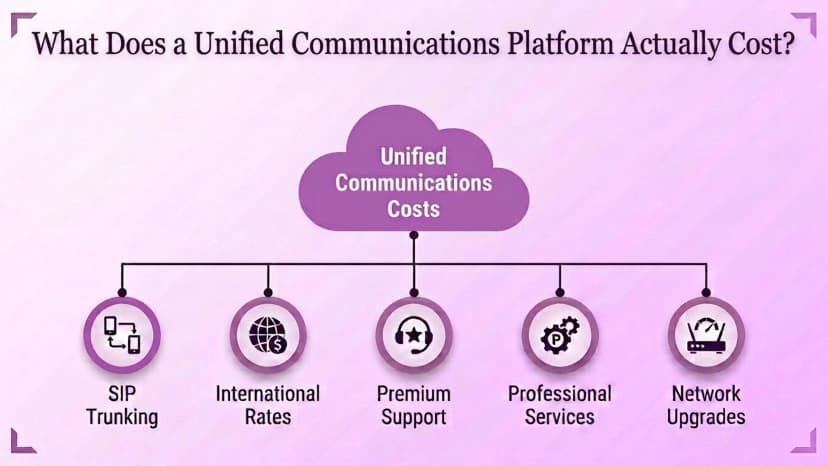
Формы моделей развертывания, которые стоят дороже, чем что-либо еще. Локальные системы обычно требуют больших первоначальных капитальных затрат на оборудование и установку. Облачные платформы превращают это в меньшие текущие эксплуатационные расходы. Консолидация сама по себе также является реальным рычагом экономии.
Замена отдельных контрактов на телефон, видео и обмен сообщениями на одну платформу устраняет дублирующие затраты на оборудование, обслуживание и поддержку. В течение года они незаметно складываются.
UCaaS vs CCaaS: Which Type of Platform Does a Business Actually Need?
Это развилка дороги, на которую большинство покупателей попадают, не замечая этого. UCaaS создан для внутреннего сотрудничества между сотрудниками. Это означает звонки, обмен сообщениями и встречи между коллегами. CCaaS (контакт-центр как услуга) создан для внешнего взаимодействия с клиентами в больших масштабах.
Это инструменты, которые команда поддержки или продаж использует для обработки большого количества звонков и сообщений людям за пределами компании.
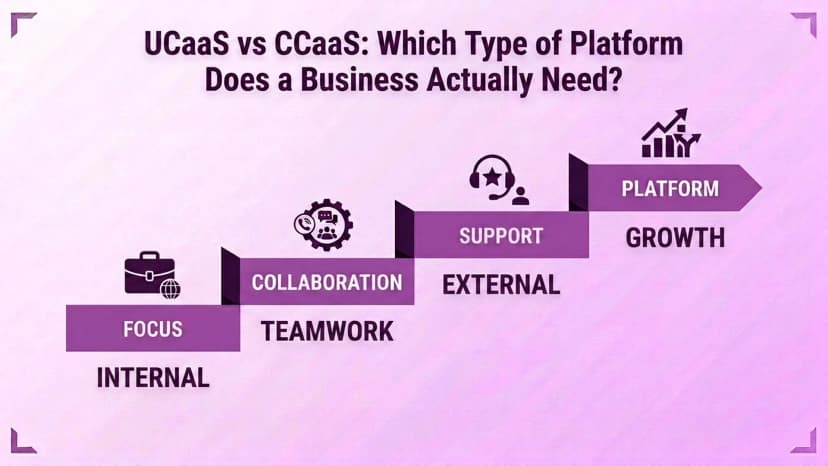
Является ли приоритетом помощь сотрудникам в работе друг с другом? Тогда UCaaS — это подходящая категория. Управляет ли он контактами с клиентами и операциями продаж? Тогда обратите внимание на CCaaS. Список функций UCaaS не ответит на вопросы, важные для этого варианта использования.
Does Ringflow Fit Into This Category?
Не как платформа UCaaS. Ringflow — это облачный контакт-центр и платформа продаж искусственного интеллекта. Он создан для части вышеприведенного решения, ориентированной на клиента, а не для внутреннего сотрудничества сотрудников.
Компания, сравнивающая платформы унифицированных коммуникаций для внутреннего обмена сообщениями и встреч, делает покупки совершенно в другой категории.
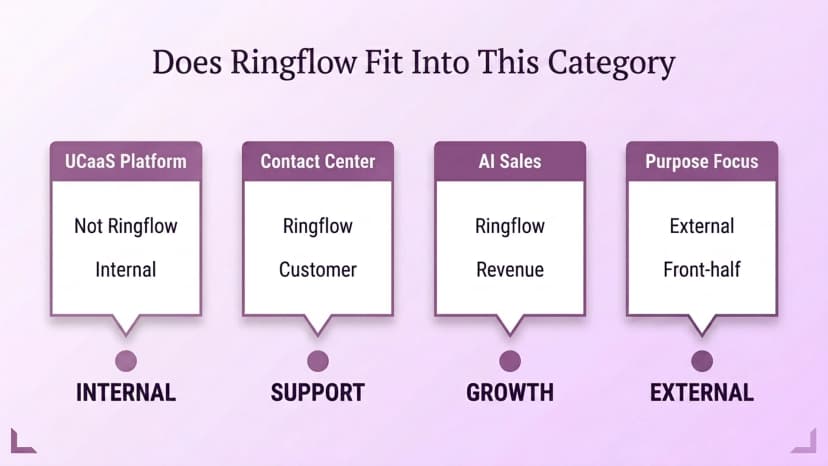
Ringflow становится актуальным на стороне CCaaS той же оценки. Он управляет объемом входящих и исходящих звонков клиентов, их маршрутизацией и CRM-интеграция для отделов продаж и поддержки. Вопросы поставщиков, заданные ранее в этом руководстве, по-прежнему актуальны. Проверьте глубину и надежность интеграции.
Сопоставьте инструмент с реальным вариантом использования, а не с длинным списком функций. Эта категория отличается от платформ UC общего назначения, но метод тот же.
Заключение
Компании, которые по-прежнему довольны платформой унифицированных коммуникаций, два года назад разделили три решения заранее. Они сопоставляют модель развертывания со своей реальной инфраструктурой. Они сопоставляют функции с тем, как на самом деле работает команда.
И они сравнивают стабильность поставщика с пятилетним горизонтом — вместо того, чтобы выбирать демо-версию с самым ярким списком функций.
Готов, когда вы будете
Обработка стороны общения с клиентом?
Посмотрите, как облачный контакт-центр и платформа продаж с использованием искусственного интеллекта Ringflow управляют объемом и маршрутизацией обращений к клиентам, используя любую платформу UC, которую выберет ваша команда.
Часто задаваемые вопросы
A genuine UC platform combines telephony (voice calling, voicemail), messaging with saved history and search, and audio/video meetings in one integrated client. It is not a bundle of separate, disconnected tools. If you switch between three apps to call, message, and meet, that is a set of point solutions, not a unified platform.
The three models are cloud-based, on-premise, and hybrid. Cloud is fast to deploy, and the provider manages scaling and updates. On-premise gives more control and customization, but the business manages the equipment and network directly. Hybrid pairs cloud services with local gateways to meet regulatory or latency needs, at the cost of added complexity.
Many enterprise-grade providers offer "five nines," or 99.999% uptime, in their service-level agreement. That works out to roughly five minutes of downtime a year. Anything well below that should prompt questions about what actually happens during an outage, not just what the contract says.
It depends on how you measure cost. On-premise usually means a larger upfront capital expense for equipment. Cloud turns that into a smaller recurring operating cost. Total cost of ownership should also count support tiers, international dialing, SIP trunking fees, and any network upgrades needed for call quality.
UCaaS is built for internal, employee-to-employee collaboration: calling, messaging, and meetings between coworkers. CCaaS is built for external, customer-facing interactions at scale — the tools a support or sales team uses to handle high call and message volume with people outside the company. The right choice depends on which side of that line you are solving for.
Beyond the feature list, check technical standards (SIP, WebRTC), REST APIs for integration, and compatibility with existing phone equipment. Also weigh factors that never show up in a demo: financial stability, support quality, and how often the roadmap actually ships. The best platform matches your real use case, not the longest spec sheet.
No. Ringflow is a Cloud Contact Center and AI Sales Platform. It is built for customer-facing call and sales operations, not internal employee-to-employee collaboration. A business comparing UCaaS platforms for internal communication is looking at a different category than Ringflow's contact center and sales tooling.